
The Mechanics of Silverware Nesting
In the culinary world, nesting refers to the tendency of similarly shaped utensils to fit snugly together during a wash cycle. This phenomenon primarily affects spoons and forks, which feature concave bowls or aligned tines that act as natural molds for one another. When these items are placed in a dishwasher basket without consideration for their orientation, they often gravitate toward each other due to the vibration of the machine and the force of the water spray. Once nested, the physical contact creates a seal that prevents water and detergent from reaching the interior surfaces.
The mechanics of this issue are rooted in the lack of surface area exposure. Because the utensils are "locked" together, the dishwasher's spray arms cannot penetrate the microscopic gaps between the metal layers. This results in "shielding," where the outermost piece receives the full cleaning force while the inner pieces remain untouched by the high-temperature water. Understanding this structural behavior is the first step toward achieving a truly hygienic kitchen environment, as it highlights the necessity of disrupting the natural alignment of flatware sets.
Optimizing Water Flow for Maximum Sanitation
To achieve high-level sanitation in a modern dishwasher, water must reach every square millimeter of a utensil's surface at a consistent pressure and temperature. Water flow optimization depends heavily on the trajectory of the spray jets and the lack of physical obstructions within the basket. If silverware is clumped together, the velocity of the water is dissipated upon contact with the first barrier, leaving the shadowed areas prone to bacterial survival and organic buildup.
Maximizing flow requires a strategic approach to loading that favors turbulence over stagnation. When water is allowed to circulate freely around each individual piece of flatware, it creates a scrubbing action that mechanical agitation alone cannot replicate. This is particularly important for the removal of stubborn proteins and starches that often adhere to stainless steel. By ensuring that the vertical and horizontal paths of the spray arm remain clear, users can leverage the full hydraulic power of the appliance. This ensures that the thermal energy of the water is efficiently transferred to the metal, effectively killing pathogens and dissolving grease.
The Alternating Handle Technique for Spoons
The alternating handle technique is one of the most effective manual strategies for preventing spoons from nesting. Because the bowls of spoons are specifically designed to cradle liquids, they are the most susceptible to the "cupping" effect, where one spoon sits perfectly inside another. To combat this, one must vary the orientation of each piece as it is placed into the cleaning compartment. This method creates a chaotic structural environment that prevents the items from settling into a unified stack.
- Place the first spoon with the handle facing downward and the bowl facing the center.
- Insert the subsequent spoon with the handle facing upward to create a physical spacer.
- Mix different sizes of spoons, such as teaspoons and tablespoons, within the same slot.
- Invert every other piece to ensure the concave surfaces are never touching.
- Distribute utensils across different basket sections rather than crowding one area.
By following these steps, you create enough physical variance that the spoons cannot find a "mate" to nest with. This allows the detergent-rich water to hit both the front and back of every spoon bowl, ensuring that no dried-on cereal or soup remains after the cycle is complete.
Benefits of Basket Grid Dividers
Modern dishwasher designs often include grid-style dividers or "slots" that are built into the silverware basket lids. These grids serve as a mechanical solution to the human error involved in loading. By forcing each individual fork, knife, or spoon into its own dedicated orifice, the grid ensures a minimum distance between items. This physical separation is the most reliable way to prevent nesting because it removes the possibility of the utensils shifting and clumping during the high-pressure wash phases.
The use of these dividers significantly improves the efficiency of the drying cycle as well. When items are held upright and apart, air can circulate around the entire perimeter of the metal. Furthermore, grids prevent the "spooning" effect that traps water droplets, which often leads to unsightly spots. While it may take a few extra seconds to slot each item individually, the time saved on re-washing or hand-buffing makes it a superior method for maintaining a high-volume kitchen. These dividers effectively transform a chaotic pile of metal into an organized array optimized for maximum exposure to cleaning agents.
Eliminating Detergent Residue and Food Traps
Nesting does more than just prevent cleaning; it actively creates "traps" where concentrated detergent and food particles can accumulate. When two spoons nest, a thin film of water is trapped between them. If this water contains dissolved detergent or loose food debris from other dishes, it can become stuck in the "dead zone" created by the contact point. As the dishwasher heats up, this moisture evaporates, leaving behind a concentrated residue of chemicals or organic matter that is baked onto the surface.
These food traps are not only unhygienic but can also lead to the corrosion of the stainless steel over time. The chemicals in dishwasher pods are designed to be rinsed away completely; when they remain on the metal in high concentrations, they can cause pitting or "rainbow" staining. To eliminate these traps, one must ensure that no two flat surfaces are in direct contact. This allows the rinse cycle to effectively flush away the soapy surfactants used in the wash cycle, leaving the silverware chemically clean and safe for food service. Proper spacing ensures that the final rinse is truly a purifying process rather than a cycle that just redistributes debris.
Enhancing Spray Arm Coverage for Flatware
The spray arm is the heart of the dishwasher's cleaning capability, rotating at high speeds to deliver water from multiple angles. However, its effectiveness is limited by the geometry of the load. Silverware placed in the corners of a basket or too close to the center hub may receive less direct impact than those positioned directly in the path of the nozzles. To maximize coverage, it is essential to understand how the water reaches the basket.
| Placement Zone | Water Impact Level | Nesting Risk |
|---|---|---|
| Outer Basket Perimeter | High (Direct Jets) | Low (If spaced) |
| Center Hub Area | Medium (Deflected) | Moderate |
| Overcrowded Corners | Low (Shadowed) | Very High |
By spreading out the silverware and ensuring the spray arm's path is not blocked by oversized plates or pots in the lower rack, you enhance the "attack angle" of the water. This ensures that even the tines of the forks and the serrated edges of knives are subjected to high-velocity cleaning. Without clear lines of sight from the spray arm to the metal, the cleaning process is reduced to simple soaking, which is rarely enough to remove stubborn residues.
Strategies for Streak Free Stainless Steel
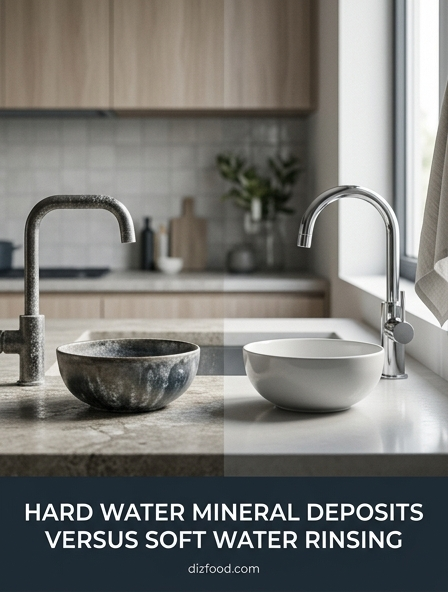
Achieving a streak-free finish on stainless steel silverware is a common challenge in many households. The primary culprits for streaks are mineral deposits from hard water and the improper evaporation of moisture. When silverware is nested or crowded, water droplets cannot slide off the metal surfaces easily. Instead, they cling to the areas where items touch, gradually evaporating and leaving behind calcium and magnesium spots. This is especially prevalent in regions with high mineral content in the local water supply.
To prevent this, the use of a rinse aid is highly recommended, as it lowers the surface tension of the water, making it "wetter" and more likely to sheet off the metal. However, even the best rinse aid cannot overcome the physics of nesting. Strategic placement ensures that every piece of flatware acts as an individual island, allowing gravity to pull water downward toward the drain. By avoiding the contact points that harbor droplets, you minimize the risk of "water spotting" and ensure that the stainless steel maintains its factory-new luster without the need for manual towel drying after the cycle.
The Relationship Between Spacing and Heat Drying
The final phase of the dishwasher cycle involves heat drying, which relies on the principles of thermodynamics and airflow. For silverware to dry effectively, the heat must be able to radiate uniformly through the metal. If the items are nested, the shared surface area creates a thermal mass that retains moisture in the center. This "moisture pocket" is shielded from the circulating hot air, resulting in silverware that is still damp when the door is opened. Dampness is a precursor to spotting and, in some cases, the development of an unpleasant metallic odor.
Effective spacing facilitates the "chimney effect," where hot air rises through the gaps in the basket, carrying away water vapor. When utensils are separated, the surface area exposed to the air is maximized, allowing for rapid evaporation. This is why grid dividers are so vital; they maintain the necessary vertical channels for airflow. Ensuring that spoons and forks do not lean against each other allows the latent heat of the metal to push moisture off the surface, resulting in bone-dry flatware that can be moved directly from the dishwasher to the storage drawer without additional attention.
Preventing Bacterial Growth Through Proper Loading
Hygiene is the most critical aspect of kitchen management, and the dishwasher is the primary tool for achieving it. However, the misconception that "heat alone kills everything" can be dangerous. If food particles are trapped between nested spoons, they can survive the wash cycle and become a breeding ground for bacteria in the dark, warm environment of the dishwasher. Proper loading is therefore a sanitation requirement, not just an aesthetic one.
- Avoid loading more than two of the same utensil type in a single basket compartment.
- Scrape off heavy protein residues, like egg or cheese, which can act as a "glue" for nesting.
- Check that the spray arm spins freely before starting the cycle to ensure constant agitation.
- Use a high-temperature wash setting if the silverware was used for raw meat or dairy.
- Unload the bottom rack first to prevent water from the top rack dripping onto clean silverware.
By following these protocols, you eliminate the micro-environments where pathogens thrive. A clean-looking spoon is not always a sterile one; only by preventing nesting can you be certain that every surface has been exposed to the sanitizing temperatures required for food safety.
Final Polishing Steps for a Meticulous Shine
For those who demand a meticulous, restaurant-grade shine on their silverware, the process does not always end when the dishwasher beeps. Even with perfect loading and no nesting, the cooling phase can occasionally introduce minor atmospheric spotting. To achieve a mirror-like finish, a quick final inspection is beneficial. Using a clean microfiber cloth is the best approach, as it picks up residual oils and dust without scratching the polished surface of the stainless steel or silver plate.
If you notice any lingering marks, a light mist of white vinegar or a specialized stainless steel polish can be applied to the cloth. This removes any final traces of mineral film. When storing the items, ensure they are completely cool and dry to prevent condensation within the cutlery tray. Proper storage is just as important as proper washing; by maintaining the separation you established in the dishwasher basket, you ensure that the silverware remains pristine until its next use. A commitment to these final details reflects a high standard of kitchen care and ensures that every meal is served with gleaming, hygienic tools.


Comments