
When it comes to maintaining a pristine kitchen, the debate between silicone bottle brushes and traditional nylon bristle scrubbers often centers on one crucial factor: long-term hygiene. While classic bristle brushes are celebrated for their rich lathering capabilities and aggressive scrubbing power on stubborn residues, silicone alternatives are rapidly gaining popularity due to their non-porous, quick-drying nature that naturally resists bacterial growth. Choosing the right tool depends on whether you prioritize deep-cleaning friction or a low-maintenance, odor-resistant lifespan, ensuring your reusable bottles and delicate glassware remain truly sanitized without the risk of micro-scratches or trapped debris.
| Feature | Silicone Bottle Brush | Traditional Bristle Brush |
|---|---|---|
| Hygiene & Bacteria | Non-porous; resists mold and biofilm buildup. | Porous fibers; prone to trapping food and germs. |
| Durability | High; bristles don't fall out or lose shape easily. | Moderate; bristles fray, flatten, and shed over time. |
| Cleaning Action | Gentle friction; best for light residue and oils. | High agitation; superior for stuck-on proteins/pulp. |
| Drying Speed | Ultra-fast; hydrophobic material sheds water. | Slow; stays damp, increasing odor risk. |
| Surface Safety | 100% scratch-free; safe for plastic and coatings. | Can cause micro-scratches on soft plastics. |
| Maintenance | Dishwasher/Boil safe for total sterilization. | Difficult to deep clean; requires frequent replacement. |
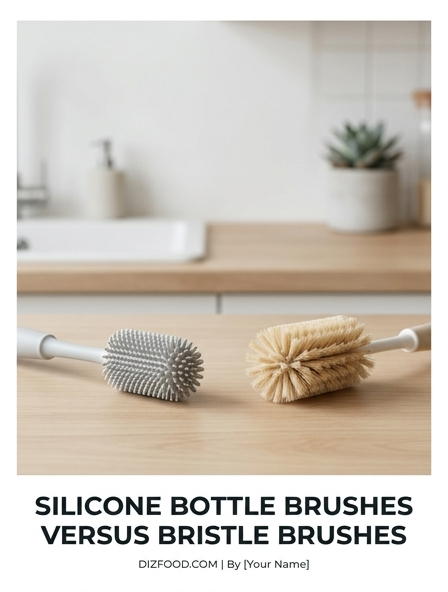
Silicone Versus Bristle Bottle Brushes Comparison
The debate between silicone and traditional bristle bottle brushes often centers on the balance between scrubbing efficiency and long-term hygiene. Traditional bristle brushes, typically made from nylon or plastic filaments, have been the standard in kitchens for decades. They are designed with hundreds of thin, flexible fibers that create a high surface area, allowing them to lather soap quickly and reach into tight corners. However, as kitchen technology has evolved, silicone brushes have emerged as a formidable alternative, constructed from food-grade polymers that offer a completely different tactile experience and set of physical properties.
While both tools serve the same primary purpose-cleaning deep or narrow vessels-their mechanical approaches differ significantly. Bristle brushes rely on friction and the trapping of soapy water within the fibers to dislodge debris. Silicone brushes, conversely, utilize thicker, blunt nub-like structures that rub against surfaces to lift grime. This fundamental difference in construction influences everything from how much soap you need to use to how the brush feels when navigating the interior of a delicate wine glass or a rugged stainless steel thermos. Choosing between them requires an understanding of your specific kitchen inventory and cleaning priorities.
| Feature | Silicone Brush | Bristle Brush |
|---|---|---|
| Material Porosity | Non-porous | Porous/Absorbent |
| Lathering Ability | Low to Moderate | High |
| Flexibility | Rigid but bouncy | Highly flexible |
Hygiene and Bacteria Resistance Differences
Hygiene is perhaps the most significant factor where silicone brushes pull ahead of their bristle counterparts. Traditional nylon bristles are porous and tend to develop microscopic cracks over time. These crevices, combined with the dense packing of the fibers, create an ideal breeding ground for bacteria, mold, and mildew. Because bristle brushes trap food particles and moisture deep within their core, they can become a source of cross-contamination if not sterilized frequently. In many cases, a bristle brush that looks clean may actually be harboring colonies of E. coli or Salmonella, especially if used for both baby bottles and general kitchenware.
Silicone is naturally non-porous and hydrophobic, meaning it does not absorb water or organic matter. The gaps between the silicone "bristles" are usually wider, allowing for easy visual inspection and rinsing. This physical structure prevents the "biofilm" buildup that often plagues nylon brushes. For households with infants or immunocompromised individuals, the hygienic profile of silicone offers significant peace of mind. Furthermore, silicone's resistance to heat allows it to be boiled or chemically sanitized without the material degrading or releasing toxic byproducts into the cleaning environment.
- Non-absorbent surface prevents the growth of odor-causing bacteria.
- Wider spacing between cleaning elements ensures food particles are easily rinsed away.
- Inert material does not react with cleaning chemicals or food acids.
- Reduced risk of biofilm accumulation compared to synthetic fibers.
Durability and Long Term Value
When evaluating the long-term value of a kitchen tool, durability is a primary metric. Traditional bristle brushes have a notorious reputation for "shedding" or fraying. After a few months of heavy use, the nylon fibers often become permanently bent, flattened, or tangled, which severely diminishes their cleaning effectiveness. Once the bristles lose their structural integrity, the brush must be replaced to avoid scratching surfaces with the exposed wire core or simply failing to reach the walls of the bottle. This frequent replacement cycle can lead to higher costs over several years and contributes more waste to landfills.
Silicone brushes are engineered for longevity. The material is incredibly resilient to wear and tear, maintaining its shape even after thousands of uses. Unlike nylon, silicone does not become brittle with age or exposure to hot water. While the initial purchase price of a high-quality silicone brush might be slightly higher than a budget bristle version, the extended lifespan usually results in better value. A single silicone brush can often outlast four or five traditional brushes. Additionally, because the head is often molded as a single piece or securely bonded, there is no risk of individual bristles falling out and becoming lodged in the items being cleaned.
Scrubbing Power and Cleaning Performance
While silicone wins on hygiene, bristle brushes are often favored for their sheer scrubbing power. The thin, stiff nature of nylon bristles allows them to create intense friction against dried-on milk, smoothie residue, or stubborn coffee stains. Because there are hundreds of contact points, a bristle brush can "sweep" a surface more thoroughly in a single pass. They are also superior at generating a rich, thick lather, which helps to chemically break down fats and oils. For bottles with complex internal geometries or narrow necks, the high flexibility of bristles allows them to compress and then expand to fill the entire volume of the vessel.
Silicone brushes provide a different type of cleaning action that some users find less satisfying initially. Because the silicone nubs are thicker and fewer in number, they do not create as much foam, which can lead to the perception that they aren't cleaning as well. However, they are excellent for agitation and lifting light to moderate debris. For best results with silicone, users often find they need to use a bit more mechanical force or a more concentrated soap solution. They excel at "rubbing" surfaces clean rather than "scrubbing" them. For daily maintenance of water bottles and lightly soiled glassware, silicone is more than sufficient, but for a bottle left overnight with dried protein shake, a bristle brush might save time.
- Bristles: Best for dried-on residues and heavy protein stains.
- Silicone: Best for daily rinsing and oily films.
- Bristles: Superior foam production for better chemical cleaning.
- Silicone: High friction rub-action for smooth surfaces.
Preventing Scratches on Delicate Surfaces
The integrity of your glassware and plastic containers depends heavily on the abrasiveness of your cleaning tools. Plastic bottles, particularly those made from polycarbonate or specialized baby bottle materials, are prone to "micro-scratching." These tiny scratches might not be visible to the naked eye at first, but they cloud the plastic over time and provide even more surface area for bacteria to hide. Traditional bristle brushes, especially those with low-quality nylon or exposed metal tips, can be surprisingly abrasive. If the protective tuft at the end of a bristle brush wears away, the metal wire can gouge the bottom of a bottle instantly.
Silicone is an inherently soft and flexible material that is virtually impossible to scratch even the softest plastics or most delicate crystal. Its "bouncy" texture ensures that even when significant pressure is applied, the force is distributed across the rounded nubs rather than concentrated into sharp points. This makes silicone the preferred choice for high-end wine glasses, decanters, and expensive baby bottles. Using silicone ensures that the polished finish of your kitchenware remains intact for years, preventing the dull, foggy appearance that often results from years of contact with stiff synthetic bristles.
Drying Speed and Odor Prevention
A major drawback of traditional bristle brushes is the "soggy brush" syndrome. Due to capillary action, water is pulled into the base of the bristles and held there long after the brush has been placed in a drying rack. This persistent moisture is what leads to that familiar, unpleasant kitchen odor-a mix of dampness and decaying organic matter. In humid environments, a bristle brush may never truly dry out between uses, creating a permanent moisture reservoir on your countertop. This environment is not only smelly but actively encourages the growth of black mold at the base of the brush head.
Silicone brushes are the solution to this moisture problem. Because silicone is hydrophobic, water beads up and rolls off the surface almost immediately after use. A simple shake of the brush removes most of the residual moisture, allowing it to air dry completely in a fraction of the time required for nylon. Because there is no damp environment for bacteria to colonize, silicone brushes do not develop odors. The lack of moisture retention also means that the brush handle and any surrounding storage areas stay cleaner and drier, contributing to a more sanitary kitchen environment overall.
- Rinse the brush head under warm water to remove soap.
- Give the brush a firm flick over the sink to dislodge water droplets.
- Store upright in a ventilated holder or hang by the handle.
- Observe that the surface is dry to the touch within minutes.
Environmental Impact and Sustainability Factors
In the context of modern sustainability, the material composition of kitchen tools is under increased scrutiny. Most standard bristle brushes are made from petroleum-based plastics and nylon. When these brushes wear out, they are rarely recyclable due to the combination of metal wiring and mixed plastics. As they degrade during use, they can also shed microplastics into the wastewater system, eventually reaching the oceans. Because they need to be replaced every few months, the cumulative plastic waste generated by a single household over a decade can be substantial.
Silicone is also a synthetic material, but it has a different environmental profile. It is derived from silica (sand), and while it is not biodegradable, it is much more durable than plastic, leading to less frequent disposal. High-quality silicone is also more stable and does not break down into microplastics in the same way that nylon filaments do. Many eco-conscious consumers view silicone as a "middle ground" between disposable plastics and natural materials like wood or boar hair. While natural fiber brushes are the most biodegradable option, they often suffer from the same hygiene issues as nylon, making silicone a popular choice for those seeking a balance between longevity and environmental responsibility.
- Longevity: One silicone brush replaces multiple plastic brushes.
- Microplastics: Silicone does not fray or shed fibers into the water.
- Waste: Reduced turnover leads to lower landfill contributions.
- Recyclability: Specialized silicone recycling exists, though it is less common than curbside plastic recycling.
Best Uses for Different Bottle Materials
Not all vessels are created equal, and matching the right brush to the material can improve your cleaning results. For stainless steel vacuum-insulated bottles, such as Hydro Flasks or Klean Kanteens, a bristle brush is often more effective at removing the "metallic" smelling residue or tea stains that cling to the textured interior. The metal walls are tough enough to handle the friction of nylon without any risk of damage. Conversely, for narrow-necked glass carafes or delicate vases, a silicone brush is the safer bet to navigate the curves without causing structural stress or surface abrasions.
Baby bottles represent a unique category where hygiene is the top priority. Many pediatricians and parents prefer silicone for this application because the bottles are cleaned multiple times a day and must be kept free of any bacterial colonies. Plastic baby bottles are also highly susceptible to scratching, which can be avoided with silicone. For wide-mouthed jars or plastic food containers, the choice often comes down to the level of grease; if the container is very oily, a bristle brush's ability to hold soap will make the job much faster.
| Bottle Material | Recommended Brush | Reasoning |
|---|---|---|
| Glass / Crystal | Silicone | Zero scratch risk |
| Stainless Steel | Bristle | Better at removing tea/coffee stains |
| Plastic (BPA-Free) | Silicone | Prevents micro-scratching/clouding |
Maintenance and Dishwasher Safety Tips
Maintaining your cleaning tools is just as important as cleaning the dishes themselves. One of the greatest advantages of silicone brushes is their extreme temperature resistance. Most silicone bottle brushes are dishwasher safe and can be placed in either the top or bottom rack without melting. The high-heat drying cycle of a dishwasher, which might warp or ruin a plastic bristle brush, actually serves to further sanitize a silicone brush. If you don't have a dishwasher, silicone can be dropped into a pot of boiling water for five minutes to ensure complete sterilization-a process that would destroy most nylon brushes.
Bristle brushes require a bit more care. They should generally be kept on the top rack of the dishwasher only, as the heating element at the bottom can melt the bristles or the plastic handle. To keep a bristle brush fresh, it is helpful to soak it periodically in a solution of vinegar and water or a diluted bleach solution to kill any lingering bacteria. Always ensure that bristle brushes are stored in a way that allows for maximum airflow around the head to prevent the core from staying damp. If the bristles start to point in different directions or "bloom," it is a clear sign that the brush has reached the end of its functional life.
- Check the manufacturer's label for specific heat ratings.
- Sanitize silicone brushes weekly in boiling water or the dishwasher.
- Replace bristle brushes as soon as they show signs of fraying or odor.
- Avoid using harsh abrasive cleaners that could degrade the silicone surface.
Final Verdict on Bottle Brush Selection
In the final analysis, the choice between silicone and bristle bottle brushes depends on what you value most in your kitchen workflow. If your primary concern is absolute hygiene, longevity, and protecting delicate surfaces from scratches, the silicone brush is the clear winner. Its ability to withstand high-heat sterilization and its resistance to mold and odors make it a superior tool for the modern, health-conscious home. It is particularly well-suited for families with infants or for those who use high-end glassware that requires a gentle touch.
On the other hand, if you frequently deal with heavy-duty cleaning tasks, such as dried-on food or stubborn stains that require significant soap lather, the traditional bristle brush remains a powerful ally. Its efficiency in high-volume cleaning environments is hard to beat, even if it requires more frequent replacement. Many households find that the best approach is to keep one of each: a silicone brush for daily bottle rinsing and delicate items, and a sturdy bristle brush for the tough jobs that require extra scrubbing muscle. By understanding the strengths of each material, you can ensure your kitchenware stays both sparkling clean and perfectly preserved.


Comments