
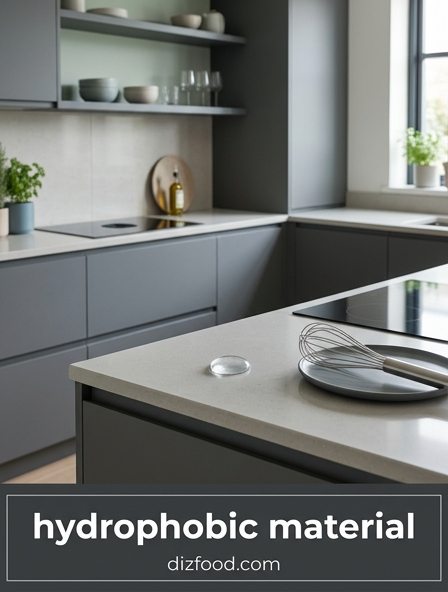
The Science of Hydrophobic Kitchen Surfaces
At the molecular level, hydrophobic kitchen surfaces function by minimizing the surface energy of materials, which prevents water from spreading and wetting the area. This phenomenon is often inspired by the "Lotus Effect," where microscopic textures trap air between the surface and a liquid droplet. In a kitchen environment, these surfaces are engineered using fluorocarbons, silicones, or specialized nanocoatings that create a high contact angle for liquids, typically exceeding 90 degrees.
- Contact Angle: The angle where a liquid interface meets a solid surface.
- Surface Energy: The excess energy at the surface of a material compared to the bulk.
- Nanostructuring: The creation of microscopic peaks and valleys to repel fluids.
When water strikes a hydrophobic countertop or utensil, the cohesive forces within the droplet exceed the adhesive forces between the water and the surface. This causes the water to pull inward, forming spherical beads that roll away easily. By utilizing these physical principles, modern kitchenware can remain dry even after heavy exposure to aqueous solutions, fat-based liquids, and organic sauces.
How Water Repellency Accelerates Dish Drying Time
The traditional drying process for kitchenware relies heavily on evaporation, which is a slow, energy-dependent phase transition. Hydrophobic materials bypass much of this process by utilizing gravitational force to remove bulk water. Because water cannot form a continuous film on a repellent surface, it beads up and slides off almost instantly, leaving only trace amounts of moisture behind for the air to evaporate.
- Immediate Beading: Water retracts into droplets upon contact.
- Gravitational Shedding: Droplets roll off the surface due to low friction.
- Reduced Surface Area: Minimal residual moisture remains trapped in pores.
In a standard dish rack, a traditional ceramic plate might hold a thin layer of water for several minutes, whereas a hydrophobic-coated plate sheds 95% of that water within seconds of being upright. This efficiency not only saves time for the user but also reduces the need for towel-drying, which can often introduce lint or secondary contamination to otherwise clean dishes. This mechanical acceleration of drying is a key benefit of advanced kitchen polymers.
Eliminating Bacterial Growth Through Moisture Control
Bacteria require moisture to thrive, metabolize, and reproduce. In the kitchen, damp surfaces such as cutting boards, sponges, and drying mats serve as primary breeding grounds for pathogens like Salmonella and E. coli. Hydrophobic surfaces disrupt this biological necessity by maintaining a dry environment that is inhospitable to microbial life. Without a consistent film of water, bacteria cannot easily move or access the nutrients required for colony formation.
| Material Type | Moisture Retention | Bacterial Risk |
|---|---|---|
| Porous Wood | High | Elevated |
| Standard Plastic | Medium | Moderate |
| Hydrophobic Coating | Negligible | Very Low |
| Feature | Traditional (Wood/Steel) | Hydrophobic (Coated/Polymer) |
|---|---|---|
| Water Absorption | Variable to High | Zero |
| Stain Resistance | Low | Exceptional |
| Cleaning Effort | Heavy Scrubbing | Rinse and Wipe |
| Drying Speed | Slow | Instantaneous |
While stainless steel is relatively non-porous, it still allows water to "sheet," which can lead to spotting and mineral buildup. Hydrophobic tools go a step further by ensuring that even mineral-heavy tap water cannot cling to the surface. This prevents the "clouding" effect often seen on older utensils and maintains the structural integrity of the tool by preventing water-induced corrosion or warping over time.
Surface Tension and the Mechanics of Beading Water
The performance of hydrophobic kitchenware is governed by the principles of surface tension and cohesive energy. Surface tension is the result of water molecules being more attracted to each other than to the air or the solid surface they are resting on. On a hydrophobic surface, the material's chemical structure provides very few "hooks" for water molecules to grab onto, forcing the water to maintain its most efficient shape: a sphere.
- Cohesion: Intermolecular attraction between like molecules (water-to-water).
- Adhesion: Attraction between unlike molecules (water-to-surface).
- Laplace Pressure: The pressure difference inside a droplet that maintains its shape.
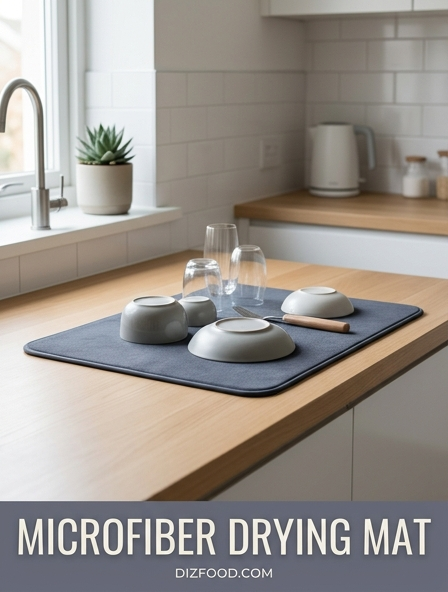
As water beads up, it gains the ability to roll rather than slide. This rolling motion is mechanically superior for cleaning, as the droplets pick up dust and debris particles along the way-a process known as self-cleaning. In a kitchen setting, this means that as water moves across a hydrophobic drying mat or tray, it actively carries away contaminants instead of leaving them behind in a stagnant pool, effectively utilizing physics to maintain cleanliness.
Enhancing Kitchen Hygiene with Non-Stick Technology
Modern non-stick and hydrophobic technologies are essential for maintaining a high standard of kitchen hygiene. The primary challenge in food preparation areas is the formation of biofilms-complex layers of bacteria that anchor themselves to surfaces using moisture. Because hydrophobic coatings prevent the initial adhesion of water and organic fluids, the biological foundation for these biofilms is never established. This makes it much harder for grime to "bake on" or "set" on surfaces.
Hygiene is also improved through the reduction of cross-contamination. When a surface is hydrophobic, it can be cleaned more thoroughly with less effort. A quick rinse often removes the majority of food residues because the residues cannot chemically bond with the repellent surface. This ensures that when moving from preparing one type of food to another, the risk of transferring microscopic particles is significantly diminished. By integrating these materials into cutting boards, prep stations, and storage containers, professional and home kitchens can achieve a level of sanitation that was previously only possible with harsh industrial chemicals.
Why Hydrophobic Coatings Reduce Foul Smells
The presence of foul smells in the kitchen is almost always an indicator of moisture-driven decay. Hydrophobic coatings address the root cause of these odors by denying moisture a place to settle. In standard sinks and drainage areas, water often clings to the sides, creating a damp film where food particles can decompose. A hydrophobic coating ensures that water and liquid wastes are funneled directly into the drain without leaving residues behind.
- Liquid Repulsion: Prevents the "soaking" of food particles in water.
- Rapid Dehydration: Surfaces dry before odors can develop.
- Barrier Layer: Prevents porous materials from absorbing scent-carrying oils.
This technology is particularly effective for trash can lids, sink basins, and compost bins. By applying a water-resistant layer, these high-odor areas stay dry and are much easier to rinse out. When the environment remains dry, the chemical reactions that produce sulfurous and ammoniacal compounds are halted. Consequently, the kitchen maintains a neutral scent profile, reducing the need for artificial air fresheners or frequent deep cleaning of waste disposal zones.
Durability and Performance of Water-Resistant Utensils
One might assume that hydrophobic properties are fragile, but modern material science has made these surfaces incredibly durable for daily kitchen use. High-performance utensils are often constructed from fluoropolymer-infused plastics or treated with plasma-enhanced chemical vapor deposition. These processes ensure that the water-repellent properties are not just a surface layer, but are deeply integrated into the material's morphology.
- Thermal Stability: Resistance to high temperatures during cooking.
- Chemical Resistance: Immunity to acidic foods and alkaline detergents.
- Abrasion Resistance: Maintaining hydrophobicity even after repeated scrubbing.
The longevity of these materials means that the benefits of moisture control and easy cleaning persist for years. Unlike older non-stick coatings that might flake off, contemporary hydrophobic utensils are designed to withstand the rigors of the dishwasher and the mechanical stress of food preparation. This durability ensures that the tool remains hygienic and efficient throughout its entire lifecycle, providing a consistent user experience and reducing the frequency of kitchenware replacement.
Improving Dishwashing Efficiency with Advanced Materials
The integration of hydrophobic materials into the kitchen significantly optimizes the dishwashing workflow. In a traditional setup, a large portion of the cleaning cycle is dedicated to scrubbing dried-on food and waiting for items to air dry. Advanced materials drastically reduce both of these phases. Because food does not adhere strongly to a hydrophobic surface, the "pre-rinse" stage becomes much more effective, often removing all visible debris without the need for manual agitation.
Efficiency is also gained in water and soap consumption. Since the surface repels liquids, less water is required to carry away suds and food particles. In industrial kitchen settings, this can lead to substantial savings in utility costs and a reduced environmental footprint. Furthermore, the rapid-dry nature of these materials means that items can be returned to storage almost immediately after washing. This eliminates the bottleneck of crowded drying racks and ensures that the kitchen remains organized and functional even during high-volume cooking tasks. Ultimately, hydrophobic technology transforms dishwashing from a labor-intensive chore into a streamlined, high-speed process.

Comments