
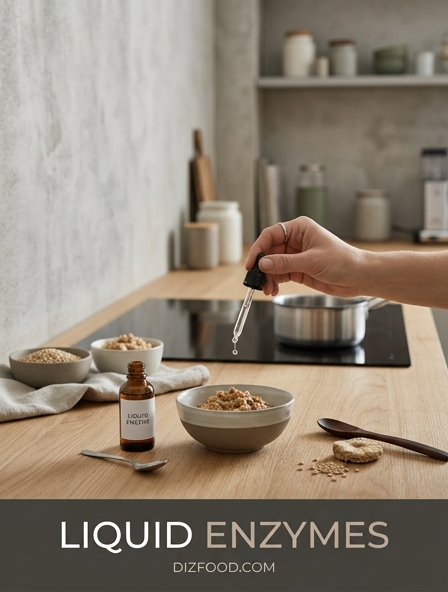
The Science of Liquid Enzymes in Fast Cycles
Modern dishwashing technology relies heavily on the catalytic power of liquid enzymes to achieve cleanliness within condensed timeframes. Unlike traditional detergents that depend primarily on high heat and mechanical force, liquid enzymes act as biological catalysts, significantly lowering the activation energy required for chemical reactions. In a fast cycle, which may last only twenty to thirty minutes, these enzymes must identify and bond with specific food soil molecules almost instantly. The liquid state is crucial here, as it allows for immediate dispersion throughout the wash cabinet.
- Proteases: These target protein-based soils like meat, egg, and cheese by breaking peptide bonds.
- Amylases: These focus on polysaccharides, effectively liquefying stubborn starches from pasta and potatoes.
- Lipases: These break down fats and oils, preventing the redeposition of grease on glassware.
The efficiency of these enzymes is temperature-dependent, but liquid formulations are specifically engineered to reach peak activity during the rapid heating phase of a short cycle. This ensures that the majority of soil breakdown occurs before the final rinse begins, maximizing every second of the machine's operation.
How Gel Packs Dissolve Instantly for Quick Cleaning
The delivery mechanism of a gel pack is a marvel of material science, designed to balance structural integrity with rapid solubility. The outer membrane is typically composed of a water-soluble polymer, such as polyvinyl alcohol (PVA), which is engineered to rupture within seconds of contact with water. In a quick wash cycle, time is the scarcest resource, making the delayed dissolution seen in traditional hard-pressed tablets a significant disadvantage. Gel packs bypass the mechanical erosion phase entirely.
| Format | Dissolution Start | Peak Concentration |
|---|---|---|
| Hard Tablet | 120-180 Seconds | 7-10 Minutes |
| Powder | 45-60 Seconds | 4-6 Minutes |
| Liquid Gel Pack | 10-20 Seconds | 2-3 Minutes |
Once the PVA membrane dissolves, the liquid enzymes and surfactants are immediately available to the spray arms. This rapid release ensures that the chemical cleaning phase begins as soon as the water reaches the appropriate temperature, allowing for a thorough clean even when the total cycle duration is minimal.
Targeting Stubborn Proteins and Starches Rapidly
Quick wash cycles face the daunting task of removing complex organic matter without the luxury of a long soak. Liquid enzymes address this by utilizing a "lock and key" mechanism at the molecular level. Proteases are specifically shaped to fit into the molecular structures of proteins, such as dried-on egg yolk or baked-on milk. Once the enzyme docks with the protein, it facilitates a hydrolysis reaction that cleaves the large, insoluble molecules into smaller, water-soluble fragments.
- Enzyme molecules collide with food particles on the dish surface.
- The active site of the enzyme binds to the specific substrate (protein or starch).
- A chemical reaction breaks the molecular bonds, turning solids into liquids.
- The fragments are washed away by the circulating water.
Amylases work simultaneously on starches, preventing the "glue" effect that often keeps other food particles stuck to plates. By targeting these two primary types of soil with high-speed precision, liquid enzymes ensure that even dried-on residues are lifted during the first ten minutes of the wash, which is essential for the success of any high-speed dishwasher program.
The Advantage of Liquid Over Powder in Short Washes
The fundamental advantage of liquid detergent over powder in short cycles is the elimination of the "solubility lag." Powdered detergents require a specific combination of water temperature and mechanical agitation to fully break down. In a fifteen or thirty-minute cycle, a powder tablet may only be 60% dissolved by the time the rinse cycle begins, leaving grit on the dishes and undissolved chemicals in the machine's filter. Liquid enzymes, being already in a fluid state, integrate into the wash water uniformly.
- Immediate Bioavailability: Enzymes are ready to work the moment the water starts circulating.
- Lower Temperature Activation: Liquids often contain stabilizers that allow enzymes to function in lukewarm water.
- Zero Residue: Since there are no undissolved granules, the risk of filming or spotting on glass is virtually eliminated.
Furthermore, liquid formulations allow for a higher concentration of active surfactants. These surfactants lower the surface tension of the water, allowing the liquid enzymes to penetrate the microscopic crevices of the food soil more effectively than the relatively large grains of a powdered detergent.
Breaking Down Stuck-on Food Without Pre-Rinsing
The "no pre-rinse" promise of modern detergents relies entirely on the aggressive action of liquid enzymes during the initial minutes of the wash. When food dries on a plate, it creates a dehydrated matrix of proteins, starches, and fats. Liquid enzymes act as molecular "scissors," infiltrating this matrix and rehydrating it from the inside out. This process is known as substrate degradation. Instead of the water simply hitting the surface of the grime, the enzymes actively digest the structural integrity of the food.
By breaking the bonds that hold food to the ceramic or glass surface, the enzymes turn a physical scrubbing task into a chemical one. This is particularly important in quick cycles where the spray arms may only pass over a specific plate a few hundred times. The chemical work performed by the liquid enzymes softens the soil to the point where even the moderate water pressure of a home dishwasher can strip it away completely. Consequently, the need for manual pre-rinsing is eliminated, saving both time and significant amounts of water.
Molecular Action of Enzymes on Heavy Grime
Heavy grime, consisting of burnt-on grease and carbonized organic matter, requires more than just soap; it requires targeted molecular intervention. Liquid enzymes in dishwashing gel packs are engineered to be resilient and highly specific. When the wash cycle starts, these enzymes seek out their specific targets amidst a chaotic environment of heat and turbulence. The molecular action is highly efficient because a single enzyme molecule can catalyze thousands of reactions per second, repeatedly attacking grime until it is fully broken down.
- Collision: Random thermal motion brings enzymes into contact with grime.
- Binding: The enzyme's active site temporarily bonds to the food molecule.
- Catalysis: The enzyme facilitates a reaction that splits the food molecule.
- Release: The enzyme detaches, unchanged, to repeat the process on the next molecule.
This cycle of action allows a relatively small amount of liquid detergent to handle a large volume of heavy soil. Because the enzymes are not consumed in the reaction, they continue to work throughout the entire wash phase, ensuring that even the most stubborn, grease-laden pans are cleaned to a professional standard within the short window of a fast wash.
Maximizing Dishwasher Performance in Under Thirty Minutes
To maximize dishwasher performance in under thirty minutes, the chemistry of the detergent must work in perfect synchronization with the machine's mechanical phases. Short cycles often utilize higher water pressure and rapid temperature spikes to compensate for the lack of time. Liquid enzymes are the ideal partner for this environment because they are designed for "high-flux" cleaning. This means they can handle a high concentration of soil in a small volume of water very quickly.
| Phase | Enzyme Action | Mechanical Action |
|---|---|---|
| Minutes 0-5 | Rapid Dissolution & Binding | Initial Wetting & Debris Removal |
| Minutes 5-20 | Maximum Catalytic Hydrolysis | High-Pressure Spray Impingement |
| Minutes 20-30 | Final Soil Suspension | Rinsing & Thermal Drying |
The efficiency of the liquid gel ensures that no time is wasted waiting for the detergent to become active. By the time the dishwasher reaches its peak operating temperature, the enzymes have already softened the most difficult soils, allowing the high-pressure jets to finish the job efficiently. This synergy is what makes thirty-minute cycles effective for daily loads.
The Role of Rapid Solubility in Stain Removal
Stains from tea, coffee, and wine are caused by polyphenols and tannins that bond tightly to the porous surfaces of mugs and plates. Removing these stains in a fast cycle is particularly challenging because they do not "melt" like fats. Instead, they must be bleached or enzymatically lifted. Liquid formulations often include stabilized bleaching agents or specific enzymes that target the colored organic compounds responsible for staining. The rapid solubility of these components is vital.
If a detergent takes five minutes to dissolve, the window for stain removal in a short cycle is nearly halved. Because liquid gel packs release their stain-fighting ingredients almost immediately upon water contact, the oxidative and enzymatic processes have more time to work on the tannins. This immediate contact prevents the stains from being "set" by the heat of the wash water. Furthermore, the liquid state ensures that these agents are evenly distributed, preventing the patchy cleaning that can occur when undissolved powder concentrates in one area of the dishwasher rack.
Optimizing Gel Pack Efficiency for High Speed Cleaning
Optimizing a gel pack for high-speed cleaning involves a complex balance of pH buffers, surfactants, and enzyme stabilizers. In a fast cycle, the chemistry must be aggressive enough to work quickly but controlled enough to avoid excessive foaming, which can dampen the force of the spray arms. Liquid gel packs are formulated to manage this balance through "controlled-release" chemistry within the liquid itself. While the pack dissolves instantly, the different chemical components are activated at slightly different intervals based on the rising water temperature.
This optimization ensures that the surfactants first lower the water tension to wet the dishes, followed immediately by the enzyme attack on food proteins. This sequential action, occurring over just a few minutes, mimics the multi-stage cleaning of a longer cycle. High-speed cleaning efficiency is also improved by the inclusion of chelating agents in the liquid gel. These agents bind to minerals in hard water, preventing them from interfering with the enzymes. This ensures that 100% of the enzymatic power is directed toward the food grime rather than being wasted on the water's mineral content.
Chemical Reactions That Power Modern Quick Wash Cycles
The core chemical reaction powering modern quick wash cycles is hydrolysis, the process of using water to break down chemical bonds. Liquid enzymes act as the catalysts for this reaction. Without enzymes, hydrolysis would occur too slowly to be useful in a kitchen setting. By introducing proteases and amylases, the dishwasher converts the kinetic energy of the water and the thermal energy of the heating element into a potent chemical attack. This process is supplemented by saponification, where alkaline components in the liquid react with fats to create soap-like molecules.
- Hydrolysis: Cleaving proteins and starches into soluble units.
- Saponification: Converting oils into water-soluble salts.
- Complexation: Sequestering metal ions to soften the water environment.
These reactions happen simultaneously and at an accelerated rate thanks to the liquid delivery system. By the time the fast cycle enters its rinse phase, the chemical reactions have converted solid food waste into a suspended emulsion that can be easily drained away. This sophisticated molecular engineering is what allows a modern dishwasher to provide "sparkling clean" results in a fraction of the time required by previous generations of appliances.



Comments