
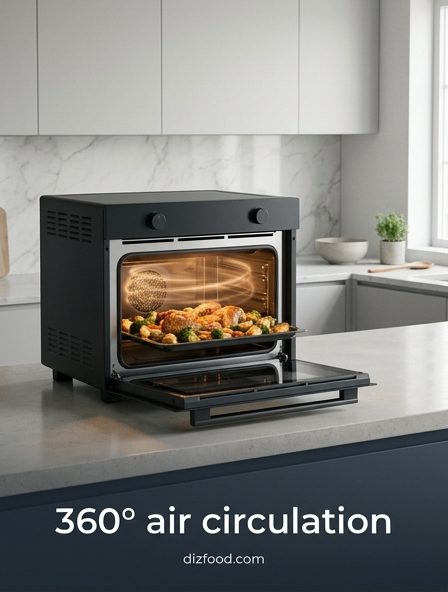
Benefits of 360 Degree Airflow for Drying
Implementing 360-degree air circulation in the kitchen environment offers transformative advantages for maintaining a hygienic and efficient workspace. Unlike unidirectional airflow, which often leaves "dead zones" where moisture persists, a circular pattern ensures that every surface area is exposed to consistent moving air. This comprehensive coverage is essential for drying intricate kitchenware, such as whisk wires, blender blades, and deep containers, which typically trap water in hard-to-reach crevices.
- Uniform evaporation across all stacked items simultaneously.
- Significant reduction in total drying time for porous and non-porous surfaces.
- Prevention of water spots and streaks on glassware and polished steel.
- Enhanced removal of lingering food odors through continuous air exchange.
- Lowered risk of structural damage to wooden cutting boards and utensils.
By prioritizing omnidirectional movement, homeowners can ensure that their kitchen tools are not just dry to the touch, but thoroughly stripped of deep-seated moisture. This method aligns with professional culinary standards, where speed and sanitation are paramount for daily operations and long-term equipment maintenance.
Preventing Kitchen Mold with Constant Circulation
Mold thrives in the stagnant, humid microclimates often found behind sinks, inside dark cabinets, and underneath drying mats. Constant 360-degree air circulation acts as a primary defense mechanism by disrupting the conditions necessary for fungal spores to settle and germinate. When air is kept in a state of continuous motion, it prevents the localized humidity spikes that occur after heavy dishwashing or boiling water on the stove. This proactive approach is far more effective than reactive cleaning, as it addresses the environmental root cause of mold growth.
In many modern kitchens, tightly sealed cabinetry can inadvertently create moisture chambers. By integrating ventilation systems or specialized drying racks that facilitate all-around airflow, these "hot spots" are neutralized. The constant movement helps to equilibrate the kitchen's internal dew point, ensuring that moisture is carried away toward exhaust fans or open windows rather than condensing on porous surfaces like drywall or grout. Maintaining this level of aeration is critical for protecting both the structural integrity of the kitchen and the respiratory health of the household inhabitants.
How Omnidirectional Airflow Speeds Up Dish Drying
The physics behind omnidirectional airflow reveals why it is the most efficient method for rapid evaporation. When air moves from all angles, it continuously strips away the boundary layer of saturated air that clings to wet surfaces. This maintains a steep concentration gradient between the liquid water and the surrounding atmosphere, forcing faster evaporation. In a traditional setup, air might only reach the top or sides of a plate, leaving the underside damp for hours. With 360-degree systems, the air penetrates the gaps between stacked items with equal pressure.
| Drying Method | Air Coverage | Relative Speed |
|---|---|---|
| Standard Rack | Top/Side Only | Baseline |
| Towel Drying | Manual Contact | Slow/Variable |
| 360° Airflow | Full Perimeter | 2x Faster |
This table illustrates how the geometry of airflow dictates the timeline of the drying process. By utilizing racks designed with open-weave patterns or integrated fans, users can cycle through their dishware inventory much faster, reducing the need for excessive storage space or manual towel drying, which can introduce lint and contaminants.
The Science of 360 Degree Ventilation in Cabinets
Cabinetry is often the most neglected area regarding kitchen ventilation, yet it is where most moisture-related damage occurs. The science of 360-degree ventilation within these confined spaces relies on the principles of thermal convection and pressure differentials. By introducing vents at both the base and the top of a cabinet, or using perforated shelving, air is encouraged to rise and circulate around the stored items. This prevents the "basement effect," where cool, damp air settles at the bottom of the cupboard, leading to musty smells and the degradation of shelf liners.
Furthermore, circular airflow helps to regulate the temperature within cabinets that house small appliances. Motorized tools like blenders or stand mixers can retain heat after use; proper aeration ensures this heat is dissipated evenly without causing localized condensation on nearby glassware. When air can flow freely around every object, the risk of "sweating"-where temperature swings cause moisture to bead on surfaces-is virtually eliminated. This scientific approach to storage ensures that fine china, wooden bowls, and metal cookware remain in pristine condition regardless of the external kitchen climate.
Eliminating Moisture Traps in Your Dish Rack
Traditional dish racks are often designed with solid plastic bases or high walls that inadvertently create moisture traps. These traps are pockets of high humidity where air cannot circulate, leading to "slime" buildup and slow drying. To eliminate these issues, a 360-degree airflow design focuses on elevating items and utilizing skeletonized structures that allow air to pass through the bottom, sides, and top simultaneously. This ensures that even the rim of an inverted glass receives enough air movement to dry completely without leaving a ring of water.
- Use racks with wire-mesh bases rather than solid plastic trays.
- Position plates with sufficient spacing to allow air to pass between them.
- Invert glasses on pegs that keep the mouth elevated from the surface.
- Avoid overcrowding the utensil holder to prevent "nesting" of spoons.
- Rotate the rack occasionally if it is placed in a corner with limited natural drafts.
By following these steps and choosing hardware that supports omnidirectional movement, you effectively turn your drying area into a high-efficiency evaporation zone. This not only keeps your dishes cleaner but also extends the life of the rack itself by preventing the accumulation of mineral deposits and biofilm.
Impact of Airflow on Bacterial Growth Prevention
Bacteria require three primary components to thrive: nutrients, warmth, and moisture. In a kitchen, moisture is often the easiest variable to control through environmental management. High-velocity, 360-degree airflow is a potent antimicrobial tool because it rapidly reduces "water activity" on the surfaces of dishes and countertops. By stripping away moisture before bacteria like E. coli or Salmonella can colonize, you create an inhospitable environment for pathogens. Studies show that surfaces dried quickly with moving air harbor significantly fewer colonies than those left to air-dry slowly in stagnant conditions.
This is particularly important for items that are frequently wet but rarely sterilized, such as sponges or silicone mats. When these items are placed in a path of circular airflow, they dry from the inside out, preventing the center from remaining damp-a common breeding ground for odors and germs. Using 360-degree drying systems ensures that even if a surface isn't perfectly sterile, it is dry enough to inhibit the exponential growth of microorganisms. This mechanical approach to hygiene complements chemical cleaning, providing a second layer of protection for food preparation areas and family health.
Optimal Placement for 360 Degree Drying Systems
To maximize the efficacy of a 360-degree drying system, its physical location within the kitchen is as important as its design. Airflow is influenced by the surrounding architecture, including the proximity of walls, windows, and large appliances. For the best results, drying systems should be placed in areas where natural cross-ventilation can assist the mechanical or structural airflow of the device. This creates a synergy that enhances the volume of air moving through the system, further reducing the time dishes spend in the "wet zone."
- Place racks at least three inches away from backsplashes to allow rear airflow.
- Position drying zones near windows or under-cabinet vents.
- Avoid placing drying systems in "dead corners" between the fridge and the wall.
- Ensure there is vertical clearance for rising warm, moist air to escape.
- Keep the area around the base clear of decorative items that block low-level drafts.
Strategic placement ensures that the 360-degree movement is not obstructed by domestic obstacles. When air can approach the system from all sides without hitting a barrier, the drying process becomes significantly more uniform. This foresight in kitchen layout prevents the accumulation of humidity in localized spots, protecting your cabinetry and improving overall air quality.
Reducing Humidity Levels Around the Kitchen Sink
The kitchen sink area is the epicenter of humidity in the home. Activities like rinsing vegetables, washing dishes, and using the garbage disposal release significant amounts of water vapor into the immediate vicinity. Without 360-degree airflow, this vapor tends to settle on cold surfaces, leading to peeling paint, warped wood, and persistent dampness. By encouraging circular air patterns around the sink, you facilitate the rapid dispersal of this vapor into the wider room, where it can be handled by the home's HVAC system or exhaust fans.
To achieve this, many designers are now recommending open-concept sink areas or the use of raised drying platforms that don't sit flush against the counter. When air can travel under and around the sink's perimeter, it keeps the underside of the faucet and the edges of the basin dry. This prevents the growth of black mold in the silicone sealant and reduces the frequency of deep-cleaning tasks. Ultimately, managing humidity at the source through better aeration creates a more comfortable cooking environment and preserves the aesthetic finish of your kitchen fixtures for years to come.
Why Circular Airflow Beats Traditional Drying Methods
Traditional drying methods, such as laying dishes on a flat towel or using a high-walled plastic rack, rely almost entirely on passive evaporation from the top surface. This is inherently flawed because it ignores the gravity-fed accumulation of water at the base of the item. In contrast, circular or 360-degree airflow addresses the entire geometry of the object. By allowing air to circulate beneath and around the items, it tackles the "drip point" directly, ensuring that water doesn't pool and create a secondary source of humidity.
| Feature | Traditional Rack | 360° Airflow System |
|---|---|---|
| Base Design | Solid/Closed | Perforated/Elevated |
| Air Path | Vertical Only | Multidirectional |
| Residue Risk | High (Slime) | Negligible |
| Efficiency | Low | Superior |
The comparison clearly shows that the traditional approach creates bottlenecks in the drying process. Circular airflow systems utilize the natural movement of air to ensure that every angle of the kitchenware is treated. This leads to a more hygienic result, as there is no stagnant water left to harbor bacteria or minerals, making it the preferred choice for modern, health-conscious households.
Maintaining a Mold Free Kitchen Through Better Aeration
A mold-free kitchen is a result of consistent habits and smart environmental controls. Better aeration through 360-degree airflow is not a one-time fix but a lifestyle shift in how the kitchen is managed. It starts with choosing the right tools, such as breathable storage containers and ventilated racks, but it also involves understanding the flow of air throughout the room. Regularly opening windows to create a cross-breeze and ensuring that exhaust fans are used during and after cooking are vital components of this aeration strategy.
Long-term maintenance also involves checking the "hidden" areas where airflow might be restricted. Inspecting the gaps behind appliances and ensuring that cabinet doors are occasionally left open to "breathe" can prevent the buildup of trapped moisture. When a kitchen is designed with 360-degree circulation in mind, the surfaces stay drier, the air smells fresher, and the need for harsh chemical cleaners is greatly reduced. By prioritizing the invisible element of air movement, you create a sustainable, healthy, and durable kitchen environment that stands the test of time and heavy daily use.

Comments