
Choosing between a countertop and an under-sink dishwasher often comes down to how you prioritize your "golden triangle" of kitchen workflow. If you're navigating a cramped apartment or a rental where permanent plumbing modifications are off the table, a countertop model offers immediate plug-and-play relief without sacrificing precious cabinet real estate. Conversely, under-sink units serve as the ultimate stealth upgrade for homeowners, reclaiming that often-wasted "dead zone" beneath the basin to maintain a sleek, seamless aesthetic while freeing up every inch of your prep area for cooking. Both compact designs are engineered for modern efficiency, but your final decision hinges on whether you value accessible vertical workspace or hidden, integrated utility to truly declutter your culinary environment.
| Feature | Countertop Dishwashers | Under-Sink Dishwashers |
|---|---|---|
| Installation | Portable; connects to faucet aerator. | Permanent; integrated into plumbing. |
| Capacity | 4-6 standard place settings. | 5-8 standard place settings. |
| Space Impact | Consumes ~20" of prep surface. | Uses "dead" space under the basin. |
| Water Source | Quick-connect hose or internal tank. | Direct hot water line connection. |
| Best For | Renters and small dorms/studios. | Homeowners with limited cabinetry. |
| Avg. Width | 17-22 inches (compact). | 24 inches (standard width). |
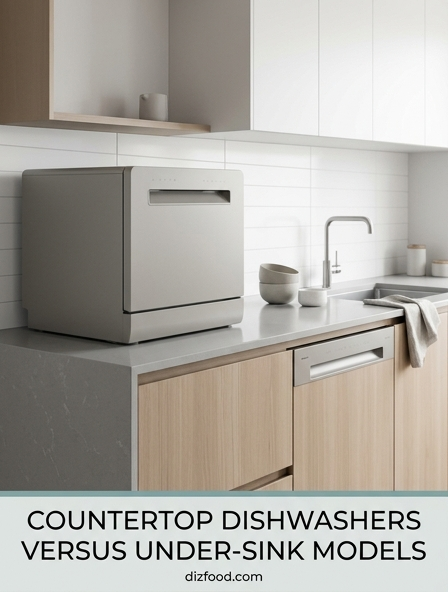
Choosing Between Countertop and Under Sink Dishwashers
Selecting the right dishwasher requires a careful evaluation of your daily habits, kitchen layout, and long-term housing plans. While both countertop and under-sink models aim to eliminate the drudgery of hand-washing, they cater to fundamentally different demographics. The countertop model is often the hero of small apartments, providing a motorized cleaning solution where traditional installation is impossible. Conversely, under-sink models offer a specialized architectural solution for kitchens where cabinet space is at a premium, but a permanent, high-performance fixture is desired.
To make the best choice, homeowners must prioritize their needs based on specific criteria. Consider the following factors when beginning your search:
- The frequency of entertaining and the average volume of dishes per meal.
- The availability of horizontal workspace versus vertical storage under the basin.
- Local building codes or lease agreements regarding plumbing modifications.
- The physical ability of the user to load and unload at various heights.
Ultimately, the decision rests on whether you value immediate convenience and portability over a more integrated, high-capacity solution. Countertop units are excellent for individuals or couples with modest needs, while under-sink models serve families or serious home cooks who need to maximize every square inch of a small but permanent kitchen. By understanding the mechanical and spatial trade-offs of each, you can ensure your investment improves your workflow rather than creating a new bottleneck in your culinary space.
Space Efficiency: Countertop vs Under Sink Design
Space efficiency is the primary driver for choosing either of these compact appliances. Countertop dishwashers occupy what is often referred to as "prime real estate" in the kitchen. By sitting directly on the work surface, they take up roughly the same footprint as a large microwave or a professional espresso machine. This is ideal for kitchens with deep counters but limited lower cabinetry. However, for those who prep large meals, the loss of 20 to 24 inches of horizontal workspace can be a significant drawback. The height must also be measured carefully to ensure the unit fits beneath upper cabinets, which usually hang 18 inches above the counter.
Under-sink dishwashers, on the other hand, utilize the "dead zone" typically reserved for cleaning supplies and trash bins. These units are specifically designed with a notched or shallower top section to accommodate the sink's basin and drainage pipes. This design allows for a seamless floor-to-countertop workflow without sacrificing prep space. While they require a specialized sink depth to function correctly, they are the ultimate solution for "tiny homes" or galley kitchens where floor space and counter space are equally precious. Choosing between the two often comes down to whether you can spare the cabinet below or the counter above, a choice dictated entirely by the existing architectural constraints of your kitchen.
Installation Differences: Plug and Play vs Permanent Plumbing
The installation process represents the widest divide between these two appliance categories. Countertop dishwashers are celebrated for their "plug and play" nature. Most models come equipped with a quick-connect adapter that snaps onto a standard kitchen faucet. Water is drawn directly from the tap, and a secondary hose drains the wastewater back into the sink. This makes them operational within minutes of unboxing, requiring no specialized tools or professional assistance. For those in temporary living situations, this lack of permanent alteration is a major selling point.
Under-sink models demand a much more rigorous installation process, often requiring the skills of a licensed plumber. Because these units are integrated into the kitchen's plumbing manifold, they involve the following steps:
- Mounting the unit securely within the cabinet frame to prevent vibration.
- Modifying the sink's drainage assembly to include a dedicated dishwasher wye.
- Connecting a permanent hot water line from the under-sink shut-off valve.
- Hardwiring the unit to a dedicated electrical circuit or installing a grounded outlet inside the cabinet.
While the under-sink installation is more labor-intensive and costly, it results in a cleaner look with no visible hoses or cords. It also frees up the kitchen faucet for other tasks while the dishwasher is running, a luxury that countertop users do not enjoy. The permanence of the under-sink model adds value to the home but requires a commitment to the current kitchen configuration.
Capacity Comparison: Place Settings and Interior Volume
When comparing capacity, it is essential to look beyond the exterior dimensions and focus on "place settings," the industry standard for measuring dishwasher volume. A standard place setting includes a dinner plate, dessert plate, bowl, cup, saucer, and cutlery. Countertop models are generally limited by their height, making it difficult to wash oversized platters or tall stockpots. Under-sink models, though compact, often offer a more versatile interior due to their taller, albeit notched, tub design.
| Feature | Countertop Models | Under-Sink Models |
|---|---|---|
| Standard Capacity | 4 to 6 Place Settings | 5 to 8 Place Settings |
| Rack Configuration | Single Rack | Double Rack (usually) |
| Max Plate Diameter | 10 to 11 Inches | 11 to 12 Inches |
| Silverware Storage | Small Basket | In-rack or Door Basket |
Countertop units are perfect for the daily dishes of one or two people. They excel at handling glassware, standard plates, and small bowls. However, the lack of a second rack means that users often have to run multiple cycles if they are cooking multi-course meals. Under-sink models typically provide more vertical flexibility, allowing for a mix of large pots on the bottom and delicate items on the top. If you frequently use large cookware or host guests, the extra two place settings and the increased vertical clearance of an under-sink model can make a significant difference in daily convenience.
Cleaning Power and Cycle Options for Every Kitchen
Modern engineering has significantly narrowed the gap in cleaning performance between compact and full-sized appliances. Both countertop and under-sink dishwashers now utilize powerful spray arms and internal water heaters to reach temperatures necessary for sanitization. However, the cycle options tend to be more robust in under-sink models due to their more sophisticated control boards. Users can often find specific settings for heavy-duty scrubbing, delicate china, and "eco-friendly" modes that optimize water usage.
Countertop units, while smaller, are surprisingly efficient at removing stubborn food residue because the spray arm is positioned very close to the dishes. They typically offer the following standard cycles:
- Normal: For everyday soil levels.
- Heavy: Higher temperatures and longer spray times for baked-on grease.
- Glass: Lower pressure to prevent etching on delicate stemware.
- Speed/Rapid: A shortened cycle for lightly soiled items.
- Self-Clean: A maintenance cycle to keep the interior fresh.
One advantage of under-sink models is their sound insulation. Because they are encased in cabinetry, they tend to operate more quietly than countertop units, which sit exposed on the work surface. Furthermore, under-sink models often feature built-in drying fans or condensation drying systems that are more effective than the simple residual heat drying found in many budget countertop models. If a bone-dry finish on plastics is important to you, the drying technology in an under-sink unit is usually superior.
Cost Analysis: Initial Price vs Long Term Value
Financial considerations involve more than just the sticker price at the appliance store. Countertop dishwashers are the clear winners in terms of upfront affordability. You can find high-quality models for a few hundred dollars, and since there are no installation costs, the initial investment is very low. This makes them an attractive option for students, young professionals, or those on a tight budget. They are also easier to sell on the used market if you move, helping you recoup some of the initial cost.
| Expense Item | Countertop Estimate | Under-Sink Estimate |
|---|---|---|
| Purchase Price | $250 - $450 | $500 - $900 |
| Installation | $0 (DIY) | $150 - $350 (Professional) |
| Annual Maintenance | Low | Moderate |
| Home Value Add | None | Moderate Increase |
Under-sink models represent a much larger financial commitment. Not only is the unit itself more expensive due to specialized engineering and lower production volumes, but the professional installation adds several hundred dollars to the total. However, the long-term value is often higher. A built-in under-sink dishwasher is considered a permanent fixture, which can increase the resale value of a condominium or small house. Furthermore, because they are built with more durable components intended for permanent use, they often outlast cheaper countertop units, potentially offering a lower cost-per-year over the life of the appliance.
Renter Friendly Portability vs Permanent Built In Stability
For the millions of people who live in rental properties, the ability to take an appliance with you is a game-changer. Countertop dishwashers are the ultimate renter-friendly luxury. They require no modifications to the apartment's infrastructure, meaning there is no risk of losing a security deposit over unauthorized plumbing changes. When the lease is up, the unit can be packed into its original box and transported to a new home as easily as a blender. This portability also allows for seasonal use; some users only bring the dishwasher out during busy holiday seasons or periods of heavy entertaining.
Under-sink models offer stability and a "settled" feel that countertop units lack. They do not vibrate on the counter, and they do not require you to attach and detach hoses every time you want to wash a load. This permanence leads to a more streamlined daily routine. However, for a renter, installing an under-sink model usually requires written permission from a landlord and may even require leaving the unit behind upon move-out, as the plumbing will have been altered. For homeowners, the stability of an under-sink unit is a mark of a "finished" kitchen, providing a level of convenience and aesthetic integration that a portable unit simply cannot match.
Water Usage and Energy Efficiency Ratings Compared
In an era of rising utility costs and environmental consciousness, the efficiency of a dishwasher is a critical metric. Surprisingly, both countertop and under-sink models are significantly more water-efficient than hand-washing the same number of dishes. While hand-washing a full load of dishes can consume up to 20 gallons of water, a countertop dishwasher typically uses only 2 to 3 gallons per cycle. Under-sink models, being slightly larger, use between 3.5 and 5 gallons. This makes them excellent choices for those looking to reduce their environmental footprint.
Energy efficiency is another area where these compact machines shine. Because they have smaller tubs, they require less energy to heat the water to the necessary 140-155 degrees Fahrenheit. Key efficiency features to look for include:
- Energy Star Certification: Ensures the unit meets strict federal guidelines.
- Delayed Start: Allows you to run the machine during off-peak energy hours.
- Eco-Mode: Optimizes the temperature and water volume for lighter loads.
- Soil Sensors: Adjusts the cycle time based on how dirty the water is.
While the per-cycle cost of a countertop unit is lower due to its smaller size, the under-sink model may be more efficient on a per-plate basis if it allows you to wash more dishes at once, thereby reducing the total number of cycles run per week. When evaluating energy ratings, always check the "Estimated Yearly Operating Cost" on the yellow EnergyGuide label to get a true sense of the long-term impact on your utility bills.
Aesthetic Impact: Countertop Clutter vs Seamless Integration
The visual impact of a dishwasher on your kitchen's design cannot be overstated. A countertop dishwasher is a prominent object that sits at eye level. Even the most stylish, modern models can contribute to a sense of "visual clutter," making a small kitchen feel even smaller. For those who prefer a minimalist aesthetic or who have invested in high-end stone countertops, placing a plastic or stainless steel box in the middle of the workspace can be a design deal-breaker. Furthermore, the visible hoses draped across the sink during operation can be unsightly.
Under-sink models are designed for "seamless integration." Because they are tucked away behind a cabinet door or flush-mounted with the rest of the lower cabinetry, they maintain the clean lines of the kitchen. Many under-sink models are even panel-ready, meaning you can attach a custom front that matches your existing cabinetry perfectly, making the appliance virtually invisible. This allows the kitchen's architectural features, such as a beautiful backsplash or a designer sink, to take center stage. If you take pride in the "curated" look of your home, the hidden nature of the under-sink dishwasher is a massive advantage over the bulky, conspicuous presence of a countertop unit.
Maintenance and Durability Expectations for Each Model
Maintenance is the key to longevity for any kitchen appliance. Countertop dishwashers, because they are often built with lighter materials for portability, may have a shorter lifespan-typically 3 to 5 years with regular use. Their pumps and seals are subject to more stress if the unit is moved frequently. Under-sink models are built more like their full-sized counterparts, with heavy-duty motors and more robust filtration systems, often lasting 7 to 10 years or more. However, because they are harder to access, repairs on under-sink models can be more expensive and cumbersome.
To keep either model running at peak performance, users should follow a consistent maintenance schedule:
- Clean the filter weekly to prevent food particles from recirculating and clogging the spray arms.
- Wipe down the door seals with a damp cloth to prevent leaks and mold growth.
- Check the spray arm nozzles for mineral buildup, especially in areas with hard water.
- Run an empty cycle with a specialized dishwasher cleaner once a month to remove grease and lime.
Durability is often reflected in the warranty offered by the manufacturer. Countertop units usually carry a standard one-year limited warranty. Under-sink models may offer extended warranties on the motor or the stainless steel tub, reflecting the manufacturer's confidence in the unit's long-term survival. Regardless of which model you choose, treating it with care and performing basic preventative maintenance will ensure that you get the maximum value out of your investment.



Comments