
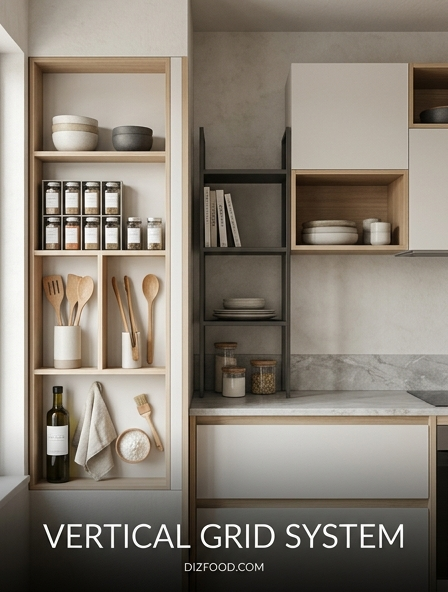
Mastering the Vertical Slice Foundation
The journey toward a professional-grade dice begins with the mastery of the vertical slice. This fundamental step involves creating a series of parallel incisions through the ingredient, establishing the first dimension of the vertical grid system. Whether you are working with a hardy root vegetable or a delicate fruit, the consistency of these initial cuts determines the final uniformity of the cube. Precision here is non-negotiable; if the slices vary in width by even a millimeter, the resulting grid will appear haphazard and amateurish.
To achieve this, the chef must maintain a steady hand and a keen eye for spacing. The knife should enter the ingredient perpendicular to the cutting board, ensuring that each slice is perfectly vertical. This phase is often referred to as "planking," as it transforms a round or irregular object into a series of uniform sheets. By mastering this foundation, you ensure that the subsequent horizontal and crosswise cuts will align perfectly, forming the backbone of all advanced knife work in the kitchen.
- Maintain a consistent distance between each vertical incision.
- Ensure the knife blade remains parallel to the previous cut.
- Use a sharp chef's knife to prevent the ingredient from tearing or slipping.
- Focus on the "flat" side of the ingredient to provide a stable base.
The Geometry of a Perfect Cube
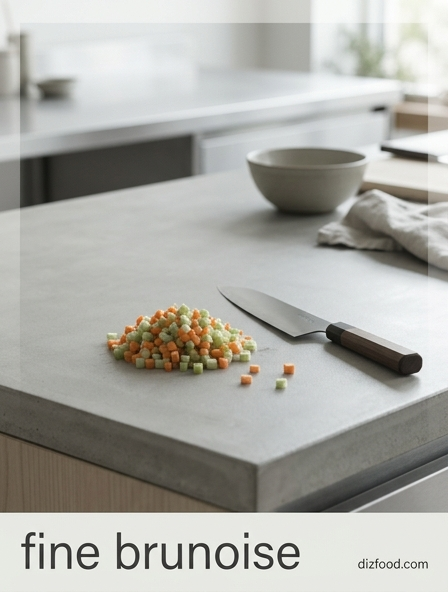
In the culinary arts, the "perfect cube" is not merely a shape but a standard of excellence that reflects a chef's technical discipline. Achieving this geometry requires an understanding of the three planes of movement: vertical, horizontal, and transverse. When these three planes intersect at precise 90-degree angles, the result is a grid-based dice that is aesthetically pleasing and functionally superior. The geometry must be respected regardless of the scale, whether executing a tiny brunoise or a larger macedoine.
To visualize this, imagine the ingredient as a 3D block on a coordinate plane. The vertical grid system acts as the guide, ensuring that every piece of food possesses equal height, width, and depth. This mathematical approach to food preparation removes the guesswork from the process. By treating the ingredient as a geometric puzzle, the cook can minimize waste and maximize the surface area available for seasoning and browning. This level of geometric precision is what separates home cooking from high-end professional gastronomy.
- Square off the ingredient to create a rectangular prism.
- Execute vertical planks of uniform thickness.
- Stack the planks and cut into even batons (sticks).
- Rotate the batons and cut crosswise into finished cubes.
Essential Tools for Grid Precision
Precision in the kitchen is largely dependent on the quality and maintenance of the tools employed. To execute a flawless vertical grid system, a chef requires more than just a sharp edge; they need a kit designed for stability and accuracy. The primary tool is a high-carbon steel chef's knife or a santoku, which provides the necessary weight and balance for straight, clean cuts. However, the supporting equipment is equally vital for maintaining the integrity of the grid.
A stable cutting surface is the second most important element. A heavy, end-grain wooden board or a high-density polyethylene board prevents the ingredient from sliding during the cutting process. Additionally, measuring tools such as rulers or specialized culinary templates can assist beginners in calibrating their eyes to standard dimensions like 1/8 inch or 1/4 inch. Without the right tools, even the most skilled hand will struggle to maintain the strict tolerances required for advanced grid work.
| Tool Name | Primary Function |
|---|---|
| Chef's Knife | Primary cutting tool for vertical and horizontal passes. |
| Bench Scraper | Moving diced ingredients without dulling the knife edge. |
| Honing Rod | Maintaining the alignment of the knife edge between tasks. |
| Damp Cloth | Placed under the board to prevent slipping and movement. |
Establishing the Horizontal Base Cut
Before any vertical grid can be established, the ingredient must be stabilized through a horizontal base cut. Most natural ingredients, such as onions, potatoes, or carrots, are inherently round or irregular, making them prone to rolling under the pressure of a knife. By removing a thin slice from one side of the ingredient, the chef creates a flat, secure base. This foundation is the secret to safety and accuracy; a stable ingredient allows for much higher pressure and precision during the subsequent vertical slices.
Once the base is established, the ingredient is "locked" to the cutting board. This allows the chef to focus entirely on the spacing of the grid rather than fighting to keep the food from moving. In professional environments, this step is also used to "square off" the ingredient, removing the rounded edges to produce a clean rectangular block. While this may seem to increase food waste, the trimmings are typically reserved for stocks or purees, ensuring that the final presentation remains uncompromisingly sharp and uniform.
Maintaining Uniformity Across Ingredients
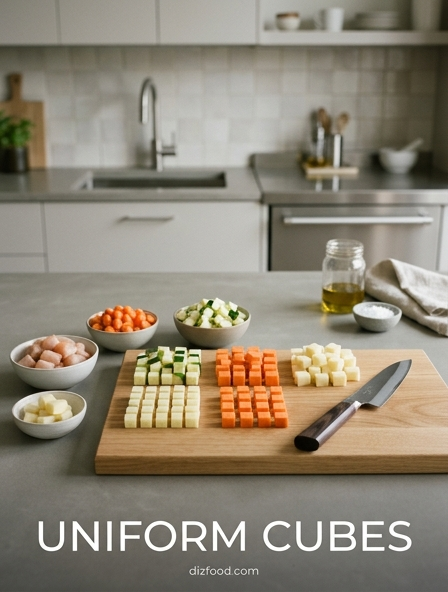
The true test of a chef's skill is the ability to maintain the same grid dimensions across different types of ingredients. A mirepoix consisting of carrots, celery, and onions should feature identical cube sizes, despite the varying textures and densities of the vegetables. Maintaining this uniformity ensures that the ingredients not only look professional when served but also behave predictably when subjected to heat. If the carrot cubes are larger than the onion cubes, the onions will likely dissolve into mush before the carrots reach the desired tenderness.
Achieving this level of consistency requires constant recalibration. Many chefs use the first cut of the first ingredient as a physical reference for everything that follows. By placing a sample cube next to the current workspace, the cook can visually verify the scale of the grid. Over time, this builds muscle memory, allowing the chef to "feel" the correct width of the slice. This commitment to uniformity is a hallmark of culinary excellence and is essential for any dish where multiple components are featured in a single bite.
Professional Hand Positioning and Safety
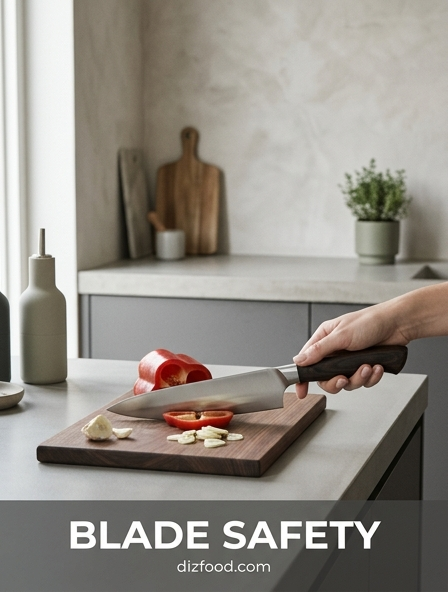
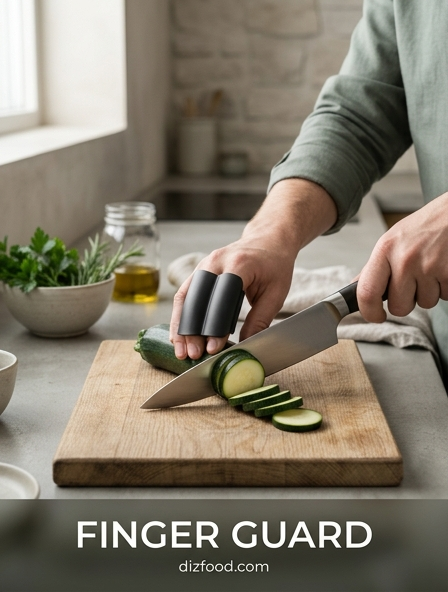
When working within a high-precision vertical grid system, hand positioning is the most critical factor for both safety and accuracy. The "claw" grip is the industry standard, where the fingertips are tucked inward and the knuckles act as a physical guide for the blade of the knife. This position serves two purposes: it protects the extremities from the sharp edge and provides a vertical surface against which the knife can rest. By maintaining contact between the knife and the knuckle, the chef can control the width of the slice with extreme precision.
As the knife moves across the grid, the "claw" hand must retreat in measured increments. Each movement of the hand determines the thickness of the next slice. Professional chefs often practice "blind" cutting, relying entirely on the tactile feedback from their knuckles to gauge the spacing. This technique allows for rapid, repetitive motions without sacrificing the integrity of the dice. Proper safety protocols not only prevent injury but actually increase the speed of production by removing the hesitation associated with an unstable grip.
- Tuck fingertips behind the first knuckle of the non-dominant hand.
- Keep the thumb tucked behind the fingers to avoid exposure.
- Rest the flat of the knife blade against the knuckles.
- Use the guide hand to "measure" the distance for each new cut.
The Impact of Precision on Cooking Times
The grid system is more than just a visual preference; it is a fundamental aspect of culinary thermodynamics. The size of a food particle dictates its surface-area-to-volume ratio, which in turn determines how quickly heat penetrates the center. When ingredients are diced into uniform cubes, they possess the same volume and surface area, meaning they will all reach the target internal temperature at exactly the same time. This predictability is vital for creating dishes with a cohesive texture and balanced flavor profile.
Inconsistent dicing leads to a phenomenon known as "uneven cooking," where smaller pieces become overcooked or burnt while larger pieces remain raw or crunchy. This is particularly problematic in quick-cooking methods like sautéing or stir-frying, where seconds matter. By adhering to a strict vertical grid system, the chef ensures that every morsel of food provides the same mouthfeel. This technical precision allows for greater control over the cooking process, enabling the chef to push the limits of texture and flavor without the risk of varied results within a single batch.
Advanced Alignment for Large Batch Prep
In high-volume commercial kitchens, efficiency is just as important as precision. To maintain a vertical grid system during large batch preparation, chefs utilize advanced alignment techniques such as stacking and bundling. Once the initial "planks" are cut, they are stacked on top of one another and cut simultaneously into batons. These batons are then grouped together and cut crosswise into cubes. This "stacking" method significantly reduces the number of knife strokes required, allowing a chef to produce pounds of perfectly diced vegetables in minutes.
However, stacking requires a high level of knife control. If the stack is too high or the ingredients are too slippery, the grid will shift, resulting in slanted or uneven cuts. The chef must apply firm, downward pressure with the guide hand to keep the layers aligned. For particularly difficult ingredients, such as bell peppers or leeks, the orientation of the skin or grain must be considered to prevent the knife from sliding. Mastering these alignment strategies is essential for anyone looking to transition from home cooking to professional-level production speeds.
Refining Your Knife Stroke for Accuracy
The mechanical action of the knife stroke is the final variable in the grid dicing equation. There are two primary motions used in precision cutting: the rocking motion and the push-and-pull stroke. For the vertical grid system, the push-cut is often preferred because it offers the most control over the verticality of the blade. In a push-cut, the knife moves forward and down simultaneously, slicing through the fibers of the food cleanly without crushing them. This preserves the sharp edges of the cube, which is essential for high-end presentation.
Refining this stroke involves minimizing unnecessary movement. The tip of the knife should rarely leave the cutting board for certain techniques, while for others, a clean vertical drop is required. The chef must also ensure that the knife is sharp enough to require minimal downward pressure; forcing a dull blade through an ingredient often causes the knife to veer off-course, ruining the symmetry of the grid. By focusing on a fluid, rhythmic stroke, the chef can maintain a high degree of accuracy over long periods of prep work without experiencing fatigue or loss of focus.
Elevating Plate Aesthetics with Grid Dicing
The ultimate goal of mastering the vertical grid system is to elevate the visual appeal of the final dish. In fine dining, the symmetry of a perfectly executed dice conveys a message of care, professionalism, and attention to detail. When cubes of vibrant vegetables are arranged on a plate, they create a sense of order and sophisticated geometry that draws the eye. This aesthetic precision suggests to the diner that if the chef has taken such care with the shape of the vegetables, they have likely taken equal care with the flavors and sourcing.
Beyond the individual components, grid dicing allows for creative plating techniques. Uniform cubes can be arranged in mosaic patterns, stacked into towers, or scattered with intentional randomness to create a "confetti" effect. The contrast of sharp corners and flat planes catches the light differently than irregular chunks, making the colors appear more vibrant. Whether it is a simple garnish or the focal point of a salad, the precision of the grid transforms ordinary ingredients into edible art, proving that technical mastery is the foundation of culinary creativity.

Comments