
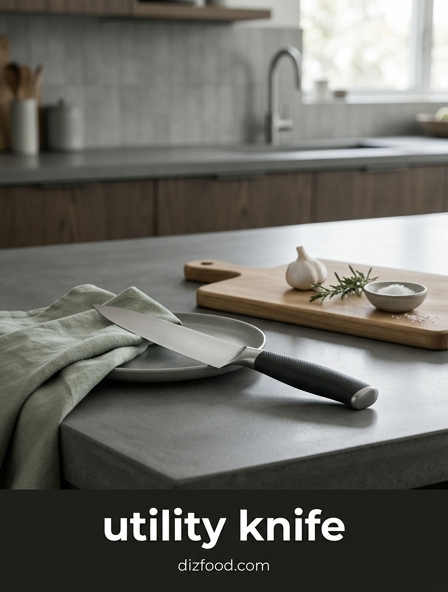
Understanding the Utility Knife Anatomy
The utility knife serves as the essential middle ground in a culinary cutlery set, bridging the gap between the heavy-duty chef's knife and the diminutive paring knife. Typically featuring a blade length between four and seven inches, its profile is significantly narrower than a primary cook's knife, allowing for decreased surface friction during use. The anatomy consists of several key components that dictate its versatility and performance in high-precision tasks.
- The Point: A sharp, tapered tip designed for piercing skins and initiating intricate detail work.
- The Cutting Edge: Usually straight or slightly curved, optimized for clean draw-cuts and precise slicing.
- The Bolster: The thick junction between the handle and blade that provides balance and a safety finger guard.
- The Tang: The portion of the blade extending into the handle, which ensures structural integrity and weight distribution.
- The Spine: The unsharpened top edge, which provides stability when applying downward pressure.
Understanding these elements helps the cook leverage the knife's unique geometry. Because the blade is thinner than a chef's knife, it excels at making thin, uniform cuts through medium-sized ingredients without wedging or tearing the delicate internal structures of the produce.
Essential Grips for Enhanced Control
To maximize the efficiency of a utility knife, one must master specific gripping techniques that prioritize both leverage and finesse. Unlike larger blades that rely on weight, the utility knife demands manual guidance. The choice of grip should be dictated by the resistance of the ingredient and the required level of detail. By alternating between these styles, a cook can maintain endurance and accuracy throughout a long prep session.
- The Pinch Grip: This is the standard for most cutting tasks. The thumb and index finger "pinch" the base of the blade just past the bolster, while the remaining fingers wrap around the handle. This provides maximum lateral stability.
- The Handle Grip: Used for tasks requiring more force, such as cutting through cold blocks of cheese or dense root vegetables. All fingers wrap firmly around the handle to provide maximum torque.
- The Fingertip Guide: For extreme precision, such as removing the seeds from a chili, the index finger may rest along the spine to act as a directional guide, though this should be used cautiously to avoid slipping.
Proper hand placement minimizes the risk of fatigue. A relaxed but firm hold ensures that the blade becomes an extension of the arm, allowing for fluid movements across the cutting board without the need for excessive muscle exertion.
Mastering the Perfect Uniform Slice
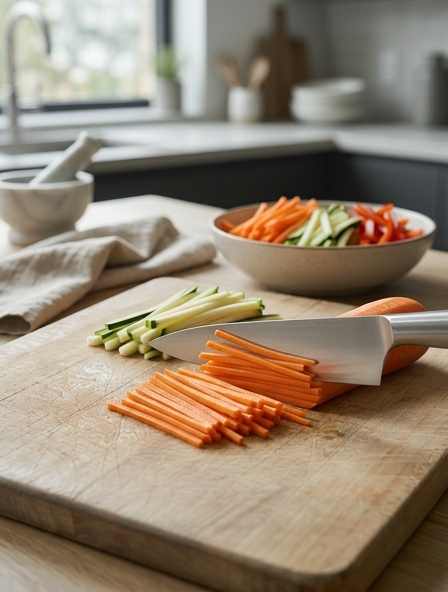
The utility knife is the premier tool for creating uniform slices, particularly when dealing with ingredients that are too large for a paring knife but too delicate for a chef's knife. Achieving uniformity is not merely about aesthetics; it ensures that food cooks at an even rate, preventing a dish from containing both overcooked and undercooked pieces. The narrow blade allows for a clean "draw-cut" motion, where the knife is pulled toward the body with minimal downward force.
| Ingredient Type | Recommended Thickness | Suggested Motion |
|---|---|---|
| Citrus Fruits | 2mm - 4mm | Sawing or Draw-cut |
| Hard Cheeses | 3mm - 5mm | Vertical Press |
| Cured Meats | 1mm - 2mm | Single Long Draw |
| Zucchini/Cucumber | 5mm - 8mm | Push-cut |
When slicing, it is vital to maintain a consistent angle. The utility knife's slim profile reduces "stiction," the tendency for wet slices to cling to the blade. By using the full length of the edge and maintaining a steady pace, you can produce professional-grade results that enhance both the flavor profile and the visual presentation of the final dish.
Navigating Tight Spaces with Nimble Bladework
One of the greatest advantages of the utility knife is its ability to operate in confined spaces where a larger blade would be cumbersome or dangerous. Its agility makes it the ideal choice for "in-hand" work or for maneuvering around complex skeletal structures in poultry and fish. When a recipe calls for removing the core of a tomato or trimming the silver skin from a tenderloin, the utility knife provides the necessary clearance and visibility to work safely.
- Coring and Pitting: The narrow tip can be inserted into the tops of strawberries or tomatoes to remove stems with minimal waste.
- Trimming Fat: The blade's flexibility allows it to follow the natural contours of meat, removing unwanted connective tissue without gouging the muscle.
- Internal Notching: Creating small incisions for stuffing herbs or garlic into roasts is safer with a mid-sized blade.
- Rib Removal: Slicing away the bitter white ribs inside bell peppers is significantly easier with the utility knife's shallow height.
By utilizing the front third of the blade, a cook can execute tight turns and intricate cuts. This nimble quality reduces the physical footprint of the prep area, making it possible to work efficiently even in crowded or small kitchen environments.
The Science of Clean Precise Cuts
The physics of a clean cut relies on the relationship between edge geometry and the cellular structure of the food. A utility knife typically features a very fine bevel, often ground to an angle of 15 to 20 degrees. When this sharp edge meets the surface of an ingredient, it severs the cell walls rather than crushing them. This is particularly important for aromatic herbs and soft-skinned produce like tomatoes or plums, where bruising can lead to rapid oxidation and flavor loss.
A dull blade requires more downward pressure, which causes the internal liquids of the ingredient to be squeezed out, resulting in a soggy cutting board and less flavorful food. Because the utility knife has less surface area on its "face" compared to a chef's knife, there is less friction and suction created during the pass. This allows the blade to glide through dense structures with significantly less resistance. Maintaining a polished, razor-sharp edge ensures that the knife performs its mechanical function of separation with surgical precision, preserving the integrity and vibrant color of the ingredients being prepared.
Strategic Dicing for Small Ingredients
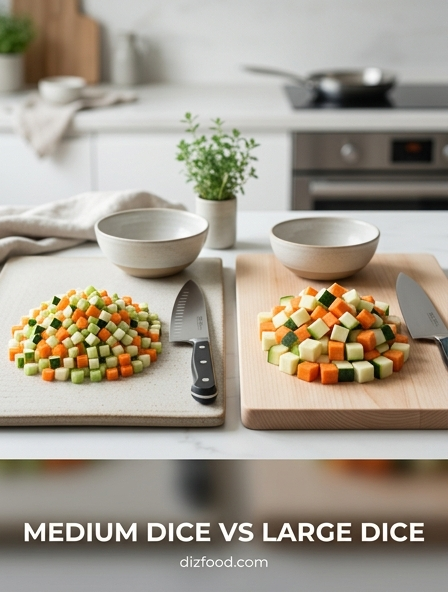
Dicing small aromatics like shallots, garlic, and ginger requires a level of control that bulky knives often lack. The utility knife is perfectly suited for this task because the cook can easily see over the top of the blade, ensuring that every cut is placed exactly where intended. Strategic dicing involves a sequence of horizontal and vertical incisions that result in a perfectly square "brunoise" or "small dice," which is essential for sauces and vinaigrettes where texture must be consistent.
- Stabilization: Slice a small piece off one side of the ingredient to create a flat, stable base on the cutting board.
- Vertical Planks: Make a series of parallel vertical cuts, keeping the ingredient held together at the root or base.
- Horizontal Shearing: Carefully make one or two horizontal cuts parallel to the board, using your palm to steady the top of the ingredient.
- The Cross-Cut: Slice perpendicularly to the initial cuts to release uniform cubes.
This systematic approach minimizes waste and ensures that every piece of the aromatic releases its flavor at the same rate during the cooking process. The utility knife's light weight allows for the rapid, repetitive motions needed for high-volume dicing without straining the wrist.
Optimizing Hand Positioning for Safety
Safety in the kitchen is fundamentally a matter of hand positioning and blade awareness. When working with a utility knife, the smaller scale of the tool can sometimes lead to a false sense of security, resulting in lapses in technique. To prevent accidents, the "non-cutting" hand must be utilized as a protective guide. This hand holds the food in place while providing a physical barrier and a directional track for the blade to follow.
- The Claw Grip: Curl the fingertips inward toward the palm, using the middle knuckles as a guide for the side of the blade.
- The Anchor: Keep the thumb tucked behind the fingers to ensure it is never in the path of the edge.
- The Bridge: When cutting an item in half, create a bridge with the thumb and fingers over the ingredient, passing the knife through the tunnel beneath.
By keeping the blade in contact with the knuckle of the guiding hand, the cook can feel the position of the knife without needing to look at it constantly. This sensory feedback is crucial for maintaining speed while ensuring that the sharp edge remains a safe distance from the fingertips at all times.
Versatile Blade Maneuvers for Delicate Produce
Delicate produce, such as ripe stone fruits, berries, and leafy greens, requires a gentle touch to avoid bruising and tearing. The utility knife is the ideal instrument for these tasks due to its balanced weight and responsive nature. For example, when "chiffonading" basil or mint, the blade can be used in a soft, rocking motion that severs the leaves without turning them black at the edges. The same principle applies when segmenting citrus or "supremining" an orange.
The pointed tip is particularly useful for decorative work or removing imperfections. You can easily "score" the skin of a duck breast or a piece of fruit by applying just enough pressure to break the surface without cutting into the flesh below. This level of nuance is difficult to achieve with larger knives. When peeling small fruits in the hand, the utility knife offers a safer alternative to the paring knife for those with larger hands, providing a more substantial handle while maintaining a short enough blade to allow for total control over the depth of the peel.
Maintaining Your Edge for Consistent Results
A utility knife is only as effective as its edge. Because this knife is often used for diverse tasks-ranging from acidic fruits to fibrous vegetables-the steel is subjected to various forms of wear and chemical stress. Regular maintenance is required to ensure the blade remains safe and efficient. A dull knife is a dangerous knife, as it is more likely to slip off the surface of the food and toward the user's fingers. Consistent care involves both daily alignment and periodic sharpening.
| Maintenance Type | Frequency | Primary Tool |
|---|---|---|
| Honing | Before every use | Ceramic or Steel Rod |
| Sharpening | Every 3-6 months | Whetstone (1000/6000 grit) | Immediately after use | Warm water and mild soap |
| Storage | Continuous | Magnetic strip or blade guard |
Honing realigns the microscopic "teeth" of the blade that bend during use, while sharpening removes metal to create a new edge. It is imperative to hand-wash utility knives, as the high heat and harsh chemicals in dishwashers can degrade the handle material and dull the fine edge through impact with other cutlery.
Transitioning Between Slicing and Dicing Tasks
Efficiency in a professional or home kitchen often depends on how quickly a cook can transition between different types of cuts. The utility knife is uniquely positioned to handle these transitions without requiring a change of tools. A cook might start by slicing a lemon for a garnish and immediately move to dicing a small shallot for a dressing. This versatility saves time and reduces the amount of equipment that needs to be cleaned at the end of the meal.
To transition effectively, one must adjust their grip and the placement of the ingredient on the cutting board. Slicing typically uses the middle and rear of the blade, while dicing and detail work utilize the tip. By mastering the "pivot," where the tip remains in contact with the board during certain cuts, the cook can maintain a high rhythm. The utility knife facilitates a seamless workflow, allowing the user to adapt to the changing needs of a recipe with a single, reliable instrument. This adaptability makes it the most reached-for tool for many chefs during the "mise en place" stage of cooking.

Comments