
Versatile Blades for Every Texture
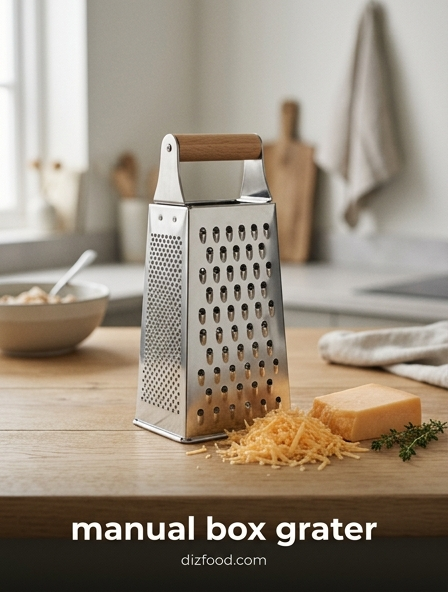
The manual box grater is a multi-functional powerhouse, offering four distinct surfaces designed to handle a wide variety of culinary tasks. Each side serves a specific purpose, allowing the cook to transition from coarse shreds to fine dustings within seconds. The variety of blade configurations ensures that whether you are working with hard vegetables or soft dairy, the tool provides the exact texture required for your recipe.
- Coarse Blade: Ideal for semi-hard cheeses, potatoes, and zucchini.
- Fine Blade: Best for citrus zest, hard cheeses like Parmesan, and chocolate.
- Slicing Blade: Perfect for creating uniform slices of cucumbers or radishes.
- Star Blade: Used for pulverizing spices or grating ginger into a fine paste.
This versatility eliminates the need for multiple specialized gadgets, making the box grater a consolidated solution for texture management. By simply rotating the grater, the user accesses different sharp-etched surfaces that maintain their edge over years of frequent use. This adaptability is essential for complex recipes that require various ingredient preparations simultaneously.
Precision Dicing Without the Bulk
While heavy food processors are often favored for high-volume tasks, the manual box grater offers a level of precision and immediacy that bulky electric appliances cannot match. For small to medium-sized dicing tasks, the grater allows the chef to control the pressure and angle, ensuring that delicate ingredients are handled with care. This manual control prevents the "mashing" effect often seen with high-speed blades that can bruise vegetables and release excess moisture.
Using the box grater for dicing involves utilizing the coarse or slicing sides to break down vegetables into manageable fragments. For example, grating a cold onion on the coarse side produces a consistent, small dice that incorporates perfectly into sauces and meatballs without the need for meticulous knife work. This method is particularly beneficial for those who want to achieve professional-grade consistency without the setup and cleanup time required by electrical machinery. The direct physical feedback through the handle allows for micro-adjustments in speed, resulting in a cleaner cut and better preservation of the vegetable's structural integrity.
The Efficiency of Manual Shredding
Manual shredding is often faster than setting up, operating, and cleaning an electric food processor. The box grater is ready for use the moment it is pulled from the cabinet, requiring no assembly or power source. For a quick weeknight dinner, the time saved during the preparation and the subsequent cleanup is significant. The efficiency of a box grater lies in its simplicity; it facilitates a rhythmic motion that processes food rapidly while allowing the cook to monitor the volume of the output directly.
- Place the grater on a stable cutting board or inside a wide bowl.
- Grip the top handle firmly to ensure the base remains stationary.
- Apply downward pressure while sliding the ingredient against the desired blade.
- Clear the interior of the grater periodically to maintain airflow and visibility.
By following these simple steps, a chef can shred a block of cheese or a bowl of carrots in under two minutes. The lack of complex parts means there are no crevices for food to become trapped in, making the transition between different ingredients seamless and hygienic during the cooking process.
Uniform Results for Even Cooking
Achieving uniformity in ingredient size is not merely about aesthetics; it is a fundamental requirement for even cooking. When pieces of vegetables or cheese are varied in size, smaller fragments may burn while larger pieces remain raw. The box grater solves this problem by providing standardized blade openings that produce consistent results every time. This consistency ensures that heat penetrates each piece at the same rate, leading to better texture and flavor development across the entire dish.
| Blade Type | Cooking Application | Texture Result |
|---|---|---|
| Coarse | Frying/Sautéing | Crispy Exterior, Tender Interior |
| Fine | Baking/Garnish | Rapid Melting, Even Distribution |
| Slicing | Pickling/Salads | Uniform Thickness, Crisp Bite |
This structural uniformity is particularly vital in dishes like hash browns or latkes, where the starch must cook evenly to create a cohesive bond. The predictable output of the manual grater allows for precise timing in the kitchen, reducing the risk of culinary errors caused by irregular ingredient preparation.
Superior Cheese Melting and Consistency
One of the most compelling reasons to use a manual box grater is the quality of shredded cheese compared to pre-packaged varieties. Commercial pre-shredded cheese is coated with anti-caking agents, such as potato starch or cellulose, to prevent the pieces from clumping in the bag. These additives interfere with the melting process, often resulting in a grainy or waxy texture. Grating cheese fresh from the block ensures that you are working with pure dairy, which melts into a smooth, creamy consistency.
Freshly grated cheese also retains more of its natural moisture and aroma. When cheese is shredded at home, the surface area is increased right before it is added to the heat, allowing the fats and proteins to react more dynamically. This leads to a superior "cheese pull" in pizzas and a more integrated flavor in sauces like Mornay or Alfredo. Furthermore, grating your own cheese is often more cost-effective, as whole blocks generally have a lower price per ounce than their pre-processed counterparts. The manual grater thus acts as an essential tool for any cook prioritizing quality ingredients and culinary performance.
Compact Design for Minimal Storage
In the modern kitchen, where counter space and cabinet storage are at a premium, the box grater stands out for its vertical efficiency. Unlike wide food processors or sets of individual hand-held graters, the box grater integrates four or more tools into a single, compact footprint. Its hollow center allows it to be stored easily over other items or tucked into a narrow corner of a pantry. Most designs feature a tapered shape that provides stability while in use but minimizes the space occupied when shelved.
The design of the box grater is a masterclass in ergonomics and spatial economy. Many models come with a detachable base or a storage container that fits directly underneath, catching the processed food and reducing the need for extra bowls. Because it is a single unit with no detachable blades to lose, it remains organized within a drawer or cabinet. This simplicity is highly valued by home cooks who prefer a clutter-free environment. The durability of its stainless steel construction means it does not require a protective case, further contributing to its status as a space-saving essential.
Quick Prep for Root Vegetables
Root vegetables, known for their density and toughness, can be challenging to prep with a knife. The manual box grater excels at breaking down these sturdy ingredients into manageable shreds or slices. For dishes like coleslaw, carrot cake, or potato rosti, the grater provides the necessary mechanical advantage to process large quantities quickly. The sharp holes of the coarse blade bite into the vegetable, requiring less physical effort than a standard chef's knife for the same volume of work.
- Potatoes: Grate for quick-cooking hash browns or pancakes.
- Carrots: Perfect for salads, muffins, or stir-fries.
- Beets: Shredded for vibrant salads or traditional borscht.
- Parsnips: Adds a sweet, shredded texture to roasted vegetable medleys.
By using a grater, the cell walls of the root vegetables are broken in a way that releases subtle juices, enhancing the overall flavor profile of the dish. This method also creates a high surface-area-to-volume ratio, which allows for faster roasting or sautéing times. For those who incorporate a high volume of vegetables into their diet, the box grater is an indispensable tool for speed and consistency.
Grating Aromatics and Hard Spices
Aromatics like ginger, garlic, and turmeric, along with hard spices such as nutmeg or cinnamon sticks, require a very fine touch to release their potent oils without leaving behind fibrous chunks. The fine-tooth side or the star-etched side of a box grater is specifically designed for this purpose. When you grate a clove of garlic or a knob of ginger, the tool creates a fine paste that distributes evenly throughout a marinade or sauce, ensuring there are no unpleasant "bites" of raw aromatic.
This application is particularly useful for spices like nutmeg, which lose their potency rapidly once ground. By using the manual grater to shave off only what is needed directly over a dish, the cook captures the full spectrum of volatile oils and fragrance. The box grater's rigid structure provides the stability needed to apply the high pressure required for hard spices, which can be difficult with smaller, flimsy hand-held rasps. This ability to handle both large vegetables and tiny spices makes the box grater a truly comprehensive kitchen instrument, bridging the gap between heavy prep and delicate finishing touches.
Sustainable Power Without Electricity
The manual box grater is an environmentally friendly choice in an increasingly electrified kitchen. It operates entirely on human power, requiring no batteries, cords, or electricity. This makes it an ideal tool for off-grid living, camping, or simply reducing one's carbon footprint. In the event of a power outage, the box grater remains fully functional, ensuring that meal preparation can continue without interruption. This independence from the power grid highlights the timeless reliability of manual kitchen tools.
Beyond its eco-friendly nature, the lack of a motor means the box grater is completely silent. This allows for food preparation at any time of day without disturbing others in the household. There are no electronic components to fail, no fuses to blow, and no planned obsolescence associated with its design. The sustainability of the box grater is also reflected in its lifespan; a high-quality stainless steel model can last for decades, whereas electric counterparts often require replacement after a few years of heavy use. Choosing manual tools is a commitment to both culinary tradition and environmental responsibility.
Durability Meets Kitchen Functionality
The construction of a manual box grater is usually centered around high-grade stainless steel, a material prized for its resistance to rust, corrosion, and staining. Unlike plastic gadgets that can crack or warp when exposed to heat or pressure, the rigid frame of a box grater is built to withstand the rigors of a professional or busy home kitchen. The blades are etched or punched into the metal, ensuring they remain sharp through thousands of cycles. This inherent durability makes it one of the most cost-effective investments a cook can make.
Functionality is further enhanced by thoughtful design elements found in modern versions. Many feature a non-slip rubberized base to prevent sliding on the countertop, and a reinforced ergonomic handle that provides a secure grip even when hands are wet. Because it is made of non-porous material, the grater does not absorb odors or bacteria, making it easy to sanitize in a dishwasher or with hot soapy water. The combination of robust materials and a simple, effective design ensures that the box grater remains a foundational tool in the culinary world, outlasting trendier but less durable kitchen innovations.


Comments