
Essential Honing Rods for Daily Edge Alignment
Maintaining a kitchen knife involves more than just periodic sharpening; it requires the daily discipline of honing. A honing rod, often referred to as a sharpening steel, does not actually remove significant metal from the blade. Instead, its primary function is to realign the microscopic "teeth" of the edge that become folded or curled during standard cutting tasks. When a blade feels dull, it is often simply out of alignment rather than truly blunt.
- Stainless Steel Rods: Best for soft European steels, providing a sturdy surface for realignment.
- Ceramic Rods: Offer a slight abrasive quality, capable of minor sharpening while honing harder Japanese steels.
- Diamond-Coated Rods: Highly abrasive tools that should be used sparingly to avoid excessive metal loss.
By using a honing rod at a consistent 15 to 20-degree angle before each use, chefs can significantly extend the interval between professional sharpening sessions. This practice ensures that the edge remains centered and upright, providing a cleaner cut and reducing the physical effort required during food preparation.
Selecting High Grit Whetstones for Precision Sharpening
The transition from a functional edge to a razor-sharp precision tool occurs within the high-grit range of whetstones. While lower grits are utilized for repairing chips and resetting the bevel, stones ranging from 3,000 to 8,000 grit are essential for refining the apex and polishing the secondary bevel. These stones feature much smaller abrasive particles, allowing for a mirror-like finish that glides through delicate proteins and vegetables without resistance.
| Grit Rating | Primary Purpose | Resulting Edge |
|---|---|---|
| 3,000 - 4,000 | Refinement | Smooth, toothy bite |
| 5,000 - 6,000 | Polishing | Mirror finish, high push-cut ability |
| 8,000+ | Ultra-finishing | Extreme sharpness for sushi/sashimi |
Choosing the right high-grit stone depends largely on the steel type. Harder steels, such as VG-10 or Blue Super, benefit most from 6,000+ grits, as they can hold the extremely fine edge. For softer German steels, stopping at 3,000 grit often provides a better "bite" for cutting through slippery tomato skins.
Leather Strops for the Ultimate Dicing Edge
After a knife has been honed and sharpened on stones, the final step for achieving peak performance is stropping. A leather strop works by removing the microscopic burr, or "wire edge," that remains after sharpening. This process ensures the edge is perfectly clean and aligned, preventing the burr from folding over and creating perceived dullness during the first few cuts of a meal.
- Apply a fine abrasive compound, such as chromium oxide, to the rough side of the leather.
- Draw the blade away from the edge at the matching sharpening angle.
- Repeat the process on the smooth side of the leather for a final polish.
Consistent stropping can maintain a "scary sharp" edge for weeks without the need for stones. It is a gentle process that favors precision over aggression, making it ideal for maintaining high-carbon steel blades. Integrating a strop into your maintenance routine bridge the gap between a standard sharp knife and a professional-grade culinary instrument.
The Role of Cutting Board Materials in Blade Retention
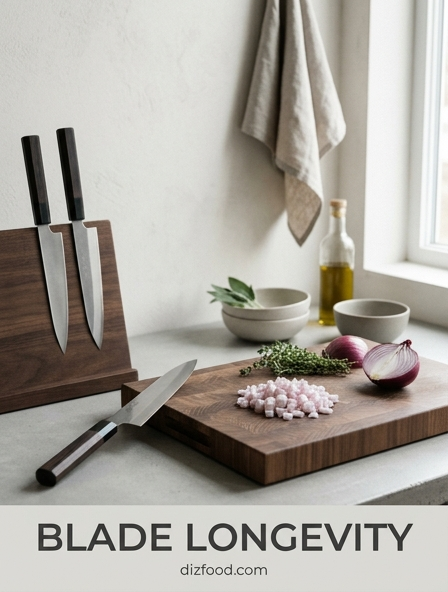
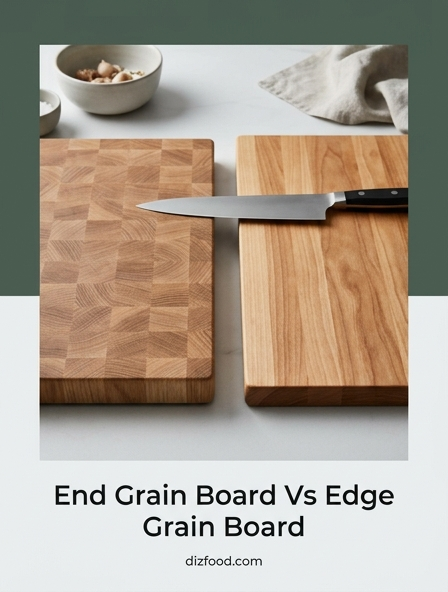
The surface upon which a knife strikes is just as important for blade longevity as the steel itself. Hard surfaces like glass, granite, or ceramic are the primary enemies of a sharp edge, as they do not "give" when the blade makes contact, causing immediate rolling or chipping of the apex. For maximum retention, a cutting board must be softer than the knife's steel to absorb the impact energy of each stroke.
- End-Grain Wood: The gold standard, as the blade slides between wood fibers rather than severing them.
- High-Density Plastic (HDPE): Affordable and edge-friendly, though prone to deep scarring over time.
- Rubber Boards: Favored in professional Japanese kitchens for their exceptional grip and gentle impact.
Choosing a soft, high-quality wood like maple, walnut, or cherry ensures that the knife's edge remains sharp for much longer. Additionally, avoiding bamboo-which contains high levels of silica-is recommended, as the silica acts as a natural abrasive that can dull even the hardest specialized steels prematurely.
Safe Storage Solutions to Prevent Edge Chipping
Proper storage is a critical factor in preserving the integrity of a kitchen knife's edge. When knives are stored loosely in a drawer, they frequently collide with other utensils, leading to microscopic nicks and significant chipping. These impacts can ruin a finely tuned edge in seconds, necessitating aggressive sharpening to repair the damage. Effective storage solutions isolate each blade, ensuring that the sharpened edge never touches a hard surface.
- Magnetic Strips: Mounted on walls, these save space and keep blades visible and separated.
- Slotted Knife Blocks: Traditional and effective, provided they are cleaned regularly to prevent dust buildup.
- In-Drawer Organizers: Horizontal slots that keep knives secure while tucked away safely from fingers.
When selecting a storage method, consider the accessibility and the material of the holder. Magnetic strips should be used carefully to avoid "clacking" the edge against the metal; it is best to land the spine first and then pivot the blade down. By investing in dedicated storage, you ensure that the effort spent sharpening is not wasted by accidental contact.
Comparing Manual and Electric Knife Sharpeners
Choosing between manual and electric sharpeners often depends on the user's skill level and the value of the knives being maintained. Electric sharpeners offer unmatched speed and convenience, using motorized abrasive wheels to grind a new edge in minutes. However, they can be aggressive, removing more metal than necessary and sometimes generating heat that can temper the steel if not used with caution.
| Feature | Manual Pull-Through | Electric Station |
|---|---|---|
| Ease of Use | High | Very High |
| Metal Removal | Low to Medium | High |
| Angle Control | Fixed | Fixed/Adjustable |
Manual pull-through sharpeners are excellent for quick touch-ups on inexpensive knives but often lack the precision required for high-end cutlery. In contrast, premium electric models provide multi-stage sharpening, including stropping disks, which can achieve a very serviceable edge for the home cook. For those with expensive, thin-edged Japanese knives, manual whetstones remain the preferred choice to ensure total control over the geometry.
Cleaning Tools to Avoid Micro-Corrosion
The longevity of a blade's edge is not only affected by physical impact but also by chemical degradation. Micro-corrosion can occur at the very tip of the edge, where the steel is thinnest, leading to a loss of sharpness even if the knife is not being used. Preventing this requires diligent cleaning habits and the right tools. The heat and harsh detergents of a dishwasher are the primary culprits of edge degradation and handle damage.
- Use warm, soapy water and a soft sponge immediately after use.
- Avoid abrasive scouring pads that can scratch the finish and weaken the edge.
- Thoroughly dry the knife with a clean microfiber cloth to remove all moisture.
Acidic foods, such as lemons or onions, can eat away at high-carbon steel if left on the blade for even a short duration. By adopting a "wipe-as-you-go" philosophy and using soft cleaning implements, you maintain the chemical stability of the steel. This prevents the formation of rust and the dulling effects of oxidation on the apex.
Angle Guides for Consistent Sharpening Results
The most difficult aspect of sharpening a knife on a whetstone is maintaining a constant angle throughout the entire stroke. Even a slight wobble can result in a rounded edge rather than a crisp, clean bevel. Angle guides are invaluable tools for both beginners and experienced sharpeners, providing a physical reference point to ensure the blade meets the stone at the intended degree, typically between 15 and 20 degrees.
- Clip-on Guides: Attach directly to the spine of the knife to set the height above the stone.
- Pyramid Blocks: Sit on the stone's surface to help the user visualize the correct starting angle.
- Digital Protractors: Used to calibrate adjustable sharpening systems for absolute precision.
Consistent angles are the secret to a long-lasting edge. When the bevel is flat and uniform, the knife performs predictably and is easier to hone. Over time, using guides helps develop the muscle memory necessary to eventually sharpen freehand, ensuring that every session results in a sharp, professional-grade finish without the guesswork.
Lubricants and Oils for Stone Maintenance
Using the correct lubricant is essential for the health of both your sharpening stones and your knives. Lubricants serve two main purposes: reducing friction-induced heat and floating "swarf"-the tiny particles of metal and stone grit-away from the surface. Without proper lubrication, the pores of the stone can become "loaded" or clogged, rendering the abrasive surface ineffective and potentially scratching the blade's face.
- Honing Oil: A food-grade mineral oil specifically designed for oil stones like Arkansas or India stones.
- Water: The standard lubricant for Japanese water stones, requiring a soak or a splash before use.
- Soapy Water: Sometimes used to further reduce surface tension and keep stones clean during long sessions.
It is crucial never to mix lubricants; an oil-soaked stone will no longer absorb water, and a water stone can be ruined by oil. Proper maintenance includes flattening the stone after use and ensuring it is completely dry before storage. Using the right fluid ensures a smooth sharpening action and protects the longevity of your investment.
Protective Sheaths for Long Term Knife Health
For knives that are not stored in a block or on a magnetic strip, protective sheaths are non-negotiable. Often called "sayas" in Japanese tradition, these covers protect the edge from dulling against other objects and ensure the safety of the user when reaching into a kit or drawer. They are particularly important for professional chefs who transport their tools between different locations, where movement can cause significant blade friction.
- Choose a sheath made of wood, heavy-duty plastic, or leather.
- Ensure the interior is clean and free of debris that could scratch the blade.
- Check that the fit is secure to prevent the knife from sliding out unexpectedly.
Wooden sayas are often preferred for high-carbon knives as they allow for some breathability, reducing the risk of moisture being trapped against the steel. Plastic guards are durable and easy to sanitize, making them a practical choice for high-volume environments. By encasing the blade when it is not in use, you provide a final layer of defense against the environment, preserving the sharpened edge for its next culinary task.

Comments