
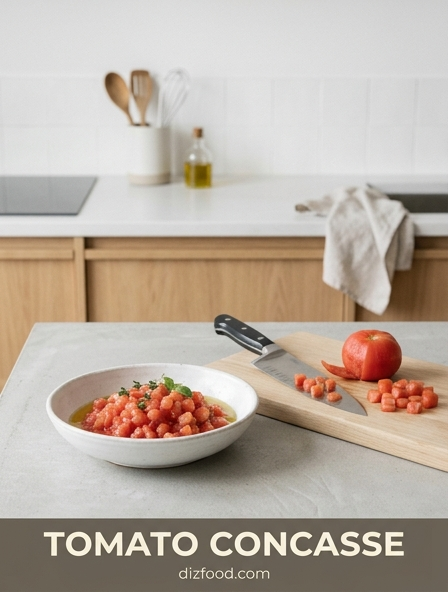
Essentials of Tomato Concassé
Tomato concassé is a foundational French culinary technique that involves peeling, seeding, and dicing tomatoes into small, uniform pieces. Derived from the French word "concasser," which means to crush or grind, this method is prized for its ability to produce a refined ingredient that is free from the distractions of tough skins and watery seeds. By focusing solely on the fleshy walls of the tomato, chefs can incorporate vibrant color and concentrated flavor into sophisticated dishes without compromising the structural integrity or clarity of a sauce.
The process is considered a mark of professional skill, as it requires precision and a deep understanding of heat application. It is not merely about dicing a vegetable; it is about refining it to its purest form. This technique is ubiquitous in high-end kitchens where the aesthetics of a plate are as important as the taste. When executed correctly, concassé serves as the perfect base for delicate salsas, garnishes for clear soups, and the structural heart of a classic pomodoro or mother sauce. Understanding the core principles of the concassé ensures that every subsequent step in the cooking process is built upon a high-quality, standardized foundation.
Selecting the Best Tomato Varieties
The success of a tomato concassé begins with the selection of the fruit. Not all tomatoes are created equal when it comes to the demands of blanching and dicing. The ideal candidate must possess thick flesh and a relatively low water content to ensure that the resulting cubes hold their shape during service. Overly ripe or heirloom varieties, while flavorful, often contain too many seeds and thin walls, which can lead to a mushy consistency that fails to meet professional standards.
- Roma (Plum) Tomatoes: These are the industry standard for concassé due to their oblong shape, high meat-to-seed ratio, and sturdy cellular structure.
- Beefsteak Tomatoes: Suitable for larger batches, though they require more work to remove the extensive seed cavities found in their larger frames.
- Vine-Ripened Tomatoes: Excellent for flavor, provided they are firm to the touch; they offer a superior aromatic profile for cold applications.
When selecting tomatoes, chefs look for fruit that is heavy for its size and free of major blemishes. The skin should be taut and the color a vibrant, deep red, indicating that the sugars and acids are perfectly balanced for the intended dish.
Essential Tools for Precision Dicing
Preparing tomato concassé requires a specific set of tools to ensure efficiency and safety throughout the multi-stage process. Using the wrong equipment can lead to bruised flesh or uneven cuts, which undermines the purpose of the technique. High-quality steel is necessary for the initial scoring and the final dicing, while heat-resistant tools are needed for the blanching phase.
| Tool Name | Primary Function |
|---|---|
| Paring Knife | Used for scoring the "X" on the bottom and removing the stem scar. |
| Chef's Knife | Provides the weight and edge length for uniform, precise dicing. |
| Slotted Spoon | Safely transfers tomatoes between boiling water and the ice bath. |
| Stainless Steel Pot | Used for boiling the water during the blanching stage. |
Beyond these, a stable cutting board and several clean bowls for separating the usable flesh from the discarded seeds and skins are vital. Maintenance of the knife edge is perhaps the most critical factor; a dull blade will crush the tomato's delicate cell walls rather than slicing through them cleanly, resulting in a loss of juice and a ragged appearance.
Mastering the Blanching Process
Blanching is the thermal process used to loosen the tomato skin without actually cooking the interior flesh. To begin, a small "X" is scored into the bottom of each tomato, just deep enough to pierce the skin. This provides a starting point for the heat to penetrate and the skin to pull away. The tomatoes are then submerged into a pot of rapidly boiling water. This stage is incredibly brief, typically lasting between fifteen and thirty seconds depending on the ripeness and size of the tomatoes.
Timing is the most critical element of blanching. If the tomatoes remain in the hot water for too long, they will begin to soften and develop a cooked flavor, which ruins the fresh, crisp quality required for a true concassé. Conversely, if the time is too short, the skin will remain firmly attached to the flesh, making peeling difficult and causing the fruit to tear. Watching for the edges of the scored "X" to begin curling outward is the visual cue that the tomato is ready to be immediately removed and shocked in cold water.
The Importance of the Ice Bath
The ice bath, or "shocking" stage, is the essential counterpart to blanching. Immediately after the tomatoes are removed from the boiling water, they must be plunged into a bowl filled with cold water and ice. This sudden drop in temperature serves two primary functions: it halts the residual cooking process instantly and creates a thermal shock that further loosens the skin from the underlying flesh. Without this step, the heat trapped inside the tomato would continue to soften the tissue, resulting in a texture more akin to stewed tomatoes than fresh concassé.
A properly executed ice bath preserves the vibrant red color of the fruit by stopping enzymatic activity that leads to browning or dullness. The tomatoes should only stay in the ice bath until they are cool to the touch. Leaving them submerged for an extended period can lead to waterlogging, which dilutes the natural sugars and acids within the tomato. Once chilled, the tomatoes are removed and patted dry, preparing them for the delicate work of peeling and seeding. This contrast of extreme temperatures is what allows for the effortless removal of the skin while maintaining a "raw" culinary profile.
Efficient Peeling and Seeding Techniques
Once the tomatoes have been shocked and cooled, the process moves toward removing the non-essential components. The goal is to maximize yield while ensuring that no skin or seeds remain in the final product. Efficiency in this stage is achieved through a systematic approach that minimizes handling of the fruit to prevent bruising. Using a paring knife or even your fingers, follow these steps:
- Gently pull back the loosened skin starting from the scored "X" at the base.
- Slice the tomato in half along the equator to expose the seed cavities.
- Use a small spoon or your thumb to scoop out the gelatinous seeds and watery locules.
- Place the cleaned tomato "petals" flat on the cutting board, skin-side up or down, depending on your dicing preference.
The discarded seeds and skins do not necessarily have to go to waste; they can be reserved for flavoring stocks or making tomato water. However, for the purpose of the concassé, only the firm, meaty walls of the tomato are retained. This process ensures that the finished dice will be pure in color and provide a consistent, clean mouthfeel in the final dish.
Achieving Uniform Dice Consistency
Uniformity is the hallmark of professional tomato concassé. In culinary schools and high-end kitchens, the standard size for a small dice (brunoise) is often one-eighth to one-quarter of an inch. To achieve this, the cleaned tomato petals must be flattened slightly and cut into even strips, known as julienne. These strips are then gathered together and sliced crosswise into perfect cubes. The precision of these cuts ensures that the tomato pieces cook at the same rate and provide an aesthetically pleasing appearance when used as a garnish.
Maintaining a sharp knife is paramount during this stage. If the blade is not sharp enough, it will slide off the slick inner surface of the tomato or crush the flesh rather than cutting it. The chef must use a fluid, rocking motion with the knife, keeping the tip on the board to maintain control. Accuracy in dicing distinguishes a rustic preparation from a refined one. When every cube is identical, the light reflects off the surfaces evenly, and the distribution of flavor within a sauce or topping becomes perfectly balanced, elevating the overall quality of the culinary presentation.
Enhancing Sauce Texture and Clarity
One of the primary reasons chefs utilize tomato concassé is to control the texture and clarity of their sauces. Traditional whole-tomato sauces often contain bits of skin that can become tough and curl into unpleasant shards during the simmering process. Additionally, the seeds and the surrounding jelly are highly acidic and contain a significant amount of moisture, which can thin out a sauce or add a bitter aftertaste. By using concassé, the chef removes these variables entirely, leaving only the flavorful solids.
In a refined sauce, such as a beurre blanc with tomato or a light consommé garnish, the absence of seeds and skins ensures a smooth, luxurious mouthfeel. The clarity of a sauce is also preserved; without the cloudy juice from the seed cavities, the sauce remains translucent and vibrant. This technique is particularly important in Mediterranean cuisine, where the purity of the ingredients is meant to shine. The result is a sauce that looks cleaner, tastes more concentrated, and exhibits a professional level of refinement that cannot be achieved with roughly chopped, unprocessed tomatoes.
Preserving Freshness and Flavor
Tomato concassé is best used immediately after preparation to take advantage of its peak freshness. Because the cellular structure of the tomato has been compromised through blanching and dicing, it is more susceptible to oxidation and moisture loss. If the concassé must be prepared in advance, it should be stored in a single layer in a shallow container, covered tightly with plastic wrap, and kept at a cool room temperature if it will be used within the hour. For longer storage, refrigeration is necessary, though it can slightly dull the aromatic compounds of the fruit.
To prevent the dice from becoming waterlogged or soggy, it is often beneficial to place the concassé in a fine-mesh strainer over a bowl for a few minutes before service. This allows any excess juice to drain away, ensuring that the tomatoes do not bleed into the other components of the dish. Seasoning should generally be reserved until the final moment of assembly. Adding salt too early will draw out more moisture through osmosis, causing the cubes to lose their structural integrity and become soft. By managing these environmental factors, a chef ensures the concassé remains a bright, firm, and flavorful highlight.
Culinary Applications for Refined Sauces
The versatility of tomato concassé makes it an indispensable component in a wide range of culinary applications. Its clean flavor and precise shape allow it to blend seamlessly into both hot and cold preparations. Because it lacks the bitterness of seeds and the toughness of skins, it is often the preferred choice for sauces that require a high degree of elegance and balance. It acts as both a flavor enhancer and a visual garnish, providing a pop of red that signals freshness to the diner.
- Classic Bruschetta: Provides a firm, non-soggy topping when mixed with basil, garlic, and olive oil.
- Pasta Sauces: Used in "Pasta Checca" or high-end marinara where a chunky but refined texture is desired.
- Garnishes: Added to finished soups like Gazpacho or clear consommés for color and bite.
- Beurre Blanc variations: Stirred into butter sauces at the last minute to add acidity and visual interest.
Whether used as the base for a sophisticated salsa or folded into a delicate seafood ragout, tomato concassé elevates the dish. It demonstrates a commitment to detail that defines professional cooking, turning a simple garden vegetable into a precise culinary element.




Comments