
Transform your culinary workspace by swapping that bulky, dust-collecting knife block for a sleek, wall-mounted solution. Organizing your kitchen with a magnetic knife strip is the ultimate way to reclaim counter space while keeping your most-used chef's knives safely within arm's reach. Not only does this modern storage method prevent blade dulling by keeping edges separate, but it also creates a clean, professional aesthetic that elevates your kitchen's design. It's an efficient, hygienic, and visually appealing choice for any home cook looking to declutter. To find the perfect storage fit for your lifestyle, consider the benefits of a knife roll vs. magnetic knife strip.
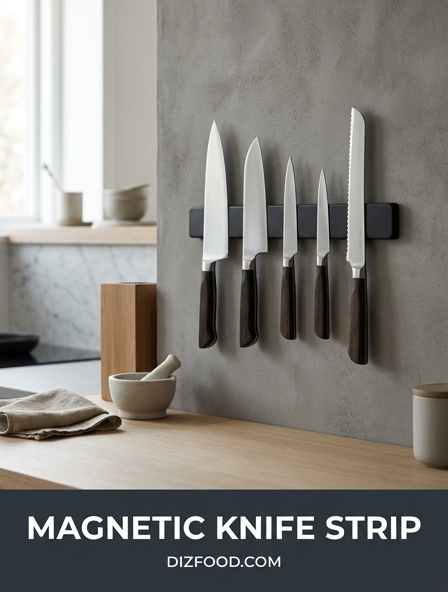
Maximizing Counter Space with Magnetic Strips
In modern kitchen design, counter space is often the most valuable real estate available. Traditional knife blocks, while functional, occupy significant surface area that could otherwise be used for food preparation, appliances, or decorative elements. By transitioning to a magnetic knife strip, you effectively move your essential cutting tools from the horizontal plane to the vertical plane. This shift opens up the workspace, making even the smallest apartment kitchens feel more expansive and organized.
Utilizing wall-mounted storage allows for a cleaner aesthetic and reduces the physical clutter that can accumulate during complex meal preparation. When the counter is clear of bulky storage containers, cleaning becomes a much faster process, as there are fewer objects to move or wipe around. Furthermore, the magnetic strip can be installed in underutilized areas, such as:
- The space between the backsplash and upper cabinetry.
- The side of a kitchen island or pantry.
- Near the primary food preparation zone for immediate access.
Ultimately, reclaiming these inches of countertop provides a more functional environment where the cook can move freely without bumping into oversized storage units.
Benefits of Magnetic Knife Storage
Magnetic knife storage offers a variety of advantages that extend beyond mere organization. One of the primary benefits is improved hygiene. Traditional knife blocks feature deep, narrow slots that are notoriously difficult to clean and can harbor moisture, dust, and food particles over time. In contrast, a magnetic strip is a flat, exposed surface that can be sanitized with a simple wipe, ensuring that your blades remain in a sterile environment between uses.
In addition to cleanliness, magnetic strips provide superior visibility. When knives are tucked into a block, only the handles are visible, often leading to "guesswork" when searching for a specific blade. A magnetic holder displays the entire profile of the tool, allowing the chef to identify the exact knife needed at a glance. This accessibility is complemented by the following features:
- Universal fit for any blade size or shape.
- Reduced risk of moisture entrapment on the blade.
- Ease of reach for high-frequency kitchen tasks.
By keeping tools in plain sight and within easy reach, the cooking process becomes more fluid and less interrupted by the search for the right equipment.
Choosing the Right Magnetic Strip for Your Kitchen
Selecting the ideal magnetic strip requires balancing aesthetic preferences with functional requirements. The most common materials are stainless steel and wood. Stainless steel strips offer a sleek, industrial look and are highly durable, making them a favorite for professional environments. However, wood-encased strips are increasingly popular for home kitchens because the soft exterior provides a gentler contact point for delicate knife edges, preventing potential scratches on high-end cutlery.
Beyond material, the strength of the magnet is the most critical factor. High-quality strips typically utilize neodymium magnets, which provide a powerful pull capable of holding heavy cleavers securely. It is also important to consider the length of the strip relative to your knife collection. A strip that is too short will result in crowded blades, increasing the risk of accidental nicks when reaching for a tool. When evaluating options, consider the following specifications:
| Material Type | Primary Advantage | Best For |
|---|---|---|
| Stainless Steel | Easy to sanitize | Modern kitchens |
| Walnut or Oak | Blade protection | Premium forged knives |
| Silicone Coated | Non-slip grip | Humid environments |
Installation Tips for Wall Mounted Knife Holders
Proper installation is essential for both the functionality and safety of a magnetic knife strip. The first step is identifying a location that is convenient but out of the main traffic flow to prevent accidental bumps. Ideally, the strip should be mounted at a height that is easily accessible to the primary cook but safely out of the reach of children. Use a level to ensure the strip is perfectly horizontal; a tilted strip can cause heavier knives to slide or shift over time due to gravity.
Most magnetic strips come with mounting hardware, such as screws and wall anchors. If you are mounting the strip onto a tile backsplash, you will need a diamond-tipped drill bit to avoid cracking the ceramic or stone. For those in rental properties where drilling is not permitted, high-strength adhesive tapes are an alternative, though they should be rated for the weight of the knives and the heat of a kitchen. Always check the weight capacity of the holder before loading it with your heaviest tools to ensure the installation remains secure for years of daily use.
Improving Dicing Efficiency with Accessible Blades
Efficiency in the kitchen is often a matter of seconds and fluid motion. When a chef is engaged in "mise en place," the ability to switch between a chef's knife, a paring knife, and a serrated blade without breaking rhythm is crucial. Magnetic strips facilitate this by placing the tools exactly where the hand naturally reaches. Instead of turning away from the cutting board to fumble with a drawer or a block, the user can simply pluck the necessary tool from the wall.
This accessibility encourages the use of the correct tool for each specific task, which in turn improves the quality of the dicing and chopping. When tools are hidden, a cook might be tempted to use a dull or inappropriate knife simply because it is the one currently on the counter. With an organized magnetic strip, the workflow is optimized through:
- Logical arrangement by size or frequency of use.
- Immediate visual confirmation of tool availability.
- One-handed retrieval and replacement.
By streamlining these micro-movements, the overall time spent on food preparation is significantly reduced, allowing more focus on the culinary technique itself.
Comparing Magnetic Strips to Traditional Knife Blocks
When deciding between a magnetic strip and a traditional block, the choice often comes down to a trade-off between tradition and modern utility. Traditional blocks are often sold as part of a set, providing a cohesive look but limiting the user to a specific number and type of knives. If you purchase a new knife that doesn't fit the pre-cut slots, the block becomes obsolete or requires additional storage solutions. Magnetic strips, however, are infinitely adaptable to any collection.
The comparison below highlights the key differences between these two common storage methods:
| Feature | Magnetic Strip | Traditional Block |
|---|---|---|
| Space Usage | Vertical (Zero counter space) | Horizontal (Large footprint) |
| Hygiene | High (Fully washable) | Moderate (Hidden crevices) |
| Flexibility | Universal for all metal tools | Limited to slot sizes |
| Blade Visibility | Full blade exposed | Handle only |
While blocks may offer a classic aesthetic, the magnetic strip provides a more versatile and sanitary solution for the evolving needs of a busy kitchen.
Safety Advantages of Elevated Knife Storage
Safety is a paramount concern in any kitchen, especially those with children or pets. Storing knives in drawers is hazardous, as reaching into a cluttered drawer can lead to accidental cuts from exposed edges. Similarly, traditional blocks can be easily tipped over or reached by small hands on a low countertop. Elevating knives onto a wall-mounted magnetic strip significantly mitigates these risks by placing sharp edges high above the work surface.
Furthermore, because the knives are stored with the blades flat against the wall, the sharp edges are not pointing outward toward the user. This "flat-to-wall" orientation ensures that even if someone were to brush against the strip, the risk of injury is minimized. To further enhance safety, follow these placement guidelines:
- Mount the strip away from the very edge of the counter.
- Place the strip away from high-heat zones like the stovetop to prevent the handles from becoming hot.
- Ensure the magnet is strong enough that knives do not wobble when the wall vibrates from nearby appliance use.
By keeping the blades visible and elevated, you create a controlled environment where sharp tools are respected and safely managed.
Protecting Your Dicing Tools from Blade Wear
High-quality kitchen knives are an investment that requires proper care to maintain their edge. One of the most common causes of blade dulling is improper storage. In a drawer, knives clatter against one another, leading to microscopic chips and rolled edges. Even in a wooden block, the act of sliding the blade in and out can cause friction against the edge if not done carefully. A magnetic strip eliminates this "edge-on-surface" contact.
When using a magnetic holder, the knife is typically held by the flat of the blade rather than the edge. To maximize the lifespan of your tools, it is important to use the correct technique when removing a knife: twist the handle so the spine of the knife leaves the magnet first, rather than pulling the edge across the surface. This prevents the magnet from exerting lateral force on the delicate cutting edge. Additionally, consider these protection tips:
- Choose a wood-covered magnetic strip for extra-soft contact.
- Ensure knives are perfectly dry to prevent magnetic-induced oxidation.
- Space knives adequately to prevent handles from knocking into one another.
Decluttering Your Workspace for Better Food Prep
A cluttered kitchen leads to a cluttered mind, which can sap the joy out of cooking. The visual noise of numerous gadgets, containers, and blocks on a countertop creates a cramped atmosphere that hinders creativity and speed. Transitioning to a magnetic knife strip is a foundational step in the "minimalist kitchen" movement. By removing the bulky knife block, you open up a significant area of the primary prep zone, allowing for larger cutting boards and more organized ingredient bowls.
This decluttering process also has ergonomic benefits. With a clear counter, you have more room to position your body correctly and move your arms without restriction. This is particularly important when performing repetitive tasks like dicing large quantities of vegetables. A clean workspace allows for better "mise en place," where every ingredient has its place, and the tools are tucked away but instantly accessible. The result is a more professional, calm, and efficient cooking environment that encourages home cooks to tackle more ambitious recipes with confidence and ease.
Maintaining Your Magnetic Knife Strip and Cutlery
To ensure the longevity of both your magnetic strip and your cutlery, a simple maintenance routine is required. The strip itself should be wiped down weekly with a damp cloth and a mild detergent to remove any airborne grease or kitchen dust that may have settled on it. For stainless steel strips, a specialized cleaner can be used to maintain the luster and prevent fingerprints. If you use a wooden strip, applying a food-safe mineral oil every few months will prevent the wood from drying out or cracking.
Regarding the cutlery, the most important rule for magnetic storage is to never place a wet knife on the strip. Moisture trapped between the metal blade and the magnet can lead to localized corrosion or "pitting," even on stainless steel. Always hand-dry your knives thoroughly after washing. Periodically check the mounting screws of the strip to ensure they haven't loosened over time due to the repetitive pull of removing knives. By following these basic steps, your storage system will remain safe, hygienic, and aesthetically pleasing for the long term.

Comments