
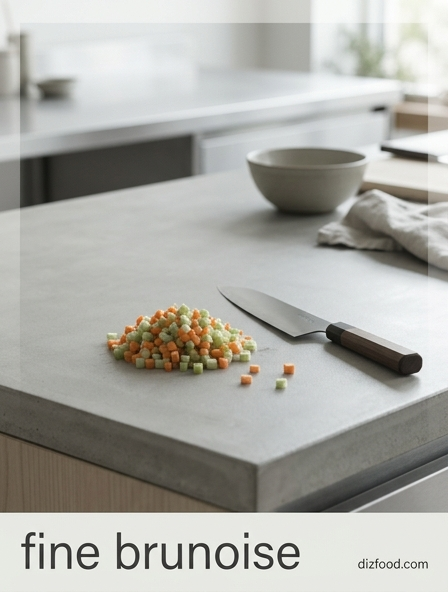
The Foundation of Culinary Precision
The culinary arts are built upon a bedrock of fundamental knife skills, with the fine brunoise representing the pinnacle of precision. This technique is more than just a method for cutting vegetables; it is a discipline that dictates the texture, visual appeal, and flavor profile of a dish. In high-end gastronomy, consistency is the hallmark of a professional. When every cube is identical, the ingredient cooks at an even rate, ensuring that no single piece is overdone or crunchy. This level of detail is essential for creating sophisticated sauces, consommés, and garnishes where subtlety is paramount.
- Establishes a uniform surface area for even heat distribution.
- Enhances the aesthetic elegance of modern plating.
- Maximizes the release of aromatic compounds in mirepoix.
- Demonstrates a chef's technical proficiency and attention to detail.
Mastering the fine brunoise requires patience and a deep understanding of vegetable anatomy. By squaring off a carrot or celery root, the chef creates a stable base, allowing for the thin longitudinal slices known as the fine julienne. From there, the rhythmic motion of the knife transforms these strands into microscopic cubes, setting the stage for culinary excellence.
Selecting the Ultimate Blade for Fine Detail
To achieve a fine brunoise of 1.5 millimeters, the choice of cutlery is non-negotiable. A chef cannot rely on a dull or overly heavy blade to execute such delicate work. The ideal knife must possess a thin spine and a narrow edge angle, typically between 9 and 12 degrees. High-carbon stainless steel or Damascus steel is often preferred for their ability to maintain a "scary sharp" edge over long periods of preparation. The weight distribution must be balanced, allowing the knife to feel like an extension of the hand rather than a separate tool.
| Knife Type | Ideal Use | Key Advantage |
|---|---|---|
| Japanese Gyuto | General precision slicing | Thinner blade profile |
| Santoku | Push-cutting vegetables | Flat edge for clean contact |
| Petty Knife | Small, intricate produce | Exceptional maneuverability |
The handle ergonomics also play a vital role. A traditional Wa-handle or a modern Western bolster should provide a secure grip, preventing slippage during high-speed repetitive motions. Ultimately, the blade must be capable of gliding through cell walls without bruising the produce, preserving the vibrant colors and essential juices within.
Anatomy of the Perfect Micro-Dice
The fine brunoise is strictly defined by its dimensions, typically measuring 1.5mm x 1.5mm x 1.5mm (approximately 1/16th of an inch). This is a step down in size from the standard brunoise, which measures 3mm. Achieving this level of miniaturization requires a methodical breakdown of the vegetable. The process begins with "pening," or squaring the vegetable into a perfect rectangular cuboid. This removes the rounded exterior and ensures that every subsequent cut results in a geometric shape rather than a curved scrap.
- Slice the vegetable into thin planks of exactly 1.5mm thickness.
- Stack the planks and cut them into 1.5mm fine julienne strips.
- Bundle the strips together and cut crosswise into 1.5mm cubes.
The result should be a pile of vegetable "confetti" that is so uniform it appears mechanical. This precision is vital because the micro-dice is often used in raw applications or as a finishing touch in delicate liquids. Any deviation in size becomes immediately apparent to the discerning palate and eye, disrupting the harmony of the final presentation.
Essential Grip Techniques for Maximum Control
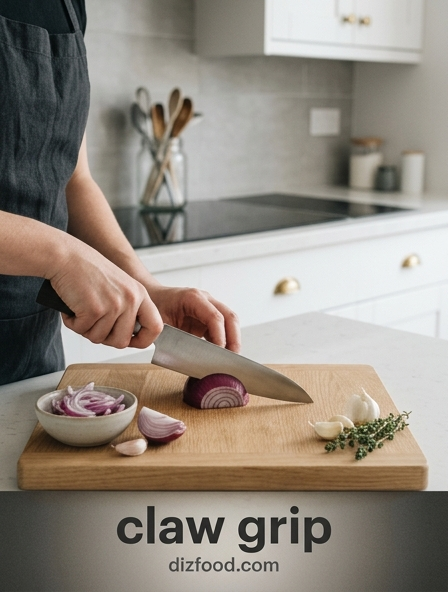
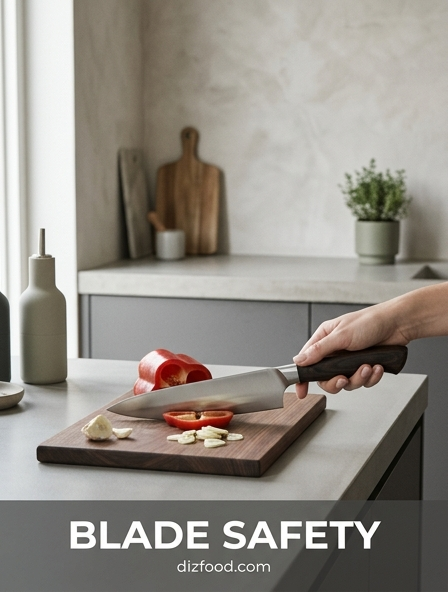
Control is the prerequisite for precision. To execute a fine brunoise, the chef must utilize the "pinch grip," where the thumb and index finger choke up on the blade's bolster while the remaining fingers wrap around the handle. This technique shifts the center of gravity forward, providing a more tactile feel for the edge's position. Simultaneously, the non-cutting hand must adopt the "claw grip," tucking the fingertips inward and using the knuckles as a guide for the blade. This ensures safety while allowing the knife to glide in consistent increments.
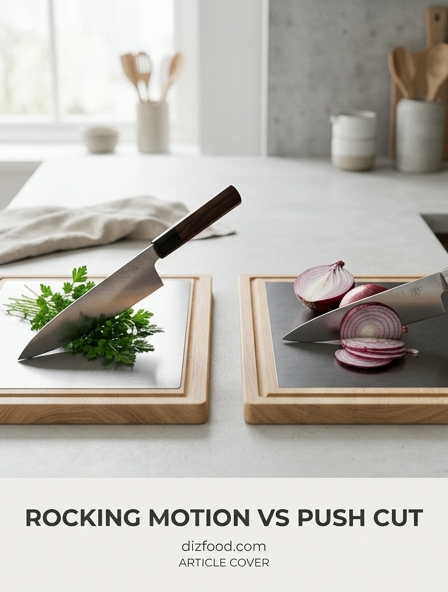
- Anchor the tip of the knife for a rocking motion or use a horizontal push-cut.
- Keep the wrist relaxed to prevent fatigue during long prep sessions.
- Maintain constant contact between the blade and the guiding knuckle.
- Adjust the pressure based on the density of the vegetable.
By mastering these hand positions, the chef can make micro-adjustments in real-time. The coordination between the "guiding hand" moving backward and the "cutting hand" striking downward creates the rhythmic tempo necessary for high-volume precision work. Without this physical foundation, achieving sub-millimeter accuracy is virtually impossible.
Maintaining a Razor Edge for Microscopic Cuts
The physics of a fine brunoise require a blade that severs fibers at a molecular level. A dull knife will crush the vegetable's cells, leading to oxidation, moisture loss, and a sloppy appearance. Maintenance is a daily ritual in professional kitchens. This involves the use of whetstones with varying grit levels, starting from a medium 1000-grit for edge setting to a fine 6000-grit or higher for polishing. The goal is to remove the burr and create a mirror-like finish on the bevel.
- Submerge the whetstone in water until air bubbles stop rising.
- Maintain a consistent angle across the stone, usually 15 degrees.
- Use a ceramic honing rod throughout the day to realign the edge.
- Test the sharpness on a tomato skin; the blade should bite effortlessly.
Beyond sharpening, the storage of the knife is equally important. Magnetic strips or blade guards prevent the edge from chipping against other metal tools. A well-maintained blade reduces the physical effort required by the chef, allowing for a lighter touch that is essential when dicing fragile herbs or soft aromatics into a microscopic brunoise.
Mastering the Brunoise and Fine Brunoise
Understanding the distinction between various dicing techniques is critical for recipe accuracy. While both brunoise and fine brunoise share the same geometric principles, their applications differ based on the desired intensity of the ingredient. A standard brunoise is robust enough to survive a brief sauté, whereas a fine brunoise is so delicate that it can be "cooked" simply by the residual heat of a finished sauce or the acidity of a citrus dressing. The transition from one to the other requires a sharpening of focus and a reduction in the scale of movement.
| Cut Name | Metric Dimensions | Imperial Dimensions |
|---|---|---|
| Brunoise | 3mm x 3mm x 3mm | 1/8" x 1/8" x 1/8" |
| Fine Brunoise | 1.5mm x 1.5mm x 1.5mm | 1/16" x 1/16" x 1/16" |
| Fine Julienne | 1.5mm x 1.5mm x 5cm | 1/16" x 1/16" x 2" |
In the world of fine dining, the fine brunoise is often the preferred choice for shallots, leeks, and carrots intended for clear soups. The tiny cubes remain suspended in the liquid, creating a shimmering, jewel-like effect that elevates the dish's perceived value and demonstrates the kitchen's technical rigor.
Science of Uniformity in High-End Gastronomy
The obsession with uniformity in precision cutting is rooted in food science. When vegetables are cut into a fine brunoise, the surface-area-to-volume ratio is significantly increased. This allows for a rapid and efficient release of flavors during the cooking process. For example, in a classic beurre blanc, finely brunoised shallots offer their pungent aromatics almost instantly to the reducing vinegar, without the need for prolonged simmering that might dull their brightness. Furthermore, the uniform size ensures a consistent mouthfeel, where no single piece distracts from the overall texture.
- Facilitates even osmosis during pickling and marinating.
- Ensures simultaneous caramelization across all pieces.
- Prevents the structural collapse of delicate garnishes.
- Optimizes the dispersion of flavor in emulsions.
Consistency also impacts the visual perception of flavor. A perfectly executed micro-dice suggests a level of care that prepares the diner's palate for a high-quality experience. In gastronomy, the "first bite is with the eyes," and the mathematical precision of the fine brunoise signals to the guest that every element of the dish has been considered with exacting standards.
Speed and Accuracy in Professional Environments
In a high-pressure commercial kitchen, the challenge is maintaining microscopic accuracy while working at a pace dictated by service demands. Speed comes not from rushing, but from the elimination of wasted motion. A chef must set up an efficient station, known as mise en place, where the vegetable scraps, julienne strips, and finished brunoise are organized logically. By minimizing the distance the hand travels and maintaining a consistent rhythm, a cook can process large quantities of produce without sacrificing the integrity of the cut.
- Standardize the prep area to reduce reach times.
- Use high-quality cutting boards that don't slip or dull the blade.
- Practice "economical cutting" by grouping strips for the final dice.
- Regularly clear the board to maintain a clear visual of the work.
Professionalism is defined by the ability to produce the hundredth gram of fine brunoise with the same precision as the first. This requires mental stamina and a refusal to cut corners. As the saying goes, "slow is smooth, and smooth is fast." Over time, the muscle memory developed through deliberate practice allows the chef to work with incredible velocity.
Advanced Geometry for Intricate Vegetable Prep
Not all vegetables are created equal, and dicing a round onion presents different geometric challenges than a straight carrot. Advanced vegetable prep involves understanding how to "square the circle." For spherical items, the chef must make a series of strategic incisions that allow the vegetable to lay flat, preventing rolling and ensuring safety. When working with layered vegetables like leeks or shallots, the natural divisions can be used to the chef's advantage, provided the root remains intact to hold the structure together during the initial julienne phase.
- Radial cutting: Following the natural curve of the vegetable fibers.
- Horizontal slicing: Essential for creating layers in aromatics.
- Waste management: Repurposing trimmings for stocks and purees.
- Strategic orientation: Cutting against the grain for softer textures.
By applying geometric principles, the chef can maximize the yield from every ingredient. The goal is to transform irregular organic shapes into perfect cubic forms with minimal loss. This level of technical mastery allows for the preparation of complex garnishes that seem to defy the natural irregularities of the produce, resulting in a clean and architectural look on the plate.
Elevating Plate Presentation with Precision Cuts
The final application of the fine brunoise is often as a decorative element that adds color and texture to a finished dish. Whether it is a sprinkle of vibrant red pepper over a seared scallop or a delicate mound of cucumber in a chilled gazpacho, the fine brunoise acts as a visual highlight. The precision of the cut creates a sense of luxury; it tells the diner that the kitchen possesses the skill and the time to focus on the smallest details. This refinement is what separates casual dining from the world of Michelin-starred service.
| Ingredient | Visual Effect | Culinary Purpose |
|---|---|---|
| Red Bell Pepper | Bright color pops | Sweetness and crunch |
| Zucchini Skin | Deep green contrast | Freshness and earthiness |
| Shallot | Translucent shimmer | Sharp aromatic finish |
Ultimately, the fine brunoise is a testament to the chef's dedication to their craft. It turns a humble vegetable into a component of art. When used thoughtfully, these tiny cubes provide a rhythmic repetition of form that guides the eye across the plate, creating a balanced and sophisticated aesthetic that delights the senses even before the first taste.

Comments