
Understanding the Macedoine Cut in Culinary Arts
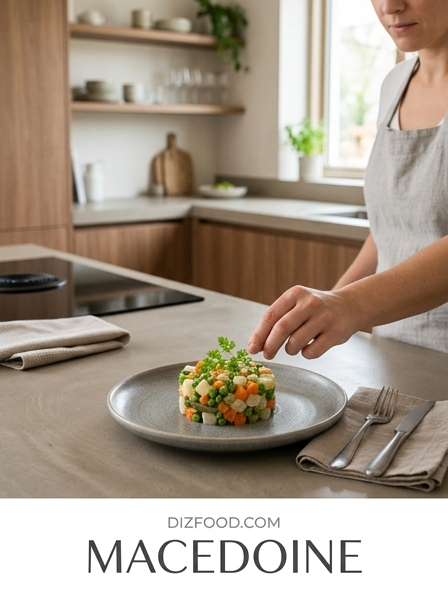
The Macedoine cut is a fundamental pillar of French culinary technique, representing a specific cube-shaped dice that measures exactly four millimeters on all sides. In the hierarchy of vegetable cuts, it sits between the tiny brunoise and the larger medium dice. The term is believed to have originated from the diverse mixture of ethnic groups in Macedonia, reflecting the colorful and varied nature of the mixed vegetable dishes that utilize this technique. Achieving a true Macedoine requires discipline, as the objective is to create perfectly symmetrical squares that provide an elegant aesthetic to any plate.
In professional kitchens, mastering the Macedoine is a rite of passage for apprentice chefs. It demonstrates not only a high level of knife control but also an understanding of texture and cookery. Because the cubes are relatively small, they offer a delicate mouthfeel while still maintaining enough structural integrity to be identifiable in a dish. This cut is most commonly used in the preparation of "Macédoine de Légumes," a classic French salad where various root vegetables are blanched and tossed in a mayonnaise or vinaigrette dressing, showcasing the beauty of uniform precision.
Essential Knives and Tools for Precise Dicing
To execute a flawless Macedoine cut, the selection of tools is just as critical as the chef's technique. A high-carbon steel chef's knife, typically eight to ten inches in length, is the primary instrument for this task. The blade must be exceptionally sharp to ensure clean edges without bruising the vegetable fibers. A dull knife will often slip or squash the produce, resulting in irregular shapes that fail to meet professional standards. In addition to a primary knife, several secondary tools facilitate the process of dicing with mathematical accuracy.
- Chef's Knife: Used for the primary slicing and dicing of firm vegetables.
- Paring Knife: Essential for peeling and removing small blemishes from the produce.
- Mandoline Slicer: Provides perfectly consistent planks before dicing them into batons.
- Culinary Ruler: Used by students to verify the four-millimeter dimensions during practice.
- Honing Steel: Keeps the knife edge perfectly centered between heavy dicing sessions.
A stable cutting surface is equally important. A heavy wooden or composite board prevents the vegetable from shifting, which is the most common cause of uneven cuts. By combining high-quality steel with a steady work surface, a chef can achieve the repetitive accuracy required for elite culinary presentations.
Step by Step Guide to the Perfect Square Cube
Creating a perfect Macedoine cube is a systematic process of reduction, transforming irregular vegetable shapes into geometric perfection. The goal is to minimize waste while ensuring every single cube is identical to its neighbor. Consistency is the hallmark of a skilled garde manger, and following a structured workflow is the only way to achieve it reliably.
- Preparation: Wash and peel the vegetable, then trim the ends to create a manageable length.
- Squaring Off: Cut the sides of the vegetable to create a rectangular block or "prism," removing the rounded exterior.
- Planking: Slice the block lengthwise into flat planks that are exactly four millimeters thick.
- Batoning: Stack the planks and cut them lengthwise again into four-millimeter sticks, known as "jardinière."
- Dicing: Turn the sticks horizontally and cut across them at four-millimeter intervals to produce the final cubes.
Throughout the process, it is vital to keep the "scrap" pieces for stocks or purees to ensure no food is wasted. The resulting cubes should look like miniature dice, ready for blanching or sautéing. Precision at each stage prevents cumulative errors that would otherwise result in trapezoids rather than squares.
Difference Between Macedoine Brunoise and Mirepoix
Understanding the distinctions between various vegetable cuts is essential for any cook navigating a professional recipe. While Macedoine, brunoise, and mirepoix all involve dicing, they serve different functional and aesthetic roles in the kitchen. The primary differences lie in their dimensions and their intended use within a dish, ranging from structural bases to delicate garnishes.
| Cut Name | Standard Dimensions | Primary Application |
|---|---|---|
| Brunoise | 2mm x 2mm x 2mm | Fine garnishes, aromatic infusions |
| Macedoine | 4mm x 4mm x 4mm | Vegetable salads, side dishes |
| Mirepoix | 1cm to 2cm (Rough) | Stock bases, stews, braises |
A brunoise is essentially a tinier version of the Macedoine, often used for garnishing clear soups where the vegetables must be small enough to fit easily on a spoon with liquid. In contrast, a mirepoix is a much coarser cut where uniformity is less critical, as the vegetables are often strained out of the final preparation after their flavors have been extracted. The Macedoine sits in the sweet spot of being large enough to provide texture while remaining refined enough for high-end plating.
Selecting the Best Vegetables for French Garnishes
Not all vegetables are suitable for the rigid requirements of the Macedoine cut. To achieve the sharp, clean edges required for French garnishes, one must select produce with high density and low water content. Root vegetables are the gold standard for this technique because their cellular structure remains firm even after peeling and slicing. If a vegetable is too soft or fibrous, it will fray at the edges, ruining the crisp geometric aesthetic of the cube.
Carrots, turnips, parsnips, and celeriac are the most traditional choices for a Macedoine mixture. They offer a variety of colors-orange, white, and cream-which create a visually stunning mosaic when combined. Potatoes can also be used, though they must be stored in water immediately after cutting to prevent oxidation. When working with softer vegetables like zucchini or bell peppers, it is often necessary to use only the outer "meat" of the vegetable, discarding the soft seeded interior. Selecting fresh, seasonal produce ensures that the vegetables hold their shape during the cooking process, resulting in a vibrant and professional final presentation.
Techniques for Consistent Four Millimeter Dimensions
The secret to achieving consistent four-millimeter dimensions lies in the "guide hand" and the rhythm of the knife. For beginners, the sheer precision of the Macedoine can be daunting, but specific techniques can bridge the gap between amateur and professional results. The most important skill is the "claw grip," where the fingertips are tucked inward, and the knuckles act as a vertical guide for the blade. By moving the guide hand back in tiny, controlled increments, the chef can dictate the thickness of each slice with extreme accuracy.
Another helpful technique involves "squaring the round." Since most vegetables are cylindrical, they must be transformed into a rectangular prism before the final dicing begins. This provides a stable base that prevents the vegetable from rolling, which is essential for safety and precision. Visualizing the final cube before making the first cut helps in planning the most efficient use of the vegetable. With consistent practice, the eye becomes calibrated to the four-millimeter measurement, allowing the chef to work quickly without the need for a ruler, maintaining uniformity through muscle memory and visual focus.
Preparing Your Workspace for Professional Knife Work
A cluttered or poorly organized workspace is the enemy of precision. Professional knife work, particularly high-detail tasks like the Macedoine cut, requires an environment optimized for efficiency and safety. This concept is known as "mise en place," meaning everything in its place. Before the first cut is made, the chef must ensure that their station is set up to handle the flow of produce from its whole state to its finished, diced state.
- Board Stability: Place a damp paper towel or a rubber mat under the cutting board to prevent any movement.
- Waste Management: Keep a "scrap bowl" nearby for peelings and trimmings to keep the board clear.
- Product Bowls: Use separate containers for the finished cubes to prevent them from getting mixed with uncut pieces.
- Knife Placement: Always place the knife at the top of the board with the blade facing away when not in use.
Proper lighting and ergonomics also play a role. The chef should stand with feet shoulder-width apart and ensure the board is at a height that does not require slouching. A clean, organized station allows the chef to focus entirely on the geometry of the vegetable, leading to faster results and fewer mistakes.
Creative Ways to Feature Macedoine in Modern Dishes
While the Macedoine cut is rooted in classical tradition, it has found a rejuvenated place in modern culinary presentations. Contemporary chefs often use these uniform cubes to add a sense of "digital" precision to their plates, contrasting the organic shapes of proteins with the mathematical regularity of the vegetables. Beyond the traditional cold salad, a Macedoine of vibrant vegetables can be used as a textural "confetti" scattered over a seared scallop or nested within a delicate consommé.
In vegetarian and vegan cuisine, the Macedoine is particularly effective. A mixture of butternut squash, beets, and parsnips, all diced to four millimeters and lightly roasted, creates a sophisticated ragout that highlights the inherent beauty of the produce. Some pastry chefs even apply the technique to fruit, creating a Macedoine of mango, kiwi, and strawberry to serve as a refreshing topping for tarts or panna cotta. By applying this rigorous French technique to non-traditional ingredients, chefs can elevate simple components into a display of high-level craftsmanship that delights the eye and the palate simultaneously.
Maintaining Uniformity for Even Cooking and Presentation
The importance of uniformity in a Macedoine cut extends far beyond mere aesthetics; it is a fundamental requirement for successful cooking. When vegetables are cut to the exact same size, they possess the same surface-area-to-volume ratio. This means they will all respond to heat at the same rate, reaching the desired level of doneness simultaneously. In a mixture of carrots and turnips, having irregular sizes would result in some pieces being mushy while others remain unpleasantly crunchy, ruining the balance of the dish.
In high-pressure kitchen environments, uniformity also ensures predictable results. Whether blanching in salted water or sautéing in butter, the chef can rely on specific timings because every cube is four millimeters thick. From a presentation standpoint, the human eye is naturally drawn to symmetry. A perfectly executed Macedoine signals to the guest that the kitchen operates with a high degree of care and attention to detail. This visual consistency elevates the perceived value of the meal, transforming humble root vegetables into a sophisticated component of a fine-dining experience through the power of geometric precision.
Pro Tips for Mastering Knife Control and Speed
Mastering the speed and control required for professional dicing is a journey of refinement. The first tip for any aspiring chef is to prioritize accuracy over velocity. Speed is a natural byproduct of correct technique; once the movements become second nature, the pace will naturally increase. Focus on the "rocking motion" of the knife, keeping the tip of the blade in contact with the board to maintain stability and rhythm. This reduces the effort required for each stroke and increases the cleanliness of the cut.
Another pro tip is to regularly maintain the knife's edge. Even a slight dullness can cause the blade to veer off-course, resulting in cubes that are tapered rather than square. Use a honing steel every few minutes during a large prep session. Additionally, practice on inexpensive vegetables like potatoes or onions to build muscle memory without the pressure of wasting high-cost ingredients. Finally, remember to breathe and relax the grip on the knife handle. A tight, tense hand leads to fatigue and jerky movements, whereas a relaxed, confident grip allows for the fluid motion necessary to produce thousands of identical cubes in a single shift.


Comments