
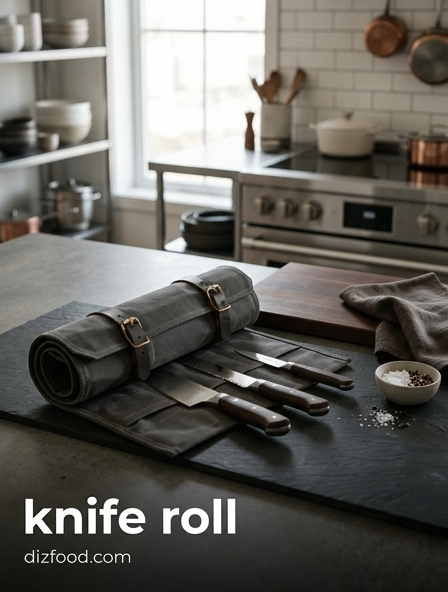
Essential Protection for Precision Dicing Blades
In the high-stakes environment of a professional kitchen, a knife's edge is its most critical asset. Precision dicing blades, often honed to a razor-thin 15-degree angle, are exceptionally vulnerable to micro-chipping and dulling when left exposed. A high-quality knife roll provides a structured sanctuary for these delicate instruments, ensuring that the sharpest points and refined bellies of the blades never come into contact with hard surfaces or other metal tools. Without the compartmentalization offered by a professional roll, knives are susceptible to friction and impact, which can quickly degrade a blade that took hours to sharpen.
The internal layout of a premium roll typically includes reinforced pockets and protective flaps that act as a barrier against moisture and physical shock. By securing each knife in its own dedicated slot, the chef eliminates the risk of blades knocking together during transport or storage. This essential layer of protection is not merely about organization; it is a fundamental requirement for maintaining the structural integrity of specialized cutlery used for intricate tasks like julienning or brunoise dicing, where every micron of sharpness counts toward the final culinary presentation.
Engineered Durability for High Pressure Kitchens
A professional kitchen is an unforgiving landscape characterized by high heat, constant moisture, and abrasive surfaces. A knife roll engineered for this environment must possess a level of durability that far exceeds standard storage solutions. High-pressure kitchens demand gear that can withstand the rigors of double shifts and the constant movement between stations. This durability is often achieved through heavy-duty stitching, reinforced rivets at stress points, and industrial-grade fasteners that refuse to fail under tension. When a chef is in the middle of a rush, they need to know their equipment is secure and accessible without the risk of fabric tearing or straps snapping.
The materials selected for these rolls are specifically tested for their tensile strength and resistance to puncture. In an environment where sharp steel is frequently inserted and removed, the interior lining must resist slicing. Furthermore, the exterior must be robust enough to handle being placed on stainless steel counters or stored in tight lockers. This engineering ensures that the roll remains a reliable partner for years, providing a consistent performance that matches the intensity of the culinary professional's daily routine and the demanding standards of the industry.
The Modern Chef's Need for Seamless Mobility
The contemporary culinary career is no longer confined to a single kitchen. Modern chefs often find themselves transitioning between restaurant service, private catering events, and culinary workshops. This lifestyle necessitates a solution for seamless mobility that does not compromise the safety of their tools. A well-designed knife roll functions as a mobile workstation, allowing the professional to carry their entire arsenal of steel with ease. Ergonomic handles and padded shoulder straps are critical features that redistribute the weight of heavy professional knives, making the commute from home to the kitchen less taxing on the body.
Mobility also implies a level of speed and readiness. A chef must be able to unroll their kit and be prep-ready within seconds. The design of the roll facilitates this transition, providing a compact footprint that fits into various kitchen environments. Whether traveling by bike, car, or public transport, the roll ensures that the knives remain stationary and silent. This portability is essential for the versatile professional who requires their specific, customized tools to perform at their peak, regardless of the geographic location or the constraints of the guest kitchen they are entering.
Protecting Your Investment in Professional Steel
Professional-grade knives are a significant financial investment, with individual blades often costing hundreds of dollars. For a chef, these tools are an extension of their hands, and protecting them is a matter of fiscal responsibility. A knife roll acts as an insurance policy against the most common causes of damage: dropping, improper storage, and environmental corrosion. By keeping blades away from the cluttered chaos of a general utility drawer, the roll prevents the blades from bending or the handles from cracking. The investment in a high-quality roll is a fraction of the cost of replacing a single high-carbon steel gyuto or a delicate yanagiba.
Beyond physical damage, a roll protects the aesthetic value and resale potential of the steel. Many professional knives feature beautiful damascus patterns or intricate wooden handles that can be easily scratched. The soft interior of a roll preserves these finishes, maintaining the tool's beauty. Furthermore, the controlled environment inside the roll helps prevent the onset of rust, especially for carbon steel blades that are sensitive to humidity. By prioritizing the housing of their steel, chefs ensure that their investment provides a lifetime of service, retaining its edge and its value through years of rigorous daily use.
Superior Materials vs Synthetic Alternatives
Choosing between natural and synthetic materials for a knife roll involves weighing tradition against modern utility. Leather and high-grade canvas are often cited as superior due to their longevity and ability to develop a unique patina over time. However, synthetic options like ballistic nylon offer distinct advantages in terms of weight and maintenance. Below is a comparison of the characteristics commonly found in these materials:
| Feature | Top-Grain Leather | Ballistic Nylon |
|---|---|---|
| Durability | Extremely high; lasts decades | High; resistant to tears |
| Maintenance | Requires conditioning | Easy to wipe clean |
| Weight | Heavier profile | Lightweight for travel |
| Aesthetics | Professional and classic | Utilitarian and modern |
While leather offers a classic look that many chefs prefer for its professional statement, synthetic materials provide a level of water resistance that is invaluable in wet kitchen environments. Synthetic rolls are often more affordable, making them an excellent choice for culinary students, whereas professional chefs may lean toward leather for its resilience against heat and its long-term reliability in the field.
Organizing the Toolkit for Maximum Efficiency
Organization is the cornerstone of efficiency in a fast-paced kitchen. A knife roll allows a chef to categorize their tools so that they are instinctively accessible during the heat of service. Instead of searching through a bag, the chef knows exactly where every instrument resides. A standard roll is often organized to accommodate more than just knives; it serves as a comprehensive toolkit for all culinary tasks. To maximize efficiency, a chef might organize their roll with the following items:
- Primary Chef's Knife (8-10 inches) for heavy prep.
- Paring knife for intricate peeling and garnishing.
- Serrated bread knife for soft-skinned vegetables or crusts.
- Honing steel to maintain the edge throughout the shift.
- Kitchen shears for opening packaging or butchery.
- Utility tools like tweezers, peelers, and microplanes.
This systematic arrangement ensures that the most-used tools are in the most accessible slots. The use of specialized pockets for smaller items prevents them from getting lost at the bottom of the roll. When every tool has a designated home, the chef can maintain a "mise en place" of their equipment, mirroring the organization they apply to their ingredients. This level of order reduces stress and allows for a smoother workflow during complex culinary preparations.
Securing Edge Geometry for Clean Vegetable Cuts
The geometry of a knife's edge is what determines its ability to slide through a tomato or onion without bruising the cell walls of the produce. Maintaining this geometry is impossible if the knife is subjected to constant friction against other metal objects. A knife roll plays a vital role in securing this edge geometry by keeping the blade stationary. When a blade shifts inside a loose bag, the apex of the edge can roll or fold, leading to a "toothy" or dull sensation during use. This is particularly detrimental for Japanese knives, which are ground to very acute angles for maximum precision.
By using a roll with individual sleeves, the chef ensures that the edge remains "true." Clean vegetable cuts require a pristine edge that can only be maintained if the blade is protected from the moment it leaves the whetstone until it touches the cutting board. Furthermore, the roll prevents the tips of the knives from snapping, a common occurrence when knives are handled carelessly. Protecting the tapering geometry of the blade ensures that the chef can perform delicate horizontal cuts in an onion or create translucent slices of radish with consistent ease and professional results every time.
A Professional Statement of Culinary Dedication
Carrying a knife roll is a rite of passage in the culinary world, signaling a transition from a novice to a dedicated professional. It is a visual representation of a chef's commitment to their craft and their respect for the tools of the trade. When a chef enters a kitchen with a well-maintained, organized roll, it conveys a message of discipline and preparedness to their peers and superiors. It shows that they value precision and take ownership of their performance. In many ways, the knife roll is as much a part of the professional uniform as the chef's coat or sturdy kitchen clogs.
The choice of a roll also reflects the chef's personal style and career philosophy. A weathered leather roll might suggest a respect for tradition and years of experience, while a sleek, modern synthetic roll might indicate a focus on efficiency and contemporary techniques. Regardless of the material, the act of carefully rolling up one's knives at the end of a long shift is a meditative practice that honors the work performed. It is a statement that the tools within are not just utensils, but the essential instruments used to create art and provide sustenance, deserving of the highest level of care.
Safety Features for the Traveling Professional
Safety is a paramount concern when transporting several razor-sharp blades through public spaces or crowded kitchens. A professional knife roll incorporates multiple safety features designed to prevent accidental injury to the chef or others. The most critical of these is the internal flap, which covers the exposed blades before the bag is rolled up, providing a double layer of fabric protection. This ensures that even if a knife were to slip from its pocket, it would remain trapped within the roll rather than piercing through the outer shell. Secure closure systems, such as heavy-duty buckles or thick leather ties, keep the roll tightly compressed.
Additionally, many modern rolls feature locking zippers or hidden compartments for personal items, adding a layer of security in shared locker rooms. The construction of the handles is often reinforced with extra stitching to prevent the bag from dropping unexpectedly. For the traveling professional, these safety measures provide peace of mind. Knowing that the sharp edges are securely locked away allows the chef to focus on their commute or travel without the constant worry of a blade protruding. These features transform a simple storage bag into a secure, portable vault for some of the most dangerous, yet necessary, tools in the culinary industry.
Longevity in Extreme Culinary Environments
The longevity of a knife roll is tested daily by the extreme conditions found in a commercial kitchen. Exposure to high humidity, grease, and fluctuating temperatures can cause inferior materials to degrade, crack, or develop mold. A premium roll is designed to resist these elements, utilizing materials that are either naturally resilient or treated with protective coatings. For instance, waxed canvas is a popular choice because it repels water and oils, preventing stains from setting into the fibers. This resistance to environmental factors ensures that the roll does not become a breeding ground for bacteria, which is essential for maintaining food safety standards.
Longevity also depends on the quality of the hardware. Stainless steel or brass buckles and zippers are preferred because they do not rust when exposed to the steam of a dish pit or the moisture of a walk-in cooler. A roll that is built to last becomes a long-term companion for a chef, surviving the transition from line cook to executive chef. Over time, the roll becomes a chronicle of a chef's career, bearing the marks of countless kitchens and prep sessions. By choosing a roll designed for longevity, the professional ensures that their tools remain protected throughout the many chapters of their culinary journey, regardless of the intensity of the environment.

Comments