
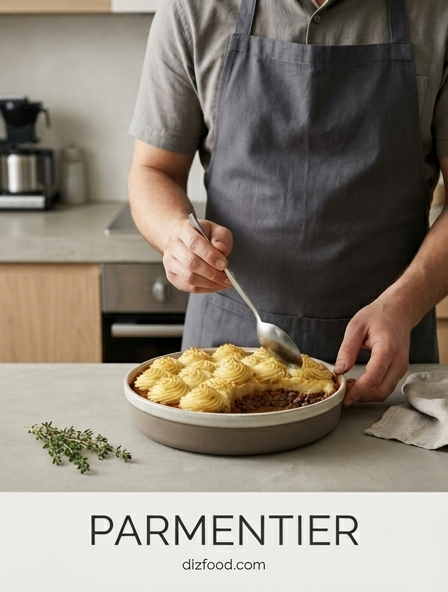
Defining the Parmentier Cut
The Parmentier cut is a foundational culinary knife technique used primarily for vegetables, most notably potatoes. Named after Antoine-Augustin Parmentier, the 18th-century French pharmacist who promoted the potato as a food source for humans, this specific cut results in a medium-sized cube. In professional kitchens, the dimensions are strictly defined as a half-inch cube, or approximately 1.2 centimeters on all sides. This size sits comfortably between the smaller macédoine cut and the larger carré cut, offering a balance between refined presentation and hearty texture.
While often associated with rustic home cooking, the Parmentier cut requires a high level of precision to ensure that every piece is identical. This uniformity is not merely for aesthetics; it plays a critical role in the physics of cooking. Because the cubes are larger than a fine dice, they retain their structural integrity during long cooking processes like roasting or braising. Understanding this cut is essential for any chef looking to master classical French techniques while providing a satisfying mouthfeel in various traditional dishes.
Essential Tools for Precision Dicing
Achieving the perfect Parmentier cut is impossible without the correct culinary arsenal. The primary tool required is a sharp, well-balanced chef's knife, typically between eight and ten inches in length. A sharp blade ensures clean cuts through dense root vegetables, preventing the cell walls from crushing and preserving the moisture within the vegetable. To maintain this edge, a honing steel should be used before each session to realign the blade's microscopic teeth.
Equally important is the work surface. A heavy, stable wooden or high-quality plastic cutting board provides the necessary grip to prevent slipping. For those still mastering the dimensions of a half-inch cube, a culinary ruler or a specialized dicing guide can be invaluable. These tools help the cook visualize the precise 1.2-centimeter measurements until they become second nature. Finally, a vegetable peeler and a bench scraper are useful for prepping the raw ingredients and efficiently moving the finished cubes from the board to the cooking vessel without dulling the knife edge.
Choosing the Best Root Vegetables
The Parmentier cut is most frequently applied to root vegetables due to their dense, firm structure, which allows them to hold a cubic shape even when exposed to high heat. Selecting the right produce is the first step toward a successful dish. For potatoes, starchy varieties like Russets or all-purpose types like Yukon Golds are ideal for roasting, while waxy varieties are better for salads. The vegetables should be firm to the touch, free of soft spots, and relatively uniform in shape to minimize waste during the squaring-off process.
| Vegetable Type | Recommended Variety | Best Application |
|---|---|---|
| Potato | Yukon Gold | Roasts and Sautés |
| Carrot | Danvers or Imperator | Stews and Soups |
| Turnip | Purple Top White Globe | Rustic Braises |
| Parsnip | Hollow Crown | Winter Roasted Medleys |
When selecting these items, look for specimens that are straight rather than twisted, as this makes the initial dicing process significantly easier and more efficient.
Step by Step Cubing Technique
Mastering the Parmentier cut involves a systematic approach to transforming a round, irregular vegetable into a collection of identical cubes. The process emphasizes safety and geometric precision. By following a structured sequence, a cook can minimize waste and maximize the speed of preparation.
- Wash and peel the vegetable thoroughly to remove all dirt and skin.
- "Square off" the vegetable by slicing off the ends and then the four sides to create a long rectangular block or "brick."
- Slice the block lengthwise into slabs that are exactly one-half inch thick.
- Stack the slabs and cut them lengthwise again into one-half inch strips, known as "batons."
- Turn the batons 90 degrees and cut crosswise at one-half inch intervals to produce the final Parmentier cubes.
The trimmings removed during the squaring-off phase should not be discarded; they are excellent for use in stocks, purees, or mashes where the shape of the vegetable is no longer relevant to the final presentation.
Importance of Uniformity in Stews
In the context of a slow-cooked stew or a hearty ragout, the Parmentier cut is chosen for its ability to withstand prolonged heat while providing a consistent eating experience. Uniformity in size ensures that every cube of potato, carrot, or turnip reaches the ideal level of tenderness at exactly the same time. If the pieces were irregular, smaller cubes would dissolve into mush and thicken the liquid prematurely, while larger pieces might remain unpleasantly crunchy or raw in the center.
Furthermore, uniform cubes create a professional and organized appearance in the bowl, signaling to the diner that the dish was prepared with care and technical skill. This consistency also aids in flavor absorption; because each cube has the same surface-area-to-volume ratio, they all soak up the savory broth and aromatics at the same rate. This creates a balanced dish where no single bite is overwhelmed by salt or under-seasoned, resulting in a harmonious culinary experience that highlights the quality of the ingredients used.
Preparing Vegetables for Hearty Roasts
When preparing vegetables for a roast, the Parmentier cut offers the perfect dimensions for achieving a contrast between a crispy exterior and a fluffy interior. The half-inch surface area allows for significant Maillard reaction-the chemical process that creates browned, caramelized flavors-without the vegetable drying out completely. This is particularly effective when roasting root vegetables at high temperatures, as the size is large enough to survive the oven's intensity while still being small enough to cook through quickly.
To prepare these cubes for the oven, they should be patted dry to remove excess surface moisture, which prevents steaming. They are then tossed in a high-smoke-point oil and seasoned with salt and herbs. Arranging them in a single layer on a preheated baking sheet ensures that the hot air can circulate around all six sides of each cube. This method results in a collection of golden-brown "nuggets" that serve as a robust accompaniment to roasted meats or as a standalone vegetarian centerpiece in rustic cuisine.
Knife Safety and Hand Positioning
Executing the Parmentier cut safely requires strict adherence to hand positioning, specifically the "claw grip." This technique involves curling the fingertips of the non-cutting hand inward and using the knuckles as a guide for the blade. By keeping the fingertips away from the edge, the risk of accidental nicks is significantly reduced. The thumb should be tucked behind the fingers, ensuring it is never in the path of the knife as it moves through the vegetable.
On the cutting hand, a "pinch grip" is recommended for maximum control. This involves gripping the bolster of the knife between the thumb and the side of the index finger, rather than wrapping all fingers around the handle. This grip provides better leverage and prevents the knife from wobbling during the forceful cuts required for dense root vegetables. Maintaining a stable stance with feet shoulder-width apart and ensuring the cutting board is secured with a damp paper towel underneath are final, crucial steps in maintaining a safe and productive kitchen environment during high-volume prep work.
Achieving the Perfect Half Inch Cube
The distinction between a mediocre dice and a true Parmentier cut lies in the precision of the half-inch measurement. While many home cooks estimate the size, professional standards demand accuracy. A perfect half-inch cube (1.27 cm) has six equal faces and sharp, clean angles. Achieving this level of perfection requires the cook to constantly monitor their progress, checking the thickness of the initial slabs against the subsequent batons and final cubes.
Consistency is more than just a visual goal; it is a measure of a cook's discipline. When every cube is identical, the dish behaves predictably under heat. If you find your cubes are becoming trapezoidal or irregular, it is usually a sign that the vegetable was not squared off properly at the beginning. It is better to sacrifice a bit more of the vegetable during the initial "squaring" phase to ensure the resulting block is a true rectangular prism. This commitment to geometry ensures that the final result is a collection of perfect cubes that elevate the rustic nature of the dish to a professional standard.
Common Dicing Mistakes to Avoid
Even experienced cooks can encounter difficulties when executing the Parmentier cut. One of the most frequent errors is failing to create a flat base for the vegetable before dicing. A rolling potato or carrot is a primary cause of uneven cuts and finger injuries. Another common pitfall is "tapering," where the cubes gradually get smaller or larger as the cook moves through the vegetable, often due to a shift in the angle of the knife.
- Using a dull knife that slips off the skin of the vegetable.
- Neglecting to square off the round sides, leading to cubes with curved edges.
- Applying too much downward pressure instead of a smooth slicing motion.
- Stacking too many slabs at once, causing them to slide and result in irregular batons.
- Ignoring the scrap pile, which leads to overcrowding on the cutting board.
By identifying these mistakes early, a cook can slow down and adjust their technique. Precision should always be prioritized over speed, especially when working with the larger dimensions of the Parmentier cut.
Enhancing Texture in Rustic Dishes
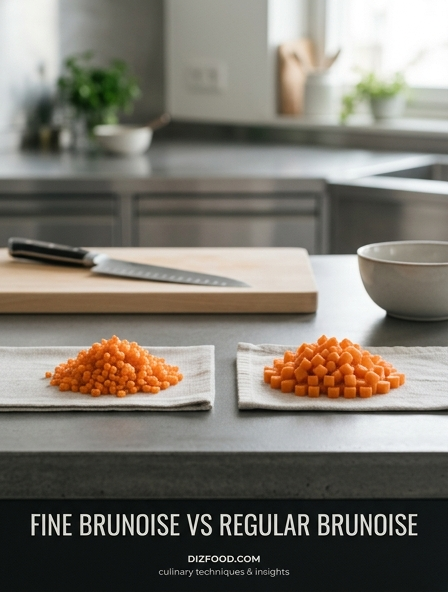
The Parmentier cut is the hallmark of rustic elegance in the kitchen. Its substantial size provides a "bite" that smaller cuts like brunoise cannot offer. In dishes such as Hash Brown Potatoes or traditional French vegetable soups, these cubes provide a sense of abundance and comfort. The texture is particularly important in rustic cooking, where the goal is often to highlight the natural, earthy qualities of the ingredients rather than masking them in a refined puree.
When used in a sauté, the Parmentier cut allows for a variety of textures within a single piece of food. The outside becomes caramelized and slightly crunchy, while the interior remains soft and creamy. This duality is what makes the cut so popular for breakfast potatoes or side dishes accompanying grilled steaks. By mastering the Parmentier cut, a cook gains the ability to control the structural elements of their dish, ensuring that every spoonful offers a satisfying, hearty texture that defines the very best of traditional, country-style culinary arts.

Comments