
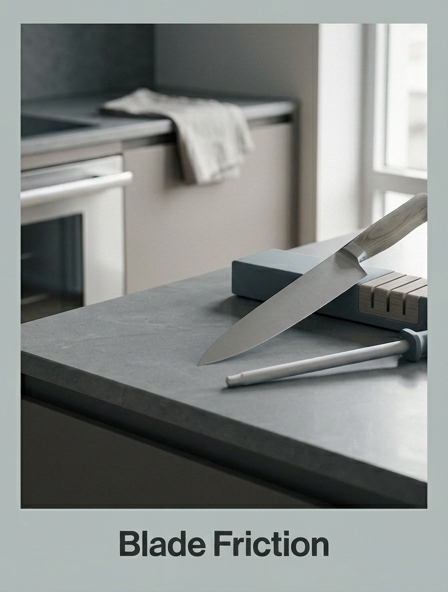
The Science of Potato Starch Adhesion
When a steel blade traverses a raw potato, it ruptures cellular structures, releasing a complex mixture of water and starch granules. This fluid acts as a biological adhesive. The primary culprit is amylopectin, a highly branched glucose polymer that exhibits significant "tackiness" when exposed to the atmosphere. As the blade creates a smooth, flat surface on the vegetable slice, it generates a perfect interface for molecular bonding. The moisture content creates a capillary bridge between the metal and the tuber, pulling the two surfaces together with surprising force.
- Starch Concentration: High-starch varieties like Russets exhibit greater adhesion than waxy cultivars.
- Cellular Rupture: Faster cutting speeds can increase the volume of starch released onto the blade face.
- Viscosity: The slurry created during slicing changes viscosity based on the temperature of the blade and the vegetable.
This phenomenon is not merely about stickiness; it is a matter of fluid dynamics. The starch molecules fill the microscopic valleys in the steel's surface, increasing the total contact area and maximizing the van der Waals forces that contribute to the "stick" often experienced during heavy prep work.
Selecting Knives with Granton Edges
The Granton edge, characterized by a series of identical divots or scallops ground into the side of a blade, is a mechanical solution to the problem of friction and food adhesion. These indentations serve a specific aerodynamic and structural purpose: they create small pockets of air between the food item and the steel. By breaking the vacuum seal that typically forms when slicing moist ingredients, the Granton edge allows the material to fall away from the blade rather than creeping up the face.
| Feature | Impact on Friction | Best Use Case |
|---|---|---|
| Scalloped Divots | Introduces air to break vacuum | Soft cheeses, starchy tubers |
| Reduced Surface Area | Lowers lateral drag | Large roasts, smoked salmon |
| Asymmetrical Grind | Redirects food away from blade | High-speed dicing |
When selecting a knife with this feature, the depth and spacing of the divots are critical. Deeper scallops provide more air space but can weaken the blade if not engineered correctly. Professionals often prefer these for Santoku and carving knives where clean, repetitive releases are essential for efficiency.
Optimizing Blade Geometry for Dicing
The cross-sectional geometry of a knife, often referred to as the "grind," determines how much resistance a cook feels during a downward stroke. A blade that is too thick behind the edge acts like a wedge, creating high lateral pressure that increases friction. Conversely, a blade with a distal taper and a convex grind helps to push the food outward, reducing the amount of surface area in contact with the ingredient. This geometric displacement is essential for maintaining speed during high-volume dicing.
- Flat Grind: Simple to sharpen but prone to high suction and sticking.
- Convex Grind: Curves outward to actively push food away from the blade body.
- Hollow Grind: Extremely thin at the edge but can create drag if the "shoulder" is too pronounced.
To optimize for dicing, the transition from the cutting edge to the spine must be gradual. A steep primary bevel increases the force required to pass through the item, while a refined secondary bevel ensures that the initial entry is effortless. Achieving the right balance of thinness and structural integrity is the hallmark of a high-performance kitchen tool.
Surface Tension and Water Lubrication
Water is a dual-edged sword in the context of blade friction. On one hand, a thin film of water can act as a lubricant, allowing the blade to glide through cellular walls with minimal resistance. This is particularly noticeable when slicing aqueous vegetables like cucumbers or celery. However, surface tension can also create a powerful "suction" effect, where the water molecules cling to both the steel and the vegetable, making it difficult to separate the two. This tension is what causes thin slices to "climb" the blade.
Understanding the meniscus-the curve seen at the edge of the liquid-helps in managing this tension. By frequently dipping the blade in clean water or using a damp cloth to wipe the surface, a chef can maintain a consistent level of lubrication. If the blade becomes too dry, the friction increases significantly; if it is too wet, the suction takes over. The goal is a micro-layer of moisture that facilitates movement without creating a vacuum seal. Professional techniques often involve specific wrist flicks to break this surface tension mid-stroke.
Benefits of High-Polished Steel Surfaces
A mirror-polished blade is not merely an aesthetic choice; it serves a functional purpose in friction reduction. At a microscopic level, even high-quality steel is full of "teeth" and irregularities. A high-polish finish removes these peaks and fills the valleys, resulting in a surface that is exceptionally smooth. This lack of texture means there are fewer points for food fibers and starches to snag on during the slicing process, leading to a much lower coefficient of friction.
- Corrosion Resistance: Smoother surfaces have less surface area for oxidation to begin.
- Hygienic Properties: Microscopic food particles are less likely to become trapped in a polished surface.
- Reduced Drag: The blade slides through dense proteins with significantly less effort than a satin-finished blade.
While a high polish is beneficial for friction, it can actually exacerbate suction in very wet vegetables. Therefore, many high-end knives feature a polished edge paired with a textured or hammered (tsuchime) finish on the upper portion of the blade to combine the benefits of low drag and food release. This hybrid approach represents the pinnacle of friction management in modern cutlery.
Impact of Blade Coatings on Friction
Advancements in materials science have introduced various coatings to the kitchen, designed specifically to address the stickiness of modern food preparation. These coatings act as a physical barrier between the reactive steel and the chemical components of the food. By altering the surface energy of the blade, these materials can make the steel "hydrophobic," meaning it actively repels water and prevents the formation of a vacuum seal.
| Coating Type | Primary Benefit | Durability |
|---|---|---|
| PTFE (Teflon) | Non-stick, ultra-low friction | Low (prone to scratching) |
| DLC (Diamond-Like Carbon) | Extreme hardness and glide | High (industrial grade) |
| Ceramic/Titanium | Resists chemical adhesion | Moderate |
Of these, DLC is increasingly popular in high-end custom knives. It provides a sleek, dark finish that is nearly as hard as diamond, ensuring that the low-friction properties last for years. While traditionalists prefer pure steel, these coatings are invaluable for chefs working with difficult, gummy ingredients that would otherwise slow down a busy service.
Precision Cutting Techniques to Minimize Drag
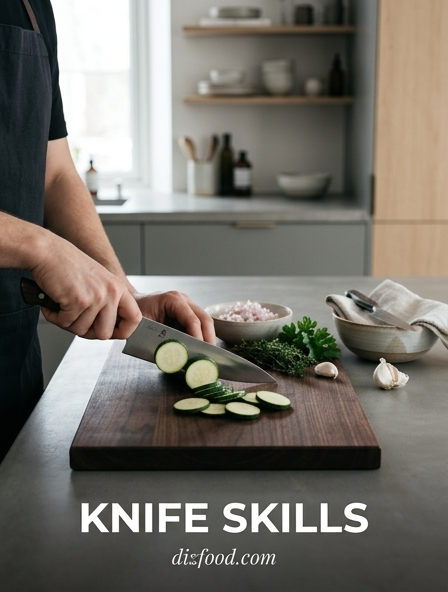
Mechanical friction can be mitigated not just by the tool, but by the technique of the user. Most drag is generated during a "dead" push cut, where the blade is forced vertically through the ingredient. This maximizes the contact time between the blade face and the food. To minimize drag, professional chefs employ slicing motions that use the entire length of the edge, such as the "draw cut" or "push-slide."
- The Draw Cut: Pulling the knife toward the body, allowing the edge to slice rather than crush.
- The Forward Glide: Moving the knife down and forward simultaneously to slice through fibers at an angle.
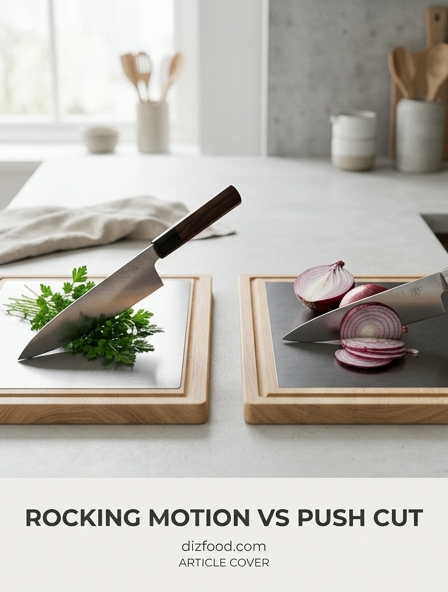
- The Rocking Motion: Using the belly of the knife to maintain contact with the board, reducing the force needed for release.
By using a slicing motion, the chef ensures that the blade is always moving tangentially to the food surface. This drastically reduces the lateral pressure and the resultant friction. Furthermore, maintaining a slight angle-rather than a perfectly vertical orientation-allows gravity to assist in separating the slice from the main body of the ingredient, further preventing adhesion.
Managing Tuber Temperature for Cleaner Slices
The physical state of a vegetable's starch is highly temperature-dependent. Cold temperatures increase the rigidity of the cellular walls and keep the starch granules in a more crystalline, less "leaky" state. When a potato is warm, the starches are more prone to gelatinization upon contact with the heat of the blade and the friction of the cut, leading to a gummy residue that coats the knife. Managing the temperature of the produce is therefore a critical step in friction control.
Many professional kitchens store prepped tubers in ice water baths. This serves two purposes: it prevents oxidation (browning) and it firms up the vegetable's structure. A chilled potato provides a crisp "snap" when cut, which correlates to a cleaner separation from the blade. The reduced temperature also lowers the kinetic energy at the point of contact, preventing the starch from becoming an effective adhesive. If a blade begins to drag excessively, simply chilling the ingredients or even the blade itself can restore the smooth slicing action required for precision work.
Reducing Vacuum Suction During Slicing
Vacuum suction is the primary force that causes food to stick to the side of a knife. This occurs when the moisture on the food creates an airtight seal against the flat surface of the blade, and the atmospheric pressure outside pushes the slice against the steel. To combat this, the "seal" must be broken by introducing air. This is why many specialized knives feature holes, ridges, or intentional "forged-in" textures that prevent the food from making full contact with the metal.
- Aero-Blades: Knives with cut-out sections specifically designed to prevent vacuum formation.
- Tsuchime (Hammered): Japanese finish where indentations create air pockets.
- Kurochi (Blacksmith): A rustic, unpolished finish that provides a natural non-stick surface.
Another method to reduce suction is the use of a "guide" or "flick" technique, where the index finger or the knuckle of the guiding hand subtly pushes the slice away as it is cut. This physical intervention breaks the vacuum before it can fully form, allowing for a continuous, uninterrupted rhythm during high-speed preparation tasks.
Essential Maintenance for Low-Friction Blades
Maintaining a low-friction edge requires consistent care beyond simple sharpening. The edge must be refined through a process of honing and stropping to remove microscopic burrs that act as anchors for food particles. A jagged edge creates more surface area and more points of resistance, increasing the effort needed for every cut. Proper maintenance ensures that the blade remains a precision instrument capable of bypassing the cellular resistance of the food.
- Fine-Grit Polishing: Use whetstones up to 6000-8000 grit to achieve a mirror finish on the bevel.
- Leather Stropping: Polishing the edge on leather with a fine compound removes the "wire edge" for a smoother glide.
- Proper Cleaning: Immediately removing starch and acidic residues prevents "pitting," which increases surface roughness.
- Regular Honing: Using a ceramic rod to realign the edge without removing significant metal.
A well-maintained blade is safer and more efficient. By keeping the surface smooth and the edge microscopically thin, you reduce the physical strain on your wrist and shoulder. Friction is the enemy of precision, and a disciplined maintenance routine is the best defense against it in a professional kitchen environment.

Comments