
The Role of Touch in Uniform Dicing
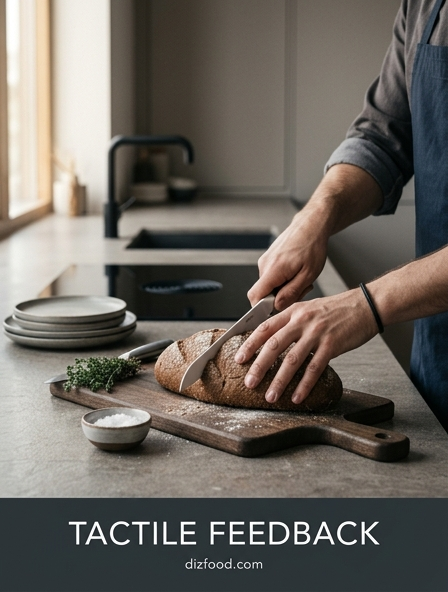
Uniform dicing is as much a physical dialogue between the chef and the ingredient as it is a visual task. While the eyes determine the target, the fingertips provide the essential feedback required to maintain consistency across hundreds of individual cuts. When a chef utilizes the "claw grip," the knuckles act as a tactile guide for the blade, allowing for micro-adjustments in thickness that the eye might miss. This physical contact ensures that each slice is identical, leading to even cooking times and a professional aesthetic.
The tactile sensation of the knife sliding against the skin of the guiding hand provides a constant stream of data. This sensory input allows for a rhythmic cadence that bypasses the need for constant visual measurement. By relying on the feel of the product's surface and the steady positioning of the guiding hand, a cook can achieve a level of precision that remains stable even when the environment is fast-paced or distracting. Ultimately, touch serves as the primary regulator of spatial awareness on the cutting board.
Haptic Feedback and Blade Control
Haptic feedback refers to the vibrations and resistance transmitted from the knife's edge, through the bolster, and into the palm of the hand. This connection allows a cook to perceive the sharpness of the blade and the structural integrity of the steel. High-quality knives are often balanced to enhance this feedback, ensuring that the user can feel exactly where the "sweet spot" of the edge is making contact with the board. Without this tactile information, blade control becomes clumsy and prone to error.
- Vibration Perception: Feeling the "bite" of the edge into the wood or plastic of the cutting board.
- Weight Distribution: Sensing how the knife pivots around its balance point during a rock-chop.
- Edge Alignment: Detecting if the blade is tilting or rolling during a heavy vertical cut.
- Surface Friction: Identifying when the blade begins to drag due to starch buildup or moisture.
By interpreting these subtle signals, a chef can adjust their grip strength and angle instantaneously. This real-time correction is what separates a mechanical movement from a nuanced, controlled technique.
Sensing Ingredient Resistance and Density
Every ingredient offers a unique resistance profile that requires a specific tactile response. A carrot, for instance, provides a firm, brittle resistance that necessitates a sharp, decisive downward force. In contrast, an onion features layers of varying tension that can cause a blade to slip if the resistance isn't felt and accounted for. Tactile feedback allows the cook to "read" the internal structure of the produce, adjusting the speed and power of the stroke to match the density of the item.
| Ingredient Type | Tactile Characteristic | Required Response |
|---|---|---|
| Root Vegetables | Dense, rigid, high resistance | Steady, high-pressure push-cuts |
| Alliums | Layered, slippery, varying density | Precision tip-work, horizontal slicing |
| Leafy Greens | Light, compressible, low resistance | Rapid, rhythmic rocking motions |
| Stone Fruits | Soft flesh, hard internal pit | Gentle pressure with sudden stops |
Understanding these densities through touch prevents the common mistake of over-applying force, which often leads to crushed fibers or jagged edges. By sensing the "push-back" from the ingredient, the chef maintains the integrity of the food's texture.
The Connection Between Grip and Accuracy
The way a knife is held determines the fidelity of the tactile information received by the brain. The professional "pinch grip"-where the thumb and index finger grasp the blade's bolster-maximizes the surface area in contact with the metal. This positioning shortens the lever arm, bringing the hand closer to the point of impact. Consequently, every microscopic vibration from the blade's edge is felt more intensely, allowing for a level of accuracy that a handle-only grip cannot provide.
Accuracy in dicing relies on the hand's ability to perceive the exact angle of the blade relative to the ingredient. When the grip is too tight, the hand becomes desensitized to subtle feedback; when too loose, control is lost. Finding the "neutral" grip allows the tendons in the hand to act as shock absorbers, smoothing out the motion. This tactile harmony ensures that the knife moves as an extension of the arm, allowing the chef to execute complex cuts like brunoise or julienne with minimal cognitive effort and maximum precision.
Calibrating Pressure for Soft and Firm Produce
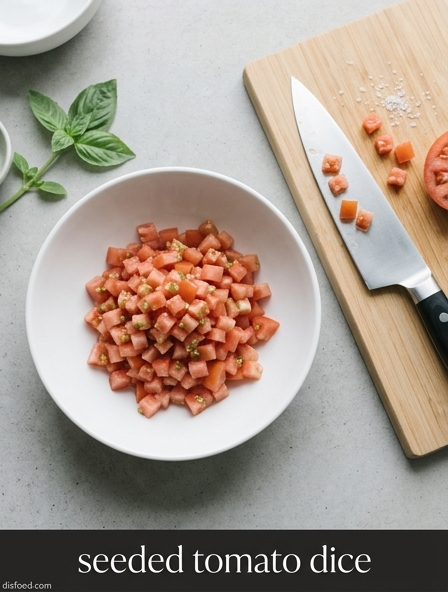
Calibrating the correct amount of downward and forward pressure is a fundamental skill that relies entirely on tactile sensitivity. Soft produce, such as ripe tomatoes or roasted peppers, requires a delicate "sawing" motion with minimal downward force to avoid bruising the delicate cell walls. Conversely, firm produce like butternut squash demands a significant application of body weight channeled through the palm. The cook must constantly recalibrate their muscular output based on the feedback felt at the point of contact.
- Initial Engagement: Feeling the blade break through the skin or outer epidermis.
- Mid-Cut Resistance: Monitoring the tension as the blade travels through the core or pith.
- Termination: Sensing the distinct "thud" as the blade completes the transit and hits the board.
This calibration prevents the blade from "wedging"-a phenomenon where a thick blade gets stuck in a dense vegetable. By feeling the drag, a chef knows to switch from a straight push-cut to a slicing motion, reducing the physical strain on the wrist and ensuring a cleaner finished product.
Tactile Awareness and Kitchen Safety
Safety in a high-speed kitchen environment is deeply rooted in tactile awareness. A sharp knife is actually safer than a dull one because it provides clear, predictable feedback. When a blade is dull, the tactile sensation is one of "sliding" or "skating" across the surface of an ingredient rather than "biting" into it. Recognizing this lack of friction through the hand is the first warning sign of a potential slip. Tactile sensitivity allows a chef to abort a cut the moment the blade deviates from its intended path.
Furthermore, the guiding hand uses touch to keep fingers away from the edge. By maintaining a constant physical reference point against the side of the blade, the chef knows the knife's location without needing to look directly at it. This "proprioceptive safety" is what allows professionals to work at high speeds while maintaining an awareness of their surroundings. Sensing a change in the angle of the blade against the knuckle can prevent a serious injury before the brain even processes the visual threat.
Enhancing Consistency Through Sensory Input
Consistency in the kitchen is the hallmark of professional skill, and it is achieved through a feedback loop of sensory input. As a chef dices a large quantity of onions, the hand begins to memorize the specific "give" of the vegetable. This muscle memory is reinforced by the tactile confirmation of each successful cut. If a piece of onion is slightly thicker than the last, the guiding hand feels the difference in the displacement of the blade, and the brain immediately adjusts the next movement.
This reliance on sensory input allows for a high degree of replicability. While visual cues can be deceived by shadows or steam, the tactile sense remains objective. The physical sensation of the knife hitting the board at a specific interval creates a tempo. This tempo, guided by touch, ensures that every cube of potato or carrot is the same size, which is critical for even heat distribution during the cooking process. Without this tactile regulation, consistency would vary wildly depending on the cook's level of fatigue or visual focus.
How Hand-to-Knife Contact Improves Rhythm
Rhythm is the secret to efficiency in kitchen prep, and it is governed by the tactile relationship between the hand and the tool. When a cook finds a rhythmic flow, the knife moves in a continuous, elliptical motion. This rhythm is maintained by the sensation of the blade's return-the moment the steel leaves the board and begins its next arc. The tactile "memory" of the previous stroke dictates the timing of the next, creating a percussive beat that echoes through the prep station.
This hand-to-knife contact allows for a seamless transition between different types of cuts. A chef can move from a rapid mince to a careful dice without breaking stride, simply by altering the tactile pressure and the width of the guiding hand's retreat. The feel of the handle in the palm and the blade against the fingers provides a stabilizing force that prevents the rhythm from becoming erratic. In this state of flow, the cook is not thinking about the knife; they are feeling the dance of the blade through the food.
The Science of Haptics in Professional Knife Skills
The science of haptics involves the study of touch and motion, specifically how we perceive and manipulate objects. In professional knife skills, this involves the activation of mechanoreceptors in the fingertips and palm. These receptors send high-speed signals to the somatosensory cortex, providing data on texture, temperature, and pressure. Professional chefs have highly developed neural pathways that allow them to process this haptic data faster than the average person, leading to superior dexterity and speed.
Proprioception, or the body's ability to sense its position in space, works alongside haptics to guide the knife. This "sixth sense" tells the chef exactly where their hand is located relative to the blade without the need for visual confirmation. Research suggests that repetitive tactile tasks in the kitchen can lead to cortical mapping, where the tool actually becomes an extension of the body's nervous system. This explains why a seasoned chef can feel a tiny nick in a blade or a soft spot in a vegetable as if it were happening to their own skin.
Achieving Precision Beyond Visual Cues
Precision is often equated with sight, but in the culinary arts, the most accurate work often happens beyond visual cues. When dicing in a steamy kitchen or under dim lighting, the tactile sense becomes the primary navigator. By utilizing the "blind" technique-where the guiding hand provides all the spatial data-a chef can produce perfect julienne while looking across the kitchen to monitor a stove. This level of mastery indicates that the tactile sense has superseded the visual sense in terms of reliability.
- Depth Perception: Feeling the blade reach the bottom of a cut without looking.
- Texture Mapping: Identifying internal rot or woodiness through the blade's resistance.
- Spatial Calibration: Maintaining exact 1/4-inch increments through the "knuckle-jump" method.
When the eyes are freed from the minutiae of the cutting board, the chef gains a broader awareness of the kitchen environment. Precision then becomes a matter of physical intuition, where the hands "know" the dimensions of the dice by the mere sensation of the knife's travel and the ingredient's displacement.

Comments