
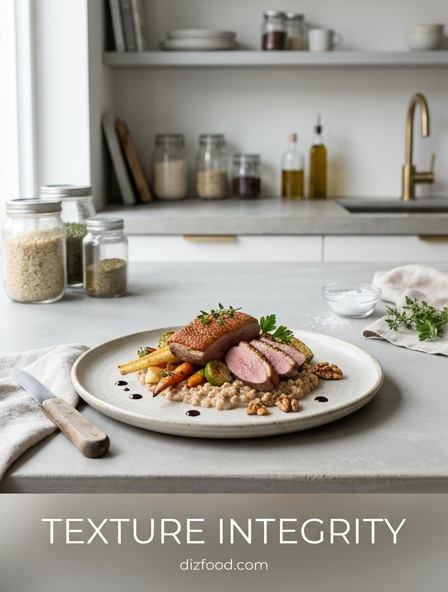
Cellular Integrity and Texture Preservation
Maintaining cellular integrity is the fundamental objective when preparing fresh ingredients. At a microscopic level, plant tissues consist of rigid cell walls made of cellulose that house water and nutrients. When a chef uses a razor-sharp blade, the edge slices cleanly through these structures, causing minimal trauma to the surrounding cells. In contrast, a dull knife exerts excessive downward pressure, effectively crushing the cells rather than severing them. This mechanical stress leads to the leakage of intracellular fluids, commonly observed as "puddling" on the cutting board.
Preserving these cell walls ensures that the internal turgor pressure remains intact, which is responsible for the characteristic "snap" of fresh vegetables. When cellular integrity is compromised, the ingredient loses its structural rigidity, resulting in a flaccid and unappealing mouthfeel. This preservation is critical for ingredients served raw, where the texture is just as important as the flavor profile.
- Reduces liquid loss (weeping) in high-moisture vegetables.
- Maintains the structural "crunch" of cruciferous plants.
- Prevents the premature softening of delicate leafy greens.
- Ensures fruit segments remain firm and distinct in salads.
Precision Control for Uniform Cooking
Texture integrity is inextricably linked to how ingredients respond to heat. Uniformity in size and shape is not merely a matter of aesthetics; it is a requirement for technical precision in the kitchen. When vegetables are cut into identical dimensions, they possess the same surface-area-to-volume ratio. This allows heat to penetrate each piece at the same rate, ensuring that every morsel reaches the desired level of doneness simultaneously. Without this precision, smaller pieces may become overcooked and mushy while larger pieces remain raw and fibrous.
| Cut Type | Dimensions | Culinary Application |
|---|---|---|
| Brunoise | 3mm x 3mm x 3mm | Garnishes and refined sauces |
| Macedoine | 5mm x 5mm x 5mm | Soups and vegetable medleys |
| Batonnet | 6mm x 6mm x 50mm | Side dishes and fries |
By achieving this level of consistency, the chef manages the degradation of pectin and starch, preventing a dish from having a variegated and distracting texture. The result is a cohesive culinary experience where the resistance of the food is predictable and pleasant across the entire plate.
Minimizing Oxidation and Enzymatic Browning
The method of cutting directly influences the rate of chemical degradation in fresh produce. When a blade is dull or when food is torn, the increased surface area and cell damage expose the enzyme polyphenol oxidase (PPO) to oxygen. This reaction triggers rapid enzymatic browning, which not only alters the color but also softens the texture and changes the flavor profile of the ingredient. Clean, surgical cuts limit the number of ruptured cells, thereby restricting the interaction between enzymes and the atmosphere.
This is particularly evident in ingredients with high phenolic content, such as apples, potatoes, and avocados. A clean cut seals the surface more effectively, delaying the onset of oxidation and keeping the ingredient visually and structurally fresh for a longer period. Furthermore, minimizing cell damage reduces the release of ethylene gas in some produce, which can accelerate the ripening and eventual decay of surrounding items in a prep container.
- Potatoes: Retain their starchy white interior longer.
- Herbs: Stay green and vibrant without turning black.
- Alliums: Release fewer sulfurous compounds that lead to bitter off-flavors.
Impact of Blade Speed on Moisture Loss
The speed at which a blade passes through an ingredient significantly affects its final moisture content and texture. High-speed mechanical processing, such as that found in food processors, often generates localized friction and heat. This thermal energy, combined with the violent impact of the blades, can cause moisture to evaporate or be forcefully ejected from the tissue. Hand-cutting with a sharp knife allows for a slower, more deliberate separation of fibers, which keeps the natural juices localized within the food.
- Mechanical impact shatters cells, leading to a "watery" result in salsas or purees.
- Manual slicing preserves the natural viscosity of plant juices.
- Reduced friction prevents the slight par-cooking of delicate surfaces.
- Controlled speed allows for the preservation of delicate emulsions within the food.
For items like tomatoes or citrus fruits, the difference is stark; a hand-cut slice remains plump and juicy, whereas a machine-cut piece often appears collapsed and sits in a pool of its own juice. This moisture retention is vital for maintaining the intended mouthfeel of a finished dish.
Enhanced Flavor Release Through Clean Cuts
Texture and flavor are deeply interconnected through the release of volatile organic compounds. When an ingredient is cut cleanly, the flavor compounds are released primarily during mastication rather than on the cutting board. Crushing or bruising an ingredient prematurely releases essential oils and juices, which then oxidize or evaporate before the food ever reaches the guest. This is especially true for aromatics like garlic, ginger, and fresh herbs.
A sharp knife allows the chef to control the intensity of the flavor. For instance, a finely minced shallot produced with a sharp blade will provide a bright, clean onion flavor, whereas a bruised shallot may taste acrid or unpleasantly pungent. By maintaining the integrity of the tissue until the moment of consumption, the chef ensures a more dynamic and layered tasting experience.
- Basil: Remains fragrant and sweet without becoming "muddy."
- Garlic: Provides a controlled pungency rather than overwhelming bitterness.
- Zest: Releases bright citrus oils only when the surface is breached by the teeth.
Comparing Sharp Steel to Machine Shredding
While industrial shredders and food processors offer speed and efficiency, they frequently compromise the tactile quality of the food. Machine blades often operate on a principle of high-velocity impact, which can tear the fibers of the food rather than slicing them. This tearing creates a ragged surface area that absorbs more dressing or moisture, often leading to a soggy final product. Hand-honed steel blades, by contrast, leave a smooth, polished surface on the ingredient.
| Feature | Hand-Cut Steel | Machine Shredding |
|---|---|---|
| Surface Texture | Smooth and sealed | Ragged and porous |
| Fluid Retention | High | Low to Moderate |
| Dressing Absorption | Controlled | Excessive |
| Visual Clarity | Defined edges | Frayed edges |
In applications like coleslaw or salads, the difference in texture integrity determines the longevity of the dish. Hand-cut cabbage will remain crisp for hours, even after being dressed, while shredded cabbage will quickly lose its structural bounce and become limp due to the capillary action of the jagged edges drawing in salt and acids.
Superior Consistency in Professional Dicing
The hallmark of a professional kitchen is the ability to produce consistent results under pressure. Superior dicing technique relies on the marriage of sharp equipment and disciplined ergonomics. Achieving a perfect "mirepoix" or "paysanne" is not just about visual uniformity; it is about creating a predictable texture in the finished stew or sauce. When every cube of carrot or celery is the same size, the chef can guarantee a specific "al dente" bite that elevates the dish from a rustic preparation to a refined one.
- Establish a flat base for the ingredient to prevent slipping.
- Use the "claw" grip to ensure safety and consistent thickness.
- Utilize the full length of the blade to minimize downward crushing force.
- Maintain a rhythmic pace to ensure identical dimensions across the batch.
This consistency is particularly important in multi-component dishes where different textures are meant to contrast with one another. A perfectly diced garnish provides a localized burst of texture that complements a smooth puree, creating a sophisticated sensory experience that is impossible to achieve with haphazardly chopped ingredients.
Protecting Nutrient Density in Fresh Produce
Texture integrity is often a visual and tactile proxy for nutritional density. Many vitamins, particularly Vitamin C and various B vitamins, are water-soluble and highly sensitive to oxygen and light. When a vegetable is roughly chopped or bruised, the resulting juice loss carries away these essential nutrients. By using sharp knives to maintain the cellular structure of the food, the vitamins and minerals remain locked within the plant's fibers until they are consumed.
Furthermore, the preservation of antioxidants is linked to the reduction of enzymatic browning mentioned earlier. When the cells remain intact, the phytonutrients are less likely to be degraded by oxidative stress. This creates a more nutritious meal and ensures that the consumer benefits from the full biological potential of the ingredients. Texture, therefore, serves as a reliable indicator of how carefully the food has been handled from a nutritional standpoint.
- Vitamin C: Retained in the cellular liquid of peppers and citrus.
- Antioxidants: Preserved in the skins and dark pigments of vegetables.
- Folate: Protected from rapid atmospheric degradation.
Role of Tactile Feedback in Food Prep
The relationship between a chef and their ingredients is mediated by the tactile feedback provided by their tools. A high-quality, sharp knife acts as an extension of the hand, transmitting information about the ingredient's density, ripeness, and internal structure. This feedback allows the cook to adjust their pressure and technique in real-time to preserve the integrity of the product. For example, when slicing a ripe tomato, the cook can feel the exact moment the skin yields, allowing for a light touch that prevents the fruit from collapsing.
- Identifies internal voids or woody cores in root vegetables.
- Signals the presence of hidden seeds or pits in fruits.
- Allows for precise tension adjustment when filleting delicate fish.
- Provides a sense of the "grain" of meats and fibrous plants.
This sensitivity is lost with dull tools or mechanical processors, where the force required to cut through the ingredient masks the subtle cues of its quality. By responding to tactile feedback, the chef can tailor their approach to each individual piece of produce, maximizing its textural potential.
Aesthetic Excellence in Hand Cut Vegetables
Visual appeal is the first stage of the dining experience, and it is largely governed by the precision of the prep work. Cleanly cut vegetables possess a natural luster and sharp edges that reflect light, making the food appear more vibrant and appetizing. When a vegetable is cut with a sharp blade, the smooth surface acts almost like a mirror, whereas a rough, torn surface scatters light, appearing dull and matte. This aesthetic quality is a direct reflection of the texture; if it looks sharp, it likely feels crisp.
- Sharp edges create defined shadows that add depth to a plate's composition.
- Uniform shapes suggest a high level of care and professional discipline.
- Vibrant colors are maintained by preventing the "clouding" of bruised tissue.
- Polished surfaces prevent sauces from clinging unevenly to the ingredients.
In high-end gastronomy, the visual integrity of a julienne or a turned vegetable (tourné) serves as a promise of the textural experience to follow. It signals to the diner that the ingredients have been treated with respect, ensuring that the final dish is as beautiful to look at as it is satisfying to eat.

Comments