
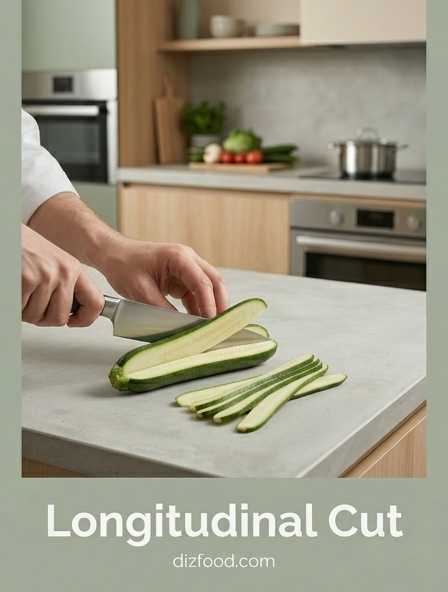
Understanding Plant Fiber Alignment
In the culinary arts, the orientation of plant fibers dictates the final outcome of any dish. Most vegetables, particularly those with elongated structures like celery, rhubarb, and scallions, possess vascular bundles that run vertically from the root to the leaf. These bundles, consisting of xylem and phloem, act as the structural highway of the plant. When a chef utilizes a longitudinal cut, they are slicing parallel to these natural fibers rather than severing them perpendicularly. This alignment is crucial because the cellulose and lignin strands remain largely intact, providing a specific mechanical resistance during both preparation and consumption.
- Primary Vascular Bundles: Provide vertical support.
- Collenchyma Cells: Offer flexibility and strength along the axis.
- Sclerenchyma Fibers: Contribute to the toughness of the outer skin.
By understanding this internal architecture, a cook can manipulate the vegetable to achieve desired structural results. Slicing with the grain preserves the natural geometry of the plant's internal transport system, ensuring that the vegetable retains its elongated shape even after the application of heat or acidic marinades. This fundamental knowledge distinguishes amateur preparation from professional-grade knife skills.
Cellular Integrity and Water Retention
The method by which a knife enters a vegetable directly impacts its cellular integrity. A longitudinal cut is inherently less invasive to the plant's microscopic storage units, known as vacuoles. When you slice along the length of a vegetable, you traverse the gaps between cell walls more frequently than when cutting across them. This preservation of the cell wall structure is vital for water retention. When cells are ruptured en masse-as occurs in crosswise slicing-internal fluids are immediately released, leading to "weeping" and a loss of turgor pressure.
This biological phenomenon explains why vegetables cut lengthwise often appear shinier and feel firmer. The moisture remains trapped within the cellular compartments rather than pooling on the cutting board. Maintaining this internal hydration is essential for ensuring that the vegetable does not become flaccid during the mise en place stage. By respecting the longitudinal boundaries of the plant's cells, the chef ensures that the nutritional content, primarily water-soluble vitamins, remains encased within the vegetable's structure rather than being lost to evaporation or drainage.
Vertical Slicing vs Horizontal Chops
Choosing between a vertical slice and a horizontal chop is a decision that affects the surface area and the structural durability of the ingredient. Vertical slices, or longitudinal cuts, favor the preservation of the plant's natural length and fiber strength. Conversely, horizontal chops, often referred to as "round" or "cross-cut" slices, break the structural skeleton of the vegetable, making it soften more quickly during the cooking process. The following table highlights the primary functional differences between these two orientations.
| Feature | Longitudinal (Vertical) | Transverse (Horizontal) |
|---|---|---|
| Fiber State | Intact/Parallel | Severed/Broken |
| Cooking Speed | Slower/Maintains Shape | Faster/Softens Rapidly |
| Texture | Crunchy/Fibrous | Tender/Mealy |
| Fluid Loss | Minimal | High |
In applications like stir-frying, where speed and texture are paramount, the vertical slice is superior because it prevents the vegetable from collapsing into a soft mass. Horizontal cuts are better suited for soups or purees where the goal is to break down the plant's defenses to release starches and flavors into the surrounding liquid.
Minimizing Cell Wall Damage
The mechanical action of a blade passing through vegetable tissue can either be a clean separation or a violent rupture. Minimizing cell wall damage is the primary objective of the longitudinal cut. Because the knife moves in the same direction as the cellulose strands, there is less resistance and friction. This results in fewer broken cell walls per square inch of surface area. When cell walls are damaged, enzymes like alliinase in onions or polyphenol oxidase in fruits are released, triggering chemical reactions that can alter flavor and cause browning.
- Reduction of enzymatic browning by keeping cells sealed.
- Prevention of "off" flavors caused by oxidation of internal compounds.
- Improved shelf life of prepped vegetables in a commercial kitchen.
By employing a precise lengthwise motion, the chef limits the exposure of the plant's internal chemistry to the atmosphere. This precision is especially important for aromatics and delicate greens. A clean, longitudinal cut ensures that the flavor remains clean and focused, rather than becoming bitter or muddy due to excessive cellular trauma during the chopping phase.
The Science of Structural Rigidity
Structural rigidity in vegetables is derived from the combination of turgor pressure and the density of the cell walls. Longitudinal cutting leverages the inherent strength of the plant's "reinforcing bars"-the long chains of cellulose. When these chains remain unbroken, they provide a rigid framework that resists bending and compression. This is why a julienned carrot cut lengthwise is significantly harder to snap than a round slice of the same thickness. The science lies in the distribution of mechanical stress along the length of the fibers.
When heat is applied, the hemicellulose and pectin that glue the cells together begin to dissolve. If the cut is longitudinal, the long cellulose fibers act as a scaffold, holding the piece together even as the "glue" weakens. This allows for a vegetable that is cooked through but still possesses a "snap" or "bite." Understanding this rigidity allows chefs to create dishes with complex architectural elements, such as tall garnishes or stacked vegetable medleys, that do not wilt or sag under their own weight or the heat of a sauce.
Preserving Crispness During High Heat
High-heat cooking methods, such as searing, roasting, or wok-frying, subject vegetables to rapid moisture evaporation. A longitudinal cut is the most effective way to preserve crispness under these intense conditions. Because the fibers are intact, they act as conduits that distribute heat more evenly without allowing the entire structure to collapse. The surface area exposed in a lengthwise cut allows for efficient Maillard reaction-browning-while the internal fibers remain taut and hydrated.
For example, when roasting bell peppers or zucchini, a longitudinal slice ensures that the vegetable maintains a "toothy" texture. If these were sliced into thin rounds, the high heat would quickly penetrate the severed cell walls, causing the moisture to steam the vegetable from the inside out, resulting in a limp, soggy texture. By maintaining the vertical integrity of the plant, the chef creates a thermal barrier that protects the core of the slice, allowing the exterior to crisp and caramelize while the interior remains succulent and firm.
Impact on Culinary Texture Profiles
Texture is often as important as flavor in modern gastronomy, and the direction of the cut is the primary tool for texture manipulation. Longitudinal cuts produce a "linear" texture profile. This means the resistance felt when biting into the food is consistent and requires more mastication. This is often described as "al dente" in the vegetable world. The mouth perceives this as freshness and quality. Conversely, cutting against the grain creates a "shorter" texture that falls apart easily, which might be perceived as more "melt-in-your-mouth" but can also be seen as mushy if overcooked.
- Longitudinal: Leads to a crisp, resilient, and fibrous mouthfeel.
- Transverse: Results in a soft, yielding, and easily dissolved mouthfeel.
In salads, where the vegetables are served raw, the longitudinal cut provides a superior crunch that lasts longer even after being dressed. The vinegar and salt in dressings typically break down plant tissues, but the reinforced structure of a lengthwise cut resists this degradation significantly better than a crosswise cut, maintaining the desired sensory experience throughout the duration of the meal.
Longitudinal Technique for Root Vegetables
Root vegetables like carrots, parsnips, and daikon radishes present a unique challenge due to their dense, woody cores and softer outer flesh. The longitudinal technique is particularly effective here because it allows the chef to include both the sweet outer cortex and the structural inner core in every slice. When these vegetables are cut into rounds, the center often remains hard while the edges overcook. A lengthwise cut ensures a uniform thickness of both types of tissue, leading to more even cooking results.
- Halve the root lengthwise to create a stable, flat base.
- Slice into planks following the vertical grain.
- Stack and cut into batons or julienne for maximum structural uniformity.
This method is essential for classic French cuts like batonnet and julienne. By adhering to the longitudinal axis, the chef ensures that every piece of the root vegetable reacts to heat in exactly the same way. This consistency is not just aesthetic; it is functional, ensuring that no guest receives a piece that is either undercooked and woody or overcooked and disintegrating.
Enhancing Mouthfeel with Precision Dicing
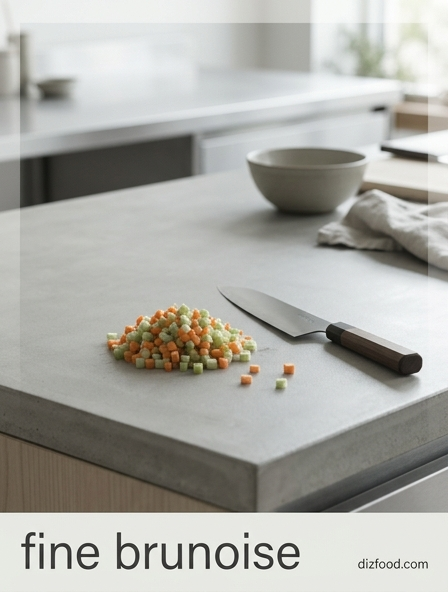
Precision dicing begins with a master longitudinal cut. To achieve a perfect brunoise or macédoine, one must first create uniform planks and batons by slicing along the grain. This initial step is what determines the final mouthfeel of the dish. When every cube is cut with its fibers oriented in the same direction, the dish achieves a level of textural harmony that is impossible with haphazard chopping. Each small cube will offer the same resistance and release the same amount of flavor when chewed.
This precision is vital in fine dining, where the uniformity of the "small dice" contributes to the elegance of the presentation and the consistency of the flavor profile. If the initial longitudinal cuts are uneven, the resulting dice will be a mixture of various fiber orientations, leading to a confused mouthfeel where some pieces are crunchy and others are soft. By mastering the longitudinal foundation, the chef ensures that even the smallest vegetable components contribute to a sophisticated and intentional culinary experience that emphasizes both craftsmanship and science.
Mastering the Grain for Better Prep
Mastering the grain of various vegetables is a hallmark of an efficient kitchen. To do this effectively, a cook must first learn to visually identify the direction of growth. Most vegetables show subtle lines or ridges on their skin that indicate the path of the underlying fibers. In onions, the lines run from the root to the stem; in celery, the ribs are obvious. Aligning the knife with these markers allows for a smoother cutting motion, which reduces physical strain on the chef and minimizes wear on the knife's edge.
Efficient prep work relies on the predictability of the ingredient. When cutting longitudinally, the vegetable is less likely to slip or roll, provided the first cut creates a flat surface. This stability increases speed and safety. Furthermore, understanding the grain allows the chef to adapt their technique for different outcomes: cutting strictly with the grain for maximum crunch, or at a slight diagonal (bias) to increase surface area while still maintaining some structural integrity. This level of control is what transforms simple ingredient preparation into an exact science.

Comments