
The Science of Cellular Structure
Plant tissues in the kitchen are complex biological systems composed of individual cells encased in rigid walls. These walls are primarily constructed from cellulose, hemicellulose, and pectin, which provide the structural integrity and mechanical support responsible for the "crunch" in fresh produce. Within these cells lies the vacuole, a large organelle filled with water and nutrients that maintains turgor pressure. This pressure is what keeps a vegetable firm; when turgor pressure drops due to heat or physical damage, the ingredient becomes soft or wilted. Understanding this microscopic architecture allows a cook to manipulate texture with precision.
- Cellulose: The primary structural component providing rigidity.
- Pectin: The intercellular adhesive that binds cells together.
- Turgor Pressure: The internal fluid pressure that determines crispness.
- Cytoplasm: The fluid containing enzymes and flavor compounds.
By respecting these biological boundaries, chefs can influence the final outcome of a dish. For instance, the degradation of pectin during cooking is what eventually leads to the softening of fruits into jams or vegetables into purees.
Uniform Dicing for Even Cooking
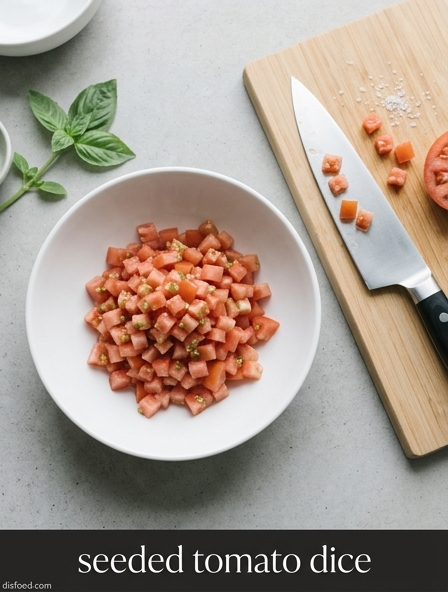
Achieving uniformity in dicing is a fundamental application of thermodynamics to cellular structures. When ingredients such as carrots, potatoes, or onions are cut into identical dimensions, they possess the same surface-area-to-volume ratio. This ensures that heat penetrates the cellular matrix at an identical rate across every piece in the pan. Without this precision, smaller pieces suffer from total cellular collapse and overcooking before larger pieces reach the desired internal temperature. This consistency is vital for maintaining the structural integrity of the ingredient throughout the cooking process.
| Cut Type | Dimensions | Typical Application |
|---|---|---|
| Brunoise | 3mm x 3mm x 3mm | Garnishes and sauces |
| Macedoine | 6mm x 6mm x 6mm | Soups and stews |
| Parmentier | 1.2cm cube | Roasted root vegetables |
Predictable heat transfer prevents the common culinary failure where some portions of a dish are mushy while others remain raw. This technical precision is what separates professional execution from amateur preparation.
Impact of Knife Sharpness on Flavor
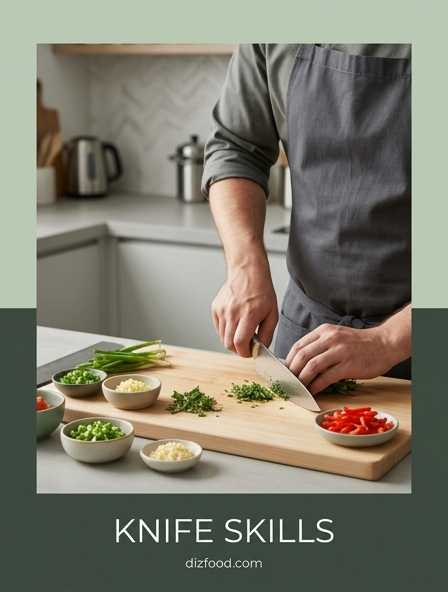
A sharp knife acts as a precision instrument that slides between or cleanly through cell walls, whereas a dull blade acts as a blunt force tool that crushes them. When cells are crushed, they rupture and release their internal contents prematurely. In aromatic ingredients like garlic, onions, and shallots, this mechanical trauma triggers an enzymatic reaction. The enzyme alliinase mixes with sulfur compounds to create pungent, often bitter molecules. A clean cut minimizes this damage, resulting in a cleaner and more nuanced flavor profile that enhances rather than overpowers a dish.
- Clean Cut: Minimizes enzymatic browning and off-flavors.
- Crushed Cells: Increases bitterness and volatile gas release.
- Moisture Retention: Sharp blades keep juices inside the tissue.
- Blade Geometry: Thinner edges reduce the wedging effect on cells.
The culinary goal is to control the release of these chemical compounds. By utilizing a sharp edge, the cook maintains the integrity of the produce's internal chemistry until the moment of consumption or targeted heat application.
Preventing Moisture Loss and Oxidation
The moment a cell wall is breached, the internal moisture is exposed to the environment, leading to rapid dehydration. Simultaneously, the exposure of phenolic compounds to oxygen, facilitated by the enzyme polyphenol oxidase, initiates enzymatic browning. This is particularly problematic in avocados, apples, and potatoes. By utilizing precise cutting techniques that damage fewer cells on the surface, the rate of this oxidation is significantly slowed. This preservation of cellular fluid is essential for maintaining both the weight and the succulent quality of the ingredient from the prep station to the final plate.
- Use a sharp blade to ensure a smooth, sealed cut surface.
- Minimize the time ingredients spend exposed to open air.
- Submerge cut items in acidulated water to inhibit enzymes.
- Store prepped produce in high-humidity environments.
The visual and textural degradation caused by oxidation is a direct result of cellular mismanagement. Protecting the integrity of the exposed surface area is the most effective way to ensure that the produce retains its vibrant color and internal moisture during the mise en place phase.
Mouthfeel and Texture Consistency
Texture is the physical sensation of food, and it is governed by the structural arrangement of cells and fibers. The way a cook navigates these fibers-either cutting with or against the grain-radically alters the sensory experience. For fibrous vegetables like celery or protein-rich meats, cutting perpendicular to the long cellular chains reduces the mechanical work required for chewing. This results in a perceived tenderness that would be absent if the long fibers remained intact. Consistency in cut size ensures a predictable mouthfeel, where every bite offers the same resistance and release of flavor-carrying juices.
- Fiber Orientation: Cutting against the grain shortens tough fibers.
- Cell Density: High-density tissues require smaller cuts for tenderness.
- Surface Texture: Smooth cuts feel more refined on the palate.
The harmony between structural science and sensory perception defines high-level culinary execution. By understanding how the palate perceives the breakdown of cellular walls, a chef can tailor the prep work to achieve a specific, desired mouthfeel. This intentionality ensures that the texture complements the flavor profile rather than distracting from it.
Visual Excellence Through Precise Cuts
Visual appeal is the first sensory interaction a diner has with a dish, and it is deeply rooted in geometric precision. Precise cuts create a sense of order and professionalism that signals quality. Beyond mere aesthetics, clean cuts reflect light differently than ragged, torn edges. A smooth, cleanly sliced surface has a natural sheen because the cell walls remain flat and uniform, allowing light to bounce off in a consistent direction. In contrast, crushed cells create a matte, dull appearance that suggests poor handling. Mastering these techniques transforms a rustic preparation into a refined culinary presentation.
| Visual Element | Effect of Precise Cutting | Effect of Poor Cutting |
|---|---|---|
| Luster | High sheen and vibrancy | Dull, matte surface |
| Color | Retains natural pigment | Accelerated browning |
| Geometry | Uniformity and balance | Visual chaos and clutter |
The visual impact of a dish is often a direct reflection of the chef's respect for the ingredient's cellular structure. Clean edges and uniform shapes indicate a level of care that extends through every stage of the cooking process.
Maximizing Nutrient Retention in Produce
The nutritional value of vegetables is often contained within the protective barrier of the cell wall. When produce is chopped too finely or with improper tools, many water-soluble vitamins, such as Vitamin C and B-complex vitamins, are lost through leaching. These nutrients reside in the cytoplasm and vacuoles, which drain out when the cellular structure is compromised. Minimizing the surface area exposed to air and water during washing and cooking is the most effective way to retain these essential compounds. By using sharp knives and choosing appropriate cut sizes, cooks can ensure that the health benefits of the food are preserved.
- Leaching: The loss of nutrients into surrounding liquids.
- Vitamin C: Highly susceptible to oxidation when cells rupture.
- Bioavailability: Proper cutting can increase access to certain phytonutrients.
Culinary technique therefore serves a dual purpose: enhancing flavor while safeguarding the nutritional density of the ingredients. By maintaining cellular integrity, we prevent the "bleeding" of vitamins and minerals, ensuring that they reach the consumer rather than being lost during the preparation phase.
The Chemistry of Clean Ingredient Breaks
On a molecular level, the "break" of an ingredient involves the snapping of polysaccharide chains. When we snap a green bean or slice through a radish, we are breaking the pectin bonds that hold cells together. A clean break indicates that the cell walls have remained intact up to the point of failure, preserving the turgidity of the tissue. If the break is ragged, it indicates that the cells have been pulled apart or crushed, leading to a loss of the "snap" sensation. This chemistry is also relevant to starches; cutting a potato cleanly prevents the excessive release of starch granules, which can make the finished dish gluey.
- Identify the natural cleavage planes of the ingredient.
- Apply swift, decisive pressure to encourage a clean fracture.
- Observe the surface for signs of starch or fluid leakage.
Controlling these microscopic interactions through proper technique is essential for achieving the desired chemical balance in any recipe. It ensures that starches and pectins behave predictably under heat, resulting in a superior final product that retains its intended structural characteristics.
Standardizing Surface Area for Seasoning
Seasoning is more than a surface treatment; it is an osmotic process where salt and flavorings penetrate the cellular structure. By standardizing the surface area through precise cutting, a chef ensures that seasonings are absorbed at a uniform rate. If a dish contains varying sizes of vegetables, smaller pieces will become over-salted while larger pieces remain bland in the center. The relationship between the exterior surface area and the interior volume dictates the efficiency of flavor transfer. Consistent dicing allows for a predictable migration of ions through the cell membranes, resulting in a balanced flavor profile across the entire plate.
- Osmosis: The movement of water out of cells to balance salt concentrations.
- Diffusion: The movement of seasoning molecules into the tissue.
- Equilibrium: Achieving a uniform flavor throughout the ingredient.
This control is especially important in curing, pickling, and marinating. Without uniform cellular exposure, the chemistry of flavor enhancement becomes erratic, leading to inconsistent results that can undermine the complexity of a well-designed recipe.
Preserving Freshness from Prep to Plate
The lifespan of prep work is directly linked to cellular health. Once an ingredient is cut, its metabolic rate increases as a stress response, accelerating the aging process and the consumption of stored sugars. Clean, sharp cuts minimize this stress response compared to rough chopping. By keeping more cells intact, the ingredient retains its natural defenses against spoilage and microbial growth. Proper storage after cutting-such as maintaining high humidity and low temperatures-further supports the cellular matrix. Understanding the fragility of these microscopic structures allows cooks to extend the window of peak freshness for their mise en place.
- Cut as close to service time as possible to reduce metabolic stress.
- Use airtight containers to maintain internal cellular humidity.
- Avoid stacking heavy items that could crush delicate cells.
- Monitor temperature to slow down enzymatic degradation.
By protecting the cellular integrity of prepped items, the kitchen ensures that the final dish retains the vibrancy, flavor, and texture of the original raw material. This longevity is the hallmark of efficient and high-quality kitchen management.

Comments