
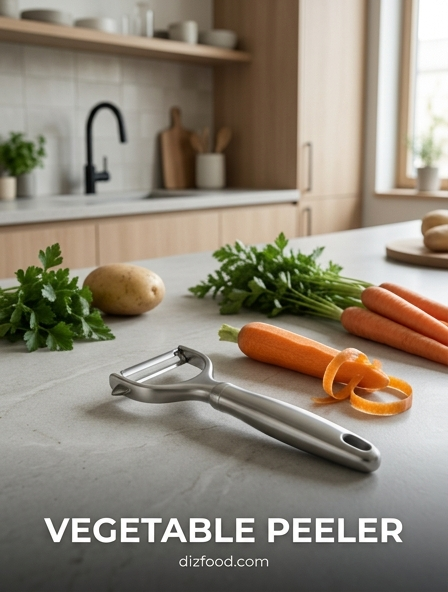
Essential Peeler Types for Maximum Speed
To achieve professional-grade speed in the kitchen, one must select the correct peeler architecture for the specific task at hand. The two primary contenders are the swivel peeler and the Y-peeler, each offering distinct advantages depending on the vegetable's geometry. The swivel peeler, with its vertical blade, is often preferred for precision tasks and smaller produce like carrots or parsnips. Its design allows for a natural wrist motion that navigates curves with ease.
| Peeler Type | Best Use Case | Speed Advantage |
|---|---|---|
| Y-Peeler | Large, round items (potatoes, squash) | Long, broad strokes with less hand fatigue |
| Swivel Peeler | Long, slender items (carrots, cucumbers) | High maneuverability around tight curves |
| Serrated Peeler | Soft-skinned items (tomatoes, plums) | Grips slick surfaces without slipping |
For high-volume preparation, the Y-peeler is generally considered the fastest due to its ergonomic "pull" motion, which engages the larger muscles of the arm rather than just the wrist. Choosing a lightweight model with a carbon steel blade can further reduce drag, allowing the tool to glide across surfaces with minimal resistance.
Mastering Rapid Bi-Directional Peeling Techniques
The secret to extreme speed in vegetable preparation lies in the bi-directional peeling technique. Most home cooks use a single downward stroke, lift the blade, and return to the top. This effectively wastes fifty percent of the movement. By utilizing a peeler with a double-edged blade, you can keep the tool in contact with the vegetable in both directions, stripping the skin on both the push and the pull stroke.
- Maintain constant contact between the blade and the vegetable skin.
- Use a light, rhythmic "sawing" motion rather than heavy pressure.
- Keep your guide hand stationary while rotating the vegetable incrementally.
- Focus on a fluid "up-down" cycle to maintain momentum.
This method is particularly effective for long, straight vegetables like daikon radishes or large carrots. It requires a relaxed grip and a high-quality swivel blade that can pivot freely. Once the rhythm is established, the preparation time for a single ingredient can be cut in half. Mastery of this technique reduces the total distance the hand must travel, minimizing fatigue during heavy prep sessions.
Streamlining Preparation for Uniform Dicing
A peeler is not merely for removing skin; it is a foundational tool for creating the flat surfaces necessary for stable, uniform dicing. When working with round or irregular vegetables like celeriac or butternut squash, the peeler can be used to "square off" the sides more safely and with less waste than a chef's knife. By creating these flat planes early in the process, the vegetable remains stable on the cutting board, preventing rolls and slips that lead to uneven cuts.
To optimize this workflow, peel the vegetable entirely first, then use the peeler to shave down any remaining bulges or asymmetrical areas. This ensures that when you transition to your knife for dicing, every slice is of equal thickness. For root vegetables, peeling slightly deeper into the fibrous layer can also ensure that the final dice has a consistent texture throughout, which is essential for even cooking times in soups and stews. Integrating the peeler as a leveling tool bridges the gap between raw produce and a refined mise en place.
Enhancing Efficiency with Ergonomic Tool Selection
Efficiency in a high-speed kitchen environment is often limited by physical fatigue. Ergonomic tool selection is critical for maintaining a rapid pace over several hours of preparation. A peeler with a thick, non-slip handle reduces the "pinch force" required to hold the tool, preventing hand cramps and repetitive strain. Look for handles made of Santoprene or textured rubber, which provide a secure grip even when hands are wet or covered in starch.
- Choose handles with a contoured shape that fits the palm naturally.
- Opt for lightweight materials to reduce wrist strain during repetitive motions.
- Select a blade width that matches the majority of your produce to avoid multiple passes.
- Test the tension of the swivel; it should move easily but not feel loose.
Professional chefs often prefer Y-peelers for their ability to be held in a variety of grips, allowing the user to shift the pressure points throughout the day. By reducing the physical toll of peeling, you can maintain a higher level of precision and speed from the first potato to the last, ensuring consistent quality in your prep work.
Maintaining Blade Sharpness for Effortless Prep
A dull peeler blade is a significant bottleneck in kitchen productivity. It requires excessive downward pressure, which increases the risk of slipping and slows down the overall workflow. Unlike knives, many peelers are treated as disposable; however, high-end carbon steel blades can be honed or replaced to maintain a razor-sharp edge. Carbon steel is particularly prized for its ability to hold an edge, though it requires immediate drying to prevent rust.
To ensure effortless preparation, inspect your blades regularly for nicks or dull spots. If the peeler begins to "skid" across the surface of a potato rather than biting into the skin, it is time for maintenance. Storing peelers in a way that prevents the blades from knocking against other metal tools will extend their lifespan. For those using stainless steel blades, replacement every few months is often the most efficient path to maintaining top speed. A sharp blade should feel as though it is melting through the vegetable, requiring almost no force from the user to produce a clean, thin peel.
Reducing Food Waste with Precision Peeling
Speed should never come at the expense of yield. Precision peeling techniques allow for the rapid removal of the exocarp without sacrificing the nutritious flesh underneath. A high-quality peeler with a sharp, well-calibrated blade gap is essential for this. If the blade is set too wide, it will gouge the vegetable, leading to significant food waste and irregularly shaped produce. Conversely, a precision blade allows for "micro-peeling," removing only the outermost layer of pigment and wax.
- Adjust the angle of the blade to control the depth of the cut.
- Use the "eye remover" tool on the side of the peeler for blemishes instead of deep-peeling.
- Peel in long, continuous strips to avoid overlapping and double-peeling.
- Apply consistent, light pressure to maintain a shallow depth.
In a commercial setting, reducing waste by even ten percent can have a substantial impact on food costs. By mastering precision strokes, you ensure that the maximum amount of product reaches the plate. This level of control also results in a smoother surface on the vegetable, which improves the aesthetic quality of the final dish.
Safety Protocols for High Speed Vegetable Processing
When increasing speed, safety must remain the primary concern to avoid debilitating cuts. High-speed peeling involves rapid, repetitive motions with sharp blades, often in wet conditions. The most important safety rule is to always peel away from your body and keep your fingers tucked well behind the path of the blade. For round items, using a "claw" grip to hold the produce at the poles ensures that the blade never comes near the fingertips.
Furthermore, maintaining a clean workspace is a safety essential. Slippery peels on the cutting board can cause the vegetable or the peeler to slide unexpectedly. Regularly clearing the board into a scrap bin keeps the footing of your produce stable. If you are working with particularly small or slippery items, consider using a protective cut-resistant glove on your non-dominant hand. This provides a safety net that allows you to maintain a high velocity without the constant fear of injury, ultimately leading to more confident and faster processing times.
Optimizing Workflow for Faster Mise en Place
Speed in the kitchen is as much about the system as it is about the tool. To optimize your workflow for faster mise en place, arrange your station to minimize movement. Place the unpeeled produce on one side, a clean container for the finished product on the other, and a scrap bin directly in front of you. This "assembly line" approach prevents the accumulation of waste and keeps the workspace organized.
| Workflow Stage | Action for Speed |
|---|---|
| Setup | Stabilize the cutting board with a damp cloth. |
| Processing | Group vegetables by size to maintain a consistent rhythm. |
| Waste Management | Peel directly into a compost bin or onto a sheet of paper. |
| Transition | Clean the peeler blade immediately to prevent starch buildup. |
By standardizing the physical movements required for each vegetable, you develop muscle memory that naturally increases speed over time. Avoid stopping to pick up individual peels; instead, focus on finishing a batch before clearing the area. This focused repetition is the hallmark of professional kitchen efficiency.
Using Peelers for Consistent Ingredient Thickness
Beyond removing skins, peelers are invaluable for creating ingredients with uniform thickness that would be difficult to achieve with a knife. For example, creating thin ribbons of zucchini or asparagus for salads requires a level of consistency that a peeler provides effortlessly. These ribbons cook almost instantly and offer a unique texture. By applying a constant amount of pressure, the peeler acts as a handheld mandoline, producing slices that are translucent and identical.
This technique is also useful for creating garnishes or structural elements in plating. Thinly shaved radishes or carrots can be shocked in ice water to create crisp, curled accents. When using a peeler for thickness control, it is helpful to lay the vegetable flat on a cutting board and peel along its length, rather than holding it in the air. This provides a solid backing that allows for more aggressive pressure and longer, more uniform strips. Using the tool in this manner expands its utility from a mere preparation device to a specialized cutting instrument for refined culinary presentations.
Advanced Peeler Hacks for Professional Kitchen Speed
Professional chefs often use peelers for tasks far beyond vegetables to save time and improve consistency. A sharp peeler is an excellent tool for shaving hard cheeses like Parmesan into thin, elegant shards for salads. It can also be used to create fine chocolate curls for dessert garnishes or to shave frozen butter for quick incorporation into pastry dough. These "hacks" eliminate the need for specialized equipment and speed up the finishing touches on a dish.
Another advanced application is the removal of citrus zest in large, clean strips without including the bitter white pith. This is essential for cocktails or for infusing oils and syrups. If you need extremely thin onion slices for a garnish, a peeler can produce finer results than most knives. By thinking of the peeler as a precision planer, you can find dozens of ways to integrate it into your workflow. These techniques not only save time but also provide a level of delicacy and uniformity that defines professional-level cooking. Always keep a sharp, dedicated peeler for these delicate tasks to ensure clean edges and perfect results.

Comments