
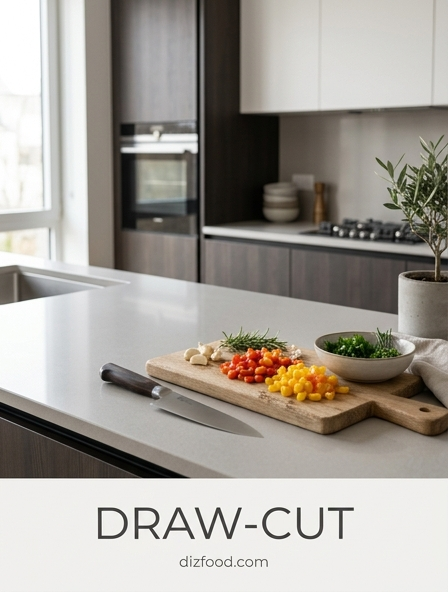
The Mechanics of the Draw-Cut Motion
The draw-cut motion is a fundamental culinary technique that relies on lateral movement rather than vertical force. Unlike a traditional chop, where the blade moves straight down onto the cutting board, a draw-cut involves pulling the knife toward the body or pushing it away while the edge makes contact with the ingredient. This horizontal displacement allows the microscopic serrations and the keen edge of the blade to engage effectively with the surface of the food. By utilizing the full length of the blade, the chef distributes the cutting force over a larger area, which significantly reduces the impact on any single point of the fruit.
- Initial Contact: The heel or the tip of the knife touches the item at a shallow angle.
- Lateral Motion: The blade slides horizontally, slicing through the surface.
- Completion: The slice is finished as the blade exits the far side with a smooth pull.
This technique is essential for ingredients that lack rigid internal support. By shifting the mechanical stress from a vertical "crush" to a horizontal "slice," the draw-cut ensures that the blade severs the material through shearing action. This method is the primary way to handle delicate items without compromising their shape or texture.
Anatomy of Soft Fruit Cellular Structures
Soft fruits, such as tomatoes, peaches, and berries, are characterized by thin epidermal layers and high water content held within fragile cellular walls. These cells are essentially microscopic vacuoles filled with juice and structural pectin. When these walls are compromised by excessive force, the internal fluids are released prematurely, leading to a loss of texture. Understanding this anatomy is crucial for professional chefs because the internal pressure of the fruit-known as turgor pressure-is what provides the characteristic "snap" or "bite" of fresh produce.
- Epidermis: The protective outer skin that requires a sharp edge to penetrate.
- Parenchyma: The fleshy tissue containing the juice-filled vacuoles.
- Vascular Bundles: The transport system that can become stringy if not sliced cleanly.
If the knife does not slice cleanly through the epidermis and parenchyma, the resulting compression collapses the vacuoles. This collapse results in a mushy consistency that detracts from the culinary presentation and the natural mouthfeel. Using a draw-cut respects this cellular arrangement by severing the pectin bonds rather than smashing them under the weight of the steel.
Minimizing Downward Pressure on Delicate Skin
The primary challenge when handling soft-skinned produce is the risk of bruising caused by vertical load. When a chef applies excessive downward pressure, the skin of the fruit resists until it reaches a breaking point. Often, the internal flesh yields before the skin does, causing the fruit to deform. The draw-cut solves this by prioritizing "slicing" over "pushing." By sliding the blade, the edge penetrates the skin with minimal weight, allowing the sharp edge to do the work rather than the cook's arm muscles.
To master this, one should consider the following factors:
- Distribute the weight across the entire length of the blade.
- Use the natural weight of the knife itself to initiate the cut.
- Maintain a shallow angle relative to the cutting surface to avoid digging.
By minimizing downward pressure, the integrity of the fruit's shape is preserved. This is particularly important for garnishes where aesthetic precision is as vital as taste. A gentle touch ensures that the blade severs the skin immediately upon contact, preventing the structural collapse that occurs when force is applied haphazardly to a delicate ingredient.
Slicing Versus Crushing Mechanisms
The distinction between slicing and crushing is the difference between a clean separation and a mechanical failure of the food's structure. Slicing utilizes the shearing action of the blade to sever fibers, while crushing occurs when the force applied exceeds the structural limits of the cells before the blade can actually cut. This is best illustrated by comparing the results of different cutting styles on a ripe tomato or a plum.
| Feature | Slicing (Draw-Cut) | Crushing (Chopping) |
|---|---|---|
| Force Direction | Horizontal/Diagonal | Vertical |
| Cellular Impact | Clean Severing | Wall Rupture |
| Juice Retention | High | Low |
| Surface Texture | Smooth/Glossy | Rough/Jagged |
When a knife is pushed straight down, it acts as a wedge. For hard vegetables like carrots, this is efficient. However, for soft fruits, the wedge shape pushes the flesh outward before the edge can bite into the skin. The draw-cut bypasses this wedging effect by initiating the cut with a sliding motion that severs the skin immediately, ensuring the internal structure remains undisturbed throughout the process.
Preserving Internal Moisture and Natural Juices
One of the most significant benefits of the draw-cut technique is the retention of moisture within the ingredient. Every time a cell wall is crushed rather than sliced, the cytoplasm and vacuolar sap escape onto the cutting board. This not only makes the workspace messy but also strips the fruit of its primary flavor compounds and nutrients. A clean cut acts like a surgical incision, leaving the majority of the juice-filled cells intact right up to the edge of the slice.
- Maintain a razor-sharp edge to reduce the need for multiple "sawing" motions.
- Use long, fluid strokes to cover the entire width of the fruit in one movement.
- Avoid placing the non-cutting hand too firmly on the fruit, which can squeeze out juices.
By ensuring that each cut is clean and decisive, the chef traps the juices inside the individual slices. This is why a tomato sliced with a draw-cut remains vibrant and plump, whereas one that has been chopped often appears flat and dry. The preservation of these natural juices is the hallmark of skilled preparation, ensuring the final dish delivers a burst of flavor.
Why Sharpness Enhances the Draw-Cut Technique
A dull knife is the enemy of the draw-cut. For this motion to be effective, the microscopic "teeth" or the polished edge of the knife must be keen enough to catch and sever the skin without the need for additional weight. Sharpness allows the blade to glide through the fruit's layers with virtually no resistance. When the edge is sharp, the friction between the steel and the fruit is localized to a tiny fraction of a millimeter, preventing the "skating" effect common with duller tools.
- Reduced Effort: The chef uses less physical energy to complete each task.
- Accuracy: The blade doesn't slip on the smooth or waxy skin of the fruit.
- Consistency: Uniform slices are significantly easier to achieve when the blade bites instantly.
If the knife is blunt, the draw-cut fails because the blade simply slides across the skin without penetrating it. This often prompts the cook to apply more downward pressure, which reverts the action back into a crush-cut. Therefore, maintaining a sharp edge via regular honing and sharpening is a prerequisite for mastering the draw-cut and protecting the quality of the produce.
Reducing Friction to Prevent Tissue Damage
Friction is a secondary factor that can degrade the quality of soft fruit during preparation. As a blade passes through tissue, the surface area of the knife's sides rubs against the exposed flesh. In a draw-cut, the speed and angle of the motion can be adjusted to minimize this contact time. High-quality knives often feature specific grinds, such as a full flat grind or a convex edge, to further reduce the surface area in contact with the food.
To further reduce friction, chefs can utilize these strategies:
- Use a thin-profile blade to limit the "drag" through the fruit's center.
- Keep the blade clean and slightly damp to prevent sugars from sticking.
- Apply a light, steady pulling speed rather than a fast, erratic motion.
Excessive friction can generate microscopic heat or physical tearing of the delicate parenchyma. By reducing this friction, the draw-cut ensures that the surface of the slice remains smooth and glass-like. This smooth surface prevents the fruit from becoming sticky or releasing excess starches and sugars that could lead to unappealing textures in the finished dish.
Avoiding Oxidation Through Clean Cellular Separation
Oxidation is a chemical reaction that occurs when enzymes within the fruit, such as polyphenol oxidase, are exposed to oxygen. This process is accelerated when cells are damaged or crushed, as the rupturing of the cell walls allows the enzymes and substrates to mix freely. A clean draw-cut minimizes this damage by severing cells cleanly rather than tearing them apart, which effectively limits the "bleeding" of these reactive compounds.
- Apples, pears, and avocados are highly susceptible to rapid browning.
- Clean cuts create a smaller total surface area for oxygen contact.
- Less bruising means fewer released enzymes are available to start the reaction.
By using a draw-cut with a sharp blade, the chef ensures that the majority of the cells remain intact and sealed. The surface of the fruit remains "closed" by the precision of the cut, which slows down the browning process. This is essential for prep work that must be done in advance, keeping the produce looking fresh and appetizing for a longer period without the immediate need for acidic inhibitors like lemon juice.
The Role of Blade Geometry in Fruit Prep
The physical shape of the knife significantly influences the success of a draw-cut. Blade geometry, including the belly, the thickness of the spine, and the taper of the edge, dictates how the steel moves through the fruit. A flatter profile is often preferred for push-cutting, whereas a gentle curve-known as the belly-facilitates the rocking and pulling motion required for an effective draw-cut on a flat board.
| Knife Type | Geometry Benefit |
|---|---|
| Sujihiki | Long, thin blade designed for extended, single-stroke draw-cuts. |
| Petty Knife | Small and agile, perfect for intricate draw-cuts on berries. |
| Santoku | The sheep's foot tip allows for safe, precise pulling motions. |
A thinner blade, often referred to as a "laser" in culinary circles, is particularly effective for soft fruits because it encounters less resistance as it moves through the flesh. The geometry should allow the chef to use the entire length of the edge, ensuring that the slicing motion is completed in a single, smooth stroke. This prevents the "stair-stepping" effect that occurs when multiple hacks are needed to finish a single slice.
Maintaining Structural Integrity During Dicing
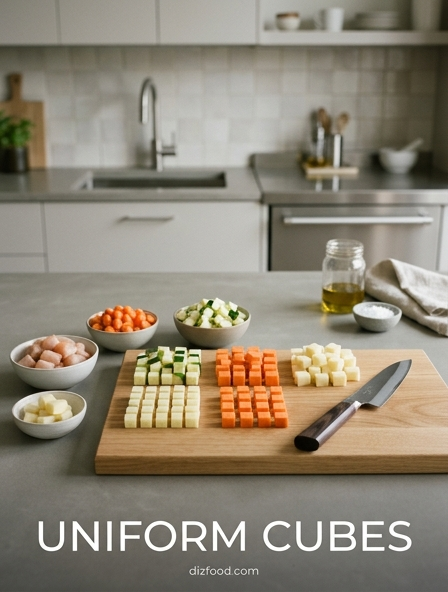
Dicing soft fruits requires a combination of horizontal and vertical cuts that can easily lead to a pile of mush if not executed with precision. The draw-cut is the secret to maintaining the structural integrity of every individual cube. When making the initial longitudinal slices, the pull-cut ensures the fruit doesn't flatten. When turning the fruit to make the cross-cuts, the same gentle, sliding motion must be applied to avoid crushing the previously made slices.
- Slice the fruit into uniform planks using a consistent draw-cut.
- Stack or align the planks carefully without applying pressure.
- Execute the final cubes with a light pulling motion using the tip of the knife.
This meticulous approach ensures that each dice has sharp, clean edges and a firm texture. Whether preparing a mango salsa or a strawberry garnish, the structural integrity provided by the draw-cut allows the ingredients to stand up to tossing and dressing without losing their form. This attention to detail elevates the dish from a simple preparation to a professional-grade culinary creation that looks as good as it tastes.


Comments