
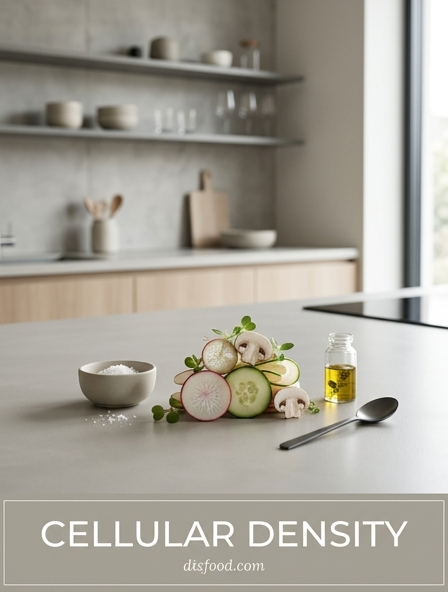
Defining Cellular Density in Culinary Ingredients
In the culinary arts, cellular density refers to the concentration and structural arrangement of cells within a plant or animal tissue. This biological metric dictates how an ingredient responds to heat, pressure, and mechanical cutting. Ingredients with high cellular density, such as tubers and certain proteins, possess tightly packed cell walls that offer significant resistance. Conversely, low-density ingredients, like leafy greens or ripe stone fruits, contain larger vacuoles filled with water, resulting in a more fragile internal matrix. Understanding this density is crucial for chefs because it influences the "mouthfeel" and the rate of osmotic exchange during marination or seasoning.
- Turgor Pressure: The internal water pressure that keeps cells rigid.
- Lignification: The development of woody tissues that increases density.
- Intercellular Spaces: Gaps between cells that determine the air-to-solid ratio.
When density is high, the ingredient requires more force to penetrate, but it also retains its shape better during high-heat applications. Mastery of this concept allows a cook to predict how a vegetable will soften or how a meat will contract during the cooking process.
Structural Resistance and Blade Geometry
The interaction between a knife and an ingredient is a study in applied physics, specifically regarding structural resistance. As a blade enters an object, the cellular density of the material exerts a counter-force. Blade geometry-the specific shape, taper, and grind of the knife-must be matched to this resistance to ensure efficiency. For high-density materials, a blade with a distal taper is preferred, as it allows for a thin tip to initiate the cut while providing a sturdier heel for more demanding tasks. If the blade geometry is too thick, it creates a "wedging" effect, where the ingredient fractures before the edge can actually cut through the cells.
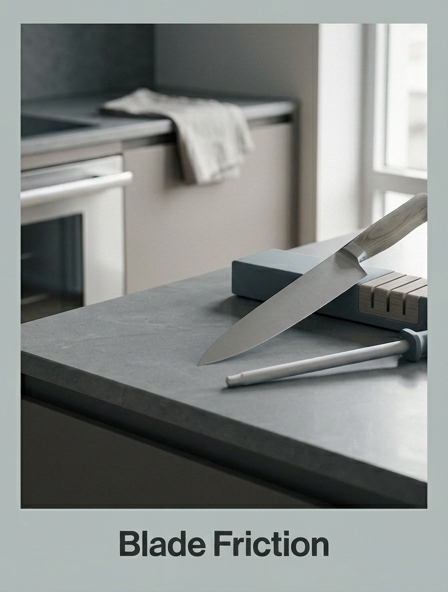
Proper geometry minimizes the surface area of the blade in contact with the ingredient, thereby reducing friction. This is particularly important when dicing dense starches like butternut squash, where the lateral pressure against the knife can cause the blade to stick. By selecting a blade with a convex grind or a sester-style finish, a chef can create air pockets that break the suction, allowing the steel to glide through dense cellular structures with minimal deviation or physical strain on the wrist.
Impact of Material Hardness on Dicing
The hardness of a culinary ingredient is often a direct byproduct of its cellular density and the presence of complex carbohydrates like cellulose and hemicellulose. Hardness determines the amount of initial "bite" required from the knife edge. If a chef uses a dull blade on a hard ingredient, the edge may skid across the surface, posing a safety risk. The relationship between ingredient hardness and dicing efficiency can be categorized by the physical effort required to achieve a clean separation of the material.
| Ingredient Class | Density Level | Resistance Level |
|---|---|---|
| Leafy Greens | Low | Minimal |
| Stone Fruits | Moderate | Low to Medium |
| Root Vegetables | High | High |
| Cucurbits | Variable | Medium to High |
Dicing hard materials requires a knife with high edge retention. If the steel is too soft, the dense cellular walls of the produce will quickly roll the apex of the blade, leading to ragged cuts and increased physical exertion over long preparation sessions.
Cellular Rupture and Flavor Preservation
The goal of precision cutting is to minimize unnecessary cellular rupture. When a knife is blunt or the technique is improper, the blade crushes the cells rather than slicing through them. This mechanical trauma releases enzymes, such as polyphenol oxidase, which leads to rapid oxidation and browning. In aromatic ingredients like garlic, onions, or herbs, excessive cellular rupture triggers chemical reactions that can turn flavors bitter or overly pungent. A sharp knife acts as a surgical instrument, passing between or cleanly through cell walls without obliterating the surrounding tissue.
Flavor preservation is inextricably linked to the integrity of the cellular matrix. For example, a clean slice through a tomato retains the locular gel and juices within the pericarp walls. In contrast, a dull blade squeezes the fruit, forcing the flavorful liquids out onto the cutting board. This loss of moisture not only degrades the texture of the final dish but also removes the essential oils and sugars that define the ingredient's flavor profile. Thus, respecting cellular density is a fundamental requirement for maintaining the ingredient's intended organoleptic properties.
Navigating High Density Root Vegetables
Root vegetables like carrots, parsnips, and beets present a unique challenge due to their high secondary cell wall development. These plants are designed to store energy in the form of tightly packed starch granules, creating a dense, rigid structure. Navigating these requires a combination of weight and sharpness. When dicing a high-density root, the chef must account for the resistance by using a vertical "push-cut" or a "locomotive" motion rather than a simple rocking motion, which can cause the blade to twist under pressure.
- Consistency: Uniform cellular density allows for even cooking if dimensions are exact.
- Starch Content: High starch levels increase the friction against the side of the knife.
- Moisture Content: Dehydrated roots become even denser and more difficult to shear.
To optimize the process, many chefs recommend parblanching extremely dense roots or using a heavier "gyuto" or "chef's knife" that utilizes its own mass to assist in the descent. This reduces the need for the cook to apply excessive downward force, which can lead to fatigue and loss of precision during large-scale prep work.
Shearing Forces in Fibrous Produce
Fibrous produce, such as celery, ginger, and rhubarb, contains vascular bundles made of xylem and phloem. These fibers act like reinforced cables within the cellular matrix, providing structural support to the plant. Cutting these requires high shearing forces. Shearing occurs when the knife edge slides across the fibers rather than just pressing down. If a chef attempts to chop straight down on a piece of ginger, the tough fibers may remain intact, resulting in a "stringy" texture. A sliding or drawing cut is necessary to sever these high-tensile fibers cleanly.
The orientation of the cut relative to the fiber direction is also vital. Cutting "against the grain" shortens the fibers, making the final product easier to chew and releasing more surface area for flavor extraction. In the case of lemongrass or galangal, the density of these fibers is so high that the knife must be exceptionally thin and sharp to avoid "shingling," where the layers of the vegetable slide over one another instead of being cut. Mastery of shearing forces ensures that even the most recalcitrant plant tissues can be transformed into delicate, palatable components.
Optimizing Bevel Angles for Soft Tissues
Soft tissues, such as those found in seafood or overripe produce, possess low cellular density and fragile cell membranes. For these materials, the bevel angle of the knife-the angle at which the edge is ground-is the most critical factor. A standard 20-degree angle may be too obtuse, causing the tissue to compress and deform before the edge can bite. Instead, an acute angle of 10 to 15 degrees is optimal. This "razor" edge allows for entry into the tissue with almost zero downward pressure, preserving the delicate shape of the ingredient.
- Assess the fragility: Determine if the tissue will collapse under its own weight.
- Select the angle: Use a single-bevel (kataba) or thin double-bevel knife.
- Execute the stroke: Use long, singular pulling motions to maximize the edge's slicing length.
This precision is why sushi chefs use long, thin knives with very acute angles. When dealing with soft cellular structures, the objective is to bypass the resistance entirely. A shallower bevel angle reduces the "shoulders" of the knife, allowing it to slip through protein or fruit fibers with the least possible disruption to the internal moisture levels.
The Role of Blade Thickness
Blade thickness, specifically at the spine and just above the "behind-the-edge" area, plays a significant role in how density is perceived by the user. A thick blade acts as a wedge; as it penetrates deeper into a dense ingredient, it pushes the two halves apart. While this is beneficial for splitting heavy bones or hard squashes, it is detrimental for precise dicing. For high-density items, a "laser" style knife-one that is thin from spine to edge-is often preferred. The lack of bulk reduces the total volume of material the knife must displace, significantly lowering the resistance felt during the cut.
However, there is a trade-off. A blade that is too thin may lack the structural integrity to handle very hard materials without flexing or chipping. The ideal thickness is a balance between the cellular density of the food and the mechanical strength of the steel. In professional kitchens, many chefs maintain a variety of knives with different thicknesses to match the specific anatomical requirements of their ingredients, ensuring that they never force a thick blade through a delicate structure or a thin blade through an impenetrable one.
Kinetic Energy and Precise Dicing
Precise dicing is an exercise in managing kinetic energy. The amount of force required to move a blade through a medium depends on the density of that medium and the velocity of the knife. For dense vegetables, increasing the velocity of the stroke (within safe limits) can help the edge "break" the surface tension of the cellular walls. This is why a quick, decisive chop is often more effective than a slow, pressing motion. The kinetic energy helps overcome the initial static friction between the steel and the plant tissue, leading to a cleaner separation.
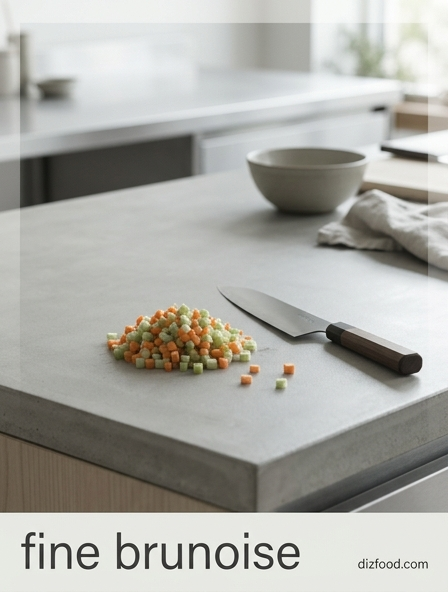
The distribution of this energy must be controlled to maintain precision. If too much force is used on an ingredient with uneven density (like a cabbage with a hard core and soft leaves), the knife may accelerate too quickly through the soft parts, leading to an uneven dice or an accidental injury. A skilled practitioner learns to modulate the energy application based on the tactile feedback provided by the ingredient's cellular resistance. This sensory loop allows for the adjustment of pressure in real-time, ensuring that every cube in a brunoise or mirepoix is uniform in size and structural integrity.
Tailoring Knife Selection to Plant Anatomy
The final step in mastering kitchen density is the strategic selection of cutlery based on plant anatomy. Different plants have different cellular layouts; for instance, the parenchyma cells in a potato are vastly different from the sclerenchyma cells in a pear. A chef must analyze whether the ingredient is primarily composed of storage tissue, structural tissue, or vascular tissue. This analysis informs whether a heavy cleaver, a nimble paring knife, or a specialized vegetable knife like a nakiri is the appropriate tool for the task.
- Nakiri: Designed with a flat profile for full contact on dense vegetable fibers.
- Petty Knife: Ideal for navigating the intricate density of small fruits and aromatics.
- Western Chef's Knife: Provides the belly and weight needed for high-resistance tubers.
By tailoring the tool to the anatomy, the chef minimizes fatigue and maximizes the quality of the cut. This holistic approach treats dicing not as a repetitive chore, but as a technical engagement with the biological properties of food. Ultimately, respecting cellular density through proper knife selection ensures that the culinary professional can achieve the highest standards of texture, flavor, and visual presentation in every dish.

Comments