
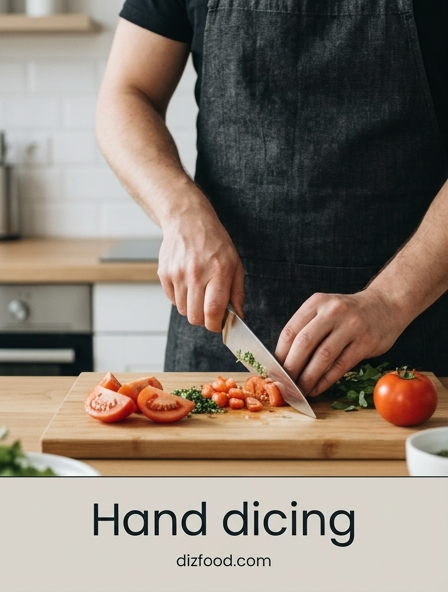
Mastering the Geometry of Perfect Dicing
Achieving a perfect dice is a fundamental skill that separates the casual cook from the disciplined chef. The process begins with the transformation of irregular organic shapes into precise three-dimensional rectangles. By squaring off a round vegetable, such as a potato or carrot, the cook establishes a stable base that ensures safety and accuracy. This initial step of creating a "plinth" allows for the production of uniform planks, which are then stacked and cut into consistent batons or matchsticks. The final stage involves rotating these batons to produce identical cubes that adhere to specific culinary dimensions.
- Stability: Flat surfaces prevent the vegetable from rolling under the blade.
- Uniformity: Consistent thickness ensures that every piece cooks at the exact same rate.
- Efficiency: A methodical approach reduces waste and speeds up prep time.
Mastery of this geometry requires a deep understanding of spatial relationships. A chef must visualize the internal volume of the produce before the first cut is made. By internalizing these geometric principles, the practitioner moves beyond mere chopping into the realm of architectural food design, where every cube serves as a building block for a structurally sound and visually appealing dish.
Essential Tools for Artisanal Knife Work
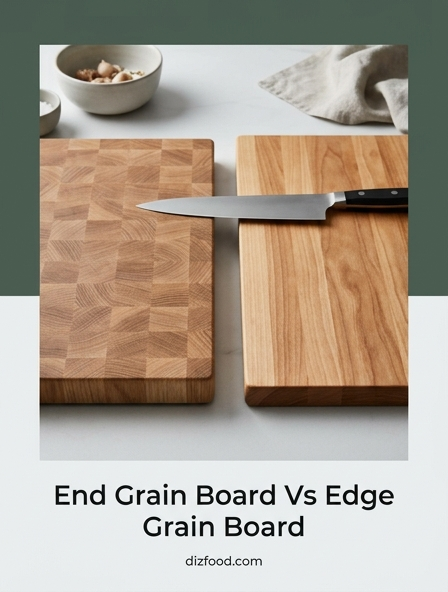
The quality of hand-dicing is inextricably linked to the tools employed during the process. A high-carbon steel chef's knife remains the primary instrument for dicing, offering the necessary weight and balance to execute clean, downward strokes. However, the supporting environment is equally critical. A heavy, end-grain wooden cutting board provides a forgiving surface that preserves the blade's edge while offering enough grip to prevent the produce from sliding. For smaller, more intricate dicing tasks like shallots or garlic, a nimble paring knife or a specialized utility knife may be preferred to maintain a high degree of control.
| Tool Type | Primary Function | Key Feature |
|---|---|---|
| Chef's Knife | Heavy dicing and chopping | Bolster balance and curved belly |
| Nakiri | Precision vegetable slicing | Flat edge for push-cutting |
| Whetstone | Blade maintenance | Variable grit for honing and sharpening |
In addition to the blade and board, a bench scraper is an often-overlooked but essential tool. It allows the cook to move large volumes of diced material without using the knife edge, thereby maintaining the sharpness of the steel. Investing in professional-grade equipment ensures that the physical effort of dicing is minimized, allowing the artisan to focus entirely on the precision and rhythm of the craft.
The Science of Texture and Uniform Cuts
The physics of the kitchen dictates that heat transfer is a function of surface area and volume. When vegetables are diced to inconsistent sizes, the smaller pieces often disintegrate into mush before the larger pieces reach the desired tenderness. Hand-dicing with precision ensures that every piece of a mirepoix or soffritto reaches the peak of its flavor profile simultaneously. This uniformity is vital for the Maillard reaction; small, uniform cubes provide a high surface-to-volume ratio that facilitates rapid browning and caramelization, which are essential for developing deep, savory base notes in soups and stews.
Beyond heat distribution, the science of texture involves the integrity of the plant's cell walls. A sharp knife used with a proper dicing technique slices through cells cleanly rather than crushing them. This preserves the internal moisture and crispness of the vegetable. When vegetables are bruised by dull blades or erratic movements, they release excess liquid, leading to steaming rather than searing. Therefore, precise dicing is not merely an aesthetic choice but a scientific necessity for controlling the chemical and physical transformations that occur during the cooking process.
Elevating Flavor Profiles Through Precision
The way a vegetable is cut directly influences how it interacts with the human palate. In a well-diced dish, the distribution of aromatics is homogenized, ensuring that every spoonful offers a balanced representation of the recipe's ingredients. For instance, a finely diced onion releases its sulfurous compounds more evenly than a roughly chopped one, allowing it to melt into a sauce and provide a consistent sweetness rather than occasional pungent bites. Precision dicing allows the chef to manage the intensity of flavors by adjusting the size of the cut to suit the potency of the ingredient.
- Mincing: Maximizes surface area for rapid flavor extraction in infusions.
- Small Dice: Ideal for delicate sauces where texture should be subtle.
- Medium Dice: Perfect for hearty stews where the vegetable must retain its identity.
By controlling the dimensions of the dice, a cook can orchestrate the sequence in which flavors are released. Smaller cubes vanish into the background to provide a foundational taste, while larger cubes offer bursts of flavor and a satisfying mouthfeel. This strategic approach to dicing transforms simple ingredients into a complex, layered culinary experience, proving that the knife is just as important as the flame in the development of a dish's flavor.
Advanced Techniques for Customized Vegetable Shapes
While the standard cube is the hallmark of dicing, professional kitchen work often requires modifications to suit specific culinary traditions or modern plating styles. Techniques such as the "oblique cut" or "roll cut" are used for long, cylindrical vegetables to create multifaceted shapes that provide more surface area for glazing. However, when returning to the dice, advanced practitioners often utilize the "horizontal cut" method for onions and shallots. By making several parallel incisions towards the root before dicing vertically, the cook can produce incredibly fine pieces that are nearly impossible to achieve with standard chopping methods.
Another advanced variation involves the "turned" vegetable style, though this is often a precursor to dicing in classical French cuisine. For items like bell peppers, which have a natural curvature, the skin-side-down technique is essential for safety and precision. The chef must flatten the pepper by removing the internal ribs, creating a consistent plane that can then be processed into perfect squares. Mastering these specialized approaches allows a cook to handle diverse textures-from the fibrous stalks of celery to the slippery flesh of a tomato-ensuring that the final dice remains uniform regardless of the ingredient's inherent challenges.
Achieving Consistency in Professional Food Preparation
In a professional environment, consistency is the metric of success. A chef must be able to produce hundreds of identical cuts under high-pressure conditions. This level of reliability is achieved through the development of "muscle memory" and a standardized workflow. The professional setup, or mise en place, is designed to minimize wasted movement. The vegetable moves from the "raw" side of the board, through the dicing zone, and into a collection container in a singular, fluid motion. This rhythmic efficiency is the hallmark of an experienced line cook.
- Standardization: Every cook in the kitchen must adhere to the same size definitions for a medium or small dice.
- Waste Management: Trimmings from squaring off are reserved for stocks or purees.
- Speed: Developing the "claw" grip allows for rapid dicing without risking injury.
Consistency also ensures that the final product meets the expectations of the diner. Whether it is a salsa, a tartar, or a vegetable medley, the visual and tactile uniformity signals a level of care and professional rigueur. By treating every cut with the same level of importance, the kitchen maintains a high standard of quality control that is reflected in the final presentation of every plate that leaves the pass.
The Art of the Brunoise and Macédoine
Classical French cuisine provides a rigorous vocabulary for dicing, establishing specific measurements that serve as the industry standard. The *brunoise* is perhaps the most famous, requiring a cube size of approximately 1.5 to 3 millimeters. This tiny cut is typically reserved for garnishes or high-end sauces where a delicate touch is required. In contrast, the *macédoine* refers to a larger 4-millimeter cube, often used in vegetable salads or hearty soups. Learning these specific terms and their corresponding dimensions is a rite of passage for any serious student of the culinary arts.
| French Term | Metric Size | Typical Application |
|---|---|---|
| Fine Brunoise | 1.5 mm | Consommé garnish, aromatic infusions |
| Brunoise | 3 mm | Clear soups, fine sauces |
| Macédoine | 4 mm | Fruit salads, vegetable side dishes |
| Parmentier | 12 mm | Roasted potatoes, rustic stews |
The execution of a perfect brunoise requires exceptional focus and a razor-sharp blade. Because the pieces are so small, any irregularity is immediately visible. Practicing these cuts refines the chef's ability to control the knife with micro-precision. This dedication to classical standards ensures that the heritage of culinary craftsmanship is preserved, while providing the technical foundation necessary for modern innovation in the kitchen.
Maintaining Blade Sharpness for Superior Accuracy
The success of any dicing task is fundamentally dependent on the sharpness of the knife. A dull blade requires more downward force, which increases the likelihood of the knife slipping and causing injury. Moreover, a dull edge tears through the fibers of the vegetable rather than slicing them, resulting in ragged edges and uneven cubes. To maintain superior accuracy, a chef must engage in regular blade maintenance, which includes both daily honing with a steel and periodic sharpening with whetstones. Honing realigns the microscopic "teeth" of the edge, while sharpening removes metal to create a new, refined bevel.
Proper maintenance also involves understanding the angle of the edge. Most Western knives are sharpened to a 20-degree angle, while Japanese knives often feature a steeper 15-degree angle for even finer precision. When the blade is perfectly maintained, the weight of the knife alone should be almost enough to slice through a tomato skin. This effortless cutting action allows the cook to focus on the placement of the blade and the rhythm of the dice. Without a sharp tool, the most advanced techniques in the world cannot produce the clean, sharp lines required for high-level culinary presentation.
Visual Excellence in Culinary Presentation
We eat first with our eyes, and the visual impact of hand-diced vegetables is undeniable. In fine dining, the dice is often used as a decorative element, where contrasting colors of perfectly squared peppers, zucchini, and carrots are arranged to create a mosaic-like effect. This visual excellence suggests a high level of technical skill and attention to detail, signaling to the diner that the meal has been prepared with extreme care. The clean lines of a precise dice provide a sense of order and sophistication that roughly chopped ingredients simply cannot replicate.
Furthermore, the visual uniformity of the dice contributes to the overall aesthetic harmony of the plate. When all components are cut to the same size, the dish appears more intentional and balanced. This is particularly important in cold preparations like tartars, ceviches, or relishes, where the ingredients are served raw and their shapes are fully exposed. By mastering the art of the dice, the chef gains the ability to transform humble vegetables into ornamental components that elevate the entire dining experience from a simple meal to a work of edible art.
From Basic Slicing to Strategic Culinary Craft
The journey from basic slicing to strategic culinary craft represents the evolution of a cook's relationship with their ingredients. Initially, dicing may seem like a tedious chore, but as proficiency increases, it becomes a meditative and strategic process. A skilled chef thinks several steps ahead, considering how the dice will affect the final viscosity of a sauce, the structural integrity of a terrine, or the mouthfeel of a garnish. This transition marks the point where technical skill meets creative intent, allowing the cook to manipulate the physical properties of food to achieve a specific culinary vision.
Strategic dicing also involves a deep respect for the ingredient. It is about finding the balance between achieving perfect uniformity and minimizing food waste. Every off-cut and trim has a purpose in a professional kitchen, ensuring a sustainable cycle of production. Ultimately, hand-dicing is a testament to the human touch in an age of mechanical processing. It is a slow, deliberate act that honors the tradition of the kitchen while pushing the boundaries of what can be achieved with a simple blade and a steady hand. Through this craft, the cook transforms the raw bounty of nature into a refined expression of culinary excellence.

Comments