
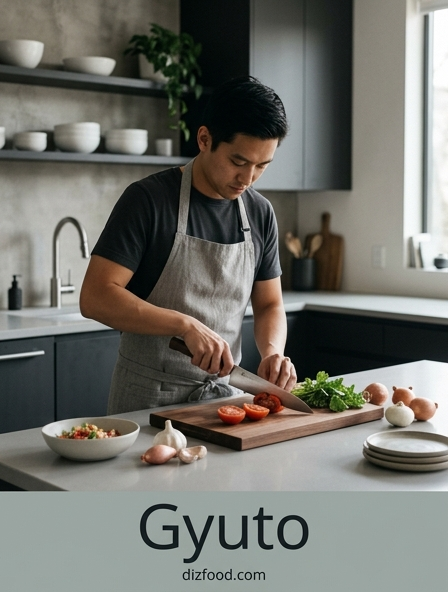
History and Evolution of the Gyuto Knife
The Gyuto is the Japanese interpretation of the classic Western chef knife. Its origins date back to the Meiji Restoration in the late 19th century, a period when Japan began adopting Western cultural and culinary practices. Before this era, Japanese blades were primarily task-specific, such as the Nakiri for vegetables or the Deba for fish. As the consumption of beef increased due to Western influence, blacksmiths developed a "beef sword"-the literal translation of Gyuto-to handle these new proteins.
While originally modeled after French and German cutlery, the Gyuto evolved distinct characteristics that set it apart. Japanese smiths applied their traditional expertise in forging high-carbon steel and single-bevel techniques to create a thinner, harder, and more precise version of the European prototype. Over the decades, the Gyuto has transitioned from a specialized meat knife to the primary multi-purpose tool in professional kitchens worldwide, blending the versatility of the West with the refined craftsmanship of the East. Today, it represents the pinnacle of culinary fusion, favored for its ability to bridge the gap between heavy-duty prep and delicate precision work.
Anatomy of the Japanese Chef Blade
Understanding the anatomy of a Gyuto is essential for maximizing its performance. Unlike its Western counterparts, the Gyuto features a flatter profile toward the heel, which transitions into a subtle curve near the tip. This design supports both push-cutting and rocking motions. The blade is typically thinner, reducing friction and allowing for effortless passage through dense ingredients. The core components of the blade include:
- The Tip: Pointed and sharp, ideal for intricate work and detail cuts.
- The Belly: The curved section used for rocking and slicing.
- The Heel: The widest part of the blade, providing stability for heavier tasks.
- The Spine: The top edge, usually kept thick enough to provide rigidity without adding excessive weight.
- The Edge: Typically ground to a 12-15 degree angle, significantly sharper than standard kitchen knives.
The construction often involves a "San Mai" or laminated structure, where a hard steel core is sandwiched between layers of softer stainless steel. This protects the brittle cutting edge while maintaining the blade's overall durability and ease of maintenance during long shifts.
Gyuto vs Western Style Knives
While they share a similar silhouette, the Gyuto and the Western chef knife differ significantly in geometry, material, and performance. Western knives are generally heavier and made from softer steels (HRC 56-58), making them durable but less capable of holding an ultra-fine edge. In contrast, the Gyuto utilizes harder Japanese steel (HRC 60+), allowing for a much thinner and sharper grind. This translates to cleaner cuts that preserve the cellular integrity of the food.
| Feature | Japanese Gyuto | Western Chef Knife |
|---|---|---|
| Steel Hardness | High (60-64 HRC) | Medium (56-58 HRC) |
| Edge Angle | 12-15 Degrees | 20-22 Degrees |
| Weight | Light/Nimble | Heavy/Robust |
| Balance Point | Forward (at the blade) | At the bolster |
The Western knife is often preferred for "brute force" tasks like splitting chickens or hacking through squash, whereas the Gyuto excels in precision. The absence of a thick bolster on most Gyutos also allows for full-length sharpening of the blade, extending its lifespan and utility.
Mastering Precision Slicing and Dicing
The Gyuto is a precision instrument that rewards proper technique. Because the blade is thinner and harder, users should avoid twisting the edge against the cutting board to prevent chipping. The versatility of the blade allows for several distinct cutting styles that cater to different ingredients and desired outcomes. Mastering these techniques ensures efficiency and safety in a fast-paced kitchen environment.
- Push Cutting: Moving the knife forward and down simultaneously, ideal for most vegetables.
- Pull Slicing: Using the length of the blade to draw back through proteins to prevent tearing.
- Rock Chopping: Keeping the tip on the board and moving the heel up and down for herbs.
- Tap Chopping: A rapid, vertical motion used primarily with the flatter heel section for quick dicing.
By utilizing the thin tip for scoring or fine dicing and the flatter heel for consistent vertical chops, the chef can achieve a level of uniformity that is difficult to replicate with thicker blades. This precision not only improves the visual appeal of the dish but also ensures even cooking throughout the ingredients.
Selecting the Right Steel Grade
The performance of a Gyuto is largely dictated by its steel composition. Selecting the right grade depends on the user's willingness to perform maintenance and their specific cutting needs. Japanese steels are broadly categorized into carbon steels and stainless steels, each offering unique trade-offs between edge retention, sharpness, and corrosion resistance. High-carbon steels are prized by purists for their unrivaled sharpness, while modern stainless alloys offer convenience without sacrificing significant performance.
- White Paper Steel (Shirogami): Purest carbon steel; gets extremely sharp but rusts easily.
- Blue Paper Steel (Aogami): Carbon steel with added tungsten and chromium for better edge retention.
- VG10: A popular high-end stainless steel that balances sharpness and rust resistance.
- SG2/R2: Powdered metallurgy steel that offers incredible hardness and durability.
- AUS-10: A reliable, mid-range stainless steel often found in entry-level professional Gyutos.
Carbon steels will develop a patina over time, which acts as a protective layer, but they require immediate drying after use. Stainless options are better suited for high-acid environments or home cooks who prefer a more "set it and forget it" approach to blade care.
Superior Protein Portioning and Preparation
As its name suggests, the Gyuto is exceptionally well-suited for processing meat. The length of the blade, typically ranging from 210mm to 240mm, allows for long, clean strokes that are necessary for portioning large cuts of protein without creating jagged edges. Whether working with raw beef, poultry, or boneless fish, the Gyuto's thin geometry minimizes resistance, allowing the blade to glide through muscle fibers with minimal effort. This is particularly beneficial when slicing cooked meats, as it preserves the juices within the protein.
While it is not designed for hacking through thick bones, it excels at trimming silver skin, removing fat caps, and slicing steaks into uniform strips. The pointed tip is sharp enough to navigate around joints and tendons during deboning tasks where a specialized honesuki might be unavailable. For the professional chef, the Gyuto serves as a bridge between a slicing knife and a general-purpose tool, providing enough length for large roasts while remaining nimble enough for delicate tasks like dicing pancetta or cleaning tenderloins.
Optimal Vegetable Processing Techniques
In the realm of vegetable preparation, the Gyuto offers a significant advantage over bulkier knives. Its thinness prevents the "wedging" effect often experienced when cutting through dense root vegetables like carrots or potatoes. Because the blade does not force the vegetable apart as it enters, the cuts remain perfectly straight and clean. This leads to better texture in the final dish and reduces the oxidation that occurs when plant cells are crushed rather than sliced. The flatter heel section of the Gyuto is perfect for "katsuramuki" (sheeting) or creating fine julienne strips.
Chefs often utilize the "claw grip" to guide the blade, taking advantage of the Gyuto's height to provide a safe surface for the knuckles to rest against. This allows for high-speed dicing of onions, shallots, and peppers with extreme consistency. For leafy greens and herbs, the slight curve in the belly facilitates a smooth rocking motion that prevents bruising of the leaves. From the precision required for a fine brunoise to the speed needed for rough-chopping mirepoix, the Gyuto remains the most efficient tool for comprehensive vegetable processing.
Essential Sharpening and Blade Care
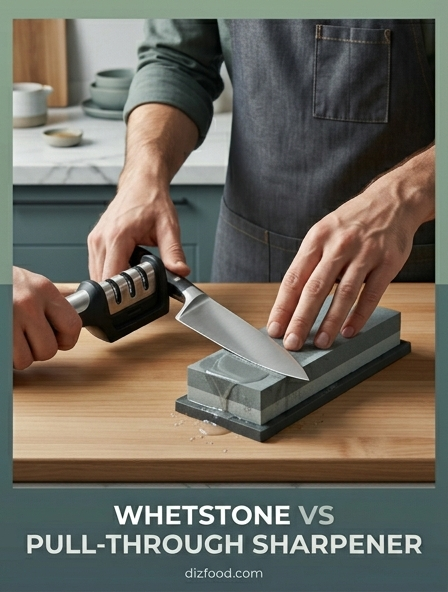
Maintaining a Gyuto requires a departure from Western maintenance habits. Honing steels, common in many kitchens, can actually damage the hard, brittle edge of a Japanese blade. Instead, whetstones are the standard for sharpening. Whetstones allow the user to control the exact angle and remove a minimal amount of metal, preserving the blade's life. Proper care ensures the knife remains a surgical instrument rather than a dull burden. To maintain the edge, follow these steps:
- Soaking: Submerge your whetstone in water until bubbles stop rising.
- Angle Consistency: Maintain a 12 to 15-degree angle throughout the stroke.
- Progressive Grits: Start with a medium grit (1000) for sharpening and finish with a fine grit (5000-8000) for polishing.
- Stropping: Use a leather strop to remove the micro-burr and refine the edge.
- Cleaning: Hand wash only and dry immediately; never put a Gyuto in the dishwasher.
Stored properly in a wooden saya or on a magnetic strip, a well-maintained Gyuto can last a lifetime, maintaining its edge through months of heavy use between full sharpening sessions.
Ergonomics of Wa versus Yo Handles
The handle of a Gyuto significantly impacts its balance and the user's cutting style. There are two primary categories: the "Wa" (traditional Japanese) and the "Yo" (Western-style). The choice between them is largely a matter of personal preference and desired weight distribution. Wa-handles are typically lighter, shifting the balance point of the knife further forward toward the blade. This encourages a "pinch grip," which provides more control and reduces hand fatigue during long periods of use.
- Wa-Handle (Octagonal): Provides multiple grip points and a traditional aesthetic.
- Wa-Handle (D-Shape): Ergonomically shaped for right-handed or left-handed users.
- Yo-Handle: Usually features a full tang with rivets, offering a heavier, more substantial feel.
- Material: Wa-handles often use Ho wood or Rosewood with horn bolsters, while Yo-handles use Pakkawood or Micarta.
Those who prefer a nimble, light-in-hand feeling usually gravitate toward the Wa-handle, while those transitioning from Western cutlery may find the familiar weight of the Yo-handle more comfortable. Regardless of the style, the handle should allow for a seamless connection between the chef's hand and the blade's edge.
The All Purpose Culinary Powerhouse
The Gyuto stands as the ultimate culinary powerhouse because it minimizes the need for multiple specialized tools. In a professional environment where speed and efficiency are paramount, the ability to switch from slicing a ribeye to mincing garlic without changing knives is invaluable. Its design is a testament to the philosophy of "less is more," providing a single edge that performs 90% of kitchen tasks with superior results. While specialized blades like the Fuguhiki or Honesuki have their place, the Gyuto is the workhorse that defines a chef's kit.
For the home cook, investing in a high-quality Gyuto is the single most effective way to improve cooking skills. The ease with which it handles prep work makes cooking more enjoyable and less of a chore. Its aesthetic beauty, often featuring Damascus cladding or hammered "Tsuchime" finishes, adds an element of artistry to the kitchen. Ultimately, the Gyuto is more than just a knife; it is a refined instrument of precision that empowers the cook to execute recipes with the confidence and accuracy of a master, making it the cornerstone of modern gastronomy.

Comments