
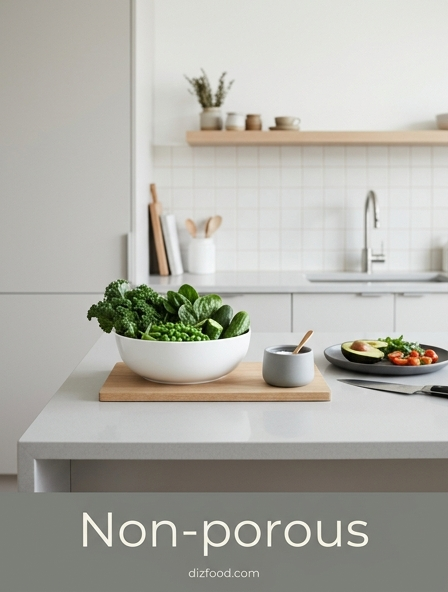
Understanding Porosity and Food Safety
In the culinary environment, the concept of porosity refers to the volume of open spaces within a material. In a kitchen setting, porosity is a critical factor in determining the overall safety and hygiene of food preparation areas. Materials like natural wood or certain unsealed stones contain microscopic voids that act as reservoirs for liquids, proteins, and fats. When these organic substances penetrate the surface, they become nearly impossible to remove through standard cleaning methods, creating a hidden breeding ground for pathogens.
Non-porous surfaces, conversely, offer a solid and impermeable barrier. Because there are no internal pathways for moisture or bacteria to travel, contaminants remain on the absolute surface where they can be effectively neutralized. This structural integrity is the first line of defense against foodborne illnesses. Choosing materials with zero or near-zero porosity ensures that the "clean" appearance of a countertop or cutting board matches its actual biological state, providing a predictable and controlled environment for handling raw ingredients.
Preventing Bacterial Growth and Biofilm
Bacteria require moisture, nutrients, and a protected environment to thrive and multiply. Porous surfaces provide all three by trapping microscopic food particles and water deep within their structure. Over time, these colonies can develop into a biofilm-a resilient, slimy layer of microorganisms that sticks to surfaces and resists conventional wiping. Once a biofilm is established in the pores of a countertop, it can shed bacteria onto fresh food, even if the surface looks visually pristine.
- Salmonella: Often survives in moisture-retaining crevices.
- E. coli: Can persist in deep scratches of porous materials.
- Listeria: Thrives in damp, hidden environments.
- Mold and Mildew: Find footing in the humid internal structures of wood and grout.
By utilizing non-porous materials such as stainless steel or engineered quartz, homeowners and professional chefs effectively eliminate the "housing" necessary for these microbial colonies. Without the ability to penetrate the surface, bacteria remain exposed to air and sanitizers, preventing the formation of dangerous biofilms and ensuring a significantly higher standard of biological safety during daily meal preparation.
Effortless Sanitization and Surface Maintenance
The primary advantage of non-porous kitchen surfaces is the radical simplification of the cleaning process. Because liquids and debris cannot be absorbed, the energy required to sanitize a surface is minimal. Most non-porous materials require nothing more than a mild detergent and warm water to achieve a high level of cleanliness. Furthermore, these surfaces can often withstand more aggressive chemical disinfectants without the risk of the chemicals soaking into the material and later leaching into food.
Maintenance routines are also streamlined because non-porous surfaces generally do not require the periodic resealing that natural stone or wood demands. For example, while a marble or granite slab must be treated with specialized sealants to maintain its (temporary) resistance to moisture, a non-porous solid surface or glass top remains permanently impermeable. This inherent characteristic saves time and reduces the long-term cost of ownership, as the material does not degrade or become more absorbent over time through use and wear.
Eliminating Persistent Odors and Flavor Transfer
Anyone who has prepared garlic, onions, or fish on a traditional wooden cutting board knows that odors can linger for days. This phenomenon occurs because the volatile organic compounds responsible for these strong scents penetrate the pores of the material. Once embedded, these odors are difficult to extract, often leading to unwanted flavor transfer. A non-porous surface ensures that the sensory profile of one dish does not contaminate the next, preserving the culinary integrity of every ingredient.
This is particularly important in professional settings or for home cooks who frequently work with diverse flavor profiles. Non-porous materials like tempered glass or high-quality stainless steel provide a neutral staging area. Because the surface is chemically inert and physically closed, there is no "memory" of previous meals. This ensures that a delicate pastry dough rolled out on a counter won't pick up the faint, lingering aroma of the spicy peppers prepared the night before, maintaining the highest standards of food quality and sensory purity.
Superior Resistance to Deep Organic Staining
Organic stains from red wine, turmeric, beet juice, or coffee are the nemesis of many beautiful kitchens. In porous materials, these pigments travel downward into the stone or wood, creating permanent discoloration that cannot be scrubbed away. This occurs through capillary action, where the liquid is literally pulled into the material's internal structure. Once the pigment is locked beneath the surface, aggressive sanding or professional chemical poultices are often the only recourse for restoration.
Non-porous materials solve this issue by keeping pigments on the surface. Since the liquid has nowhere to go, it simply sits on top until it is wiped away. Even if a spill is left to dry, the staining agent remains superficial and can be removed with a plastic scraper or a damp cloth without leaving a ghost-like remnant. This resistance to deep staining ensures that the kitchen maintains its aesthetic appeal for decades, regardless of how frequently high-pigment ingredients are used in daily cooking and entertaining routines.
Comparing Porous versus Non-porous Worktops
When selecting kitchen worktops, understanding the physical differences between material categories is essential for long-term satisfaction. Porous materials are often prized for their natural beauty, yet they require significant intervention to remain hygienic. Non-porous materials, however, provide a modern solution that prioritizes performance and safety without sacrificing visual appeal. The following table highlights the key differences between these two material classifications in a standard kitchen environment.
| Feature | Porous (Wood, Marble) | Non-porous (Quartz, Steel) |
|---|---|---|
| Liquid Absorption | High; leads to staining | Zero to negligible |
| Bacterial Risk | High; trapped in pores | Low; surface-only |
| Maintenance | Regular sealing required | Low; no sealing needed |
| Odor Retention | Persistent odors common | No odor retention |
| Chemical Resistance | Sensitive to acids/cleaners | Generally high resistance |
As illustrated, the functional gap between these materials is substantial. While porous surfaces can be managed with diligent care, non-porous surfaces offer an inherent "fail-safe" against common kitchen hazards and degradation.
Durability Against Scratches and Microscopic Germs
Surface integrity is directly linked to hygiene. While many people focus on porosity, the hardness of a material also dictates how many "micro-pores" are created through daily use. Softer materials, like wood or certain plastics, develop deep knife scores and scratches over time. These scratches function as artificial pores, providing a sanctuary for germs that is even harder to clean than the natural grain of the material. A truly durable kitchen surface must resist both internal porosity and external abrasions.
High-hardness non-porous materials, such as engineered stone or porcelain, are extremely difficult to scratch with standard kitchen utensils. By maintaining a smooth, unmarred surface, these materials ensure that there are no microscopic valleys where bacteria can hide from the wiping motion of a cleaning cloth. This structural resilience ensures that the material remains as hygienic in its tenth year of service as it was on the day of installation. Investing in a hard, non-porous surface is therefore a strategy for maintaining a consistent level of sanitation throughout the life of the kitchen.
Best Non-porous Materials for Modern Kitchens
Selecting the right material depends on the specific needs of the cook, but several industry standards stand out for their exceptional non-porous properties. These materials have been engineered or selected specifically to thrive in high-moisture, high-impact environments. Modern technology has allowed for the creation of surfaces that mimic the look of natural stone while providing the superior performance of a non-absorbent material.
- Engineered Quartz: Made from crushed stone and resin, it is 100% non-porous and never requires sealing.
- Stainless Steel: The gold standard for professional kitchens due to its total impermeability and heat resistance.
- Sintered Stone/Porcelain: Extremely high-density materials that are resistant to liquids, UV rays, and scratches.
- Solid Surface: Man-made acrylic or polyester blends that offer seamless installations, leaving no grout lines for bacteria.
- Tempered Glass: Non-reactive and non-absorbent, making it ideal for backsplashes and prep zones.
By choosing from this list, homeowners can ensure their kitchen is equipped with the best possible defense against contamination and wear, ensuring a lasting and healthy workspace.
Reducing Cross-Contamination Risks During Prep
Cross-contamination is one of the leading causes of food poisoning, occurring when pathogens from one food item-typically raw poultry or meat-are transferred to another, such as fresh produce. In a kitchen with porous surfaces, this risk is heightened because the juices from raw meat can seep into the countertop or cutting board. Even if the surface is wiped, the trapped pathogens can "wick" back up to the surface when a different food item is placed upon it.
Non-porous materials mitigate this risk by keeping all fluids on the surface. When a cook prepares raw chicken on a stainless steel or quartz surface, a simple spray of sanitizer and a wipe removes 99.9% of the risk. There is no worry about "deep-seated" bacteria surviving the cleaning process. This allows for a more fluid and confident cooking process, as the user knows that once the surface is wiped, it is truly clean and ready for the next ingredient. This "biological reset" is essential for any kitchen that handles a variety of raw and ready-to-eat foods.
Long-term Health Benefits of Hygienic Surfaces
The cumulative impact of choosing non-porous kitchen surfaces extends far beyond immediate cleanliness; it represents a long-term investment in household health. By reducing the overall microbial load in the kitchen, these surfaces help lower the frequency of minor stomach ailments and more serious foodborne infections. This is particularly vital in homes with vulnerable individuals, such as children, the elderly, or those with compromised immune systems, for whom even minor bacterial exposure can be significant.
Furthermore, non-porous surfaces contribute to better indoor air quality by preventing the growth of mold and mildew within the substrate of the kitchen counters. In humid climates or poorly ventilated kitchens, porous materials can act as moisture sinks, leading to fungal growth that releases spores into the air. Non-porous materials remain dry and inhospitable to mold. Ultimately, a kitchen designed with non-porous materials is a kitchen that supports a wellness-focused lifestyle, providing a safe, odor-free, and easy-to-maintain environment for the most important room in the home.

Comments