
Deciding between a reusable Silpat silicone mat and traditional parchment paper can be the difference between a perfectly golden batch of cookies and a burnt, sticky mess. While Silpats are celebrated for their eco-friendly durability and exceptional heat insulation-ideal for delicate macarons and sugary tuiles-parchment paper remains the undisputed champion of convenience and airflow, delivering a crispier bottom for savory roasts and classic chocolate chip cookies. Whether you're aiming for the consistent heat distribution of professional-grade silicone or the effortless cleanup and versatility of disposable sheets, understanding how these non-stick surfaces interact with your oven's heat is the secret to elevating your home baking to professional standards.
| Feature | Silpat (Silicone Mat) | Parchment Paper |
|---|---|---|
| Material | Fiberglass & food-grade silicone | Silicone-coated cellulose (paper) |
| Reusability | Highly durable (2,000-3,000 uses) | Single-use (compostable options exist) |
| Baking Result | Soft, pale, and evenly cooked bottoms | Crispy, browned, and textured bottoms |
| Heat Limit | Up to 480°F (approx. 250°C) | Up to 425°F-450°F (varies by brand) |
| Cleanup | Hand wash and air dry required | Zero cleanup; discard after use |
| Versatility | Fixed size; slips on some trays | Can be cut to fit any pan or mold |
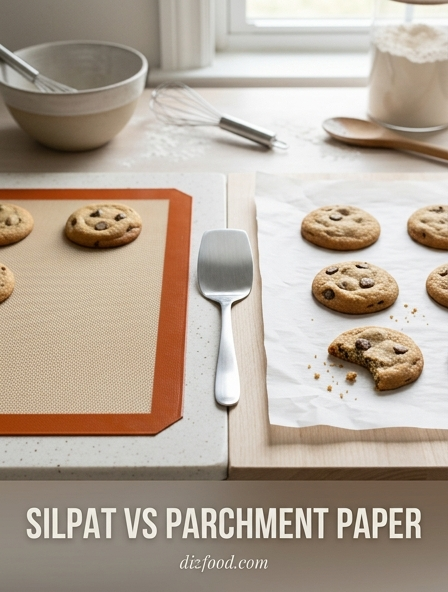
Silpat vs Parchment Paper Key Differences
The primary distinction between Silpat and parchment paper lies in their material composition and longevity. Silpat is a brand name for a high-quality silicone baking mat constructed from a combination of food-grade silicone and a fiberglass mesh core. This structure provides a thick, heavy-duty barrier between the food and the baking sheet. Conversely, parchment paper is a cellulose-based paper that has been treated with silicone to make it non-stick and heat-resistant. While Silpat is designed to be washed and reused thousands of times, parchment paper is generally intended for single or limited use before being discarded.
Another key difference is their physical flexibility and fit. Parchment paper is sold in rolls or pre-cut sheets and can be easily trimmed with scissors to fit any pan, including circular cake tins or irregularly shaped roasting dishes. Silpat mats are rigid in their dimensions and must be purchased to fit specific standard pan sizes, such as half-sheets or full-sheets. The thickness of the material also impacts the outcome; Silpats provide a cushioned, insulating layer, whereas parchment is thin and allows for more direct heat transfer. This leads to differences in how much a cookie spreads or how quickly the bottom of a pastry browns during the baking process.
- Material: Silicone/Fiberglass vs. Silicone-coated Paper.
- Reusability: Permanent (up to 3,000 uses) vs. Disposable.
- Customization: Fixed size vs. Easily cut to fit.
- Thickness: Thick and insulating vs. Thin and conductive.
Benefits of Reusable Silicone Mats
The most significant advantage of utilizing a Silpat or similar silicone baking mat is its unparalleled non-stick surface. Because the silicone is integrated into the fiberglass mesh, it creates a perfectly smooth plane that releases even the stickiest substances, such as melted cheese, caramel, or delicate tuile cookies, without the need for additional grease or flour. This makes it an essential tool for pastry chefs who work with high-sugar recipes that would otherwise fuse to a traditional baking sheet or tear through thin paper. The durability of these mats means they will not curl, scorch, or tear under normal kitchen conditions, providing a stable and reliable surface for years of consistent baking.
Beyond its non-stick capabilities, the Silpat serves as a protective layer for your bakeware. It prevents the buildup of carbonized food and oils on your expensive aluminum pans, significantly extending their lifespan and reducing the effort required for deep cleaning. The weight of the mat also helps to flatten out warped baking sheets, creating a level surface for batters. From an economic perspective, once the initial investment is made, the recurring cost of lining pans drops to zero. Professional bakers often prefer the predictability of silicone mats, as they offer a standardized baking environment that does not change from one batch to the next, ensuring that every macaron or cookie comes out with the same bottom texture and spread.
Advantages of Disposable Parchment Paper
Parchment paper remains a staple in kitchens worldwide primarily due to its extreme convenience and versatility. One of the greatest benefits is the ability to customize the paper to the specific task at hand. Whether you are lining a deep 9-inch cake pan, a square brownie tin, or a narrow loaf pan, parchment can be folded, pleated, and cut to provide total coverage, including the sides of the pan. This "sling" method allows bakers to lift entire cakes or batches of brownies out of the pan effortlessly, a feat that is impossible with a heavy, flat silicone mat. Furthermore, parchment paper is highly effective at absorbing excess moisture and fat, which can result in crispier edges for certain types of cookies and roasted vegetables.
The cleanup process with parchment paper is virtually non-existent. Once the baking is complete, the paper is simply removed and discarded, leaving the tray underneath clean and ready for storage. This is particularly advantageous during high-volume baking sessions, such as holiday cookie production, where multiple batches need to be processed quickly without stopping to wash and dry mats between rounds. Additionally, parchment paper can be used for "en papillote" cooking, where fish or vegetables are steamed inside a folded pouch. Its lightweight nature and thin profile make it ideal for tasks that require direct heat contact, ensuring that foods develop a golden-brown crust more rapidly than they would on an insulated silicone surface.
Baking Performance and Heat Conductivity
Understanding the thermodynamics of your baking surface is crucial for achieving professional results. Silpat mats act as an insulator; the thickness of the silicone and the internal fiberglass mesh slow down the transfer of heat from the metal pan to the food. This insulation is a double-edged sword. For delicate items like macarons, meringues, or light-colored sugar cookies, the Silpat prevents the bottoms from browning too quickly or burning, allowing the interior to cook through evenly. However, because it inhibits heat, you may find that items take a few minutes longer to finish, and they will rarely develop a truly crispy or crunchy bottom crust.
Parchment paper, by contrast, is very thin and offers negligible insulation. It allows the heat of the oven and the conductivity of the baking sheet to reach the dough or batter almost immediately. This results in faster browning and a more pronounced "snap" on the bottom of cookies and breads. If you are aiming for a caramelized, golden-brown finish on roasted potatoes or a crispy bottom on a loaf of focaccia, parchment paper is the superior choice. The choice between the two often comes down to the desired texture of the final product. A Silpat will produce a softer, more uniform bottom, while parchment paper will facilitate a more traditional, heat-intensive bake that favors crust formation and Maillard reaction browning.
Cost Comparison and Long Term Savings
When analyzing the financial aspect of Silpat versus parchment paper, one must consider the difference between a one-time capital investment and a recurring operational expense. A single genuine Silpat mat can cost between $15 and $25, depending on the size and retailer. While this may seem expensive compared to a $5 roll of parchment paper, the math shifts significantly over time. A Silpat is rated for approximately 2,000 to 3,000 baking cycles. To achieve the same number of bakes using parchment paper, you would need to purchase dozens of rolls, eventually spending hundreds of dollars more than the cost of a single reusable mat.
The following table illustrates the potential cost divergence over a period of high-volume baking:
| Feature | Silpat (Single Mat) | Parchment Paper (100-sheet box) |
|---|---|---|
| Initial Cost | $20.00 | $10.00 |
| Uses per Unit | 3,000 | 100 |
| Cost per Use | $0.006 | $0.10 |
| Cost over 1,000 Bakes | $20.00 (Original purchase) | $100.00 (10 boxes) |
For the occasional baker who only uses their oven once a month, the cost difference is negligible, and the convenience of parchment might outweigh the savings. However, for a home hobbyist or a professional who bakes several times a week, the Silpat pays for itself within the first few months of use, representing a substantial long-term saving.
Environmental Impact of Baking Tools
The environmental debate between reusable and disposable tools is complex. Parchment paper, while made from cellulose, is often coated with silicone, which can complicate the composting or recycling process. Many brands of parchment paper are bleached with chlorine, which can release dioxins into the environment during manufacturing. While unbleached, compostable parchment options exist, the vast majority of parchment paper used in kitchens ends up in landfills after a single use. The sheer volume of waste generated by frequent baking can be significant over several years, contributing to the broader issue of single-use disposable culture.
Silpat mats offer a more sustainable alternative by eliminating the need for constant disposal. However, they are not without their own environmental footprint. The production of silicone and fiberglass involves energy-intensive industrial processes and the extraction of non-renewable resources. Furthermore, once a Silpat reaches the end of its life, it is not biodegradable and is difficult to recycle in standard municipal programs. Despite this, the longevity of a silicone mat-replacing thousands of sheets of paper-generally makes it the more eco-friendly choice for high-frequency users. By reducing the demand for paper production, transportation, and waste management, the Silpat lowers the overall carbon footprint of a busy kitchen over its multi-year lifespan.
Best Uses for Silicone Baking Mats
Silicone baking mats excel in specific culinary scenarios where stickiness and precision are paramount. One of the most common applications is in the creation of French macarons. The insulating properties of the Silpat help these delicate almond-flour cookies rise evenly and develop their characteristic "feet" without the bottoms browning too much. Furthermore, many Silpat mats come with pre-printed templates to ensure every cookie is the exact same size. These mats are also the gold standard for sugar work, including isomalt, brittle, and toffee. Because silicone can withstand high temperatures and remains completely non-stick even when in contact with molten sugar, it allows for easy release and cleanup of candies that would shatter or stick to parchment.
Beyond desserts, Silpats are excellent for working with doughs that require kneading or shaping. They provide a stable, non-slip surface for rolling out pie crusts or pizza dough, often eliminating the need for excess dusting flour that can toughen the pastry. They are also ideal for:
- Chilled items: Setting chocolate bark or dipped strawberries in the refrigerator.
- Sticky proteins: Baking honey-glazed chicken or salmon without skin sticking to the pan.
- Frozen goods: Flash-freezing individual berries or meatballs so they don't clump together.
- Cheese crisps: Creating frico or parmesan tuiles that peel off effortlessly.
When to Choose Parchment Paper
Despite the popularity of silicone mats, parchment paper remains the superior choice for several specific kitchen tasks. First and foremost is high-heat roasting. Parchment is generally rated for temperatures up to 425-450°F, and unlike silicone, it does not trap moisture underneath the food. This makes it the better option for roasting vegetables like Brussels sprouts or carrots, where you want maximum contact with the heat to achieve a crispy, charred exterior. Additionally, if you are baking crusty artisan breads at very high temperatures, parchment paper is more suitable as it can be easily transferred along with the dough into a preheated Dutch oven or onto a baking stone.
Another critical use case is lining cake pans and deep dishes. A Silpat cannot be bent into the corners of a square brownie pan or used to line the sides of a tall springform pan. Parchment's ability to be cut and shaped means it can provide a 360-degree non-stick environment for cakes, ensuring that the sides don't tear when the cake is removed. It is also the preferred tool for "en papillote" cooking, where fish and aromatics are sealed inside a paper pouch to steam. Finally, parchment is the logical choice when you need to transport baked goods or give them away. You can bake cookies on the paper, let them cool, and then stack them with layers of the same paper for transport, a convenience that a heavy silicone mat does not provide.
Cleaning and Maintenance Requirements
The cleaning process is perhaps the biggest point of contention between Silpat and parchment users. Parchment paper requires zero maintenance; it is used and then discarded. Silpat, however, requires careful cleaning to maintain its non-stick properties. Over time, silicone can develop a greasy film from the fats and oils in doughs. This film can become rancid or sticky if not properly removed. To clean a Silpat, it should be washed with a soft sponge and mild, grease-cutting dish soap. It is important to avoid abrasive scrubbers or harsh chemicals, which can damage the silicone coating and expose the fiberglass mesh beneath.
Proper drying and storage are also essential for the longevity of a silicone mat.
- Wash the mat in warm, soapy water immediately after use.
- Rinse thoroughly to ensure no soap residue remains, as this can affect the flavor of future bakes.
- Pat the mat dry with a clean towel or allow it to air dry completely.
- Store the mat flat or rolled up inside a cardboard tube; never fold it, as creases can break the internal fiberglass fibers.
Final Comparison for Better Baking
In the debate of Silpat versus parchment paper, the "better" tool depends entirely on your specific baking goals. For the precision baker who specializes in macarons, delicate cookies, and sugar confectionery, the Silpat is an indispensable investment that provides consistency and cost-savings over thousands of uses. Its ability to insulate and protect delicate batters from the harsh heat of a metal pan ensures a professional finish that is difficult to replicate with paper. It is the workhorse of the pastry kitchen, offering durability and a reliable non-stick surface that handles the stickiest ingredients with ease.
On the other hand, the home cook who values convenience, versatility, and crispy textures will likely find parchment paper to be more practical. Its ability to be trimmed to any size, its superior heat conductivity for browning, and its effortless cleanup make it ideal for roasting, cake baking, and high-volume holiday production. For many, a well-equipped kitchen should ideally contain both. Use the Silpat for your standardized cookie sheets and delicate sweets, and keep a roll of parchment paper for odd-shaped pans, high-heat roasting, and those busy days when you simply don't want to wash another dish. By choosing the right tool for the specific recipe, you ensure the best possible texture, flavor, and appearance for your culinary creations.

Comments