
Deciding between a wild sourdough starter and commercial yeast is the ultimate crossroads for any home baker looking to elevate their bread game. While commercial yeast is the king of convenience, offering a predictable, rapid rise and a soft, uniform crumb, sourdough starter is a living ecosystem of wild yeast and lactic acid bacteria that prioritizes depth of flavor and artisanal texture. Choosing the right leavening agent isn't just about how much time you have on your hands; it's about whether you want the nostalgic, mild sweetness of a quick-baked loaf or the complex, tangy, and highly digestible profile of a long-fermented masterpiece. By understanding how these two powerhouses transform flour and water, you can tailor your baking process to achieve the exact crust crunch and interior softness your perfect sandwich or dinner roll requires.
| Feature | Sourdough Starter | Commercial Yeast |
|---|---|---|
| Leavening Agent | Wild yeast & Lactic Acid Bacteria | Concentrated S. cerevisiae |
| Fermentation Speed | Slow (12-24+ hours) | Rapid (1-3 hours) |
| Flavor Profile | Complex, acidic, tangy, and earthy | Mild, slightly sweet, "yeasty" aroma |
| Texture & Crumb | Open, irregular holes; chewy crumb | Uniform, tight crumb; soft/pillowy |
| Digestibility | High (breaks down gluten/phytic acid) | Standard (minimal nutrient conversion) |
| Shelf Life | Longer (natural acidity prevents mold) | Shorter (stales and molds faster) |
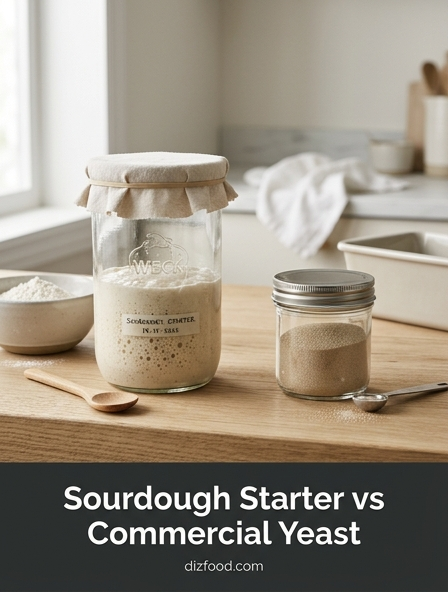
Understanding Wild Yeast vs Commercial Yeast Biology
At the microscopic level, the primary difference between sourdough and commercial yeast lies in biodiversity. Commercial yeast, known scientifically as Saccharomyces cerevisiae, is a single strain of yeast isolated and cultivated for its aggressive CO2 production. This industrial strain is optimized for speed and reliability, ensuring that dough rises predictably within a short timeframe. Because it is a monoculture, it lacks the complexity found in natural environments, focusing solely on the fermentation of simple sugars into carbon dioxide and ethanol.
In contrast, a sourdough starter is a complex ecosystem containing multiple strains of wild yeast, such as Saccharomyces exiguus or Candida humilis, living in symbiosis with Lactic Acid Bacteria (LAB). This biological community is often gathered from the flour itself and the surrounding environment. The relationship is mutually beneficial: the yeast provides nutrients for the bacteria, while the bacteria acidify the environment, protecting the colony from pathogens. This biological diversity is responsible for the unique characteristics of sourdough bread that a single-strain commercial yeast cannot replicate.
- Commercial Yeast: Single strain (monoculture), high-speed fermentation, laboratory-grown.
- Wild Yeast: Poly-culture, symbiotic relationship with bacteria, environmentally captured.
- Lactic Acid Bacteria: Present only in sourdough, responsible for acidification and flavor.
Flavor Development in Sourdough vs Neutral Instant Yeast
The flavor profile of bread is a direct result of the metabolic byproducts produced during fermentation. Commercial instant yeast is specifically designed to be flavor-neutral. Its rapid fermentation process leaves little time for the development of complex organic compounds, resulting in bread that tastes primarily of the grain it is made from. While this is ideal for certain enriched breads or rolls where the flavor of butter and sugar should dominate, it often leaves lean breads tasting "yeasty" or flat.
Sourdough flavor is characterized by a sophisticated interplay of tanginess and depth. The Lactic Acid Bacteria (LAB) within the starter produce organic acids-specifically lactic acid and acetic acid. Lactic acid provides a mild, creamy tang similar to yogurt, while acetic acid provides a sharper, vinegary punch. The longer fermentation times required for sourdough allow for proteolysis, a process where enzymes break down proteins into amino acids, which further enhances the savory "umami" notes and contributes to a deeply caramelized crust through the Maillard reaction during baking.
Digestibility Benefits of Long Fermentation Sourdough
One of the most significant advantages of sourdough is its impact on digestive health. The long fermentation period, often lasting between 12 and 48 hours, allows the wild yeast and bacteria to perform a "pre-digestion" of the dough. During this time, the enzymes in the starter break down the complex starches and proteins that many people find difficult to process. This is particularly relevant for individuals with mild gluten sensitivities, as the fermentation process significantly degrades gluten proteins, making the final loaf easier on the gut.
Furthermore, the fermentation process reduces the presence of FODMAPs (Fermentable Oligosaccharides, Disaccharides, Monosaccharides, and Polyols), which are short-chain carbohydrates that can cause bloating and gas in sensitive individuals. Commercial yeast bread, which typically rises in under two hours, does not allow enough time for these enzymes to work. Consequently, the human digestive system must do all the heavy lifting, which can lead to discomfort. The symbiotic activity in sourdough creates a more bioavailable and gut-friendly product.
- Enzymatic breakdown of gluten proteins.
- Reduction of fermentable carbohydrates (FODMAPs).
- Transformation of complex starches into simpler sugars.
- Lowered glycemic index due to organic acid production.
Comparing Rise Times and Baking Schedules
The choice between sourdough and commercial yeast dictates the rhythm of the kitchen. Commercial yeast is the tool of efficiency; it is engineered to be vigorous and consistent. When using instant or active dry yeast, a baker can go from raw ingredients to a finished loaf in as little as three hours. This predictability makes it the preferred choice for industrial bakeries and home bakers with limited time. However, this speed comes at the cost of the structural and nutritional benefits that time provides.
Sourdough follows a biological clock that is influenced by temperature, hydration, and the health of the starter. Because wild yeast is less concentrated and works alongside bacteria, the rise times are significantly longer. A typical sourdough schedule involves a "bulk fermentation" of 4 to 6 hours, followed by a cold proof in the refrigerator for 12 to 24 hours. While this requires more planning, it offers the baker more flexibility in some ways, as the dough can be held in the cold to fit a busy schedule. The following table summarizes the typical timeline differences.
| Process Phase | Commercial Yeast | Sourdough Starter |
|---|---|---|
| Bulk Fermentation | 1 - 2 Hours | 4 - 8 Hours |
| Final Proofing | 30 - 60 Minutes | 3 - 24 Hours |
| Total Duration | 2.5 - 4 Hours | 12 - 48 Hours |
Nutritional Differences Between Natural and Manufactured Yeast
From a nutritional standpoint, sourdough is often considered superior to commercial yeast bread, even when the same flour is used. While commercial yeast focuses on aeration, the bacterial component of a sourdough starter acts as a nutritional enhancer. The lactic acid bacteria increase the levels of certain vitamins and antioxidants in the bread. Specifically, sourdough fermentation has been shown to increase levels of folate and B-vitamins, which are essential for energy metabolism and cellular repair.
The bioavailability of nutrients is also increased in sourdough. Many of the vitamins and minerals present in whole grains are "locked" by other compounds, preventing the body from absorbing them. The acidic environment created by sourdough fermentation activates enzymes that release these nutrients. Additionally, the presence of prebiotic fibers-the compounds that feed beneficial gut bacteria-is often higher in naturally leavened bread. While the live bacteria in the starter are killed during the baking process, their metabolic contributions remain, offering a more nutrient-dense profile than the relatively inert crumb of a quick-rise commercial loaf.
Texture and Crumb Comparison of Sourdough and Yeast Bread
The internal structure of a loaf, known as the "crumb," differs vastly between these two leavening agents. Commercial yeast bread is typically characterized by a "closed" or uniform crumb. This means the air bubbles are small and evenly distributed, resulting in a soft, pillowy texture often found in sandwich loaves. The rapid gas production of commercial yeast stretches the gluten network quickly and evenly, creating a consistent but sometimes uninteresting mouthfeel.
Sourdough is famous for its "open" or "irregular" crumb. Because the gas is produced more slowly and the acids strengthen the gluten over time, the dough can support larger, more varied air pockets. This results in a texture that is both chewy and light, providing a more complex sensory experience. Additionally, the crust of a sourdough loaf is typically thicker and more robust than that of a yeast loaf. The sugars broken down during the long fermentation migrate to the surface, creating a deeply browned, crackly exterior that provides a stark contrast to the moist, tender interior.
The Impact of Phytic Acid on Mineral Absorption
One of the most critical chemical differences in these breads involves phytic acid, an "anti-nutrient" found in the bran of grains. Phytic acid binds to important minerals like iron, zinc, magnesium, and calcium, preventing the human digestive tract from absorbing them. In commercial yeast bread, the fermentation time is too short to neutralize phytic acid, meaning much of the nutritional value of the grain passes through the body unabsorbed.
Sourdough fermentation addresses this through the activation of the enzyme phytase. This enzyme thrives in the acidic environment created by the Lactic Acid Bacteria. As the dough ferments over many hours, the phytase breaks down the phytic acid, effectively "unlocking" the minerals and making them available for the body to use. This makes sourdough an essential choice for those relying on grains for their mineral intake, particularly in whole-grain baking.
- Phytic Acid: Binds to minerals, reducing their bioavailability.
- Phytase Enzyme: Activated by low pH in sourdough, breaks down phytic acid.
- Mineral Access: Sourdough provides significantly more absorbable zinc, magnesium, and iron.
Shelf Life and Preservation Properties of Natural Leaven
Sourdough bread possesses a natural resistance to staling and mold that commercial yeast bread lacks. This is largely due to the organic acids produced during the long fermentation process. The acetic acid acts as a natural preservative, inhibiting the growth of mold and rope bacteria. This is why a loaf of sourdough can often sit on the counter for a week without showing signs of spoilage, whereas a homemade yeast loaf might begin to mold within a few days.
Furthermore, the texture of sourdough remains palatable for longer. Staling, or "retrogradation," occurs when starch molecules realign and expel moisture, causing the bread to become hard and crumbly. The acids in sourdough slow down this process, helping the bread retain its moisture and chewiness over several days. While commercial breads often use chemical preservatives like calcium propionate or monoglycerides to achieve a long shelf life, sourdough achieves this through its own internal chemistry, making it a "cleaner" option for preservation.
Simplicity of Ingredients vs Commercial Bread Additives
The philosophy of sourdough is rooted in minimalism. Authentic sourdough requires only three ingredients: flour, water, and salt. The leavening is provided by the air and the grain themselves. This simplicity appeals to those who want to avoid the complex list of additives often found in store-bought, commercially leavened breads. Because commercial yeast often lacks the structural and flavor benefits of time, manufacturers frequently add ingredients to compensate.
When examining a standard loaf of commercial bread, one might find a variety of dough conditioners, emulsifiers, and fortificants. These are used to speed up production, increase volume, and extend shelf life on a grocery store shelf. Sourdough relies on biological processes to achieve these results naturally, bypassing the need for industrial intervention.
- Sourdough Ingredients: Flour, water, salt, wild culture.
- Common Commercial Additives: DATEM, monoglycerides, calcium propionate, high fructose corn syrup, and soy lecithin.
- Flavor Source: Sourdough uses bacterial fermentation; commercial bread often uses added sugar or artificial flavorings.
Choosing the Right Leavening Agent for Your Health Goals
The decision between sourdough and commercial yeast ultimately depends on your health priorities and lifestyle. If blood sugar management is a concern, sourdough is the clear winner. The organic acids produced during fermentation slow down the rate at which glucose is released into the bloodstream, giving sourdough a lower glycemic index compared to yeast bread. This can prevent the sharp insulin spikes often associated with consuming white bread. For those with digestive sensitivities, the pre-digested nature of sourdough proteins and starches offers a path to enjoying bread without the associated discomfort.
However, commercial yeast still has its place in a healthy kitchen, particularly for its convenience and role in providing reliable fortification. Many commercial yeasts are enriched with Vitamin D, and the speed of yeast allows for the quick creation of whole-grain rolls or pizzas that are still more nutritious than processed snacks. Ultimately, while sourdough offers superior depth of flavor and specialized health benefits, commercial yeast remains a valuable tool for the modern baker who needs efficiency without completely sacrificing the quality of homemade food.


Comments