
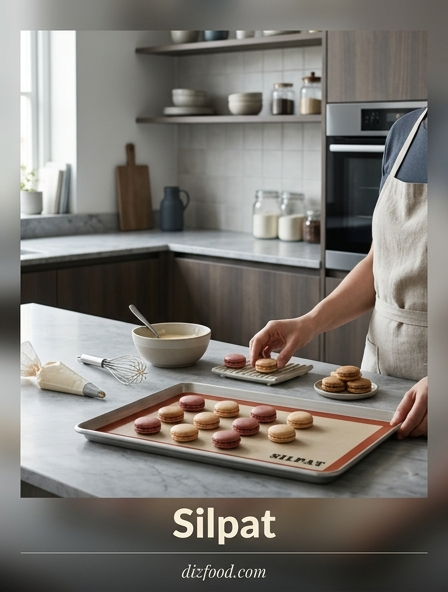
Professional Benefits of Silicone Baking Mats
In the demanding environment of a professional kitchen, Silpat mats have become an indispensable tool for pastry chefs and bakers alike. The primary advantage lies in their unique construction, which combines a specialized fiberglass mesh with food-grade silicone. This synergy provides an exceptionally durable surface that can withstand the rigors of high-volume production without losing its structural integrity. Unlike traditional methods, these mats offer a predictable surface that ensures uniformity across hundreds of baking cycles.
- Significant cost savings by eliminating the need for single-use parchment paper.
- Enhanced structural support for delicate batters and doughs.
- Reduced prep time as there is no need for greasing or flouring pans.
- Versatility across various culinary tasks, from chocolate work to roasting savory items.
- Improved kitchen safety by providing a stable, non-slip surface on sheet pans.
Furthermore, the professional-grade silicone used in Silpat products is designed to resist staining and odor absorption, which is critical when transitioning between sweet and savory preparations. By providing a reliable, reusable alternative to disposables, these mats allow chefs to maintain high standards of quality while optimizing operational efficiency and minimizing kitchen waste.
Heat Distribution and Consistent Baking Results
The core technology behind silicone baking mats centers on the internal fiberglass mesh, which acts as a sophisticated heat conductor. In a standard convection or deck oven, "hot spots" are a common occurrence that can lead to uneven browning or burnt edges. Silpat mats mitigate this issue by diffusing heat evenly across the entire surface of the baking sheet. This thermal regulation ensures that every cookie, macaron, or pastry receives the same caloric energy, regardless of its position on the tray.
This consistency is vital for achieving the "golden-brown-and-delicious" standard required in professional baking. Because the silicone provides a slight buffer between the direct heat of the metal pan and the delicate dough, the bottom of the baked goods undergoes a slower, more controlled Maillard reaction. This results in a perfectly set base without the bitterness of over-caramelization. Whether you are working with high-fat shortbread or sugar-heavy meringues, the temperature stabilization offered by these mats ensures a level of precision that parchment paper simply cannot replicate, making them essential for technical recipes where timing and temperature are sensitive.
Transitioning from Parchment to Reusable Mats
Making the switch from disposable parchment paper to reusable silicone mats is a strategic move for any kitchen looking to modernize its workflow. While parchment is a traditional staple, it often curls, scorches at high temperatures, and requires constant reordering. Silpat mats, conversely, lay perfectly flat every time, ensuring that batters do not spread unevenly due to paper wrinkles. The transition requires a slight adjustment in baking times, as silicone is a more efficient insulator than thin paper.
| Feature | Parchment Paper | Silicone Baking Mat |
|---|---|---|
| Reusability | Single-use (usually) | Up to 3,000 uses |
| Max Temperature | ~420°F (varies) | ~500°F (standard) |
| Surface Prep | Often needs butter/oil | Completely non-stick |
| Waste Factor | High environmental impact | Zero-waste compliant |
Chefs transitioning to Silpat should note that the underside of baked goods may appear slightly smoother compared to the texture left by parchment. However, the elimination of recurring costs and the reduction in trash volume provide an immediate return on investment that far outweighs the initial purchase price of the mats.
Maximizing Non Stick Efficiency for Pastries
The hallmark of a genuine Silpat is its legendary non-stick surface, which is particularly beneficial when working with high-sugar content recipes that typically stick to metal or paper. For intricate pastry work, such as lace cookies, tuiles, or sugar glass, the ability to peel the mat away from the product-rather than the product from the mat-is a game changer. This flexibility prevents the breakage of fragile edges that often occurs when using spatulas on rigid surfaces.
- Place the mat on a clean, dry perforated or solid sheet pan.
- Deposit dough or batter directly onto the silicone surface without greasing.
- After baking, allow the items to cool slightly to set their structure.
- Gently lift the corner of the mat or slide the pastry off; the release should be effortless.
- For sugar work, ensure the sugar has cooled to the appropriate temperature before handling.
To maximize this efficiency, it is crucial to avoid using sharp metal tools on the surface, as nicks can compromise the silicone coating. By maintaining a smooth, unblemished surface, the mat will continue to provide a frictionless release for years, even when dealing with the stickiest caramels and most delicate choux pastry shells.
Temperature Management and Thermal Resistance
Silpat mats are engineered to perform in extreme temperature ranges, typically from -40°F to 500°F (-40°C to 260°C). This broad thermal resistance makes them versatile for more than just hot oven applications. They are equally effective in the freezer for setting mousses, chocolates, or flash-freezing individual portions of dough. The ability to move a mat directly from the freezer to a preheated oven without risk of thermal shock or warping is a testament to the high-quality materials used in their construction.
In high-heat scenarios, such as roasting vegetables or searing proteins, the silicone remains stable and does not off-gas or degrade. This safety margin is critical for maintaining the flavor profile of the food. Furthermore, the mats act as a thermal barrier that prevents the bottom of the pan from heating up too quickly, which is especially useful when using dark-colored pans that tend to absorb more radiant heat. By managing the rate of heat transfer, Silpat allows for a more forgiving baking window, reducing the likelihood of scorched bottoms in high-temp recipes like pizzas or artisan breads.
Achieving Professional Crust and Texture
One common misconception is that silicone mats result in soft crusts. On the contrary, when used correctly, Silpat mats can help achieve a sophisticated texture and crumb. For items like cookies, the mat encourages a slight spread and a perfectly flat bottom, which is the hallmark of professional bakery aesthetics. For breads, the silicone provides enough moisture retention to allow for a proper "spring" before the crust hardens, resulting in a better interior volume.
The fiberglass mesh inside the mat allows for a degree of airflow that parchment does not offer, especially when used on perforated pans. This setup is ideal for puff pastry and croissants, where the goal is to achieve flaky layers without burning the base. The lack of added fats (like butter or cooking spray) also means the true flavor of the dough shines through, without the greasy residue often found in traditionally greased pans. By controlling the evaporation of moisture at the contact point, the mat helps create a uniform, dense crust that is both structurally sound and aesthetically pleasing for high-end plated desserts.
Essential Care and Cleaning for Longevity
To ensure that a Silpat mat lasts for its intended lifespan of several thousand bakes, proper maintenance is mandatory. Silicone is naturally hydrophobic, meaning it repels water, but it can develop a slight oily film over time if not cleaned correctly. This film is usually just polymerized fats from butter or oils used in doughs. While it doesn't affect performance, it can be removed with a proper cleaning regimen.
- Wipe the mat with a soft sponge and mild, grease-cutting dish soap.
- Rinse thoroughly with warm water to remove all soap residue.
- Shake off excess water and allow to air dry, or place in a low-temperature oven for a few minutes.
- Store mats flat or rolled loosely; never fold or crease them, as this can snap the fiberglass filaments.
- Avoid using abrasive scrubbers or harsh chemicals like bleach.
It is important to never use the mat as a cutting board. Knives and pastry wheels will slice through the silicone and expose the fiberglass mesh, rendering the mat unsafe for food contact. When cared for with respect, a single mat can replace thousands of sheets of parchment, making it one of the most sustainable and durable assets in the kitchen.
Sustainable Kitchen Practices with Silicone
Environmental stewardship is becoming a priority in modern gastronomy, and the adoption of Silpat mats is a significant step toward a zero-waste kitchen. Every time a chef chooses a silicone mat over parchment paper, they are preventing a piece of treated paper and its packaging from entering a landfill. Since parchment paper is often coated in quilon or silicone, it is frequently non-compostable and non-recyclable once soiled with food grease. Silpat provides a long-term solution that aligns with the principles of the circular economy.
Beyond waste reduction, the manufacturing longevity of these mats means a lower carbon footprint over the life of the product compared to the continuous production, shipping, and disposal of paper products. By investing in high-quality, reusable gear, a kitchen reduces its logistical load and environmental impact. This commitment to sustainability does not come at the cost of quality; rather, it enhances the kitchen's reputation as an ethically conscious and operationally efficient establishment. Using these mats is a practical way to demonstrate that high-volume professional cooking can be both high-performing and environmentally responsible.
Sizing and Fit for Professional Sheet Pans
Standardization is key in professional kitchens to ensure that equipment is interchangeable and efficient. Silpat mats are manufactured in dimensions that correspond exactly to industry-standard sheet pans and Gastronorm (GN) sizes. A proper fit is essential because a mat that is too large will curl up the sides of the pan, causing uneven baking and potentially damaging the mat, while a mat that is too small leaves sections of the pan exposed to sticking.
| Mat Type | Dimensions (Approx.) | Common Application |
|---|---|---|
| Full Size | 16-1/2" x 24-1/2" | Commercial Deck Ovens |
| Half Size | 11-5/8" x 16-1/2" | Standard Pro Convection |
| Quarter Size | 8-1/4" x 11-3/4" | Countertop/Pastry Ovens |
| GN 1/1 | 530mm x 325mm | European/International Standard |
When selecting mats, it is important to measure the internal flat surface of your pans rather than the outer rim. Using the correct size ensures that the mat stays flat and provides edge-to-edge coverage, which is particularly important when baking large batches of items that require precise spacing, such as cookies or appetizers.
Maintaining Food Safety and Material Integrity
Food safety is the most critical aspect of any kitchen tool. Authentic Silpat mats are made from high-quality silicone that is FDA, NSF, and Kosher certified. They are BPA-free and do not contain phthalates or other harmful plasticizers. The integrity of the mat is maintained by the encapsulation of the fiberglass mesh within the silicone; as long as the silicone layer remains intact, the mat is perfectly safe for repeated food contact. However, if a mat becomes deeply scratched or the mesh becomes visible, it should be decommissioned immediately.
- Inspect mats regularly for tears or exposed fiberglass fibers.
- Ensure mats are completely dry before storage to prevent mold growth.
- Use only for intended baking and freezing purposes; do not use over open flames or broilers.
- Verify that the mat is placed on a tray and never directly on the oven rack.
By adhering to these safety guidelines, kitchens can ensure they are providing the highest level of food safety for their clients. The inert nature of the silicone ensures that no chemicals migrate into the food, even at high temperatures, providing peace of mind for chefs who prioritize the purity of their ingredients and the health of their customers.

Comments