
Tired of scrubbing burnt-on messes off your baking pans? Achieving that golden-brown, professional-level crispiness has never been easier than with disposable sheets. Whether you're roasting seasonal veggies or baking a fresh batch of cookies, these liners provide a reliable non-stick surface that ensures your food slides right off while protecting your favorite cookware from stains and scratches. They offer a stress-free solution for busy home cooks who want to enjoy gourmet results without the tedious cleanup afterward. It's the ultimate kitchen hack for consistent browning and effortless pan maintenance every single time. However, if you're looking for a more sustainable alternative, you might want to weigh the pros and cons of Silpat vs Parchment Paper to find the best fit for your specific baking needs.
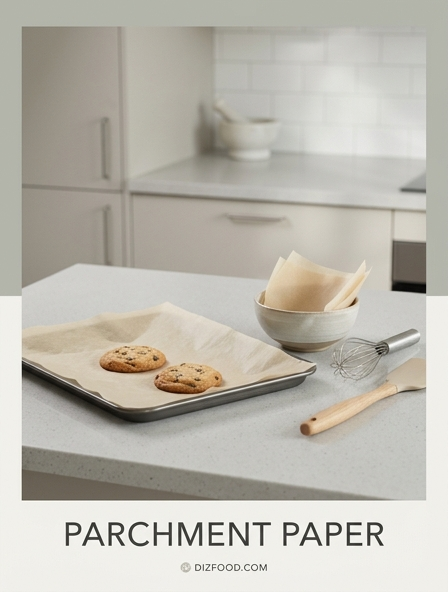
Benefits of Disposable Baking Liners
Disposable baking liners, particularly parchment paper, have revolutionized the efficiency of modern kitchens. These liners act as a reliable barrier between the food and the baking surface, ensuring that even the most delicate items release effortlessly. Unlike traditional greasing methods that use butter or oil, parchment paper provides a clean, chemical-free non-stick surface that does not alter the nutritional profile or flavor of your recipe. This makes it an indispensable tool for health-conscious cooks and professional pastry chefs alike.
- Ensures consistent food release without tearing or sticking.
- Eliminates the need for excess fats and oils on the pan surface.
- Protects expensive bakeware from scratches and stubborn stains.
- Provides a stable surface for rolling out dough or shaping pastries.
- Facilitates quick transfers from hot pans to cooling racks.
Beyond convenience, these liners offer significant hygiene benefits. By preventing direct contact between raw ingredients and metal trays, they minimize the risk of cross-contamination. Furthermore, parchment paper is heat-stable, meaning it will not leach harmful substances into your food at high temperatures, unlike some lower-quality synthetic alternatives.
Maximizing Crispiness with Parchment Paper
Achieving the perfect crunch on roasted vegetables or golden-brown cookies often depends on how moisture is managed during the cooking process. Parchment paper is uniquely suited for this task because it is breathable yet grease-resistant. Unlike silicone mats, which can trap a thin layer of moisture against the food, parchment allows for a more effective evaporation process. This subtle difference is what separates a soggy roasted potato from one with a shattered-glass exterior and a fluffy interior.
To maximize crispiness, it is essential to avoid overcrowding the sheet pan. When food items are spaced out on a parchment liner, the dry heat of the oven can circulate around each piece, browning the bottom through the thin paper layer. The paper also absorbs a small amount of excess oil, preventing the food from sitting in a pool of grease that would otherwise lead to a heavy, oily finish. Whether you are preparing breaded chicken or kale chips, the moisture-regulating properties of parchment paper ensure that the direct heat from the pan is distributed just enough to crisp the exterior without burning the sugars in the food.
Effortless Cleanup Strategies for Busy Cooks
One of the most significant burdens in any kitchen is the post-meal cleanup. Traditional roasting and baking often leave behind carbonized food particles and polymerized fats that require hours of soaking and intense scrubbing. Utilizing parchment paper effectively eliminates this chore. By lining your pans completely, you ensure that any drips or spills are caught by the disposable sheet rather than the metal surface itself.
- Measure the paper to fit the pan perfectly, including the sidewalls.
- Apply a small dot of oil to the corners of the pan to keep the paper from sliding.
- Fold the edges of the paper upward to create a reservoir for juices.
- Once cooking is finished, simply lift the paper and discard it.
- Give the pan a quick rinse with warm soapy water to sanitize.
This strategy is particularly effective when working with sticky glazes, such as honey-roasted carrots or balsamic-glazed salmon. These sugars often burn onto the pan, becoming nearly impossible to remove without damaging the bakeware. With a parchment barrier, these burnt residues are tossed away in seconds, allowing you more time to enjoy your meal and less time at the sink.
The Role of Airflow in Perfect Roasting
Successful roasting relies on the efficient movement of hot air and the conductive heat of the pan. Parchment paper is thin enough to allow the metal's heat to transfer quickly to the food, yet it provides just enough insulation to prevent the bottom of your dish from scorching before the top is done. This balance is critical when roasting dense root vegetables or thick cuts of meat that require a longer duration in the oven. The paper acts as a thermal buffer, smoothing out the hot spots common in many residential ovens.
Furthermore, because parchment paper has a slightly textured surface, it does not create a vacuum seal with the food. This allows microscopic amounts of air to move underneath the ingredients, aiding in the dehydration of the surface and resulting in a better Maillard reaction. This chemical reaction is responsible for the complex flavors and deep brown colors associated with high-quality roasting. By facilitating this airflow and heat distribution, parchment paper helps home cooks achieve professional-grade results with minimal effort or specialized equipment.
Choosing the Right Liner for Every Dish
Selecting the appropriate liner is crucial for both safety and culinary success. While parchment paper is the most versatile option, it is often confused with wax paper or aluminum foil. Understanding the heat tolerances and physical properties of each material ensures that you do not ruin your dish or create a smoke hazard in your kitchen. Parchment paper is treated with silicone, making it heat-resistant and non-stick, whereas wax paper is coated in paraffin and should never be used in the oven.
| Liner Type | Max Temp | Best Use Case |
|---|---|---|
| Parchment Paper | 420°F - 450°F | Baking, Roasting, Steaming |
| Aluminum Foil | Varies | Grilling, High-Heat Broiling |
| Silicone Mats | 480°F | Sugary Candies, Macarons |
| Wax Paper | Do Not Heat | Cold Storage, Prep Work |
When cooking at temperatures above 450°F, parchment may begin to brown and become brittle. For high-heat tasks like broiling steaks, aluminum foil is the better choice. However, for 90% of standard baking and roasting, parchment paper remains the gold standard due to its superior release properties and ease of use.
Preventing Soggy Bottoms with Heat Resistant Sheets
The "soggy bottom" is a common frustration when baking pies, tarts, or heavy loaves of bread. This occurs when moisture from the filling or dough migrates downward and gets trapped between the food and the pan. Parchment paper helps mitigate this issue by providing a semi-permeable layer that manages moisture more effectively than non-stick sprays or heavy oils. By using a heat-resistant parchment sheet, you allow the base of your baked goods to "breathe" during the initial phase of baking.
For particularly wet doughs, such as focaccia or high-hydration sourdough, parchment paper provides a structural advantage. It allows you to move the dough into a preheated Dutch oven or onto a hot baking stone without deforming the shape or losing the internal air bubbles. The paper stands up to the intense heat while ensuring that the crust develops a crisp, dry texture rather than steaming in its own juices. This results in a superior crumb structure and a crust that rings hollow when tapped, which is the hallmark of a perfectly baked loaf.
Tips for Maintaining Non Stick Surfaces
Maintaining the non-stick integrity of your pans is essential for long-term kitchen performance. Over time, traditional non-stick coatings can peel or lose their effectiveness due to high heat and abrasive cleaning. Using parchment paper is an excellent preventative measure to extend the life of your bakeware. By eliminating the need for metal spatulas to scrape off stuck-on food, you prevent the micro-scratches that eventually lead to coating failure.
- Avoid using cooking sprays on parchment; it is already naturally non-stick.
- Use pre-cut sheets to avoid the jagged edges that come from tearing rolls.
- Never allow parchment to hang over the edges of the pan near heating elements.
- Reuse parchment for multiple batches of cookies if the paper is still clean.
- Store sheets flat to prevent curling during the lining process.
Additionally, parchment paper acts as a buffer against acidic foods like tomatoes or citrus-marinated meats. These acids can react with certain pan materials, such as aluminum, leading to pitting or off-flavors. The parchment barrier ensures that your food remains pure and your pans remain pristine for years of service.
Reducing Prep and Scrub Time in the Kitchen
Efficiency in the kitchen is often measured by how quickly one can move from preparation to cooking to cleaning. Parchment paper streamlines every stage of this workflow. During the preparation phase, parchment can be used to sift dry ingredients, which can then be easily funneled into a mixing bowl. It also serves as a clean surface for weighing ingredients on a digital scale, preventing mess and ensuring accuracy without the need to wash multiple containers.
The reduction in scrub time is perhaps the most appreciated benefit. When roasting meats, the rendered fat often turns into a sticky, gelatinous mess as it cools. By lining the roasting pan with parchment, you can simply wait for the fat to solidify slightly and then roll up the paper and discard the entire mess. This eliminates the need for harsh degreasers and the physical toll of scrubbing. For busy families or professional cooks handling high volumes, this time-saving measure allows for a more organized and less stressful culinary environment.
Optimizing Heat Distribution for Golden Brown Finishes
Uniformity is the key to professional-looking baked goods. Home ovens often have "hot spots" where the back corner might be significantly hotter than the front. Parchment paper assists in evening out these temperature fluctuations by providing a thin layer of insulation. This insulation slows down the initial heat shock to the bottom of the pan, allowing the entire cookie or cake to rise evenly before the edges set. This results in a level surface and a consistent golden-brown color across the entire batch.
Furthermore, parchment paper helps in the browning of the bottom through conduction without the risk of localized burning. Because the paper is a poor conductor compared to metal, it moderates the energy transfer, ensuring that the sugars caramelize slowly and deeply. This is particularly useful when baking delicate items like meringues or macarons, where even a slight over-temperature can cause cracking or discoloration. By optimizing how heat interacts with the food, parchment paper provides a safety net that guarantees better results even in less-than-perfect ovens.
Simplified Sheet Pan Cooking and Disposal
Sheet pan meals have become a staple for easy weeknight dinners, but they can be messy if multiple ingredients with different moisture levels are cooked together. Parchment paper allows you to partition a single sheet pan into sections. You can fold the paper to create small "walls," keeping the juices from your lemon-garlic chicken from running into your balsamic-glazed asparagus. This keeps flavors distinct and prevents the entire meal from becoming a muddled stew.
- Line a large rimmed baking sheet with a single sheet of parchment.
- Place proteins on one side and vegetables on the other.
- Use a second piece of parchment to cover the protein if steaming is desired.
- Slide the finished meal directly onto a serving platter using the paper as a sling.
- Dispose of the paper immediately to leave a virtually clean pan.
The disposal process is the final step in a simplified cooking cycle. Because parchment paper is often compostable (depending on the brand and local regulations), it can be an eco-friendly choice compared to heavy chemical cleaners and excessive water usage. It simplifies the entire culinary experience from the first chop to the final wipe-down.

Comments