
Choosing the right tool for your kitchen isn't just about aesthetics; it's about preserving your investment in quality cookware and achieving the perfect consistency in every dish. While the classic wooden spoon remains a rustic favorite for its rigid strength and natural feel, modern silicone alternatives have revolutionized the culinary world with their heat-defying flexibility and non-porous hygiene. Whether you are deglazing a heavy cast-iron skillet or gently stirring a delicate sauce in a high-end non-stick pan, understanding the trade-offs between these two kitchen staples ensures you protect your surfaces from scratches while mastering everything from thick doughs to airy crèmes.
| Feature | Silicone Spoons | Wooden Spoons |
|---|---|---|
| Heat Resistance | High (up to 600°F); won't melt or warp. | Moderate; can char or burn over open flames. |
| Cookware Safety | Best for non-stick; zero risk of scratching. | Safe for most; may scratch delicate coatings over time. |
| Hygiene | Non-porous; antimicrobial and stain-resistant. | Porous; can absorb odors, flavors, and bacteria. |
| Durability | Dishwasher safe; won't crack or splinter. | Hand-wash only; prone to drying out and splitting. |
| Flexibility | Flexible edges; great for scraping bowl sides. | Rigid; ideal for heavy stirring and scraping fond. |
| Sustainability | Long-lasting but synthetic/non-biodegradable. | Eco-friendly, renewable, and biodegradable. |
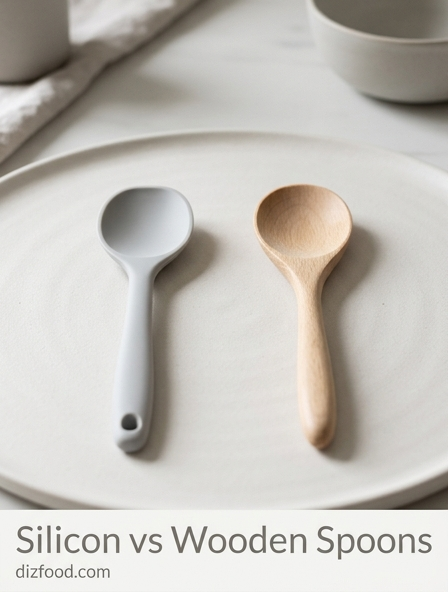
Silicone vs Wood Material Comparison
When selecting the ideal stirring companion for your culinary endeavors, understanding the core material composition of silicone and wood is essential. Silicone is a synthetic polymer made from silicon, oxygen, carbon, and hydrogen. It is essentially a high-performance elastomer that bridges the gap between rubber and plastic, offering a soft, flexible, and rubber-like texture that remains stable across a wide range of conditions. In contrast, wood is a natural, fibrous structural tissue found in the stems and roots of trees. Common kitchen woods include bamboo, maple, beech, and olive, each providing a unique grain pattern and density that adds an organic aesthetic to the kitchen environment.
The choice between these two often comes down to the tactile experience and the specific requirements of the dish being prepared. Silicone is prized for its uniform manufacturing, ensuring a consistent texture without the risk of splinters or natural irregularities. Wood, however, offers a timeless appeal and a rigid structure that many chefs prefer for heavy-duty tasks. Below is a brief overview of how these materials differ in their fundamental physical properties:
| Feature | Silicone Spoons | Wooden Spoons |
|---|---|---|
| Origin | Synthetic (Lab-created) | Natural (Plant-based) |
| Flexibility | High (Bends under pressure) | Very Low (Rigid structure) |
| Surface Texture | Smooth and non-porous | Textured and porous |
| Heat Conductivity | Very Low | Very Low |
Heat Resistance and Cooking Safety
Safety in the kitchen is paramount, especially when working with high-temperature oils and simmering sauces. Silicone is renowned for its impressive heat resistance, typically capable of withstanding temperatures up to 450°F to 600°F (232°C to 315°C) without melting, warping, or off-gassing harmful chemicals. This makes it an excellent choice for stirring boiling liquids or candy-making. Unlike some plastics, food-grade silicone does not react with acidic foods or leach BPA, ensuring that the chemical integrity of your meal remains intact regardless of the heat level applied during the cooking process.
Wooden spoons also excel in heat management, though they operate on a different principle. Wood is a natural insulator; it does not conduct heat quickly, meaning the handle remains cool to the touch even when the bowl of the spoon has been resting in a hot pot for an extended period. However, wood does have a combustion point. If left near an open flame or exposed to extreme dry heat, it can char, scorch, or even catch fire. Furthermore, wood does not melt, which prevents the catastrophic failure seen in cheap plastic utensils. To ensure maximum safety when using these tools, consider the following points:
- Always check the manufacturer's maximum temperature rating for silicone utensils.
- Avoid leaving wooden spoons resting on the rim of a pot over a high gas flame.
- Inspect silicone for signs of degradation or "pitting" if used frequently in deep frying.
- Replace wooden spoons that show deep scorch marks, as these can weaken the structural integrity.
Durability and Product Longevity
The lifespan of a kitchen tool is a major consideration for both professional chefs and home cooks. Silicone spoons are virtually indestructible under normal conditions. Their flexible nature allows them to withstand drops, heavy pressure, and frequent use without cracking or breaking. Because they are molded as a single piece or over a reinforced core (usually steel or nylon), they do not have joints where food particles can collect or where the tool might snap. Silicone is also resistant to "fatigue," meaning it can be bent thousands of times without losing its original shape or becoming brittle over time.
Wooden spoons, while incredibly sturdy, are susceptible to the elements. Over years of use, the repeated cycle of getting wet and then drying out can cause the wood fibers to expand and contract, eventually leading to warping or small cracks known as checking. If not properly maintained, a wooden spoon can eventually splinter, which poses a safety risk. However, with proper care, a high-quality hardwood spoon can last for decades, often becoming a cherished heirloom. The longevity of wood is heavily dependent on the species; for instance, olive wood and maple are significantly more durable than soft bamboo. To maximize the life of your wooden utensils, consider these maintenance steps:
- Season the wood regularly with food-grade mineral oil to prevent drying.
- Avoid soaking wood in water for long periods, which promotes swelling.
- Sand down any rough spots or minor splinters with fine-grit sandpaper.
- Hand wash only to prevent the high heat of a dishwasher from stripping natural oils.
Bacteria Growth and Hygiene Standards
Hygiene is a critical differentiator between silicone and wood. Silicone is a non-porous material, meaning it does not have microscopic holes or cracks where bacteria, mold, or food particles can hide. This makes silicone one of the most hygienic materials available for kitchen use. When you wash a silicone spoon, the smooth surface allows for the total removal of residues, ensuring that cross-contamination is kept to an absolute minimum. This is particularly important when switching between raw ingredients and cooked components of a meal.
Wood, being a biological material, is naturally porous. There has been significant debate regarding the safety of wood in the kitchen, but studies have shown that many hardwoods possess natural antimicrobial properties that can trap and kill bacteria within the wood fibers. Despite this, the porous nature means that if a wooden spoon develops deep cracks or is not cleaned thoroughly, it can harbor moisture and organic matter, potentially leading to mold growth. To maintain high hygiene standards, users must be more diligent with wood than with silicone. The following comparison highlights the hygiene dynamics:
- Silicone: Impermeable to moisture; easy to sterilize in boiling water or dishwashers.
- Wood: Absorbs moisture; requires thorough air-drying to prevent microbial colonization.
- Cross-contamination: Silicone is safer for handling raw meats and poultry due to its easy-clean surface.
- Aging: Old, frayed wooden spoons should be discarded to avoid bacterial pockets.
Protecting Nonstick Cookware Surfaces
One of the primary reasons modern cooks reach for silicone or wooden spoons is to protect the delicate coatings of nonstick pans. Traditional metal utensils can easily scratch or gouge Teflon and ceramic coatings, leading to a loss of nonstick properties and potentially releasing coating fragments into the food. Silicone is arguably the king of cookware protection. Its soft, rubbery edges glide over surfaces without any risk of abrasion. Many silicone spoons are designed with a "blade" edge that acts like a spatula, allowing the user to scrape every bit of sauce from the pan without even a hairline scratch.
Wooden spoons are also safe for nonstick surfaces, but they are slightly more abrasive than silicone. While a smooth wooden spoon will not damage a pan under normal use, a dry, aged spoon with rough fibers or a splintered edge could potentially cause minor surface wear over time. However, wood is vastly superior to metal and is generally considered a "pan-friendly" material. The rigidity of wood offers a different advantage; it can be used to scrape "fond" (browned food bits) from the bottom of a pan during deglazing without damaging the seasoning of a cast-iron skillet or the finish of a nonstick pot. When choosing for surface protection, consider the following:
| Material | Softness Level | Best Use Case |
|---|---|---|
| Silicone | High (Cushioned) | Delicate Teflon and ceramic coatings |
| Wood | Medium (Firm) | Cast iron, enameled Dutch ovens, and nonstick |
Food Odor and Flavor Retention
The ability of a utensil to remain "neutral" is vital when moving between different types of recipes. Silicone is largely inert and non-reactive. It does not absorb odors or flavors, which is a massive advantage if you frequently switch between savory dishes involving garlic and onions and sweet dishes like custards or chocolates. You can stir a spicy chili with a silicone spoon, wash it, and immediately use it to fold blueberries into a cake batter without any fear of flavor transfer. This flavor-neutrality is a hallmark of high-quality food-grade silicone.
Wood is notorious for its "memory." Because wood is porous and contains natural resins, it tends to absorb the aromatic oils of the foods it touches. If you have ever used a wooden spoon to cook a heavy curry, you may notice that the spoon smells of cumin and turmeric even after a vigorous wash. While some cooks enjoy this "seasoned" aspect of wooden tools, it can be a disadvantage when preparing delicate desserts. To manage this, many professional kitchens designate specific wooden spoons for specific tasks-one for savory and one for sweet. If you are concerned about flavor retention in your wooden tools, keep these tips in mind:
- Designate your wooden spoons by labeling the handles or using different wood types.
- Use a baking soda and lemon juice paste to help draw out deep-seated odors from wood.
- Always use silicone for high-aroma ingredients if you only own a single set of tools.
- Rinse wooden spoons in cold water immediately after use to close the pores before washing in hot water.
Dishwasher Safety and Cleaning Ease
Modern convenience often dictates the choice of kitchen tools, and here the two materials diverge sharply. Silicone is almost universally dishwasher safe. It can withstand the high-pressure jets, caustic detergents, and intense heat drying cycles of a standard dishwasher without any loss of integrity. This makes silicone the clear winner for busy households where minimizing manual labor is a priority. Furthermore, the non-stick nature of silicone means that even stubborn residues like caramel or dried cheese slide off with minimal effort during a quick hand wash.
Wooden spoons, on the other hand, are strictly hand-wash items. The harsh environment of a dishwasher is devastating to natural wood. The combination of prolonged immersion in hot water and the high-heat drying cycle causes wood to swell and then shrink rapidly, leading to warping, cracking, and a "fuzzy" texture as the grain raises. A wooden spoon that goes through the dishwasher repeatedly will eventually become brittle and break. Cleaning wood requires a gentle touch with warm soapy water and immediate hand-drying. For those who prioritize ease of maintenance, the differences are clear:
- Silicone: Toss in the dishwasher; no special drying required; chemical resistant.
- Wood: Hand wash only; must be air-dried thoroughly; requires occasional oiling.
- Residue: Silicone resists staining; wood can stain from tomatoes, turmeric, or beets.
- Effort: Silicone is low-maintenance; wood is high-maintenance.
Sustainability and Environmental Impact
As consumers become more environmentally conscious, the "green" credentials of kitchenware are increasingly scrutinized. Wood is the clear leader in terms of sustainability. It is a renewable resource that is completely biodegradable. When a wooden spoon finally reaches the end of its life, it can be composted or burned, returning its carbon to the earth without leaving behind microplastics or toxic residues. Many wooden spoons are made from fast-growing bamboo or managed forests, making them an excellent choice for those looking to reduce their carbon footprint and plastic consumption.
Silicone presents a more complex environmental picture. While it is not a plastic, it is a synthetic material that does not biodegrade. A silicone spoon discarded in a landfill will remain there for hundreds of years. However, silicone is often considered more "eco-friendly" than cheap, single-use plastics because of its extreme durability; one silicone spoon can replace dozens of plastic ones over its lifetime. Additionally, silicone can be recycled at specialized facilities, though these are not as common as standard recycling centers. When weighing the environmental impact, consider these factors:
- Wood is a carbon-sequestering natural material.
- Silicone production requires significant energy but results in a long-lasting product.
- Wooden spoons are often locally sourced, reducing transportation emissions.
- Avoid silicone utensils with plastic handles, as these create mixed-material waste that is impossible to recycle.
Ergonomic Grip and Stirring Power
The "feel" of a spoon in the hand is subjective but vital for comfort during long cooking sessions. Wooden spoons are prized for their ergonomics. Wood feels warm and natural to the touch, and the handles are typically thicker and more rigid, providing a solid grip that doesn't flex when you are stirring a thick stew or a heavy bread dough. The weight of a wooden spoon is usually well-balanced, and the rigidity allows for excellent leverage when scraping the bottom of a pot. For tasks that require "brute force," such as mixing a stiff cookie dough, wood is generally superior.
Silicone spoons offer a different kind of ergonomic benefit. Many feature soft-touch grips that are easy on the joints, making them a preferred choice for individuals with arthritis or limited hand strength. However, the flexibility of silicone can be a drawback. If you are trying to stir a very dense substance, a pure silicone spoon may bend too much to be effective. High-quality silicone utensils solve this by using an internal stainless steel core to provide the necessary "stirring power" while keeping the exterior soft and flexible. Consider these mechanical differences:
| Task | Better Performer | Reasoning |
|---|---|---|
| Heavy Dough | Wood | Superior rigidity and leverage. |
| Scraping Sides | Silicone | Flexible edges act like a squeegee. |
| Long Simmering | Both | Neither conducts heat to the hand. |
| Deglazing | Wood | Provides the hardness needed to lift fond. |
Final Verdict for Your Kitchen
In the debate between silicone and wooden spoons, the "best" choice depends entirely on your specific cooking habits and lifestyle priorities. Silicone is the champion of modern convenience, hygiene, and versatility. If you want a tool that can go from the dishwasher to a high-heat nonstick pan, and then into a delicate chocolate mousse without flavor ghosting, silicone is the clear winner. Its durability and safety features make it an essential component of a high-traffic, modern kitchen where speed and sanitation are the primary concerns.
However, the wooden spoon remains an icon of the culinary world for a reason. It offers an unmatched tactile connection to cooking, superior stirring power for heavy ingredients, and a sustainable, biodegradable footprint that silicone cannot match. For the cook who values tradition, natural materials, and the unique patina that a well-used tool develops over time, wood is irreplaceable. Ultimately, most kitchens benefit from having a curated selection of both. Use silicone for your delicate sauces and nonstick pans, and reserve your sturdy wooden spoons for heavy baking, cast iron cooking, and the soulful preparation of long-simmered family recipes. By understanding the strengths and weaknesses of each, you can ensure your kitchen is equipped for any culinary challenge.

Comments