
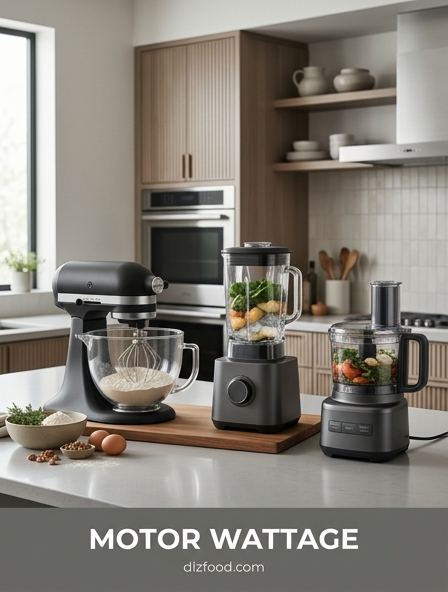
Defining Blender Motor Wattage Basics
In the realm of kitchen appliances, motor wattage serves as a fundamental metric for determining the electrical power consumption of a blender. Measured in watts, this figure indicates how much energy the motor draws from the electrical outlet during operation. Generally, household blenders range from 300 to over 1,500 watts, with each tier serving specific culinary purposes. It is important to understand that wattage is a measure of input rather than a direct measurement of the output force applied to the food. However, it provides a reliable baseline for comparing the potential strength and endurance of different models.
Basic kitchen tasks often require varying power levels:
- 300-500 Watts: Suitable for soft fruits, protein shakes, and light liquid mixing.
- 600-900 Watts: Ideal for everyday smoothies, light ice crushing, and vegetable purees.
- 1000+ Watts: Designed for professional-grade tasks, including grinding grains and making nut butters.
While a higher wattage typically suggests a more capable motor, it also implies higher energy consumption. For most home cooks, the balance between power and efficiency is the key to selecting the right tool for their specific kitchen needs.
Peak Power Versus Rated Wattage Explained
When browsing for blenders, consumers often encounter two distinct figures: peak power and rated (or continuous) wattage. Peak power represents the absolute maximum wattage a motor can reach for a very short burst, typically during the initial startup when the blades first encounter resistance from solid ingredients. This "surge" power is often used in marketing to showcase a blender's potential strength, but it does not reflect how the machine performs during a standard blending cycle. Rated wattage, on the other hand, is the sustainable power the motor can maintain consistently over time without overheating.
Understanding the difference is crucial for long-term durability. A blender advertised at 1,500 peak watts might only have a rated wattage of 800 watts. If a user attempts to run the machine at its peak capacity for several minutes, the motor is likely to burn out or trigger a safety shut-off. Reliability is found in the rated wattage, as this figure dictates the machine's ability to handle heavy loads, such as thick doughs or large quantities of frozen fruit, throughout the entire duration of the blending process.
Matching Blending Power to Recipe Texture
The texture of a finished dish is heavily influenced by the motor's ability to maintain high speeds under a load. For simple recipes like vinaigrettes or thin batters, a low-wattage motor is sufficient because there is minimal resistance against the blades. However, as the density of the ingredients increases, the motor requires more power to keep the blades spinning fast enough to create a vortex. Without sufficient wattage, the blades may slow down or even stall, resulting in a grainy or uneven texture.
| Recipe Type | Recommended Wattage | Expected Texture |
|---|---|---|
| Fruit Smoothies | 600W - 800W | Liquid and consistent |
| Hummus / Dips | 900W - 1200W | Creamy and aerated |
| Nut Butters | 1200W+ | Ultra-smooth and oily |
High-wattage motors allow for finer pulverization, which is essential for creating silky purees and soups. By matching the motor's power to the specific resistance of the ingredients, users can ensure consistent culinary results across a wide range of different recipes.
Why High Wattage Matters for Hard Ingredients
Processing hard ingredients like ice cubes, frozen berries, and fibrous vegetables like kale requires significant kinetic energy. In these scenarios, a low-wattage motor often struggles, causing the blades to chop the ingredients into small chunks rather than liquefying them. High-wattage motors, typically those exceeding 1,000 watts, generate enough force to shatter cellular structures and hard ice crystals instantly. This prevents the motor from straining and ensures that the final product is free of unwanted lumps or grit.
Furthermore, high wattage allows the blender to process these tough materials quickly. Speed is essential when dealing with frozen items to prevent them from melting due to the heat generated by friction. A powerful motor can turn ice and frozen fruit into a thick sorbet in seconds, maintaining the desired cold temperature. For users who frequently prepare green smoothies or frozen cocktails, investing in a high-wattage machine is a necessity to achieve the professional-grade "pulverized" finish that lower-tier appliances simply cannot replicate under the stress of hard, dense ingredients.
The Impact of Motor Torque on Performance
While wattage measures energy consumption, torque is the actual rotational force that turns the blades. In the kitchen, torque is what allows a blender to continue spinning when it encounters a thick mixture, such as bread dough or heavy nut butter. A motor can have high wattage but low torque, which means it might spin very fast when empty but slow down significantly when the jar is full. High-performance blenders are designed to balance wattage with high-torque gear systems to ensure the blades do not get stuck.
- Start-up Torque: The force needed to move blades through a stationary pile of ingredients.
- Running Torque: The ability to maintain speed as the mixture thickens or becomes more viscous.
- Gear Reduction: How the motor's internal speed is converted into crushing power.
A motor with high torque can operate at lower speeds without stalling, which is particularly useful for tasks like dicing vegetables or mixing thick salsas where high-speed pulverization isn't wanted. Understanding torque helps users realize why some 800-watt professional blenders can outperform 1200-watt "budget" models during heavy-duty tasks.
How Wattage Influences Smoothie Consistency
The hallmark of a perfect smoothie is the complete absence of seeds, skin fragments, and ice crystals. Achieving this level of consistency is directly tied to the motor's wattage and its ability to maintain a high RPM (revolutions per minute) under load. When a blender maintains high speeds, it creates a powerful vortex that pulls ingredients down into the blades repeatedly. Low-wattage motors often fail to create this vortex, leaving unblended chunks floating at the top of the jar.
High-wattage motors are especially important for "green" smoothies containing spinach, kale, or celery. These vegetables contain tough cellulose fibers that require high-speed impact to break down. A blender with 1,200 watts or more can rupture these cell walls, releasing more nutrients and creating a smooth liquid. Additionally, high wattage ensures that berry seeds, such as those from raspberries or blackberries, are pulverized rather than left whole. This results in a superior mouthfeel and a more professional beverage, transforming raw produce into a perfectly homogenous drink that remains stable without separating quickly in the glass.
Understanding Energy Efficiency in Kitchen Blenders
While high wattage offers more power, it does not always translate to better efficiency. Energy efficiency in a kitchen motor refers to how much of the electrical energy consumed is actually converted into mechanical work at the blades versus how much is lost as heat and noise. A poorly designed 1,500-watt motor might produce more heat than a well-engineered 900-watt motor, leading to shorter run times and potential food spoilage. Modern "brushless" DC motors are becoming more common in high-end blenders because they offer higher torque and better efficiency at lower wattages.
To maximize efficiency, users should look for motors that feature advanced cooling systems and high-quality bearings. These components reduce friction, allowing the motor to utilize its wattage more effectively. Efficiency is also a matter of kitchen safety; an inefficient motor that draws high wattage can easily trip circuit breakers or overheat, especially in older homes with limited electrical capacity. By choosing a blender that prioritizes efficient energy conversion over raw wattage numbers, consumers can enjoy powerful performance while minimizing electricity waste and reducing the wear and tear on the internal motor components.
Blade Design and Motor Power Synergy
A blender's performance is the result of a symbiotic relationship between the motor's wattage and the design of the blade assembly. High wattage alone cannot compensate for dull or poorly angled blades. Conversely, the most aerodynamic blades will not perform well if the motor lacks the power to push them through dense ingredients. Manufacturers often design specific blade geometries-such as wingtip blades or serrated edges-to complement the specific torque and speed profile of the motor.
Consider the following synergy factors:
- Blade Surface Area: Larger blades require higher wattage to overcome air and liquid resistance.
- Pitch and Angle: Steeply angled blades create a stronger vortex but put more strain on the motor.
- Material Strength: High-wattage motors require hardened stainless steel blades to prevent bending under high-speed impact.
When these elements are balanced, the blender operates smoothly, requiring less time to achieve the desired result. This synergy reduces the load on the motor, preventing it from working harder than necessary, which ultimately extends the lifespan of the appliance. A well-designed blade system effectively multiplies the "felt" power of the motor wattage.
Preventing Motor Overheat During Heavy Loads
Overheating is the primary cause of motor failure in kitchen blenders. When a motor is tasked with blending thick mixtures like nut butter or frozen desserts, it draws more current to maintain its speed. This increased electrical flow generates significant heat within the motor windings. High-wattage blenders are usually equipped with internal cooling fans and thermal sensors that automatically shut the machine down if the temperature reaches a critical level. However, lower-wattage models may lack these protections, making them susceptible to permanent damage if pushed too hard.
To prevent overheating, it is essential to follow the manufacturer's guidelines regarding "duty cycles"-the amount of time the motor should run versus the amount of time it should rest. For heavy loads, it is often recommended to blend in short bursts rather than continuous long cycles. Ensuring there is enough liquid in the jar also helps by reducing the resistance the blades encounter. By respecting the limits of the motor's wattage and allowing for proper airflow around the base of the unit, users can significantly extend the operational life of their kitchen appliances.
Choosing the Right Wattage for Daily Cooking
Selecting the ideal blender wattage requires an honest assessment of daily cooking habits. If the primary use is making simple protein shakes or blending soft fruits for a child, a compact blender with 300 to 500 watts is likely sufficient and saves counter space. These models are generally quieter and more affordable. However, for a family that enjoys daily green smoothies, frozen margaritas, or home-made flours, a motor in the 1,000 to 1,500-watt range is a better investment, providing the durability and versatility needed for intensive use.
For those who fall in the middle-cooking soups, salsas, and occasional frozen drinks-a mid-range blender between 700 and 900 watts offers a perfect balance of price and performance. It is also worth considering the warranty; manufacturers of high-wattage blenders often provide longer warranties, reflecting their confidence in the motor's longevity. Ultimately, the right wattage is the one that handles your toughest ingredients without struggling, ensuring that the blender remains a helpful tool rather than a source of frustration in the kitchen. Balancing power, frequency of use, and budget will lead to the best purchase decision.


Comments