
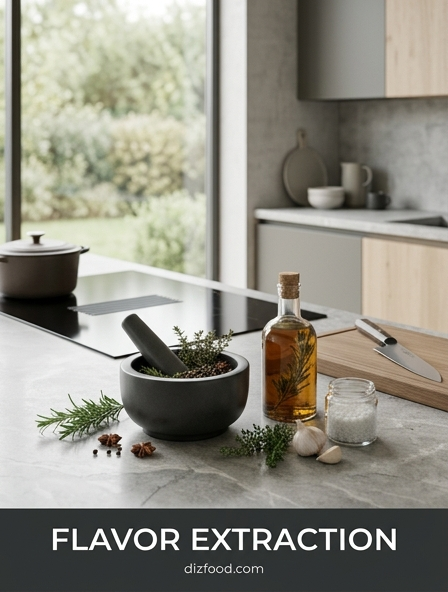
The Science of Heat and Time
Flavor extraction is fundamentally governed by the kinetic energy of molecules. When heat is applied to ingredients, it increases the vibration and movement of flavor compounds, allowing them to break free from cellular structures and enter a solvent like water, oil, or alcohol. The relationship between temperature and duration is critical; high heat can accelerate extraction but risks destroying delicate volatile compounds, while lower temperatures require significantly more time to achieve a deep, nuanced profile.
In a professional kitchen, understanding this balance allows for precise control over the final product. For instance, a rapid boil might extract tannins from tea or bitterness from bones, whereas a gentle simmer encourages a clean transfer of proteins and minerals. The following factors dictate the efficiency of thermal extraction:
- Molecular agitation through consistent heat application.
- Breakdown of tough connective tissues in meats over extended periods.
- Solubility thresholds of specific aromatic compounds at varying boiling points.
- Evaporative loss of delicate top notes during prolonged exposure to high heat.
Achieving the perfect extraction requires the chef to treat heat not just as a cooking medium, but as a precise solvent regulator that dictates the depth of the flavor profile.
Maximizing Fat Soluble Aromatics
Many of the most desirable flavor compounds in the culinary world, particularly those found in spices and aromatics, are non-polar. This means they do not dissolve readily in water and instead require a lipid medium for effective extraction. This process, often referred to as "blooming," involves heating spices in oil or butter to release their essential oils. The fat acts as a carrier, trapping the volatile aromatics and distributing them evenly throughout the dish.
The choice of fat can significantly influence the character of the extracted flavor. Saturated fats often provide a different mouthfeel and stability compared to unsaturated oils. Using a table to understand common aromatic pairings with fats can assist in strategic recipe development:
| Fat Type | Ideal Aromatic | Extraction Result |
|---|---|---|
| Clarified Butter | Whole Spices | Nutty, toasted depth |
| Neutral Oil | Chili Flakes | Clean, sharp heat |
| Animal Fat | Hard Herbs | Savory, earthy notes |
By leveraging fat-soluble extraction, chefs ensure that the core essence of the ingredients remains bonded to the sauce or base, preventing the "washing out" of flavors that occurs in water-heavy preparations.
Surface Area and Particle Size
The rate of flavor extraction is directly proportional to the surface area of the ingredient exposed to the solvent. When an ingredient is left whole, the solvent must penetrate deep into the center to reach flavor compounds, which can be a slow and inefficient process. By reducing the particle size through chopping, mincing, or grinding, the total surface area increases exponentially, providing more contact points for the extraction medium to work its magic.
This principle is most evident in coffee brewing or spice preparation, where the coarseness of the grind dictates the strength and bitterness of the output. To maximize efficiency, follow these steps in preparation:
- Assess the density of the ingredient to determine necessary reduction.
- Use a sharp blade to minimize cellular bruising while increasing area.
- Match the particle size to the intended cooking time.
- Apply mechanical force like crushing to rupture internal cell walls.
However, increased surface area also leads to faster oxidation. Once the internal structures are exposed to air, volatile oils begin to dissipate. Therefore, the physical reduction should ideally occur immediately before the extraction process begins to capture the peak aromatic potential.
Alcohol as a Flavor Solvent
Alcohol is a unique and powerful tool in the kitchen because it is an amphiphilic molecule, meaning it can bond with both water and fat. This allows it to extract flavor compounds that are neither fully water-soluble nor fully fat-soluble. Furthermore, ethanol has a much lower boiling point than water, which means it can carry aromatic molecules to the nose more effectively through evaporation, enhancing the perceived aroma of a dish before it even reaches the palate.
In sauce making, deglazing with wine or spirits serves a dual purpose: it dissolves the caramelized proteins stuck to the pan and captures complex esters that would otherwise remain trapped. Consider the following benefits of using alcohol as a solvent:
- Enhances the volatility of aromas for a stronger "bouquet."
- Extracts specific esters and aldehydes found in fruits and fermented goods.
- Penetrates cell walls more aggressively than water alone.
- Creates a bridge between aqueous and lipid-based flavor components.
Proper application requires a balance; too much alcohol can mask flavors with its own pungency, while just enough acts as a catalyst for a more vibrant sensory experience.
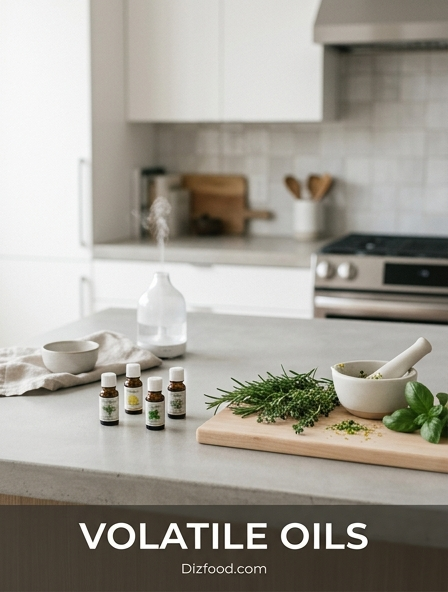
Toasting Spices for Volatile Oils
Toasting spices before use is a transformative process that utilizes dry heat to alter the chemical composition of the ingredient. Unlike raw spices, which often have "green" or sharp notes, toasted spices develop complex, smoky, and savory profiles. This occurs because the heat causes the internal volatile oils to migrate to the surface and triggers minor pyrolytic reactions that create new, more robust aromatic molecules. The difference in extraction potential is significant when comparing raw and toasted spices in a liquid base.
| Spice State | Molecular Profile | Extraction Speed |
|---|---|---|
| Raw | Volatile, floral, sharp | Slow in fats |
| Lightly Toasted | Nutty, aromatic, warm | Moderate |
| Deeply Toasted | Smoky, earthy, bitter | Rapid in fats |
Care must be taken to avoid burning, as the thin cell walls of spices can quickly carbonize, replacing desirable aromatics with acridity. The goal is to reach a point where the kitchen becomes fragrant, signaling that the oils have been mobilized and are ready for integration into the final dish.
Acidity and Chemical Extraction
Acidity plays a crucial role in extraction by modifying the chemical environment of the food. When an acid like lemon juice, vinegar, or wine is added, it can break down rigid structures such as pectin in fruits or the connective tissues in meat. This "chemical cooking" allows flavor compounds to be released into the surrounding liquid much faster than they would in a neutral pH environment. Additionally, acids can neutralize certain bitter alkaline compounds, refining the flavor profile during the extraction phase.
The use of acid as an extraction aid is common in marinades and pickling. The following sequence describes the process of acidic extraction in a marinade:
- The acid denatures surface proteins, increasing permeability.
- Internal juices are drawn out through osmotic pressure.
- Infused aromatics in the marinade move into the loosened structures.
- The overall pH shift brightens the flavor of the extracted solutes.
Beyond structural changes, acidity acts as a flavor enhancer by stimulating salivary glands, which helps transport the extracted flavor molecules to the taste buds more effectively, making the results of the extraction taste more vivid.
Maillard Reaction and Deep Intensity
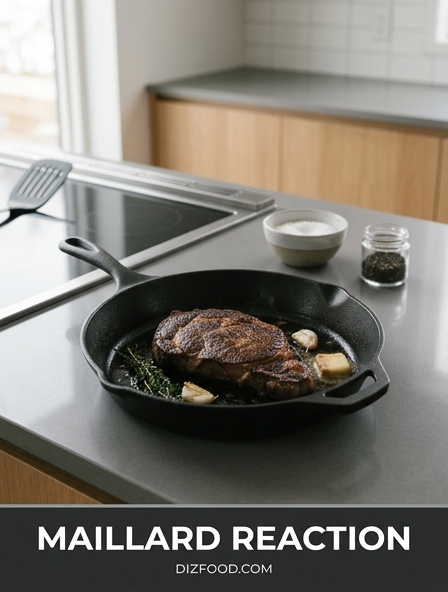
The Maillard reaction is a chemical interaction between amino acids and reducing sugars that occurs under heat. While often viewed as a browning process for textures, its role in flavor extraction is profound. The reaction creates hundreds of different flavor compounds, known as melanoidins, which provide the savory, "umami" depth found in seared meats, roasted coffee, and crusty bread. These compounds are highly flavorful and, once created, can be extracted into stocks and sauces to provide a foundation of complexity.
To maximize the extraction of Maillard products, certain conditions must be met:
- Surface moisture must be removed to allow temperatures to rise above 285°F (140°C).
- Sufficient protein and sugar concentrations must be present in the ingredient.
- Alkaline environments can be used to accelerate the reaction if needed.
- Deglazing is required to capture the "fond" where these compounds concentrate.
By intentionally inducing the Maillard reaction before adding liquids, a chef ensures that the resulting extraction contains a rich array of savory notes that raw boiling could never produce. It is the difference between a pale, simple broth and a dark, multi-dimensional consommé.
Strategic Timing for Fresh Herbs
Effective extraction from herbs requires a deep understanding of their structural integrity and oil content. Herbs are generally categorized into "hard" herbs and "soft" herbs, each requiring a different strategy for flavor release. Hard herbs, like rosemary and thyme, have woody stems and thick leaves that contain resilient essential oils. They require heat and time to break down. Soft herbs, like basil and cilantro, possess delicate cell walls and volatile oils that dissipate almost instantly when exposed to heat.
| Herb Category | Examples | Extraction Method |
|---|---|---|
| Hard Herbs | Rosemary, Thyme, Sage | Long simmer/Early addition |
| Soft Herbs | Parsley, Basil, Mint | Late addition/Raw garnish |
If soft herbs are added too early, their vibrant, top-note flavors are lost to evaporation, leaving behind a dull or even hay-like taste. Conversely, adding hard herbs at the end of cooking will result in an under-extracted, needle-like texture with little flavor contribution. Strategic timing ensures that the specific aromatic profile of each herb is captured at its peak, providing either a deep background note or a bright finish.
Liquid Reductions and Concentration
Reduction is the process of thickening and intensifying the flavor of a liquid by simmering or boiling it to remove water through evaporation. From a scientific perspective, this increases the concentration of non-volatile solutes-the sugars, salts, and flavor molecules-within the remaining solvent. As the water volume decreases, the ratio of flavor to liquid increases, leading to a more viscous and potent result. This is the cornerstone of classical sauce making, where a liter of stock might be reduced to a small glaze.
The reduction process follows a predictable path of concentration:
- Initial simmering removes excess water vapor.
- Vitamins, minerals, and proteins become more densely packed.
- Natural sugars begin to caramelize as the concentration rises.
- Viscosity increases due to the concentration of gelatin or starches.
Chefs must be cautious, however, as reduction also concentrates salt and bitterness. An extraction that tastes perfectly seasoned at the start of a reduction may become unpalatably salty by the end. Therefore, final seasoning should always occur after the desired concentration has been achieved, ensuring the balance of the intensified flavors remains harmonious.
Essential Tools for Physical Extraction
While heat and chemicals are vital, physical tools often provide the necessary mechanical force to begin the extraction process. These tools work by rupturing cell walls, bruising fibers, or increasing surface area to allow solvents better access to flavor compounds. In the modern kitchen, the choice of tool can dictate the texture and clarity of the flavor being extracted. A blender might provide a total extraction but introduce air and heat, whereas a mortar and pestle offers a more controlled, traditional approach.
Key tools for maximizing physical extraction include:
- Mortar and Pestle: Ideal for crushing spices to release oils without over-processing.
- Microplane: Creates ultra-fine particles of zest or hard spices for maximum surface area.
- Fine Mesh Sieve/Chinois: Crucial for separating solids from the extracted liquid for clarity.
- Immersion Blender: Rapidly breaks down ingredients directly in the solvent for quick infusion.
- Sous-Vide: Uses vacuum pressure to force flavors into liquids at precise temperatures.
By selecting the right tool, a chef can manipulate the physical state of an ingredient to optimize the extraction rate. Whether it is the gentle bruising of mint leaves for a cocktail or the high-speed pulverization of aromatics for a curry paste, the mechanical approach is the first step in successful flavor development.



Comments