
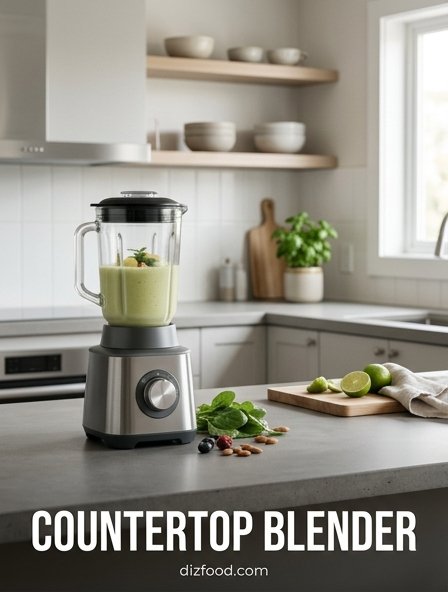
Understanding Motor Wattage and Peak Horsepower
When selecting a countertop blender, the relationship between motor wattage and peak horsepower is a primary indicator of performance. Wattage measures the electrical power consumed by the motor during operation, typically ranging from 500 to 1,500 watts for home models. Higher wattage generally suggests a more robust motor capable of handling tougher ingredients like frozen fruit or fibrous kale without overheating. However, wattage alone does not account for the efficiency of the motor's design.
Peak horsepower refers to the maximum output a motor can generate momentarily when it starts or encounters a significant load. While a high peak horsepower rating, often between 2.0 and 3.5 HP, sounds impressive, it is the "rated" or continuous horsepower that determines how the machine performs during a long blending cycle. A high-wattage motor with efficient cooling systems ensures that the blender maintains consistent speed under pressure. To better understand these metrics, consider the following general categories:
- Entry-Level: 500-700 Watts, suitable for soft fruits and liquids.
- Mid-Range: 800-1,100 Watts, capable of crushing ice and handling frozen ingredients.
- High-Performance: 1,200+ Watts, designed for nut butters, hot soups, and heavy daily use.
Stainless Steel Blade Configurations for Ice
The efficiency of a blender in processing ice is largely dictated by the configuration and material of the blade assembly. Most high-performance blenders utilize aircraft-grade stainless steel for its resistance to corrosion and dulling. Unlike blades designed for soft foods, ice-crushing blades must be blunt enough to pulverize frozen cubes through sheer force rather than slicing. The physical arrangement of these blades is critical for preventing "bridging," where ice gets stuck above the blades and stops moving.
Manufacturers often employ distinct blade geometries to maximize contact with frozen contents. Some designs use a four-prong system, while others utilize a six-prong configuration with varying angles. The following table highlights common blade characteristics found in ice-capable blenders:
| Blade Feature | Functional Benefit |
|---|---|
| Winged Tips | Creates upward lift to keep ice circulating. |
| Serrated Edges | Provides extra grip on hard, slippery surfaces. |
| Dual-Plane Alignment | Ensures ingredients are processed at both the base and mid-level. |
| Solid Hammer-Mill | Uses blunt force for consistent snow-like texture. |
Choosing Between Glass and Tritan Pitchers
The material of the blender jar influences the appliance's weight, durability, and aesthetic appeal. For decades, glass was the standard due to its resistance to odors, scratches, and discoloration. Glass pitchers are ideal for those who prioritize a chemical-free environment, as they do not contain BPA or other plasticizers. They also retain their clarity over years of use, even when processing abrasive ingredients like ice or hard grains. However, glass is heavy and prone to shattering if dropped or subjected to extreme thermal shock.
Conversely, many modern high-end blenders utilize Tritan copolyester. This material offers the clarity of glass with the impact resistance of plastic. Tritan is preferred for high-speed blending because it can withstand the intense vibrations and pressure of a 3-horsepower motor. It is also significantly lighter, making it easier to pour and clean. When choosing, consider the following factors:
- Weight: Tritan is much lighter and safer for households with children.
- Heat Resistance: High-quality glass can handle hot liquids, but Tritan is specifically engineered for high-temperature soups.
- Longevity: Glass won't scratch from frozen fruit, while Tritan may cloud over time if used for grinding spices.
The Power of High Velocity Vortex Action
Vortex action is the fluid dynamic phenomenon that determines how effectively ingredients are integrated during a blend. In a well-designed countertop blender, the shape of the pitcher and the speed of the blades work in tandem to create a powerful downward suction. This "tornado" effect pulls solid chunks from the top of the jar directly into the blades at the bottom, ensuring that no unblended pieces remain. Without a strong vortex, ingredients often sit on top of the mixture, requiring manual intervention with a spatula.
The container's geometry plays a vital role in this process. Square-sided jars or jars with internal ridges are designed to break the circular flow of the liquid, forcing it back toward the center. This turbulence prevents the "spinning" effect where ingredients simply rotate without hitting the blades. High-velocity motors accelerate this process, allowing for the emulsification of fats and liquids into a silky-smooth consistency. Achieving a perfect vortex is essential for recipes like hollandaise sauce or thick green smoothies where fiber must be completely broken down for a pleasant mouthfeel.
Optimizing Results with Pre-Set Smoothie Modes
Pre-set programs have revolutionized the user experience by automating the blending process for specific tasks. These modes are not merely timers; they are programmed sequences that vary the motor speed and incorporate pauses. For instance, a smoothie mode might start with several short pulses at high speed to break up large chunks of frozen fruit, followed by a sustained medium speed to create a creamy texture, and finally a high-speed finish to aerate the mixture. This hands-free operation allows users to walk away while the blender handles the complexities of the texture.
Most premium blenders include a variety of these smart cycles to accommodate different culinary needs. Using these modes prevents the motor from straining and ensures repeatable results every time. Common pre-set categories include:
- Smoothie: Optimized for a mix of liquids, leafy greens, and frozen solids.
- Ice Crush: Utilizes rhythmic pulsing to turn cubes into snow without melting them.
- Hot Soup: Runs at maximum speed for several minutes to generate friction heat.
- Frozen Desserts: Maintains a lower speed to prevent the mixture from liquefying.
Variable Speed Control for Custom Textures
While pre-set modes offer convenience, variable speed control provides the precision required for professional-level food preparation. Most high-performance blenders feature a dial that allows users to adjust the motor from a slow stir to a high-speed pulverize. This range is crucial for achieving specific textures that automated programs might miss. For example, when making a chunky salsa, a low speed is necessary to chop vegetables without turning them into a purée. Conversely, creating a smooth nut butter requires a gradual increase from low to high speed to draw the oils out of the nuts.
The ability to control the speed manually also helps in the emulsification process. When making dressings or mayonnaise, a slow, steady speed allows the oil to incorporate perfectly into the base. Furthermore, starting at the lowest setting prevents the "splatter effect" that occurs when a high-torque motor jumps immediately to maximum RPM. This control extends the life of the motor by reducing the initial startup load and provides the user with complete creative authority over the final consistency of their recipes.
The Role of the Tamper in Thick Mixtures
A tamper is an essential tool for high-performance blending, particularly when working with low-moisture recipes. It is a specially designed rod that fits through the lid plug, allowing the user to push ingredients into the blades safely while the motor is running. The tamper is engineered with a collar that prevents it from ever making contact with the spinning blades, ensuring safety and preventing damage to the machine. Its primary purpose is to eliminate air pockets, often referred to as "cavitation," which occur when the blades spin so fast they create a vacuum around themselves.
In recipes such as thick hummus, frozen sorbets, or heavy nut butters, the ingredients often become too dense for the vortex to pull them down naturally. In these scenarios, the tamper is used to press the food toward the blades, forcing the air out and re-establishing the flow. Without a tamper, the user would be forced to stop the blender frequently to stir the contents manually. This tool significantly expands the versatility of the appliance, turning a standard blender into a powerful food processor capable of handling the thickest culinary challenges.
Effective Noise Reduction and Sound Dampening
The high-decibel output of a powerful countertop blender can be a significant drawback in residential settings. To combat this, manufacturers have developed various noise reduction technologies. The sound produced by a blender comes from two main sources: the motor's mechanical operation and the vibration of the pitcher on the base. Higher-quality models often feature insulated motor housings that use sound-absorbing materials to trap the high-pitched whine of the internal components. Additionally, rubberized centering pads and dampening feet help decouple the blender from the countertop, preventing the surface from acting as a soundboard.
For those who require near-silent operation, specialized "quiet" models include a sound enclosure-a clear plastic dome that fits over the entire pitcher. These enclosures can reduce perceived noise by up to 50%. Key features found in quieter blenders include:
- Airflow Management: Channels that direct air for cooling while baffling the sound.
- Gasket Seals: Thick rubber seals between the lid and jar to prevent rattling.
- Heavy Bases: Increased mass to absorb vibrations and provide stability during high-speed tasks.
Self Cleaning Cycles and Maintenance Essentials
Maintaining a blender is vital for its longevity and food safety. Many modern units feature a dedicated self-cleaning cycle that simplifies the process. To use this feature, the jar is filled halfway with warm water and a single drop of liquid dish soap. When the cycle is activated, the high-speed rotation creates a soapy vortex that reaches under the blades and into the corners of the jar, areas that are often difficult to clean by hand. This method is highly effective for removing residue from smoothies or soups before it has a chance to dry and harden.
Beyond daily cleaning, certain maintenance tasks ensure the machine stays in peak condition. It is important to inspect the blade assembly for any signs of wear or leakage around the gasket. While many jars are listed as dishwasher safe, frequent exposure to high heat and harsh detergents can eventually degrade the plastic and dull the blades. Hand washing is often recommended for the lid and the base of the pitcher. Finally, the motor base should be wiped with a damp cloth, ensuring that no liquid enters the ventilation ports, which could lead to internal corrosion or electrical failure.
Evaluating Warranty and Long Term Durability
A countertop blender is a significant investment, and the warranty offered by the manufacturer is often a reflection of the product's expected lifespan. Entry-level blenders typically offer a one-year limited warranty, covering only manufacturing defects. In contrast, premium brands often provide comprehensive coverage ranging from five to ten years. These longer warranties usually cover the motor, the blade assembly, and the container, giving the consumer peace of mind that the machine is built for daily, heavy-duty use. When evaluating durability, it is important to look at the materials used in the drive socket-the point where the motor connects to the blades.
Metal-to-metal couplings are vastly superior to plastic ones, as they resist stripping and can handle the torque of a powerful motor over thousands of cycles. Additionally, consider the availability of replacement parts. A blender's long-term value increases significantly if the manufacturer sells individual components like new gaskets, lids, or blade assemblies. This allows for repairs rather than total replacement. Investing in a machine with a proven track record of durability and a robust customer support system ensures that your kitchen remains equipped with a reliable tool for years to come.

Comments