
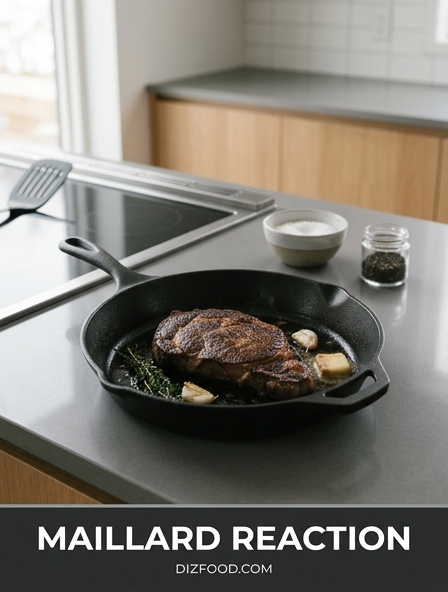
Understanding the Maillard Reaction Chemistry
The Maillard reaction is a complex chemical process that occurs when reducing sugars and amino acids are exposed to heat, typically starting around 285°F (140°C). This interaction, named after the French chemist Louis-Camille Maillard, is responsible for the savory, complex flavors and the distinctive brown color found in seared steaks, toasted bread, and roasted coffee. Unlike simple caramelization, which involves the pyrolysis of sugar alone, the Maillard reaction produces hundreds of different flavor compounds and brown pigments known as melanoidins.
To maximize this reaction in a kitchen setting, one must understand the three primary variables that influence the outcome:
- Temperature: Higher temperatures accelerate the reaction, though exceeding 400°F (200°C) can lead to bitter, charred flavors.
- Moisture: Water acts as a thermal buffer, preventing the surface from exceeding the boiling point.
- Time: Longer exposure at lower temperatures can still yield browning, but high-heat searing is more common for proteins.
This chemical transformation is what separates a gray, boiled piece of meat from a rich, mahogany-crusted steak, providing the foundational "umami" profile that professional chefs and home cooks strive to achieve in nearly every savory dish.
Importance of Total Surface Dryness
The presence of moisture is the single greatest inhibitor of the Maillard reaction. When heat is applied to a wet surface, the energy is first consumed by the evaporation of water-a process known as latent heat of vaporization. Since water turns to steam at 212°F (100°C), the surface temperature of the food cannot rise high enough to trigger the necessary chemical rearrangements for browning until the moisture is completely gone. This often results in food that is overcooked on the inside before it develops a crust on the outside.
Achieving total surface dryness requires a proactive approach. Professional techniques often involve more than just a cursory wipe. Consider the following methods for ensuring a dry surface:
- Paper Towels: Firmly pressing the food with multi-layered paper towels until no damp spots appear.
- Air Chilling: Leaving meat uncovered on a wire rack in the refrigerator for several hours or overnight.
- Surface Starch: A light dusting of cornstarch or flour can absorb residual moisture instantly.
By removing water, you allow the heat of the pan to transfer directly to the proteins and sugars, resulting in a rapid, crisp, and flavorful sear that preserves the internal juices of the ingredient.
Choosing High Smoke Point Searing Fats
When aiming for a perfect sear, the choice of cooking oil is critical. The "smoke point" is the temperature at which an oil begins to break down, producing acrid smoke and off-flavors that can ruin the delicate compounds of the Maillard reaction. For high-heat searing, you need fats that remain stable at temperatures exceeding 400°F. If an oil breaks down too early, it can leave a sticky, bitter residue on the food instead of a clean, brown crust.
| Fat Source | Smoke Point (°F) | Suitability |
|---|---|---|
| Avocado Oil | 520°F | Ideal for high-heat searing |
| Ghee (Clarified Butter) | 450°F | Excellent flavor and stability |
| Grapeseed Oil | 420°F | Neutral flavor, very stable |
| Extra Virgin Olive Oil | 325-375°F | Low suitability for searing |
| Butter (Unsalted) | 302°F | Poor for searing; milk solids burn |
While butter provides exceptional flavor, it is best added toward the end of the cooking process-a technique known as butter basting-after the initial crust has already formed via a high-heat oil.
Optimizing Pan Temperature for Browning
Achieving the Maillard reaction requires a pan that not only reaches a high temperature but maintains it when food is added. This is a matter of thermal mass. When a cold steak hits a thin pan, the temperature of the cooking surface drops instantly, leading to "stewing" rather than searing. To optimize browning, the pan should be preheated until the oil is shimmering and just beginning to wisps of smoke, indicating it has reached its maximum effective temperature.
To ensure consistent results, follow these thermal management steps:
- Preheat the pan over medium-high heat for at least three to five minutes.
- Use the "Leidenfrost Effect" test by dropping a bead of water on the pan; if it skitters across the surface like a ball bearing, the pan is ready.
- Add the oil only after the pan is hot to prevent the oil from breaking down during the preheating phase.
- Avoid adding too many items at once, which causes a drastic drop in surface temperature.
By controlling the thermal environment, you ensure that the kinetic energy of the heat is sufficient to break the chemical bonds of the amino acids and sugars, facilitating a rapid and even browning across the entire surface.
Enhancing Color with pH Adjustment
The speed and intensity of the Maillard reaction are highly sensitive to the pH level of the food's environment. In acidic conditions, the amino groups on proteins become protonated, making them less reactive with sugars and slowing down the browning process. Conversely, an alkaline (basic) environment accelerates the reaction significantly. Chefs use this chemical quirk to achieve deep browning in shorter timeframes or at lower temperatures, which is particularly useful for vegetables and starches.
There are several common kitchen applications for pH adjustment to enhance color:
- Baking Soda on Onions: Adding a tiny pinch of baking soda to sautéing onions will cause them to caramelize and brown in a fraction of the usual time.
- Pretzel Bath: Dipping dough in a lye or baking soda solution creates the signature dark, glossy crust during baking.
- Alkaline Noodles: The use of "kansui" in ramen noodles helps them turn golden and develop a distinct savory flavor when cooked.
However, caution is required; too much alkalinity can lead to a soapy flavor or a mushy texture. A subtle balance is key to leveraging pH for superior visual and flavorful results.
The Role of Dry Brining for Crust
Dry brining is the process of salting meat and letting it rest uncovered in the refrigerator before cooking. This technique serves a dual purpose: it seasons the meat deeply through osmosis and, more importantly for the Maillard reaction, it creates a superior surface for browning. When salt is first applied, it draws moisture out of the meat. Over time, that moisture dissolves the salt into a concentrated brine, which is then reabsorbed into the muscle fibers, breaking down proteins.
This process results in a surface that is structurally different and significantly drier than fresh meat. The benefits of dry brining include:
- Enhanced Evaporation: Because the salt has already modified the surface proteins, residual moisture evaporates much faster in the pan.
- Pellicle Formation: The air-drying phase creates a thin, tacky skin called a pellicle, which browns more evenly and deeply.
- Juice Retention: Salt denatures proteins so they can hold more water, meaning the interior remains juicy even as the exterior gets crispy.
For best results, dry brine for at least 45 minutes, though 12 to 24 hours is optimal for thick cuts like ribeye or pork chops.
Maximum Contact with Cast Iron Skillets
Conductive heat transfer is the most efficient way to trigger the Maillard reaction, and nothing facilitates this better than a heavy cast iron skillet. Unlike stainless steel or aluminum, cast iron has high emissivity and excellent heat retention. Once hot, it stays hot, providing a constant reservoir of energy that isn't easily depleted. However, the key to a perfect crust isn't just the pan material; it is the physical contact between the food and the metal.
To maximize contact and ensure a uniform brown crust, consider these techniques:
- Using Weights: A steak weight or a heavy second pan can press uneven cuts of meat flat against the skillet surface.
- Adequate Fat: Using enough oil ensures that heat is transferred into the microscopic crevices of the food that don't directly touch the pan.
- Minimal Movement: Avoid the urge to flip the food too early; constant movement prevents the surface temperature from reaching the Maillard threshold.
The textured surface of cast iron also helps to hold onto fats, creating a semi-nonstick surface that allows for a clean release once the proteins have properly coagulated and browned, preventing the crust from tearing off.
Reverse Sear Technique for Even Searing
The reverse sear is a modern technique that flips the traditional cooking order to achieve a better Maillard crust. Instead of searing first and finishing in the oven, the food is slowly brought up to temperature in a low-heat oven (around 225°F) and then seared at the very end. This method is particularly effective for thick steaks or roasts. The extended time in the low-heat environment acts as a secondary drying phase, essentially "par-parching" the exterior of the meat.
The advantages of this method are substantial:
- The surface of the meat is bone-dry by the time it reaches the pan, allowing for a near-instantaneous sear.
- The internal temperature is consistent from edge to edge, eliminating the unsightly "gray band" of overcooked meat.
- The final sear only takes 45 to 60 seconds per side, minimizing the risk of overcooking the center.
By the time the meat hits the hot cast iron, the amino acids and sugars are primed for reaction, resulting in a thin, glass-like crust and a perfectly medium-rare interior every single time.
Impact of Sugars and Amino Acids
The Maillard reaction is not a single reaction, but a cascade of thousands of potential pathways depending on the specific sugars and amino acids present. Different proteins contain different concentrations of amino acids, and different plants contain various reducing sugars like glucose, fructose, and lactose. This variation is why seared scallops taste sweet and delicate, while a seared steak tastes deep and meaty. The "precursors" available in the raw ingredient dictate the final flavor profile.
Consider how different components influence the final result:
- Amino Acids: Cysteine and methionine (found in meat) produce savory, sulfurous notes; glycine and alanine produce sweet, caramel notes.
- Reducing Sugars: Fructose (found in onions/honey) reacts more quickly than glucose, leading to faster browning.
- Lactose: Found in milk solids, lactose is highly reactive, which is why butter and milk-based washes brown so intensely.
Chefs often "prime" the Maillard reaction by adding precursors, such as brushing a roast with a small amount of honey or using a dry rub containing milk powder, to ensure a high concentration of reactants on the surface of the food.
Avoiding the Steam Effect During Cooking
Even with a dry starting product and a hot pan, the Maillard reaction can be sabotaged by the "steam effect." This occurs when moisture released from the food during cooking becomes trapped, creating a localized humid environment that drops the temperature back down to 212°F. This effectively boils or steams the food instead of searing it, resulting in a rubbery texture and a pale, gray appearance. Managing the escape of moisture is just as important as the initial heat.
To avoid the steam effect, adhere to these kitchen rules:
- Don't Crowd the Pan: Leave at least an inch of space between items so that evaporated moisture can escape into the air rather than condensing on the food next to it.
- High-Walled vs. Low-Walled Pans: Use a skillet or griddle with low sides rather than a high-walled pot to allow for better airflow and steam dissipation.
- Wait for the Sizzle: If the sound of searing changes from a sharp crackle to a dull bubble, the pan has lost too much heat and steam is winning.
By maintaining high airflow and heat, you ensure that moisture is whisked away the moment it leaves the food, keeping the surface temperature high enough for the Maillard reaction to thrive.



Comments