
Is that stubborn white crust slowing down your morning brew? Limescale buildup is the inevitable enemy of every tea lover, but choosing between a specialized tea kettle descaler and a classic vinegar soak can make all the difference in your maintenance routine. While a vinegar soak is a cost-effective, eco-friendly pantry staple that effectively dissolves calcium carbonate over time, commercial descalers are engineered with powerful citric or lactic acids to strip away heavy mineral deposits in a fraction of the time. Whether you prioritize a budget-friendly DIY approach or a high-efficiency formula that leaves zero lingering odors, understanding how these two methods stack up will help you keep your kettle pristine and your tea tasting exactly as it should.
| Feature | Vinegar Soak (DIY) | Commercial Descaler |
|---|---|---|
| Primary Agent | Acetic Acid (5% concentration) | Citric, Lactic, or Sulfamic Acid |
| Action Time | 30-60 minutes (or overnight) | 5-15 minutes (fast-acting) |
| Odor Profile | Pungent; requires heavy rinsing | Odourless or mild citrus scent |
| Cost Per Use | Very Low ($0.10-$0.30) | Moderate ($1.00-$3.00) |
| Effectiveness | Best for light, regular maintenance | Highly effective on thick, old scale |
| Appliance Safety | Safe, but can degrade some rubber seals | Specifically formulated for kettle internals |
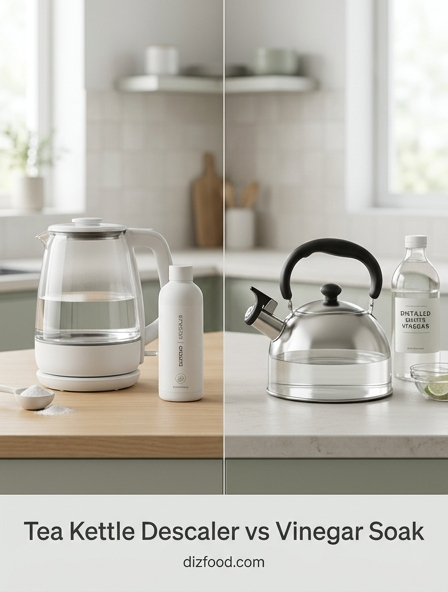
Commercial Descaler vs Vinegar: The Ultimate Limescale Showdown
Maintaining a pristine tea kettle is a fundamental task for any tea enthusiast or coffee lover. Over time, hard water-rich in minerals like calcium and magnesium-leaves behind a stubborn, white, chalky residue known as limescale. This buildup not only affects the aesthetic of your appliance but also interferes with its heat transfer efficiency and the flavor profile of your water. The two primary contenders for tackling this kitchen nuisance are commercial descaling agents and the traditional household staple, white distilled vinegar. Each method relies on acidity to dissolve mineral deposits, yet they function with varying degrees of intensity and chemical sophistication.
Vinegar is often lauded for its accessibility and natural origins, making it a favorite for those prioritizing eco-friendly cleaning. However, commercial descalers are engineered specifically for the materials found in modern electric and stovetop kettles. While vinegar uses acetic acid to slowly break down calcium carbonate, professional formulas often utilize more potent or specialized acids, such as citric or sulfamic acid, designed to act quickly without the pungent aroma associated with fermentation byproducts. This showdown explores the nuances of these two methods, evaluating their chemical effectiveness, impact on appliance longevity, and the overall user experience within a busy kitchen environment.
- Mineral Reactivity: How fast the acid bonds with calcium.
- Material Safety: Impact on stainless steel, glass, and plastic.
- Ease of Use: Preparation time and rinsing requirements.
Effectiveness Compared: Removing Hard Water Deposits Fast
The core objective of descaling is to break the chemical bonds of mineral crusts that adhere to the internal walls and heating elements of a kettle. Vinegar typically contains about 5% acetic acid, which provides a mild reaction. In contrast, commercial descalers are concentrated solutions or powders that offer a higher reactivity. Because hard water deposits can vary in thickness, the "strength" of the solution determines how many boil cycles or soaking hours are required to restore a smooth surface. When faced with heavy, multi-layered scale, vinegar often requires repeated applications, whereas a professional-grade descaler can often resolve the issue in a single pass.
| Feature | White Vinegar | Commercial Descaler |
|---|---|---|
| Active Acid | Acetic Acid (5%) | Citric, Lactic, or Sulfamic |
| Reaction Speed | Slow (requires soaking) | Fast (active on contact) |
| Deposit Removal | Moderate to Good | Excellent/Professional |
| Residue Risk | Low (Mineral) | Very Low (Chemical) |
The speed of removal is particularly critical for electric kettles with exposed heating coils. Limescale acts as an insulator, causing the element to work harder and potentially overheat. A commercial descaler's ability to penetrate these layers rapidly ensures that the heating element is returned to its optimal state with minimal mechanical stress. While vinegar eventually gets the job done, its lower acidity levels mean it struggles with the dense, "stone-like" deposits found in regions with exceptionally high water hardness.
The Pros and Cons of Traditional Vinegar Soaks
Vinegar has been the go-to DIY solution for generations due to its simplicity and low cost. As a natural byproduct of fermentation, it is biodegradable and non-toxic, which provides peace of mind for families wary of introducing industrial chemicals into their food preparation areas. Its versatility allows it to be used across various kitchen surfaces, making it a convenient "one-size-fits-all" cleaner. However, this convenience comes with significant trade-offs that can affect the routine maintenance of high-end kitchen appliances.
- Pro: Cost-Effective: Extremely inexpensive and available at any grocery store.
- Pro: Eco-Friendly: Contains no synthetic dyes or fragrances; safe for septic systems.
- Pro: Safety: Accidental ingestion of diluted residue is generally harmless.
- Con: Pungent Odor: The smell of boiling vinegar can permeate a home for hours.
- Con: Time Intensive: Often requires an overnight soak for heavy buildup.
- Con: Rinsing Difficulty: Requires multiple boils with fresh water to remove the sour taste.
Despite the drawbacks, the vinegar soak remains a reliable fallback. If a kettle is maintained weekly, the mild acidity of vinegar is usually sufficient to prevent heavy crusting. The main challenge arises when maintenance is deferred; at that point, the time and effort required to neutralize the vinegar smell and fully remove the scale can outweigh the initial savings. Users must balance the desire for a "natural" home with the practicalities of efficiency and sensory comfort.
Why Professional Descaling Solutions Outperform Household Vinegar
Professional descaling solutions are formulated with a specific goal: maximum mineral dissolution with minimum environmental impact on the appliance. Unlike vinegar, which is a generic solution, commercial products often contain a blend of organic acids like citric and lactic acid, paired with corrosion inhibitors. These inhibitors create a protective barrier on the metal surfaces, ensuring that the acid attacks only the limescale and not the kettle's interior lining. This targeted chemistry is what allows professional products to work in a fraction of the time required by acetic acid.
Furthermore, commercial descalers are often more effective at tackling "silica" and other complex minerals that vinegar might miss. Vinegar is excellent at dissolving calcium carbonate, but hard water often contains a cocktail of minerals that create a more resilient matrix. Descalers are engineered to break down this complex structure efficiently. Many brands also offer their products in pre-measured pods or tablets, eliminating the guesswork involved in mixing ratios. This precision ensures that the concentration is high enough to be effective but calibrated to prevent damage to delicate internal sensors or plastic components that are common in modern, digitally-controlled electric kettles.
The inclusion of surfactants in some professional formulas also helps to lift away oils and organic residues that can accumulate alongside minerals. This results in a "deep clean" that restores the kettle to a factory-fresh state, something that a simple vinegar and water mixture rarely achieves. For owners of premium glass or copper kettles, the specialized nature of these cleaners provides an added layer of security against etching or tarnishing.
Speed and Efficiency: Which Method Saves More Time
In a modern kitchen, time is a valuable commodity. When comparing the two methods, the difference in "active time" versus "total time" is stark. A vinegar soak is a passive process but a long one. Typically, a 1:1 ratio of vinegar to water must be brought to a boil and then left to sit for at least 30 to 60 minutes. For severe cases, users are often advised to leave the solution in the kettle overnight. Following the soak, the kettle must be scrubbed and then boiled with fresh water two to three times to eliminate the persistent vinegary scent.
- Preparation: Both methods take roughly 2 minutes to fill.
- Activation: Commercial descalers work within 5-10 minutes of boiling.
- Rinsing: Vinegar requires 3+ rinses; descalers usually require 1-2.
- Total Turnaround: Descaler (15 mins) vs. Vinegar (60+ mins).
Commercial descalers are designed for rapid action. Most liquid or powder formulations require a single boil and a short wait of no more than 10 minutes. Because they are often odorless and highly soluble, they rinse away much faster than the oily residue sometimes left by certain types of vinegar. For those who use their kettle multiple times a day, the ability to descale and return the appliance to service in under fifteen minutes is a significant advantage. This efficiency encourages more frequent maintenance, which in the long run prevents the kind of heavy buildup that leads to appliance failure.
Odor and Aftertaste: Comparing Residue After Cleaning
One of the most common complaints regarding the use of vinegar is the "lingering ghost" of the cleaning process. Acetic acid has a high volatility, meaning its molecules easily become airborne when heated, filling the kitchen with a sharp, sour scent. More importantly, it can be incredibly difficult to remove every trace of vinegar from the kettle's nooks, crannies, and filter mesh. If even a small amount remains, the next several pots of tea or coffee will have a subtle, unpleasant tang that ruins the delicate notes of the beverage.
Commercial descalers, particularly those based on citric acid, are virtually odorless. Citric acid is a non-volatile solid, so it does not release fumes when boiled. This makes the cleaning process much more pleasant, especially in smaller apartments or poorly ventilated kitchens. Once the descaling cycle is complete, a single thorough rinse is usually enough to remove the solution entirely. There is no lingering aftertaste, as these products are designed to be "rinse-clean."
Some premium descalers even include a color-indicator technology. The liquid might change color as it reacts with the scale, and then turn a different shade once the minerals are neutralized. This visual feedback gives the user confidence that the kettle is clean and that the chemicals have been fully flushed out. Compared to the "sniff test" required with vinegar, this professional approach offers a more hygienic and reliable result for those who are sensitive to taste and smell.
Impact on Kettle Longevity: Chemical vs Natural Acidity
While both methods are acidic, the way they interact with different materials over the long term varies significantly. Vinegar is a weak acid, but it can be surprisingly aggressive toward certain materials if left in contact for too long. For example, prolonged exposure to acetic acid can degrade rubber gaskets and silicone seals found in the base of many electric kettles, leading to leaks. It can also cause pitting in lower-grade stainless steel if the solution is not properly diluted or if it is left to soak for days at a time.
Commercial descalers are typically "buffered." This means they are chemically balanced to be aggressive toward calcium but gentle on the appliance's structural components. Manufacturers of high-end appliances often recommend specific descaling brands because those formulas have been tested against the specific plastics and metals used in their products. This is particularly important for kettles with integrated electronic sensors that measure temperature or water levels, as these components can be sensitive to the corrosive nature of unmonitored DIY acids.
- Seals and Gaskets: Vinegar may cause hardening or cracking over time.
- Heating Elements: Descalers remove scale faster, preventing "hot spots" that burn out the element.
- Surface Finish: Vinegar can occasionally dull the shine of polished chrome or copper.
By using a product specifically designed for the task, you are investing in the "health" of the appliance. A kettle that is descaled effectively will run quieter, boil faster, and last years longer than one that is either neglected or treated with harsh, unbuffered household acids that might compromise its internal integrity.
Cost-Benefit Analysis of Store-Bought vs DIY Cleaners
At first glance, vinegar appears to be the undisputed winner in terms of cost. A large gallon of white vinegar costs a fraction of a single bottle of specialized descaler. However, a true cost-benefit analysis must take into account more than just the initial purchase price. Factors such as the volume of water used for rinsing, the energy consumed during multiple boil cycles to remove odors, and the potential impact on the kettle's lifespan all play a role in the total cost of ownership.
| Factor | Vinegar (DIY) | Commercial Product |
|---|---|---|
| Unit Price | $0.05 - $0.10 per clean | $1.00 - $3.00 per clean |
| Water Usage | High (multiple rinses) | Low (1-2 rinses) |
| Energy Cost | Higher (longer boil times) | Lower (single cycle) |
| Appliance Life | Potential seal damage | Protective/Optimized |
For a budget-conscious household that descales frequently, vinegar is a viable economic choice. However, for a user with an expensive $150+ electric gooseneck kettle, spending an extra dollar or two every few months for a professional cleaner is a form of insurance. The "benefit" of the commercial product lies in the time saved and the assurance that the appliance's warranty remains intact. Many manufacturers specify that damage caused by "improper cleaning agents" (which can sometimes include high concentrations of vinegar) is not covered under warranty. Therefore, the higher upfront cost of a descaler often pays for itself in convenience and appliance protection.
Safety Considerations for Electric Kettles and Heating Elements
Safety is paramount when dealing with appliances that combine water and electricity. One risk associated with DIY methods like vinegar is the tendency for users to "over-boil" the solution to try and force a faster reaction. This can lead to excessive steam and moisture entering the handle or base where the electrical components are housed. Furthermore, the strong fumes from boiling vinegar can be irritating to the respiratory system, particularly for individuals with asthma or sensitivities.
Commercial descalers are generally safer for the appliance's internal logic. Since they work effectively at lower temperatures or with shorter boil times, there is less risk of moisture ingress into the circuitry. However, commercial products are concentrated chemicals and must be handled with care. They should always be kept out of reach of children and pets, and users should ensure they follow the dilution instructions precisely. Most modern descalers use food-safe acids (like citric acid), but they are still irritants in their concentrated form.
- Electrical Safety: Avoid splashing the exterior or base with any liquid.
- Chemical Safety: Always rinse the kettle thoroughly before the first use after cleaning.
- Venting: Ensure the kitchen is ventilated regardless of the method used.
Another safety advantage of commercial descalers is their physical form. Tablets or liquid sachets prevent the mess and potential spills associated with pouring large jugs of vinegar. This reduces the risk of slipping on wet floors or getting acid in one's eyes during the preparation phase. Regardless of the choice, always unplug an electric kettle before performing any external cleaning or maintenance.
Choosing the Right Method for Your Tea Kettle Maintenance
Ultimately, the choice between a commercial descaler and a vinegar soak depends on your priorities: speed and performance versus cost and natural ingredients. If you live in a region with soft water and only notice light spotting every few months, a quick vinegar rinse is likely all you need. It is a gentle, sustainable way to keep a clean kettle in top shape without unnecessary spending. In this scenario, the minor inconvenience of the smell is outweighed by the simplicity of the task.
However, if you are a daily tea drinker in a hard-water area, or if you own a high-performance electric kettle, a professional descaling solution is the superior choice. The efficiency, lack of odor, and protective additives make it a more sophisticated tool for appliance care. It ensures that your water tastes exactly as it should, without any mineral interference or vinegary aftertaste. For those who value their time and want to maximize the lifespan of their kitchen technology, the small investment in a dedicated descaler is a logical step.
To maintain a healthy kettle, consider a hybrid approach. Use vinegar for light, regular maintenance every two weeks, and perform a "deep clean" with a professional descaler every three months. This strategy provides the best of both worlds: keeping costs low while ensuring that stubborn, deep-seated scale never has a chance to damage your heating element or ruin your perfect cup of tea.



Comments