
Choosing between a silicone scrubber and a traditional abrasive sponge often feels like a tradeoff between ultimate hygiene and raw scrubbing power. While the classic abrasive sponge is a powerhouse for tackling burnt-on grease, its porous nature makes it a notorious breeding ground for bacteria and mold, often requiring replacement every week. On the other hand, silicone scrubbers offer a non-porous, dishwasher-safe alternative that resists odors and prevents cross-contamination, making them the superior choice for delicate non-stick pans. Understanding the balance between these two tools is essential for maintaining both the longevity of your premium cookware and the sanitary standards of your kitchen.
| Feature | Silicone Scrubber | Abrasive Sponge |
|---|---|---|
| Hygiene | Non-porous; bacteria-resistant; fast-drying. | Highly porous; traps food and pathogens. |
| Cleaning Power | Gentle; best for light debris/oils. | High friction; removes burnt-on carbon. |
| Cookware Safety | 100% safe for non-stick and seasoned cast iron. | Can scratch Teflon and delicate finishes. |
| Durability | Long-lasting; doesn't fray or crumble. | Degrades quickly; prone to tearing. |
| Maintenance | Dishwasher/Boil safe for sterilization. | Hard to sanitize; requires frequent disposal. |
| Best Use Case | Daily rinsing and non-stick maintenance. | Heavy-duty scouring of stainless steel. |
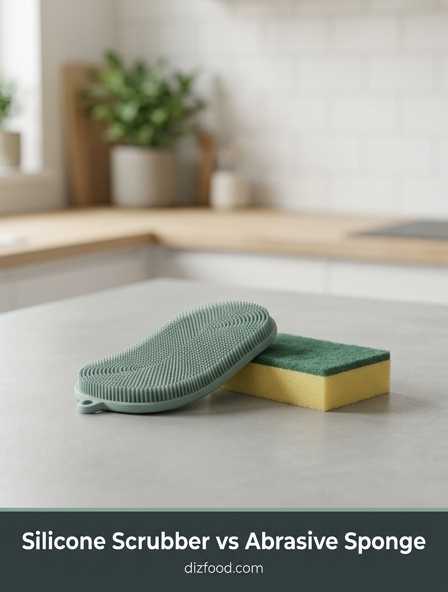
Silicone Scrubber vs Abrasive Sponge Performance Comparison
In the modern kitchen, the debate between silicone scrubbers and abrasive sponges centers on the balance between surface agitation and liquid absorption. Abrasive sponges, typically constructed from a combination of cellulose and synthetic scouring fibers, excel at holding soapy water and creating a rich lather. This allows for a continuous flow of surfactant over the dish surface, which helps in emulsifying fats and oils. However, their porous nature means they lose structural integrity quickly as the fibers break down during heavy-duty tasks.
In contrast, silicone scrubbers are engineered from non-porous, food-grade polymers. Their performance is defined by flexibility and heat resistance rather than absorption. While they do not produce the same level of foam, they offer a consistent level of friction that does not diminish over time. When comparing the two, users often notice that the silicone variety excels at removing loose food particles from smooth surfaces, whereas the abrasive sponge is better suited for tasks requiring chemical dwell time and high-friction scouring.
- Absorption: Sponges hold significantly more water and detergent.
- Surface Contact: Silicone bristles reach into tight crevices and corners more effectively.
- Heat Resistance: Silicone can double as a trivet, while sponges melt or scorch easily.
- Consistency: Silicone maintains its shape, while sponges compress and flatten.
Ultimately, the performance gap is most visible during "wet" versus "dry" scrubbing. The abrasive sponge relies on the density of its scouring pad to sand away debris, while the silicone scrubber uses the mechanical leverage of individual bristles to flick away waste without absorbing the accompanying grease.
Why Silicone Scrubbers Lead in Kitchen Hygiene
Hygiene is perhaps the most significant category where silicone scrubbers outperform traditional cellulose or foam sponges. The primary reason lies in the material's pore structure. Traditional sponges are designed to be highly absorbent, which creates a labyrinth of damp, dark cavities. These cavities are the perfect breeding ground for various household pathogens, including E. coli and Salmonella. Because a sponge rarely dries out completely between uses, it becomes a reservoir for microbial growth within hours of its first use.
Silicone is a non-porous material, meaning it cannot absorb water or food particles. This physical property ensures that there is no internal environment for bacteria to colonize. Furthermore, silicone scrubbers are incredibly easy to sanitize. They can be placed in the dishwasher or even boiled in water to achieve a level of sterilization that would destroy a standard abrasive sponge. This makes them an ideal choice for households that prioritize food safety and wish to avoid the "sour" smell associated with contaminated cleaning tools.
| Feature | Silicone Scrubber | Abrasive Sponge |
|---|---|---|
| Material Density | Non-porous solid | Porous cellulose/foam |
| Drying Speed | Extremely Fast | Very Slow |
| Sanitization | Dishwasher/Boiling safe | Limited (Microwave risk) |
By preventing the formation of biofilms, silicone tools ensure that you are actually cleaning your dishes rather than simply spreading dormant bacteria across your plates. For those concerned with kitchen sanitation, the switch to silicone represents a shift toward medical-grade material standards in a domestic setting.
Scrubbing Power Abrasive Sponges vs Silicone Bristles
When it comes to raw scrubbing power, the traditional abrasive sponge remains a formidable opponent. The "scratchy" side of a sponge is usually made from heavy-duty polyester or nylon fibers coated with abrasive resins. This construction allows the user to apply significant downward pressure to grind away carbonized food, such as burnt sugar or charred meat drippings. The density of these fibers provides a high-grit surface that acts almost like fine sandpaper, making it the go-to tool for stainless steel pots and oven grates.
Silicone scrubbers, on the other hand, utilize soft, flexible bristles to agitate the surface. While these bristles are excellent for dislodging soft debris-like oatmeal, egg, or sauce-they lack the "bite" required for true heavy-duty scouring. The tips of silicone bristles are rounded and smooth, which means they glide over hardened residues rather than cutting through them. This makes them highly effective for 90% of daily dishwashing but leaves them struggling with the remaining 10% of stubborn, baked-on messes.
- Mechanical Action: Sponges use friction; silicone uses agitation.
- Pressure Distribution: Sponges distribute force evenly across a pad; silicone concentrates force on bristle tips.
- Surface Penetration: Abrasive pads can "sand" a surface, whereas silicone only "sweeps" it.
Despite the lack of grit, silicone scrubbers are often preferred for cleaning delicate produce or whisking away crumbs from countertops. They provide enough mechanical action to clean without the risk of damaging the item being washed, which is a trade-off many users are willing to accept for general daily maintenance.
Durability and Lifespan of Silicone vs Cellulose Sponges
The lifespan of a cleaning tool is a critical factor for both convenience and economics. Cellulose sponges have a notoriously short functional life. Within a week or two of regular use, the fibers begin to fray, the scouring pad starts to detach from the foam base, and the entire structure begins to crumble. This degradation is accelerated by exposure to hot water, harsh degreasers, and the physical act of wringing the sponge out. Once a sponge loses its structural integrity, its ability to clean effectively drops to nearly zero.
Silicone scrubbers are built for longevity. Made from high-strength silicone polymers, these tools can withstand thousands of uses without showing signs of wear. They are resistant to tearing, do not lose their bristles, and remain flexible regardless of how many times they are heated or cooled. It is not uncommon for a single silicone scrubber to last for six months to a year, whereas a pack of sponges might be exhausted in the same timeframe. This durability makes silicone an attractive "buy-it-once" solution for the kitchen.
Furthermore, silicone is chemically inert. It does not react with bleach, vinegar, or heavy-duty dish soaps. While these chemicals can cause the cellular structure of a sponge to melt or harden, silicone remains unaffected. This resilience ensures that the tool performs as well on day 300 as it did on day 1. For the consumer, this means fewer trips to the store and a consistent cleaning experience that doesn't involve dealing with a disintegrating mess in the sink.
Bacteria Resistance and Odor Control in Cleaning Tools
The distinctive "dirty sponge smell" is a common kitchen grievance caused by the metabolic byproducts of bacteria trapped within the sponge's pores. Because sponges stay damp for long periods, they allow bacteria to multiply exponentially. As these microorganisms break down food particles and organic matter trapped in the sponge, they release volatile organic compounds that produce a foul odor. Even "anti-microbial" sponges eventually lose their effectiveness as the treatment washes away, leading to a tool that smells worse than the dishes it is supposed to clean.
Silicone scrubbers solve the odor problem through their hydrophobic properties. Water does not penetrate the surface of the silicone; instead, it beads up and rolls off. Because the tool can be shaken dry in seconds, there is no lingering moisture to support bacterial life. Without moisture and trapped food, there is no bacterial growth, and without bacteria, there is no smell. This makes silicone the superior choice for those who are sensitive to kitchen odors or who want a tool that feels fresh every time they pick it up.
- Hydrophobicity: Silicone repels water, leading to rapid evaporation.
- Surface Area: Unlike sponges, silicone has no internal surface area for mold to hide.
- Maintenance: A quick rinse under a tap removes all debris, whereas sponges trap microscopic particles.
For individuals who have previously resorted to microwaving their sponges or soaking them in bleach to kill odors, the transition to silicone offers a maintenance-free alternative. The peace of mind that comes from using a tool that doesn't smell like mildew is a primary driver for the growing popularity of silicone in the domestic cleaning market.
Protecting Cookware Non Scratch Silicone vs Traditional Abrasives
Modern kitchens often feature high-end cookware with delicate coatings, such as Teflon, ceramic, or seasoned cast iron. Using the wrong cleaning tool on these surfaces can lead to permanent damage. Abrasive sponges, particularly those labeled "heavy-duty," contain mineral particles like aluminum oxide that can create microscopic scratches in non-stick coatings. Over time, these scratches cause the coating to flake off, ruining the pan's non-stick properties and potentially leaching chemicals into food.
Silicone scrubbers are inherently non-scratch. The material is much softer than the coatings used on cookware, making it impossible to cause physical damage through scrubbing alone. This makes silicone the safest choice for expensive pans, delicate glassware, and polished stainless steel. It allows the user to apply significant pressure to remove stuck-on food without the fear of leaving swirl marks or stripping away protective finishes.
| Cookware Type | Silicone Compatibility | Abrasive Sponge Risk |
|---|---|---|
| Non-Stick / Teflon | Perfect / No Risk | High / Scratches Coating |
| Cast Iron | Good / Preserves Seasoning | Moderate / Can Strip Oil |
| Stainless Steel | Safe / No Scratches | Can leave visible marks |
| Glass / Crystal | Excellent / Gentle | Moderate / May Cloud Surface |
Even when used on seasoned cast iron, silicone is gentle enough to leave the polymerized oil layer intact while still removing charred food bits. For anyone investing in high-quality kitchen gear, the insurance provided by a non-scratch silicone scrubber is invaluable compared to the aggressive and unpredictable nature of traditional scouring pads.
Environmental Impact Eco Friendly Silicone vs Disposable Sponges
The environmental footprint of kitchen cleaning tools is a growing concern for eco-conscious consumers. Traditional sponges present a dual threat: they are often made from plastic-based foams (like polyurethane) and they are designed to be discarded frequently. Because they harbor bacteria and fall apart quickly, billions of sponges end up in landfills every year. Furthermore, as synthetic sponges degrade during use, they shed microplastics into the wastewater system, which eventually find their way into the oceans and the food chain.
Silicone scrubbers offer a more sustainable alternative primarily through their longevity. One silicone scrubber can replace dozens of disposable sponges, significantly reducing the volume of waste sent to landfills. While silicone is not biodegradable, it is a much more stable material that does not break down into microplastics during the dishwashing process. Many silicone products are also made from silica (sand), which is a more abundant and less toxic raw material than the petroleum-based plastics used in many cheap sponges.
To maximize the eco-friendly benefits of silicone, users should look for high-quality, 100% food-grade silicone that can be recycled at specialized facilities. By moving away from the "throwaway culture" of weekly sponge replacements, households can take a small but meaningful step toward reducing their overall plastic consumption and environmental impact.
Deep Cleaning Efficiency When to Use Abrasive Sponges
While silicone has many advantages, there are specific scenarios where the abrasive sponge is objectively more efficient. Deep cleaning tasks-such as scrubbing a baking sheet after roasting vegetables or cleaning the grates of an outdoor grill-require a level of grit that silicone cannot provide. The abrasive particles in a scouring pad act like tiny chisels, breaking the bonds between carbonized food and the metal surface. In these instances, using a silicone scrubber would be an exercise in frustration, as the soft bristles would simply slide over the burnt material.
Abrasive sponges also excel in "soak and scrub" situations. Because they can hold a large volume of hot, soapy water, they keep the cleaning area lubricated and allow the detergents to work more effectively on grease. The sponge's ability to compress allows it to be squeezed into narrow gaps, like the tines of a fork or the hinges of a kitchen tool, where its rough surface can work from all angles simultaneously.
- Carbonized Residue: Use an abrasive sponge for anything "burnt."
- Heavy Grease: Sponges emulsify grease better due to soap retention.
- Textured Surfaces: Abrasive pads can reach into the valleys of textured metals more aggressively.
For these reasons, many professional kitchens maintain a supply of both tools. The abrasive sponge is reserved for the "heavy lifting" and deep-cleaning cycles at the end of the night, while more delicate tools are used for general service. Recognizing the limitations of each tool allows for a more efficient cleaning routine that saves both time and physical effort.
Cost Analysis Silicone Longevity vs Frequent Sponge Replacement
From a financial perspective, the comparison between silicone and sponges is a classic example of "upfront cost vs. long-term value." A single high-quality silicone scrubber might cost between $5 and $10. In contrast, a multi-pack of abrasive sponges can often be purchased for less than $1 per unit. At first glance, the sponges seem like the more economical choice. However, the calculation changes when you factor in the recommended replacement frequency for hygiene and performance.
Health experts recommend replacing a traditional sponge every one to two weeks to avoid bacterial buildup. If a household follows this guideline, they will consume between 26 and 52 sponges per year. At an average cost of $0.75 per sponge, the annual expenditure ranges from $19.50 to $39.00. Because a silicone scrubber can easily last a full year (or longer) with regular sanitization, the total annual cost remains fixed at the initial $5 to $10 investment.
- Sponges: High frequency of purchase, low individual cost, high annual total.
- Silicone: Low frequency of purchase, higher individual cost, low annual total.
- Indirect Costs: Silicone reduces the risk of damaging expensive cookware, potentially saving hundreds in replacement pans.
Over a five-year period, the savings become even more pronounced. A household using silicone might spend $30 on replacements, while a sponge-using household could spend nearly $200. When viewed as a long-term household utility, silicone is the clear winner for the budget-conscious consumer who wants to maximize every dollar spent on kitchen maintenance.
Choosing the Best Scrubber for Your Dishwashing Needs
Selecting the right tool depends entirely on your cooking habits and the types of materials present in your kitchen. There is no one-size-fits-all answer, but rather a best-fit solution based on your specific priorities. If your kitchen is filled with non-stick pans and you primarily cook light meals with minimal heavy searing, a silicone scrubber will likely meet all your needs while providing superior hygiene and longevity.
However, if you frequently bake, use cast iron, or cook meat at high temperatures, you will find the silicone scrubber lacking in the necessary friction. In such cases, a hybrid approach is often the most practical. Using a silicone scrubber for 90% of your dishes-plates, glasses, silverware, and light pans-keeps your kitchen sanitary and reduces waste. Keeping a small stock of abrasive sponges or a dedicated scouring brush for the remaining 10% of heavy-duty tasks ensures you aren't struggling with stubborn messes.
Consider the following when making your choice:
- Frequency of use: Daily light cleaning favors silicone.
- Dishwasher access: If you have a dishwasher to sanitize tools, silicone is even more convenient.
- Cookware value: Protect expensive coatings with silicone.
- Sensitivity: If you hate the smell of old sponges, switch to silicone immediately.
By understanding the mechanical and hygienic properties of both materials, you can curate a cleaning kit that is efficient, cost-effective, and safe. The goal is to minimize the effort required to maintain a clean kitchen while maximizing the lifespan of your tools and cookware.


Comments