
Understanding Porosity and Bacterial Growth
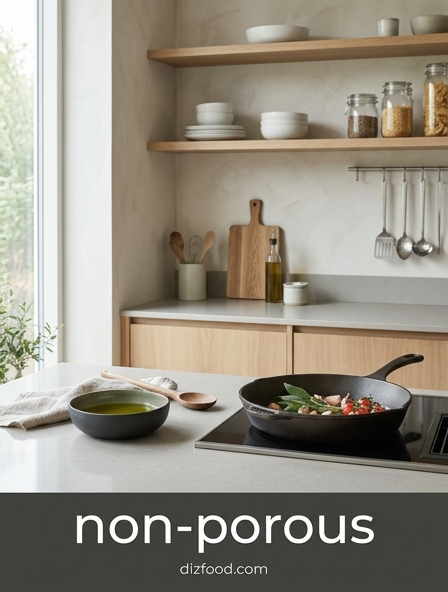
In the culinary environment, the physical structure of a material determines its susceptibility to microbial invasion. Porosity refers to the presence of microscopic voids or channels within a substance, such as those found in natural wood or unsealed stone. When liquid organic matter-like meat juices or raw egg-contacts these surfaces, capillary action draws the contaminants deep into the material's core. This creates a protected internal environment where bacteria can flourish, shielded from surface-level cleaning agents.
- Biofilm Formation: Bacteria trapped in pores secrete extracellular substances, forming resilient biofilms.
- Micro-pockets: Tiny indentations provide moisture and nutrients, essential for rapid cellular division.
- Structural Decay: Absorbed organic matter can rot internally, compromising the tool's integrity.
Conversely, non-porous materials like stainless steel, glass, and high-density plastics lack these internal cavities. This structural density ensures that pathogens remain on the surface, where they are fully exposed to heat and chemical sanitizers. By eliminating the "hiding spots" provided by porous structures, a kitchen significantly reduces the baseline risk of persistent bacterial colonies.
Hidden Risks of Porous Kitchen Sponges
The traditional cellulose sponge is perhaps the most dangerous item in a modern kitchen due to its extreme porosity. Designed to absorb and hold water, these tools inadvertently become high-density incubators for pathogens like E. coli and Salmonella. Because the internal structure of a sponge is a complex web of interconnected pores, it is nearly impossible to fully mechanicalize the removal of trapped food particles. Even after rinsing, the damp interior remains a prime breeding ground for millions of microbes.
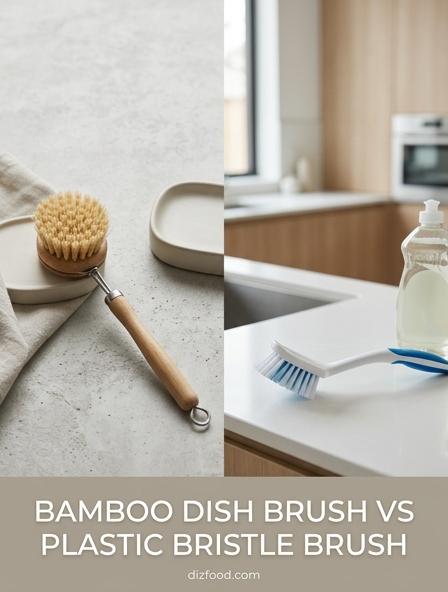
Studies have shown that attempts to "sanitize" porous sponges in microwaves or boiling water often fail to reach the deep-seated colonies, sometimes even selecting for more resilient bacterial strains. This leads to a false sense of security where a user believes they are cleaning a surface, but is actually spreading a concentrated film of bacteria across the countertop. Transitioning to non-porous alternatives, such as silicone scrubbers or brushes with synthetic bristles, eliminates this internal moisture retention, allowing the tool to dry completely and stay hygienic between uses.
Benefits of Non-Porous Surfaces for Hygiene
Non-porous surfaces provide a fundamental barrier that is essential for maintaining professional-grade food safety standards. Materials like quartz, tempered glass, and solid-surface synthetics are engineered to be entirely impermeable, ensuring that no liquids, oils, or proteins can penetrate the surface layer. This lack of absorption means that odors and stains cannot take root, resulting in a surface that is as clean on the inside as it appears on the outside.
| Material | Porosity Level | Cleaning Requirement |
|---|---|---|
| Stainless Steel | Zero | Simple Wipe / Sanitize |
| Engineered Quartz | Extremely Low | Mild Soap / Water |
| Unsealed Granite | High | Periodic Resealing |
| Natural Wood | High | Oil Treatment / Scrubbing |
Beyond the ease of cleaning, these materials are often resistant to the acidic nature of many foods, such as lemon juice or vinegar, which can etch and damage more sensitive, porous materials. By choosing non-porous surfaces, kitchen staff ensure that the environment remains hostile to microbial life, facilitating a safer preparation area that requires less aggressive chemical intervention to maintain.
Preventing Cross-Contamination with Synthetic Materials
Cross-contamination is a primary driver of foodborne illness, often occurring when pathogens from raw proteins are transferred to ready-to-eat produce via cutting boards or utensils. Synthetic, non-porous materials like High-Density Polyethylene (HDPE) play a critical role in mitigating this risk. Unlike wooden boards, which contain natural fibers that swell and trap juices, synthetic boards provide a hard, flat surface that prevents deep penetration of contaminants.
- Impermeability: Synthetic surfaces do not absorb fluids, keeping raw juices on the surface.
- Color-Coding: Non-porous plastic boards are easily produced in various colors to designate specific food groups.
- High-Heat Tolerance: Many synthetic materials can withstand the high temperatures of commercial dishwashers.
By implementing a system of non-porous tools, a kitchen can establish a rigorous color-coded workflow. For example, a red HDPE board is strictly for raw meats, while a green one is for vegetables. Because the material does not "hold" onto the proteins of the meat, a thorough wash ensures the board is completely reset, preventing any microscopic transfer between different food batches during a busy shift.
Why Non-Porous Tools Resist Mold and Mildew
Mold and mildew thrive in environments characterized by stagnant moisture and organic "food" sources. Porous materials, such as wood or natural fibers, act like sponges that retain water long after the surface feels dry to the touch. This internal humidity, combined with trapped starch or protein molecules, creates the perfect ecological niche for fungal spores to germinate. Once mold takes root within the pores of a wooden spoon or a cutting block, it becomes functionally impossible to remove without destroying the item.
Non-porous tools, such as those made from silicone, metal, or glass, lack the internal architecture required to support fungal growth. When these items are washed, the water sits purely on the surface and evaporates quickly, especially when placed in a drying rack. Without the ability to penetrate the material, mold spores cannot find a stable foothold. Furthermore, the smooth surfaces of non-porous tools do not provide the texture necessary for spores to cling to, ensuring that a simple rinse often removes potential contaminants before they can begin to colonize.
Comparing Silicone and Traditional Cleaning Utensils
The shift from traditional cellulose or natural-fiber cleaning tools to silicone alternatives marks a significant advancement in kitchen sanitation. Traditional tools are designed for high absorption, which is useful for picking up spills but detrimental for long-term hygiene. Silicone, being a non-porous synthetic polymer, offers a completely different set of physical properties that prioritize cleanliness and durability over mere liquid retention.
| Feature | Cellulose Sponge | Silicone Scrubber |
|---|---|---|
| Bacterial Retention | High | Negligible |
| Drying Speed | Slow | Instantaneous |
| Heat Resistance | Low | Up to 450°F |
| Odor Development | Rapid | Rare |
While a sponge may feel more effective at wiping a counter dry, it is simultaneously depositing older bacteria from its core. Silicone scrubbers use small bristles to mechanically dislodge food without absorbing the grease or grime. This means they do not develop the characteristic "sour" smell associated with old sponges. Additionally, silicone can be boiled or placed in a dishwasher without degrading, allowing for regular sterilization that would destroy a natural-fiber brush or sponge.
The Role of High-Density Materials in Food Safety
Food safety is often a matter of material science. High-density materials, such as stainless steel and specialized polymers, are engineered to have a molecular structure so tightly packed that nothing can pass through the surface. In a kitchen, this density provides two-fold protection: physical durability and biological safety. These materials resist the deep gouges and scratches that typically occur on softer, porous surfaces like wood or low-grade plastics.
- Knife Resistance: High-density surfaces resist deep scarring where bacteria can hide.
- Chemical Inertness: These materials do not react with salts, acids, or detergents.
- Thermal Stability: They can endure extreme temperature shifts without cracking.
When a surface is "scarred" by a knife, the depth of that cut determines how easy it is to sanitize. In low-density, porous materials, these cuts become canyons for bacterial growth. In high-density, non-porous materials, the scratches remain shallow and open, allowing sanitizing solutions to reach the bottom of the groove. This ensures that even a well-used tool can be maintained in a sterile condition, preventing the accumulation of dangerous pathogens over time.
How Non-Porous Tools Simplify Kitchen Sanitization
The primary advantage of non-porous tools is the radical simplification of the sanitizing process. In a professional or high-use home kitchen, time is a critical factor. Porous items often require complex cleaning protocols, such as air-drying for 24 hours, oiling, or hand-scrubbing with specialized pastes. Non-porous items, however, are generally compatible with modern, high-efficiency cleaning methods that save time and ensure a higher level of baseline cleanliness.
- Dishwasher Compatibility: Most non-porous tools can withstand the 160°F+ temperatures of a sanitizing cycle.
- Reduced Chemical Use: Because grime doesn't soak in, less aggressive scrubbing and fewer chemicals are needed.
- Visual Verification: It is easier to see if a smooth, non-porous surface is clean compared to a grain-heavy material.
This efficiency encourages better habits. When a tool is easy to clean, users are more likely to wash it properly between tasks. The ability to simply toss a silicone mat or a stainless-steel bowl into the dishwasher ensures that heat-based sanitization is applied consistently, which is far more effective at killing pathogens than a cursory hand-wash of a porous item.
Eliminating Persistent Kitchen Odors Effectively
Kitchen odors are often the result of Volatile Organic Compounds (VOCs) that have been absorbed into porous surfaces. When you cut garlic on a wooden board or store onions in a plastic container of low-quality, porous material, the aromatic oils penetrate the surface fibers. Over time, these oils oxidize and turn rancid, creating a persistent "stale" smell that can even transfer back into fresh food. This phenomenon is known as "flavor ghosting," where the remnants of yesterday's meal taint today's preparation.
Non-porous materials like glass, stainless steel, and high-grade silicone do not have the internal capacity to store these aromatic molecules. Because the oils remain on the surface, they are easily emulsified by dish soap and rinsed away completely. This is why professional chefs prefer stainless steel bowls for mixing pungent ingredients and glass containers for storage. By using non-porous tools, you ensure that the sensory profile of your ingredients remains pure, and your kitchen environment stays fresh without the need for heavy air fresheners or deep-scrubbing with deodorizing agents.
Building a Sustainably Clean Cooking Environment
Sustainability in the kitchen is not just about the materials we use, but how long they last and how healthy they keep our environment. Non-porous tools are inherently more sustainable because they do not suffer from the same internal degradation as porous items. A wooden spoon may crack or rot within a year, and a sponge must be thrown away every two weeks to avoid bacterial buildup. In contrast, high-quality non-porous tools can last for decades.
- Waste Reduction: Durable materials like steel and glass reduce the frequency of landfill contributions.
- Health Longevity: Reducing microbial loads in the kitchen prevents long-term health issues.
- Resource Efficiency: Non-porous surfaces require less water and fewer harsh detergents to reach a sterile state.
By investing in a suite of non-porous kitchenware, you create a cooking environment that is easier to manage and less prone to systemic contamination. This proactive approach to hygiene focuses on prevention rather than reaction. Ultimately, a kitchen built on the foundation of non-porous materials is a more professional, safer, and more efficient space for culinary creativity.

Comments