
When it comes to tackling a sink full of grime, understanding the functional science behind your cleaning agents is the secret to achieving a streak-free shine. While both dish soap and dishwasher detergent aim for the same goal-spotless dishes-they are engineered for entirely different environments. Standard dish soap is a high-sudsing formula designed for manual agitation, using concentrated surfactants to lift grease while remaining gentle on your skin. In contrast, dishwasher detergents are heavy-duty, low-foam powerhouses that rely on enzymes and high-temperature water to chemically dissolve stubborn proteins and starches. Choosing the wrong one doesn't just result in dirty plates; using manual soap in a machine can lead to a "suds-tastrophe" of overflowing bubbles that can damage your appliance's internal sensors.
| Feature | Dish Soap (Manual) | Dishwasher Detergent |
|---|---|---|
| Primary Action | Manual scrubbing & sudsing | Chemical breakdown & spraying |
| Active Ingredients | Concentrated surfactants | Enzymes, bleach, & builders |
| Foam Profile | High; creates thick bubbles | Low/Zero; prevents pump cavitation |
| Water Temp | Effective in warm/tepid water | Optimized for high heat (140°F+) |
| Skin Sensitivity | pH-balanced; skin-safe | Caustic; can cause skin irritation |
| Best For | Grease, oils, & delicate items | Dried proteins & baked-on starches |
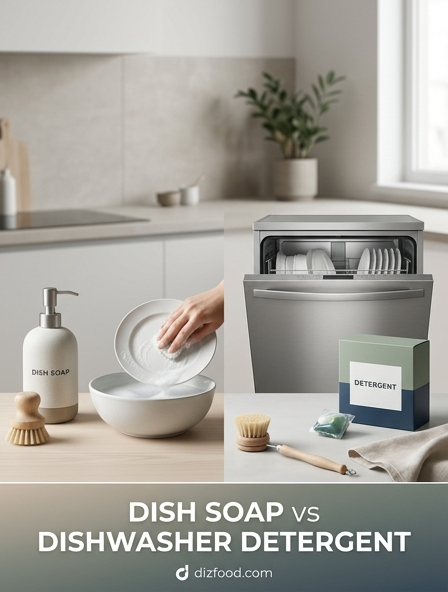
Dish Soap vs Dishwasher Detergent Key Differences
While both dish soap and dishwasher detergent are formulated to clean your kitchenware, they serve fundamentally different purposes and operate through distinct chemical processes. The most significant difference lies in their reaction to water and mechanical agitation. Dish soap, designed for hand-washing in a sink, is a high-sudsing agent. Its primary goal is to create a thick foam that lifts grease and food particles away from surfaces while being gentle on human skin. In contrast, dishwasher detergent is specifically engineered to be low-sudsing or non-foaming, allowing it to function within the high-pressure environment of a machine without causing mechanical failure.
- Application Method: Dish soap requires manual scrubbing and human intervention, whereas detergent relies on high-temperature water jets.
- Foaming Action: Soap creates voluminous bubbles; detergent stays flat to prevent pump cavitation.
- Skin Sensitivity: Manual soaps contain emollients to protect hands; machine detergents are often caustic and should not be handled directly.
- Temperature Requirements: Hand soap works in lukewarm water; machine detergents often require temperatures above 120°F to activate properly.
Understanding these differences is crucial for kitchen maintenance. Using the wrong product can result in poor cleaning performance, damage to expensive appliances, or a kitchen floor covered in an uncontrollable mountain of foam. While they both aim for "clean," the paths they take to achieve that result are chemically and mechanically incompatible.
The Science of Suds vs Chemical Enzymes
The chemistry behind these two cleaning agents reveals why they cannot be used interchangeably. Dish soap relies heavily on surfactants like sodium lauryl sulfate. These molecules have a hydrophilic head and a hydrophobic tail; the tail attaches to grease, while the head attaches to water, allowing the oil to be rinsed away. The physical agitation of your hands or a sponge introduces air into this mixture, creating the "suds" we associate with cleanliness. These bubbles provide a visual cue of the soap's efficacy but are actually a byproduct of the surfactant's tension-reducing properties.
Automatic dishwasher detergents operate on a more complex biochemical level. Because they cannot rely on manual scrubbing, they utilize specialized enzymes to do the heavy lifting. Proteases are included to break down protein-based stains like meat or eggs, while amylases target starches from pasta or potatoes. Additionally, these detergents often include bleach or oxygen-based whitening agents to remove stains from tea or coffee. Unlike the "lifting" action of suds, enzymes "digest" the food debris, turning complex organic molecules into water-soluble fragments that the machine can easily flush away during the rinse cycle.
This scientific distinction explains why dish soap fails in a machine; the high-pressure spray arms act like a giant whisk, whipping the surfactants into an explosive amount of foam that the machine's drainage system cannot handle. Conversely, using machine detergent in a sink is often disappointing because it lacks the lubricity and sudsing action we expect during manual washing.
Why You Should Never Use Liquid Dish Soap in a Dishwasher
It is a common kitchen mishap: running out of dishwasher pods and reaching for the bottle of liquid dish soap instead. However, this is a mistake that can lead to significant appliance damage and a literal flood in your kitchen. The mechanical design of a dishwasher involves a recirculating pump that pulls water from the bottom and forces it through spray arms at high velocity. When you introduce a high-sudsing surfactant like standard dish soap into this environment, the spray arms act as aerators, rapidly expanding the soap into a dense, heavy foam.
The consequences of this foam expansion are multi-fold. First, the foam is much lighter than water, meaning it can bypass the door seals, which are designed to hold liquid, not pressurized air and bubbles. This leads to water and soap leaking onto your kitchen floor, potentially damaging hardwood or cabinetry. Second, the suds fill the internal cavity of the pump. Since pumps are designed to move liquid, the presence of air-filled foam causes "cavitation," where the pump spins without moving water, potentially leading to motor burnout. Finally, modern dishwashers use optical sensors to check water clarity; a wall of white bubbles can trick these sensors, causing the machine to cycle incorrectly or stall mid-wash, requiring a manual reset or professional repair.
How to Fix a Dishwasher Overflowing with Bubbles
If you have accidentally used dish soap in your dishwasher and are now facing a floor full of foam, immediate action is required to save your appliance and your flooring. The first step is to cancel the cycle immediately and drain the unit. Once the initial water has drained, you will likely still see a massive amount of thick suds inside the tub. Do not simply run the "rinse" cycle, as this will only create more bubbles and exacerbate the problem.
- Clear the Suds Manually: Scoop out as much foam as possible using a bowl or wet-vac.
- Add a De-foaming Agent: Pour about a cup of white vinegar or a generous amount of table salt directly onto the remaining bubbles. Vinegar changes the pH and breaks down the surfactant structure, while salt collapses the bubble walls.
- Use Cooking Oil: If the bubbles persist, a tablespoon of vegetable oil can help break the surface tension of the soap.
- Cold Water Rinse: Pour several gallons of cold water into the bottom of the tub and use the drain function again. Repeat this until the water is clear.
After the visible bubbles are gone, run a final cycle with just water and a cup of vinegar to ensure every trace of the high-sudsing soap is flushed from the internal hoses. This process may take several attempts, but it is the only way to ensure the machine is safe to operate again with proper detergent.
Comparing Ingredients in Manual and Automatic Cleaners
The ingredient lists for these two products look vastly different because they solve different problems. Manual soaps are focused on safety and surface tension, while automatic detergents are focused on chemical degradation and mineral management. The following table highlights the primary components found in each category of cleaner:
| Ingredient Type | Manual Dish Soap | Automatic Detergent |
|---|---|---|
| Primary Agent | Anionic Surfactants (High Suds) | Non-ionic Surfactants (Low Suds) |
| Cleaning Power | Grease cutters/Emulsifiers | Enzymes (Amylase/Protease) |
| Bleaching | Rarely included | Sodium Percarbonate |
| Skin Care | Aloe, Glycerin, Vitamin E | None (Highly alkaline) |
| Water Softeners | Minimal | Chelating agents (EDTA/Phosphonates) |
Manual soaps often prioritize a pleasant sensory experience, featuring fragrances and dyes that make the chore more tolerable. Automatic detergents, however, contain builders and chelating agents designed to combat "hard water" minerals. These ingredients prevent calcium and magnesium from depositing on your dishes, which is a major concern in machine washing where dishes air-dry inside the unit.
Dishwashing Performance on Grease and Stuck-on Food
When comparing performance, the winner often depends on the type of debris being cleaned. Dish soap is the champion of grease removal. Because it is applied directly with a sponge, the high concentration of surfactants can emulsify fats instantly. Manual scrubbing provides the physical force necessary to break the bond between oil and ceramic. If you have a pan coated in heavy bacon grease, hand-washing with a concentrated dish soap is often more effective than a machine cycle, which might simply spread the grease around if the water temperature isn't high enough.
However, for stuck-on carbohydrates and proteins-such as dried oatmeal, baked-on cheese, or lasagna crust-the automatic dishwasher is superior. These substances are difficult to scrub away by hand without intense effort. The enzymes in dishwasher detergent are specifically designed to "eat" through these organic bonds over the course of a long, hot wash cycle. While dish soap simply sits on top of a dried pasta stain, dishwasher detergent chemically deconstructs it. Furthermore, the sustained high heat (often 140°F or higher) in a dishwasher provides a level of sanitization that is nearly impossible to achieve by hand, as human skin cannot tolerate the temperatures required to kill most common food-borne bacteria.
Cost Analysis of Hand Washing vs Machine Cycles
Many homeowners believe that hand washing saves money, but modern efficiency data suggests otherwise. When analyzing the cost of cleaning your kitchenware, you must consider water usage, energy for heating that water, and the price of the cleaning agent itself. Modern Energy Star-certified dishwashers use as little as 3 to 5 gallons of water per full load. In contrast, a running tap during hand washing can use up to 2 gallons of water per minute, easily exceeding 20 gallons for a full sink's worth of dishes.
- Water Cost: Dishwashers use roughly 80% less water than hand washing the same volume of dishes.
- Energy Cost: Heating a small amount of water inside a machine is more efficient than the heat loss associated with a large open sink.
- Time Value: The 30 to 45 minutes spent scrubbing can be redirected to other tasks, which is a hidden but significant cost.
- Product Price: Dishwasher pods are generally more expensive per wash ($0.15-$0.30) compared to a few squirts of liquid soap ($0.02-$0.05).
While the cleaning agent for the machine is more expensive, the dramatic savings in water and energy bills usually make the dishwasher the more cost-effective choice for large loads. Hand washing should be reserved for items that are not "dishwasher safe" or for small, single-item cleanups where running a full machine cycle would be wasteful.
Impact of Soap Residue on Glassware and Silverware
One of the most frustrating aspects of kitchen cleanup is finding spots, film, or "cloudy" glass after the dishes have dried. This residue is caused by different factors depending on the cleaning method. In hand washing, residue is typically the result of insufficient rinsing or using too much soap. If dish soap is not completely washed away, it leaves a thin surfactant film that can make glassware look hazy and can even affect the taste of food or the "head" on a glass of beer.
In a dishwasher, "cloudiness" is often not soap at all, but rather mineral deposits or etching. Hard water minerals like calcium can precipitate out of the water at high temperatures, leaving white spots. Dishwasher detergents include rinse aids and salts to prevent this. However, a different problem called "etching" can occur if the detergent is too aggressive or if the water is too soft; this is actual microscopic scratching of the glass surface that is permanent. Silverware can also suffer in the machine; the harsh chemicals and high heat can cause pitting or tarnishing, especially on real silver or silver-plated items. For heirloom silverware and fine crystal, the gentler environment of hand-washing with mild dish soap is always the safer bet to prevent long-term degradation of the finish.
Eco-Friendly Alternatives for Soap and Detergent
As environmental awareness grows, many consumers are looking for kitchen cleaning agents that have a smaller ecological footprint. Traditional detergents once contained high levels of phosphates, which led to algae blooms and oxygen depletion in waterways. While phosphates are now largely banned in household detergents, other ingredients like synthetic fragrances, dyes, and petroleum-based surfactants still pose environmental concerns. Eco-friendly dish soaps usually replace these with plant-derived surfactants, such as those made from coconut or corn.
For those seeking "green" dishwasher detergents, look for labels that specify "biodegradable," "petroleum-free," and "fragrance-free." Many sustainable brands use sodium percarbonate (oxygen bleach) instead of chlorine bleach. You can also create DIY alternatives:
- For Hand Washing: A mixture of Castile soap and water is a highly effective, biodegradable grease cutter.
- For Dishwashers: A combination of citric acid, baking soda, and washing soda can provide the alkalinity and mineral management needed for a machine.
- Rinse Aid Alternative: Plain white vinegar in the rinse aid compartment can prevent hard water spots without the need for synthetic chemicals.
Choosing concentrated formulas or plastic-free packaging (like dishwasher powder in cardboard boxes or solid dish soap bars) further reduces the carbon footprint associated with shipping and plastic waste.
Choosing the Best Cleaning Agent for Your Kitchen Needs
Ultimately, the choice between dish soap and dishwasher detergent is not about which is "better," but which is appropriate for the task at hand. A well-equipped kitchen requires both. Dish soap is your primary tool for delicate items, wooden cutting boards, cast iron (in moderation), and professional-grade chef's knives, which can be dulled by the harsh environment of a dishwasher. It is also the go-to for quick cleanups of a single bowl or mug.
Dishwasher detergent should be the workhorse for your daily plates, bowls, and stainless steel cutlery. To get the best results from your detergent, follow these guidelines:
- Match the Form to the Load: Use pods for convenience and pre-measured strength, or powder for the ability to adjust dosage based on the soil level.
- Check Water Hardness: If you have hard water, choose a detergent with built-in softeners or add a separate rinse aid.
- Store Properly: Keep dishwasher pods in a dry environment; moisture can cause them to dissolve or stick together, reducing their efficacy.
By understanding the chemical and mechanical constraints of each cleaning agent, you can maintain the longevity of your appliances while ensuring your dishes remain hygienic and aesthetically pleasing. Never substitute one for the other, and always prioritize the material requirements of your cookware over convenience.




Comments