
Oven Bottom Liner Vs Aluminum Foil: Which Is The Best For Protecting Your Oven?
Keeping your oven floor free from burnt cheese and stubborn grease spills is a battle every home cook knows well, but choosing the right shield can make or break your appliance's efficiency. While many households instinctively reach for a roll of aluminum foil due to its low cost and convenience, specialized oven bottom liners offer a heavy-duty, reusable alternative designed specifically to withstand high temperatures without interfering with heat circulation. In this comparison, we explore how these two options stack up in terms of safety, durability, and cleaning ease, helping you decide if you should stick with the traditional kitchen staple or upgrade to a dedicated liner to prevent permanent damage to your oven's porcelain finish.
| Feature | Oven Bottom Liner | Aluminum Foil |
|---|---|---|
| Material & Durability | Heavy-duty PTFE (Teflon) or Silicone; tear-resistant. | Thin, flexible aluminum; prone to tearing and crinkling. |
| Heat Distribution | Non-reflective; maintains even airflow and temperature. | Reflective surface; can cause hot spots or uneven baking. |
| Safety Risk | High melting point; safe for most electric/convection. | High risk of melting or fusing to the oven floor permanently. |
| Reusability | Washable and reusable for years; dishwasher safe. | Single-use; discarded after one spill or heavy meal. |
| Cleaning Ease | Wipe-clean non-stick surface; prevents carbon buildup. | Food sticks easily; requires replacement when soiled. |
| Long-term Cost | Moderate upfront ($10-$20); high long-term value. | Low upfront ($0.15/sheet); high recurring cost over time. |
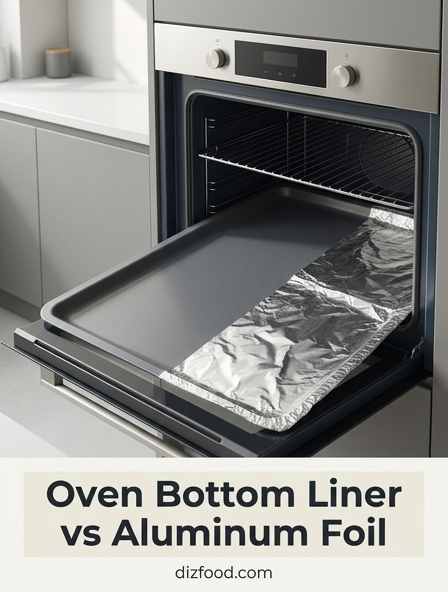
The Safety Risks of Aluminum Foil in Ovens
Using aluminum foil to line the bottom of an oven is a common household practice, yet it poses significant safety risks that many homeowners overlook. Most modern oven manufacturers explicitly warn against this practice because aluminum foil is not designed to withstand the direct, concentrated heat of an oven floor. When foil is placed directly on the bottom surface, it can trap heat underneath it, leading to a phenomenon known as thermal shock. This can cause the oven's porcelain enamel coating to crack, flake, or even permanently fuse with the foil, resulting in irreparable structural damage to the appliance.
Beyond structural damage, there is a serious risk of fire and carbon monoxide poisoning. In gas ovens, foil can easily block the airflow required for proper combustion. If the air vents are obstructed, the gas may not burn cleanly, leading to the accumulation of carbon monoxide, an odorless and deadly gas. In electric ovens, the foil's reflective surface can bounce heat back toward the heating elements, causing them to overheat and burn out prematurely. Key safety hazards include:
- Melting and bonding to the oven floor or heating elements.
- Obstruction of vital airflow and ventilation ports.
- Increased risk of grease fires due to uneven heat distribution.
- Potential for electrical shorts if foil touches exposed wiring or elements.
To ensure the longevity of your appliance and the safety of your home, it is essential to avoid the makeshift use of foil and instead opt for products specifically engineered for high-heat environments. Understanding these risks is the first step in maintaining a functional and hazard-free kitchen environment.
Why Oven Bottom Liners Outlast Foil
The durability of professional oven bottom liners is fundamentally superior to that of standard household aluminum foil. Foil is designed for temporary tasks, such as wrapping leftovers or covering a roasting pan, and it is inherently thin and prone to tearing. Once foil is exposed to the intense heat cycles of an oven, it becomes brittle and oxidizes, losing its structural integrity after just one or two uses. In contrast, oven liners are manufactured from heavy-duty materials like PTFE (Polytetrafluoroethylene) coated fiberglass, which can withstand temperatures up to 500 degrees Fahrenheit repeatedly without degrading.
While foil must be replaced every time a spill occurs, a high-quality liner is a semi-permanent kitchen fixture. These liners are engineered to be thick and flexible, allowing them to resist puncturing from falling utensils or heavy cookware. The specialized coating ensures that even the most stubborn, charred food residues do not bond to the material, allowing the liner to maintain its original condition for years. Consider the following durability factors:
- Tensile Strength: Liners do not crinkle, rip, or tear during the cleaning process.
- Heat Resistance: Liners are chemically stable at high temperatures, whereas foil can warp or melt.
- Chemical Inertia: Liners are resistant to the acidic components in food spills that cause foil to corrode.
By investing in a liner, you eliminate the constant cycle of cutting, fitting, and discarding foil. The longevity of these products ensures that they remain a reliable barrier against messes, providing consistent protection that foil simply cannot match over the long term.
Protecting Your Oven Floor from Spills
Spills and boilovers are inevitable in any active kitchen, whether it is bubbling cheese from a pizza or juice from a fruit pie. When these substances hit a hot oven floor, they instantly carbonize, creating smoke and a foul odor that can permeate the entire house. Oven bottom liners provide a comprehensive shield that covers the entire floor area, catching these drippings before they can reach the oven's surface. Because liners are slightly weighted and lie flat, they offer a more stable catching surface than crinkled foil, which often allows liquids to run off the edges and pool underneath.
The protective nature of a liner also prevents the "baked-on" effect that makes oven cleaning such a dreaded chore. Without protection, sugar-based or protein-heavy spills can chemically bond to the oven's enamel, requiring harsh abrasive scrubbers or toxic oven cleaners to remove. A liner acts as a sacrificial barrier; the spill lands on the non-stick surface, where it can sit safely until the oven cools down. This protection is vital for maintaining the aesthetic and functional quality of the appliance. Benefits of effective spill protection include:
- Prevents permanent staining and pitting of the porcelain floor.
- Reduces the amount of smoke generated during cooking sessions.
- Maintains the resale value of the appliance by keeping the interior pristine.
- Eliminates the need for the high-heat "self-clean" cycle, which can stress oven components.
Ultimately, the goal of using a protector is to make the cleanup process as passive as possible. With a liner in place, the oven floor remains untouched by grease and grime, ensuring that the internal environment remains sanitary and efficient for every meal prepared.
Heat Efficiency Differences Explained
The thermodynamics of an oven are finely tuned to ensure even cooking and accurate temperature control. Aluminum foil is highly reflective, and when placed on the bottom of an oven, it disrupts the intended heat flow. It can reflect heat back toward the bottom heating element or reflect it away from the food, leading to "cold spots" or unevenly cooked dishes. This reflection can also trick the oven's internal thermostat into sensing that the oven is hotter than it actually is, causing the heating elements to cycle off too early and resulting underbaked results.
Oven liners, particularly those with a matte or dark PTFE finish, are designed to work in harmony with the oven's convection and radiant heat patterns. These materials generally have a lower reflectivity index compared to shiny foil, allowing heat to be absorbed and radiated more evenly. This ensures that the temperature you set on the dial is the temperature actually reaching your food. The following table highlights the differences in thermal behavior between the two materials:
| Feature | Aluminum Foil | Oven Bottom Liner |
|---|---|---|
| Reflectivity | High (causes heat bounce-back) | Low (balanced heat absorption) |
| Airflow Impact | High (can block vents easily) | Minimal (customizable size) |
| Thermostat Accuracy | Often disrupted | Generally maintained |
| Heat Distribution | Uneven/Patchy | Consistent/Uniform |
Proper heat efficiency not only results in better-tasting food but also reduces energy consumption. When the oven operates at its peak thermal efficiency without the interference of reflective foil, it reaches the desired temperature faster and maintains it with less effort, saving both time and electricity over the life of the appliance.
Easy Cleaning with Reusable Oven Liners
One of the primary advantages of a reusable oven liner is the sheer ease of maintenance. When a spill occurs on a liner, the cleanup process is significantly simplified compared to the labor-intensive scrubbing required for a standard oven floor. Because these liners are manufactured with advanced non-stick coatings, even burnt-on sugars and grease can be wiped away with a damp cloth. In most cases, once the oven has cooled, the liner can simply be removed, rinsed under warm water in the sink, and placed back into the oven within minutes.
For more significant messes, such as a heavy overflow of casserole or sauce, most oven liners are dishwasher safe. This eliminates the need for manual scrubbing altogether. Instead of spending hours on your hands and knees using caustic chemicals that produce dangerous fumes, you can simply toss the liner in the bottom rack of your dishwasher. The cleaning routine typically follows these steps:
- Wait for the oven to cool completely before handling the liner.
- Lift the liner out of the oven, being careful not to spill loose crumbs.
- Wipe off excess debris with a soft sponge and mild soap.
- Rinse thoroughly or place in the dishwasher if the manufacturer allows.
- Dry the liner completely before reinstalling it to prevent moisture buildup.
This streamlined process encourages regular cleaning, which prevents the buildup of old grease that can eventually become a fire hazard. By making the task effortless, oven liners ensure that your kitchen remains hygienic and your oven remains in top-tier condition without the physical strain of traditional cleaning methods.
Potential Damage from Foil on Heating Elements
Electric ovens often have exposed heating elements located near the floor of the appliance. When users attempt to line the bottom with aluminum foil, there is a high probability that the foil will come into direct contact with these elements. This contact is extremely dangerous. Aluminum is an excellent conductor of electricity, and if the foil touches a live or damaged element, it can cause an immediate electrical arc. This can result in a loud pop, sparks, and the immediate failure of the heating element or the oven's control board.
Even if the foil does not cause a short circuit, the physical damage it can cause is significant. Foil has a relatively low melting point compared to the temperatures an oven element can reach during its heating cycle. If the foil melts onto the element, it creates a permanent "hot spot" where the heat cannot dissipate correctly. This localized overheating can lead to the element snapping or burning out. Common damage scenarios include:
- Pitting and scarring of the metal heating sheath.
- Permanent bonding of melted aluminum to the element surface.
- Blown fuses or tripped circuit breakers due to electrical interference.
- Voiding of the manufacturer's warranty due to improper use of materials.
Oven liners are designed to be placed on the lowest rack or safely tucked under hidden elements, depending on the oven type. Their thickness and material composition make them far less likely to move or blow around inside the oven, keeping them safely away from sensitive components. Protecting the heating elements is crucial for avoiding expensive repair bills and ensuring the appliance lasts for its intended lifespan.
Cost Comparison Over Time
At first glance, aluminum foil seems like the more economical choice because of its low entry price. A single roll of foil can be purchased for a few dollars and appears to offer multiple uses. However, when you calculate the frequency of replacement, the cost dynamics shift significantly. Because foil is thin and fragile, it must be replaced almost every time a spill occurs or every few baking sessions due to heat degradation. Over the course of a year, an active baker can easily go through several large rolls of foil purely for oven lining purposes.
A high-quality reusable oven liner typically costs between ten and twenty dollars. While this is higher than a single roll of foil, the liner is designed to last for several years with proper care. There are no recurring costs associated with a liner. When comparing the two options over a three-year period, the liner emerges as the clear financial winner. The following list breaks down the long-term cost benefits:
- Initial Investment: Foil (~$5) vs. Liner (~$15).
- Replacement Frequency: Foil (Weekly/Monthly) vs. Liner (Every 3-5 Years).
- Hidden Costs: Foil may lead to expensive enamel repairs or element replacements.
- Maintenance Savings: Liners reduce the need for expensive chemical oven cleaners.
When you account for the time saved in cleaning and the protection against appliance damage, the oven liner provides a much higher return on investment. It is a one-time purchase that pays for itself within the first few months of use, making it the smarter choice for budget-conscious homeowners who value efficiency and long-term savings.
Eco Friendly Oven Maintenance Solutions
In an era where reducing household waste is increasingly important, the choice between aluminum foil and a reusable liner has significant environmental implications. Aluminum foil is technically recyclable, but only if it is clean. Most foil used on the bottom of an oven is covered in baked-on grease, oils, and food particles, which makes it ineligible for recycling. Consequently, tons of soiled aluminum foil end up in landfills every year, where it takes centuries to break down. This creates a cycle of "single-use" waste that is entirely avoidable.
Reusable oven liners represent a sustainable alternative that aligns with a zero-waste lifestyle. By purchasing a single product that lasts for years, you significantly reduce your kitchen's carbon footprint. Furthermore, because liners are so easy to clean with just water and mild soap, they eliminate the need for harsh, aerosolized oven cleaners. These chemical cleaners often contain caustic soda and other volatile organic compounds (VOCs) that are harmful to both the indoor air quality and the wider environment. Environmental advantages include:
- Reduction in non-recyclable solid waste production.
- Decreased reliance on chemical-heavy cleaning agents.
- Lower energy consumption due to improved oven efficiency.
- Durability prevents the constant manufacturing and shipping of disposable rolls.
Choosing a reusable liner is a small but impactful change. It demonstrates a commitment to sustainable living by prioritizing longevity and reuse over the convenience of disposability. For the environmentally conscious cook, a liner is the only logical choice for maintaining a clean kitchen responsibly.
Compatibility with Gas and Electric Ovens
Understanding how protection works across different oven types is essential for safety. Gas and electric ovens distribute heat differently, and the placement of a protector must reflect these differences. In an electric oven with a hidden heating element, the liner is typically placed directly on the oven floor. However, if the element is exposed, the liner must be placed on the lowest wire rack to prevent direct contact. Foil is particularly dangerous in electric ovens because it can easily blow upward and touch the element, causing immediate damage.
Gas ovens present a different set of challenges. These ovens rely on a constant flow of air to feed the flame and vent the combustion byproducts. Most gas ovens have vents along the sides or back of the floor. Placing aluminum foil over these vents is a major safety hazard that can lead to inefficient heating and carbon monoxide buildup. Oven liners can be easily trimmed with household scissors to fit perfectly around these vents, ensuring the oven remains safe to operate. Compatibility considerations include:
- Gas Ovens: Always trim the liner to ensure no vents or airflow holes are covered.
- Electric (Hidden Element): Place the liner directly on the bottom of the oven.
- Electric (Exposed Element): Place the liner on the bottom rack, not the oven floor.
- Convection Ovens: Ensure the liner is heavy enough not to be moved by the internal fan.
Regardless of the oven type, the flexibility of the liner allows for a custom fit that foil cannot provide. Foil often crinkles and shifts, whereas a trimmed liner stays in place, providing consistent protection without interfering with the appliance's mechanical or thermal operations.
Choosing the Best Protection for Your Oven
When deciding between aluminum foil and a professional oven bottom liner, the evidence overwhelmingly favors the liner. While foil is a versatile tool for food preparation, it is poorly suited for the rigorous environment of an oven floor. Its tendency to melt, its interference with heat distribution, and its contribution to household waste make it a suboptimal and potentially dangerous choice. A professional liner, conversely, is a purpose-built tool designed to enhance the cooking experience while safeguarding the appliance.
To choose the best protection, consider the dimensions of your oven and the type of cooking you do most often. Look for liners that are BPA and PFOA-free to ensure that no harmful chemicals are released into your home at high temperatures. High-quality liners should be thick enough to feel substantial but flexible enough to be trimmed for a perfect fit. The ideal protection strategy involves:
- Selecting a liner with a high temperature rating (at least 500°F).
- Measuring your oven interior before purchasing to ensure maximum coverage.
- Trimming the liner to avoid blocking any air vents or touching heating elements.
- Committing to a quick wipe-down after every major spill to maintain the non-stick surface.
In conclusion, the small initial investment in a reusable oven liner pays dividends in safety, ease of cleaning, and appliance longevity. By moving away from the "quick fix" of aluminum foil and adopting a dedicated oven protector, you ensure that your kitchen remains a safe, efficient, and clean space for years to come. The superior performance of a liner makes it an essential accessory for any modern kitchen.

Comments