
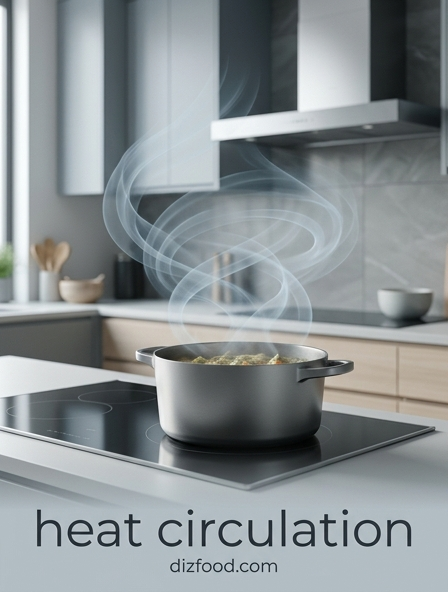
Understanding Airflow Dynamics
Effective heat circulation within a kitchen environment, particularly inside an oven, relies heavily on the principles of fluid dynamics. Air behaves as a fluid; as it is heated, it expands, becomes less dense, and rises. This natural buoyancy creates a cycle where cooler, denser air sinks to the bottom to be heated in turn. In a standard oven, this process is known as natural convection. However, without mechanical assistance, this process can be slow and uneven, leading to pockets of stagnant air.
Understanding these dynamics allows for better control over the cooking environment. When heat is trapped in corners or blocked by large solid objects, the thermal transfer to the food is compromised. To optimize this movement, one must consider the volume of the cooking chamber and how air interacts with the surfaces of the cookware. The goal is to facilitate a continuous loop of thermal energy that touches every surface area of the ingredient simultaneously.
- Natural Convection: Driven by temperature-induced density changes.
- Forced Convection: Driven by internal fans to accelerate heat transfer.
- Turbulence: Necessary for breaking the boundary layer of cool air around food.
Maximizing Convection Efficiency
Convection ovens are designed specifically to overcome the limitations of natural airflow by incorporating a fan system. This fan forces hot air to circulate rapidly, which significantly increases the rate of heat transfer through a process called impingement. By constantly moving the air, the oven strips away the "cold halo" or moisture envelope that naturally forms around cold food, allowing the heat to penetrate more deeply and quickly. This results in faster cooking times and more uniform browning.
To maximize this efficiency, it is crucial to understand the relationship between air velocity and surface area. Smaller, more frequent air movements are often more effective than one large, high-pressure blast. Using perforated trays or wire racks instead of solid baking sheets can further enhance this effect by allowing the forced air to reach the underside of the food. The following table illustrates the typical benefits of convection settings compared to standard radiant heat:
| Feature | Standard Radiant | Forced Convection |
|---|---|---|
| Cooking Speed | Baseline | 25% Faster |
| Browning | Uneven | Highly Uniform |
| Energy Use | Higher | Lower (via shorter times) |
Optimal Rack Placement Strategies
The positioning of oven racks is one of the most influential factors in heat circulation. Ovens are not uniform boxes of heat; they have distinct thermal zones based on where the heating elements are located. Most ovens have a primary element at the bottom and a secondary broiling element at the top. The middle rack is generally the "sweet spot" for most dishes because it allows for equal distance from both heat sources, facilitating balanced air movement above and below the dish.
For specific results, however, strategic placement is necessary. If you are seeking a crispy bottom crust for pizza or bread, the lower rack provides the most direct conductive and radiant heat. Conversely, the top rack is ideal for dishes that require rapid browning or caramelization. Proper placement ensures that the air has enough clearance to travel around the dish rather than being squeezed into a narrow gap, which can cause localized burning.
- Top Rack: Best for casseroles and browning toppings.
- Middle Rack: Standard for cakes, cookies, and general roasting.
- Bottom Rack: Ideal for roasting large meats or browning pastry crusts.
Reducing Cooking Energy Waste
Energy waste in the kitchen often stems from poor heat management and frequent interruptions of the airflow cycle. Every time the oven door is opened to check on food, the internal temperature can drop by as much as 25 to 50 degrees Fahrenheit. The heating element must then work overtime to recover that lost energy, which not only increases electricity or gas consumption but also disrupts the delicate balance of air circulation, leading to potential "fallen" baked goods or uneven textures.
To reduce this waste, cooks should rely on oven lights and windows rather than opening the door. Furthermore, ensuring the oven door seal is intact prevents precious thermal energy from leaking into the kitchen. Efficient cooking also involves matching the size of the cookware to the volume of the food, as heating large empty spaces is a primary source of energy loss. Following these steps can lead to a more sustainable kitchen environment:
- Utilize the oven window to monitor progress.
- Check and replace worn fiberglass or silicone door gaskets.
- Group multiple dishes together to maximize a single heating cycle.
- Preheat only for the required duration to avoid idle heating.
Impact of Clean Elements
The cleanliness of the heating elements and the interior walls of an oven plays a surprisingly large role in heat circulation. Over time, grease, carbonized food particles, and mineral deposits can build up on the heating coils or the infrared emitters. This buildup acts as an insulator, forcing the element to reach higher internal temperatures to emit the same amount of heat into the oven cavity. This not only stresses the appliance components but also creates "laggy" heat response times.
Moreover, the reflective surfaces of a clean oven interior help bounce radiant heat back toward the food. Dark, greasy walls absorb this energy instead of reflecting it, which can lead to inefficient heating patterns. Regular maintenance ensures that the thermal sensors can accurately read the ambient air temperature without being confused by the localized heat radiating from a crust of burnt cheese or drippings. A clean environment allows the air to move smoothly over surfaces without being diverted by physical debris, maintaining the integrity of the designed airflow path.
Consistent Temperature Distribution
Achieving a consistent temperature throughout the cooking chamber is the hallmark of professional-grade heat circulation. Most domestic ovens fluctuate in a wave-like pattern, turning the heat on and off to maintain an average temperature. To dampen these fluctuations, thermal mass can be utilized. Placing a baking stone or a heavy cast-iron pan on a lower rack can act as a thermal battery, absorbing heat and radiating it back steadily, which helps stabilize the air temperature even when the elements cycle off.
Another factor is the preheating phase. Many ovens signal they are ready based on the air temperature, but the walls and racks may still be cold. For true consistency, allowing the oven to "soak" for an extra ten minutes ensures that the entire structure is contributing to a stable thermal environment. This reduces the cold spots that occur when cold air is pulled in from the edges. Utilizing multiple thermometers can help a cook understand their specific appliance's unique distribution patterns, allowing for better adjustments during sensitive baking tasks.
Eliminating Oven Hot Spots
Almost every oven has hot spots-areas where heat concentrates due to the proximity of elements or the specific shape of the interior. These spots can cause one side of a tray of cookies to burn while the other remains doughy. To eliminate these issues, it is essential to understand where they are. A common diagnostic test involves placing slices of white bread across an entire rack and observing the browning pattern. Areas that brown first indicate the highest concentration of radiant heat or air convergence.
Once identified, these hot spots can be managed through rotation and shielding. If an oven is known to be hotter in the back-left corner, rotating the baking sheet 180 degrees halfway through the cooking time will equalize the exposure. Additionally, using heavy-duty pans can help distribute heat more evenly across the surface of the food, mitigating the effects of the air's uneven path. The following table summarizes common hot spot causes and their symptoms:
| Cause | Symptom | Solution |
|---|---|---|
| Proximity to Element | Burnt bottoms or tops | Adjust rack height |
| Blocked Vents | Soggy textures | Clear airflow path |
| Fan Turbulence | One-sided browning | Rotate pans regularly |
Proper Ventilation for Cooking
Heat circulation is not limited to the inside of the oven; it extends to the entire kitchen environment. Proper ventilation through range hoods and exhaust fans is critical for managing the heat, steam, and airborne grease generated during cooking. Without adequate ventilation, the kitchen can become overly humid, which affects the efficiency of heat transfer. Moist air holds more energy than dry air, but it can also prevent the crisping of food surfaces by maintaining a high vapor pressure around the dish.
Active ventilation pulls hot, contaminated air out and encourages the movement of fresh air. This is particularly important when using high-heat methods like searing or stir-frying. A well-designed ventilation system should be turned on several minutes before cooking begins to establish a clear upward draft. This prevents heat from mushrooming against the ceiling and spreading throughout the house, which can increase the load on air conditioning systems and degrade air quality. Proper maintenance of filters is also essential to ensure that the airflow remains unobstructed and the motor operates at peak efficiency.
Avoiding Airflow Obstructions
One of the most common mistakes in the kitchen is inadvertently blocking the path of heated air. Crowding the oven with too many dishes at once is a primary culprit. When the space between pans is less than an inch or two, the air is forced into narrow channels, speeding up in some areas and stagnating in others. This results in uneven cooking. Similarly, lining the bottom of the oven or the entire rack with aluminum foil to catch drips is a major obstruction that can permanently damage the appliance or cause a fire hazard by trapping heat where it shouldn't be.
To ensure optimal results, pans should be staggered so they are not directly above one another. This "staggered" formation allows the rising air to weave between the levels, ensuring every tray receives a similar volume of thermal energy. Furthermore, using low-sided pans rather than deep ones for roasting allows the air to sweep across the surface of the food more effectively. By maintaining "breathing room" around each vessel, you ensure that the convection currents designed by the manufacturer can function as intended.
Long Term Energy Savings
Adopting smart heat circulation habits leads to significant long-term energy savings and extends the lifespan of kitchen appliances. When an oven or stove operates efficiently, it reaches the desired temperature faster and maintains it with less effort. This reduces the total "on-time" for heating elements, which are often the most power-hungry components in a household. Investing in high-quality, high-conductivity cookware, such as copper or multi-clad stainless steel, also helps by ensuring that the heat provided by the air is quickly and evenly absorbed into the food.
Beyond hardware, behavior plays a massive role. Thawing food completely before cooking reduces the energy required to bridge the temperature gap, and using residual heat-turning the oven off five minutes early and letting the standing hot air finish the job-can save a surprising amount of electricity over a year. Consistent maintenance, such as cleaning and checking seals, prevents the "efficiency drift" that typically plagues older appliances. These small, cumulative actions create a more economical and environmentally friendly kitchen.
- Inspect door seals annually for cracks or leaks.
- Use residual heat for the final stage of cooking.
- Choose appropriately sized appliances for the task (e.g., toaster ovens for small items).

Comments