
Deciding between a high-tech steam mop and a trusty microfiber spray mop often comes down to balancing deep sanitization with everyday convenience. While steam mops use pressurized heat to kill 99.9% of bacteria and lift stubborn, stuck-on grime without harsh chemicals, they require a power outlet and can be risky for unsealed or delicate wood floors. Conversely, microfiber spray mops offer ultimate portability and precision, allowing you to control exactly how much moisture hits your surfaces, making them the safer, budget-friendly choice for quick spills and routine maintenance. Whether you are looking to sterilize tile grout or gently refresh your hardwoods, choosing the right tool depends on your floor's durability and how much "elbow grease" you are willing to trade for specialized cleaning power.
| Feature | Steam Mop | Microfiber Spray Mop |
|---|---|---|
| Cleaning Action | High-heat steam (Sanitizes) | Manual spray & mechanical scrubbing |
| Best For | Tile, stone, and sealed laminate | Hardwood, vinyl, and quick spills |
| Power Source | Electric (Corded/Requires outlet) | None (Manual/Always ready) |
| Chemical Use | Water only (Eco-friendly) | Water or specialized floor cleaners |
| Drying Time | Near-instant (High evaporation) | Fast to moderate (Depends on spray) |
| Price Range | $60 - $150+ | $20 - $45 |
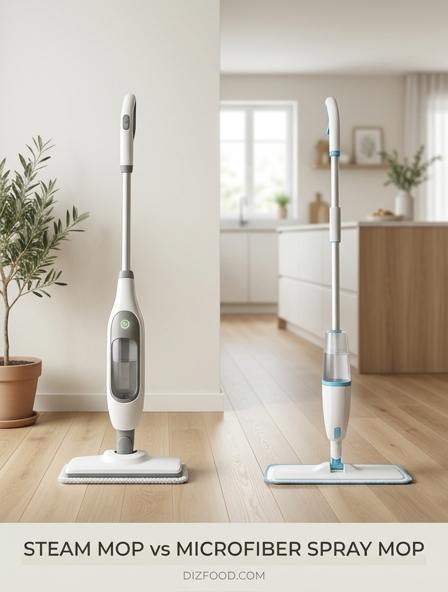
Steam Mop vs Spray Mop: Which Is Better for Your Floors?
Choosing between a steam mop and a microfiber spray mop often depends on the specific needs of your kitchen and the types of flooring installed. Both tools are designed to move away from the traditional "mop and bucket" method, offering a more hygienic and efficient way to maintain hard surfaces. Steam mops utilize electricity to heat water to high temperatures, creating a pressurized vapor that loosens dirt and kills bacteria. On the other hand, spray mops are purely mechanical, featuring a built-in reservoir for cleaning solution that is triggered by a manual handle.
The "better" option is usually determined by your tolerance for cords and your floor's sensitivity to heat. While steam mops provide a deeper level of sanitation, spray mops offer unparalleled agility for quick spills. Below is a high-level comparison of their primary characteristics:
- Energy Source: Steam mops require a power outlet; spray mops are cordless and manual.
- Cleaning Agent: Steam mops use plain water; spray mops use a mixture of water and floor detergent.
- Drying Time: Steam evaporates quickly, whereas spray mops may leave slightly more moisture depending on the solution used.
- Versatility: Spray mops are safe for almost any surface; steam mops require caution on unsealed or delicate floors.
Ultimately, a steam mop acts as a heavy-duty deep cleaner, while a spray mop serves as a convenient daily maintenance tool. If your kitchen sees heavy foot traffic and frequent grease buildup, the power of steam might be necessary. However, for a small apartment with mostly laminate, the spray mop is often the more practical choice.
Deep Cleaning Power: Steam Heat vs Microfiber Friction
The fundamental difference in cleaning efficacy between these two tools lies in how they break down grime. Steam mops leverage thermal energy. When water is heated to roughly 212 degrees Fahrenheit, it acts as a powerful solvent that melts through sticky kitchen grease, dried sauces, and embedded dirt in grout lines. The heat expands the dirt particles, making them easy for the attached pad to lift and trap. This process requires very little physical effort from the user, as the temperature does the heavy lifting.
In contrast, microfiber spray mops rely on chemical action and mechanical friction. The cleaning solution serves to loosen the bond between the debris and the floor, while the microscopic fibers of the mop pad grab onto the particles. To achieve a "deep" clean with a spray mop, the user often has to apply downward pressure and scrub back and forth over stubborn spots. While modern microfiber is highly effective at trapping dust and allergens, it cannot match the grease-cutting capability of pressurized steam.
For kitchen environments where oil splatters and sticky spills are common, the heat-based approach is superior. Steam effectively emulsifies fats that cold water and soap might simply smear around. However, for light dust and surface-level footprints, the friction of a high-quality microfiber pad is more than sufficient for a polished finish.
Floor Safety: Protecting Hardwood and Laminate From Damage
When it comes to floor longevity, the spray mop is generally considered the safer alternative, particularly for sensitive materials like hardwood, laminate, and luxury vinyl plank (LVP). These floors are often held together by adhesives or tongue-and-groove systems that are vulnerable to moisture and heat. A spray mop allows the user to control exactly how much liquid is applied. Because the water is at room temperature, there is no risk of warping the wood or causing the top layer of laminate to peel or "bubble."
Steam mops, while effective, pose a higher risk if used incorrectly. The intense heat can break down the finish on hardwood floors or penetrate the seams of laminate, leading to permanent structural damage. Many flooring manufacturers explicitly state that using a steam mop will void the warranty. However, for durable surfaces like ceramic tile, porcelain, or stone, steam is perfectly safe and highly recommended for cleaning porous grout lines.
If you choose to use a steam mop on wood, it is vital to follow these safety guidelines:
- Ensure the floor is properly sealed with no visible cracks or gaps.
- Never leave the steam mop idling in one spot while turned on.
- Use the lowest steam setting available for wood surfaces.
- Always check the manufacturer's care instructions for your specific flooring brand.
Sanitization Showdown: Killing Bacteria Without Harsh Chemicals
One of the strongest arguments for the steam mop is its ability to sanitize surfaces without the use of specialized detergents. For households that prioritize a chemical-free environment-especially those with toddlers crawling on the floor-steam is the gold standard. To effectively kill 99.9% of common household bacteria like E. coli and Salmonella, the steam must be held over an area for a specific duration (usually 10 to 15 seconds). This makes the steam mop an eco-friendly powerhouse that relies solely on tap or distilled water.
Spray mops, by definition, require a cleaning agent to be effective at killing germs. While you can use "green" or natural cleaners like diluted vinegar or castile soap, these do not always provide the same level of clinical sanitization as high-temperature steam. If you are using a standard floor cleaner in your spray mop, you are also introducing fragrances and surfactants into your home environment, which can leave a residue behind or trigger sensitivities in some individuals.
| Feature | Steam Mop | Spray Mop |
|---|---|---|
| Sanitization Method | High-Temperature Heat | Chemical Disinfectants |
| Residue | Zero (Water only) | Potential soapy film |
| Eco-Friendliness | Excellent | Varies by solution |
| Kill Rate | 99.9% (with contact) | Dependent on chemical |
Setup and Convenience: Which Mop Is Faster for Daily Spills?
In the fast-paced environment of a kitchen, convenience is king. This is where the microfiber spray mop shines. Because it is a non-electric, cordless tool, it is always "ready to go." If a child drops a spoonful of yogurt or a dog tracks in wet mud, you can simply grab the spray mop from the closet, pull the trigger, and wipe the mess away in seconds. There is no cord to untangle, no tank to wait for to heat up, and no need to find a nearby outlet. This makes the spray mop the ultimate tool for "spot cleaning."
Steam mops require a bit more preparation. First, you must fill the tank with water. Then, you have to plug the device in and wait anywhere from 30 seconds to two minutes for the boiler to reach the necessary temperature. While cleaning, you are tethered to a power cord, which can be frustrating if you are trying to navigate around a kitchen island or through multiple rooms. Furthermore, after you finish, you must wait for the unit to cool down before removing the pad and storing the device. For a full-house deep clean, the extra setup time is justifiable, but for a 10-second kitchen spill, the steam mop can feel like overkill.
Long Term Costs: Electric Power vs Cleaning Solutions
When evaluating the total cost of ownership, the spray mop and steam mop present different financial profiles. The initial purchase price of a steam mop is typically higher, ranging from $60 to $150, whereas a high-quality spray mop can be found for $20 to $40. However, the ongoing costs tell a different story. A steam mop primarily uses water and a small amount of electricity. If you use distilled water (highly recommended to prevent mineral buildup), that is your only recurring expense. The microfiber pads are usually washable and reusable for up to a year.
The spray mop may have a lower entry price, but the costs of cleaning solutions can add up quickly. Many spray mop brands use proprietary bottles that force you to buy their specific (and often expensive) refills. While some users "hack" these bottles or buy models with refillable reservoirs, you are still consistently purchasing liquid cleaners. Additionally, if you use disposable pads instead of washable microfiber ones, the daily cost of cleaning becomes significantly higher. Over a three-year period, a steam mop is often the more economical choice despite the higher upfront investment.
- Steam Mop: Higher initial cost, negligible refill cost, small electricity usage.
- Spray Mop: Lower initial cost, high recurring cost for solutions/disposable pads.
- Maintenance: Steam mops may require descaling; spray mops may require spray nozzle replacement.
Best for Pet Owners: Tackling Muddy Paws and Tough Grime
Pet owners face unique challenges in the kitchen, including shed fur, muddy paw prints, and the occasional "accident." For these users, the steam mop is frequently the preferred tool. The high-temperature steam does more than just clean; it deodorizes. It can neutralize pet odors trapped in floor crevices without masking them with artificial scents. Furthermore, the steam mop is highly effective at lifting dried-on mud or "kibble slobber" that has hardened on the tile overnight. Because it uses no chemicals, there is no risk of a pet licking a floor that still has wet, toxic cleaning residue on it.
However, the spray mop has one specific advantage for pet owners: hair management. A dry microfiber pad on a spray mop acts like a magnet for pet hair via static electricity. You can use the spray mop as a "dry sweep" first to gather the fur, then spray the solution to tackle the prints. If you use a steam mop on a floor covered in pet hair, the moisture often turns the hair into wet clumps that stick to the grout and become difficult to remove. For the best results, pet owners should always sweep or vacuum thoroughly before using a steam mop, whereas a spray mop can sometimes handle a "sweep and mop" in one fluid motion.
Maintenance Guide: Cleaning Pads and Water Tank Longevity
To keep either mop functioning at peak performance, regular maintenance is required. For steam mops, the biggest enemy is "hard water" or calcium buildup. Over time, mineral deposits can clog the internal heating element and the steam nozzles, leading to reduced pressure or total failure. Using distilled water is the best way to extend the life of the machine. Additionally, the water tank should be emptied after every use to prevent mold or musty smells from developing inside the reservoir.
Spray mops are mechanically simpler but still require care. The spray nozzle can become clogged if the cleaning solution is too thick or if it dries inside the orifice. It is a good practice to occasionally run warm water through the spray mechanism to keep it clear. For both types of mops, the microfiber pads must be laundered correctly. You should avoid using fabric softeners or bleach when washing microfiber, as these chemicals can coat the fibers and reduce their ability to absorb dirt or allow steam to pass through.
Common maintenance steps include:
- Rinsing the water tank after every cleaning session.
- Washing pads in warm water and air-drying them.
- Checking for nozzle clogs once a month.
- Descaling steam mops with a vinegar-water solution if steam output decreases.
Portability Comparison: Navigating Large Rooms and Tight Spaces
The physical design of the mop dictates how easy it is to use in a crowded kitchen. The spray mop is the undisputed winner in terms of portability and agility. Most spray mops are incredibly lightweight, often weighing less than 3 pounds when the reservoir is empty. Their swivel heads are usually very thin, allowing them to slide under baseboards, toe kicks beneath kitchen cabinets, and around the legs of dining chairs with ease. Because there is no cord, you have a 360-degree range of motion.
Steam mops are inherently heavier due to the internal boiler, water pump, and electrical components. A typical steam mop weighs between 6 and 10 pounds. This extra weight can make the mop feel "self-propelling" on smooth surfaces, but it makes carrying it up and down stairs or lifting it over transitions more difficult. The power cord is the most significant portability hurdle; you will inevitably find yourself stepping over it or having to unplug and move to a different outlet when moving from the kitchen to the laundry room. For large, open-concept kitchens, a long 20-foot cord might suffice, but in smaller, cluttered spaces, the cordless nature of the spray mop provides a much smoother experience.
Final Verdict: Selecting the Best Mop for Your Home Layout
The decision between a steam mop and a spray mop ultimately comes down to your floor type and your cleaning philosophy. If your kitchen features durable ceramic tile or stone and you are concerned about bacterial growth-especially with pets or children in the house-the steam mop is the superior investment. It provides a level of deep cleaning and sanitization that a manual spray mop simply cannot match, all while avoiding the use of harsh chemicals. It is the "heavy hitter" of floor care.
Conversely, if your home is filled with delicate hardwood or laminate, or if you simply want a tool that allows you to clean up a spill in under a minute, the microfiber spray mop is the more logical choice. It is safer for your floor's finish, easier to store, and requires no electrical outlet. Many homeowners actually find that the best solution is to own both: a spray mop for daily maintenance and "emergency" spills, and a steam mop for a thorough, once-a-week deep clean of the high-traffic areas.
Before buying, consider these three factors:
- Floor Sensitivity: Do you have unsealed wood or laminate? (Choose Spray).
- Hygiene Needs: Do you need to kill bacteria without chemicals? (Choose Steam).
- Budget: Are you willing to pay more upfront to save on refills later? (Choose Steam).

Comments