
Maintaining the perfect non-stick patina on your cast iron cookware is a labor of love, but the wrong cleaning tool can quickly strip away years of hard-earned polymerization. While traditional scrubbers-ranging from stiff nylon brushes to abrasive sponges-are often the go-to for daily messes, they can occasionally be too aggressive on a young seasoning layer. In contrast, the stainless steel chainmail scraper has surged in popularity because its smooth, rounded rings are specifically engineered to lift stubborn, carbonized food bits without gouging the iron's protective surface. Finding the right balance between "clean" and "protected" depends on the age of your skillet's seasoning and the intensity of the stuck-on grime you face after every meal.
| Feature | Chainmail Scraper | Standard Scrubber (Nylon/Bristle) |
|---|---|---|
| Seasoning Impact | Non-abrasive; glides over polymerized oil. | Abrasive; can chip or "sand" thin seasoning. |
| Material Durability | 316L Stainless Steel; lasts a lifetime. | Plastic or natural fibers; frays/melts over time. |
| Cleaning Power | High torque for burnt-on proteins/carbon. | Moderate; better for oily residues. |
| Hygiene & Care | Dishwasher safe; doesn't harbor bacteria. | Traps food particles; prone to mildew/odors. |
| Ergonomics | Flexible "cloth" feel; reaches tight corners. | Fixed handle; provides better leverage. |
| Cost Value | Higher upfront ($15+); zero replacement cost. | Low cost ($5); requires frequent replacement. |
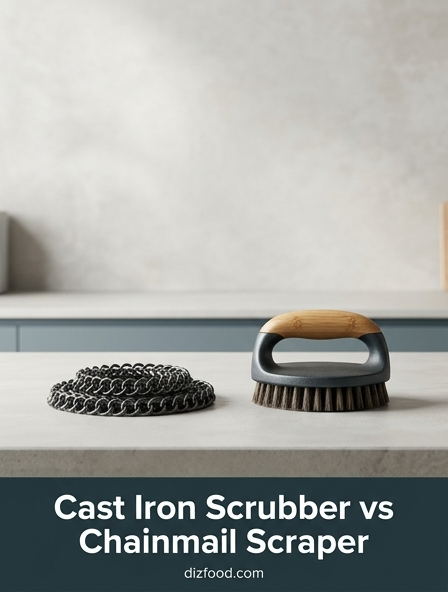
Cast Iron Scrubber vs Chainmail Scraper Comparison
When maintaining heirloom-quality cookware, the debate between a traditional cast iron scrubber and a specialized chainmail scraper often comes down to mechanical design and material composition. Traditional scrubbers frequently utilize abrasive fibers, stiff plastic bristles, or coiled copper, whereas a chainmail scraper is constructed from interlinked loops of high-grade stainless steel. The fundamental difference lies in how these tools interact with the polymerized oil layer, known as seasoning, that gives cast iron its non-stick properties.
| Feature | Chainmail Scraper | Traditional Scrubber |
|---|---|---|
| Material | 316L Stainless Steel | Polymer or Coiled Metal |
| Abrasiveness | Low (Smooth Rings) | Medium to High |
| Longevity | Decades | Months |
| Hygienic Properties | Dishwasher Safe | Traps Food Particles |
The chainmail scraper offers a unique tactile experience, allowing the user to feel the texture of the pan's surface through the metal mesh. This provides a high level of control that prevents over-scrubbing. Conversely, traditional scrubbers may offer a faster initial cleaning experience but often wear down quickly, losing their structural integrity after only a few months of heavy use. Choosing between them requires balancing the immediate need for speed against the long-term health of the cookware's surface.
Preserving Seasoning with Chainmail Scrapers vs Scrubbers
The primary goal of any cast iron enthusiast is to build a deep, dark patina of seasoning. Using the wrong tool can inadvertently strip this hard-earned layer, exposing the raw iron and leading to rust. Chainmail scrapers are specifically engineered to solve this problem. Because the rings are smooth and circular, they lack the sharp edges found in steel wool or heavy-duty green scouring pads. This allows them to glide over the seasoning while catching onto raised carbonized food bits.
- Surface Contact: Chainmail contacts the pan at specific points rather than a broad, abrasive plane.
- Chemical Interaction: Unlike sponges, chainmail does not require heavy detergents to be effective.
- Mechanical Action: The shifting rings adjust to the contours of the pan without digging into the base layer.
- Pressure Distribution: The weight of the metal mesh provides natural pressure that reduces the need for manual force.
Standard scrubbers, particularly those with synthetic fibers, can act like fine-grit sandpaper. Over time, consistent use of these abrasives can thin the seasoning, making the pan more prone to sticking. In contrast, the chainmail scraper acts more like a polisher. By removing only the unwanted residue and leaving the polymer intact, it helps the seasoning become smoother and more resilient over years of use. This preservation is critical for those who cook delicate items like eggs or fish in their cast iron.
Best Tool for Removing Burnt Food from Cast Iron
Burnt-on food is the ultimate test for any kitchen cleaning tool. When sugars or proteins carbonize and bond to the iron, they require a combination of heat, moisture, and mechanical friction to remove. The chainmail scraper excels in this scenario because of its "lifting" action. As the rings move across the surface, they get underneath the edges of the burnt debris, popping it off the surface rather than grinding it down into a paste as a sponge might do.
- Add a small amount of warm water to the pan while it is still slightly warm.
- Swirl the chainmail scraper in a circular motion over the affected areas.
- Rinse the pan to observe remaining spots and repeat with targeted pressure.
- Dry the pan thoroughly on the stovetop to prevent moisture retention.
Traditional scrubbers often struggle with heavy carbonization because their bristles or fibers lack the structural rigidity to displace hardened food. If the food is significantly burnt, a plastic scrubber will often melt or become clogged with grease, rendering it ineffective. The stainless steel rings of a chainmail scraper remain unaffected by heat and do not clog. This makes the chainmail tool the superior choice for heavy-duty restoration or for cleaning up after a high-heat searing session where fond has become excessively stuck to the bottom of the skillet.
Durability Battle Cast Iron Scrubber vs Chainmail Scraper
In terms of sustainability and long-term value, the chainmail scraper is the undisputed champion. Most traditional scrubbers are designed as consumables; they are meant to be used for a few weeks or months and then discarded. This leads to a continuous cycle of waste and recurring costs. A high-quality chainmail scraper, typically made from 316L surgical-grade stainless steel, is essentially a "buy it once" item that can last for several generations if cared for properly.
The durability of these tools can be assessed through several factors:
- Rust Resistance: Premium chainmail is corrosion-resistant, whereas steel wool pads rust within days of their first use.
- Structural Integrity: Plastic scrubbers suffer from "bristle splay," where the fibers flatten and lose cleaning power.
- Bacterial Resistance: Porous scrubbers host colonies of bacteria; stainless steel is non-porous and easy to sanitize.
- Environmental Impact: Chainmail generates zero microplastic waste, unlike synthetic sponges.
When you invest in a chainmail scraper, you are investing in a tool that will not fray, unravel, or lose its shape. Even when subjected to the intense scrubbing required for a neglected 12-inch Dutch oven, the rings maintain their circular form. This permanent nature makes it a favorite for outdoor cooks and campers who need a reliable tool that won't fail in the field. While the initial price point is higher than a pack of sponges, the cost-per-use drops to nearly zero over the lifespan of the tool.
How to Clean a Chainmail Scraper After Use
One of the most overlooked advantages of the chainmail scraper is how easily the tool itself can be cleaned. Traditional sponges and fiber scrubbers are notorious for trapping grease, food particles, and odors deep within their matrix. This often results in a "sour" smell that can be transferred back onto your cookware. Because the chainmail scraper is composed of individual open loops, there are no hidden crevices where organic matter can hide and decompose.
- Rinse the scraper under hot running water immediately after cleaning your pan to dislodge loose debris.
- Apply a drop of grease-cutting dish soap and rub the mesh against itself to create friction.
- For deep cleaning, place the scraper in the silverware caddy of your dishwasher.
- Hang the scraper by its corner ring to air dry completely before storage.
The ability to sanitize the scraper in a dishwasher is a significant hygiene benefit. High-temperature cycles effectively kill any lingering bacteria and strip away residual oils that might go rancid. Unlike plastic scrubbers, which can melt in the dishwasher, or copper scrubbers, which can degrade, stainless steel chainmail handles the heat with ease. This ensures that every time you go to clean your cast iron, you are using a sterile tool that won't introduce old flavors or harmful pathogens to your cooking surface.
Comparing Effectiveness on Stubborn Food Residue
Effectiveness in cleaning cast iron is measured by how much residue is removed relative to how much seasoning is preserved. Stubborn food residue, such as melted cheese or balsamic glazes, creates a sticky bond that resists standard agitation. In these instances, the "scrubbing profile" of the tool is vital. A traditional scrubber provides a soft, broad contact area, which is often insufficient for breaking the surface tension of caramelized proteins.
The chainmail scraper utilizes a "ball-bearing" effect. As you move the mesh, the individual rings roll and slide, creating multi-directional shear forces that catch the edges of residue from every angle. This is particularly effective in the corners of square griddle pans or the deep ridges of a grill pan. The metal provides a hardness that exceeds the hardness of the food residue but remains lower than the hardness of the polymerized oil and iron, ensuring a safe but aggressive clean.
Furthermore, the chainmail's flexibility allows it to bunch up into a ball for concentrated scrubbing or spread out flat to cover large surface areas. This versatility is something that rigid scrapers or standard brushes cannot replicate. When dealing with stubborn residue, the weight of the steel helps maintain contact without requiring the user to apply excessive downward force, reducing hand fatigue during long cleaning sessions.
Cast Iron Scrubber vs Chainmail Scraper Performance Review
In a head-to-head performance review, the chainmail scraper consistently outperforms traditional scrubbers in specialized kitchen environments. While a standard sponge or brush might be more "multi-purpose" for washing glassware or non-stick pans, the chainmail is a precision instrument for seasoned metal. Users often report that cleaning time for a standard skillet is cut in half when switching to chainmail, primarily because the tool doesn't "clog" with grease during the process.
| Metric | Standard Scrubber | Chainmail Scraper |
|---|---|---|
| Cleaning Speed | Moderate | Fast |
| Ease of Handling | High | Moderate (Requires Technique) |
| Detail Work | Low | High |
| Seasoning Safety | Variable | Excellent |
The performance review also highlights the sensory feedback of the chainmail. Because it is metal on metal, you can hear and feel when the pan is truly clean. The "gritty" sound of the rings hitting residue transitions into a smooth "glide" once the carbon is removed. This auditory feedback prevents unnecessary scrubbing. While some users find the feeling of metal on metal initially jarring, the efficiency gains usually outweigh the aesthetic preference for softer materials.
Why Chainmail is Better for Cast Iron Longevity
The longevity of a cast iron pan depends entirely on the stability of its surface. Every time a pan is cleaned with a harsh abrasive, a microscopic layer of the seasoning is removed. Over years of daily cooking, this can lead to a surface that is uneven or prone to "flaking." Chainmail is better for longevity because it respects the chemical bond of the seasoning. The rounded edges of the rings are physically incapable of gouging the iron, which prevents the start of "pitting" or rust spots.
- Non-Abrasive Nature: The lack of sharp edges ensures the patina remains thick and protective.
- Heat Tolerance: Chainmail can be used on a hot pan, allowing for "deglaze-style" cleaning that is more effective.
- Zero Residue: Synthetic scrubbers can leave behind micro-plastics or fibers that get baked into the next meal.
- Uniform Wear: It provides an even cleaning pressure that helps maintain a level cooking surface.
By using a tool that targets only the "high spots" (the food) and misses the "low spots" (the seasoning pores), you are effectively helping the pan self-level. This leads to a superior non-stick surface over the course of the pan's life. Professionals often recommend chainmail specifically for high-end or vintage pans where the preservation of the original casting texture is a priority. In the long run, the gentler mechanical action of the chainmail results in a more reliable and beautiful piece of cookware.
Choosing the Right Scraper for Your Cast Iron Skillet
Not all chainmail scrapers are created equal, and choosing the right one requires looking at the ring size and the weave pattern. Most scrapers come in two main varieties: the standard large-ring mesh and the fine-ring "premium" mesh. Large rings are excellent for heavy-duty Lodge-style pans with a rougher factory finish. They provide more "bite" and can move larger chunks of debris. Fine-ring scrapers are better for smooth-surface pans like those from Field Company or Smithey, as they provide a more delicate touch.
When selecting a tool, consider the following specifications:
- Ring Diameter: Usually 7mm to 10mm; smaller rings offer a denser cleaning surface.
- Edge Construction: Look for "welded" or "soldered" rings to ensure they won't pull apart under tension.
- Added Features: Some come with a silicone insert to provide a grip, which is helpful if the mesh feels too loose in your hand.
The size of the scraper also matters. A 4x4 inch square is usually sufficient for home kitchens, while an 8x6 inch version is better for large griddles or commercial-sized skillets. Choosing a scraper with a built-in hanging ring is a practical detail that ensures the tool can be stored in a way that promotes air drying, preventing any potential moisture issues in your utensil drawer.
The Pros and Cons of Chainmail Cleaning Tools
While the benefits of chainmail are numerous, a balanced view requires acknowledging its limitations. For most, the switch to chainmail is a revelation, but there is a slight learning curve involved in handling the loose mesh. It does not hold soap like a sponge does, so the cleaning technique relies more on the water and the metal itself rather than suds. Understanding these trade-offs helps in deciding if this tool fits your specific kitchen workflow.
Pros:
- Extremely long-lasting; virtually indestructible under normal kitchen conditions.
- Environmentally friendly and reduces household waste.
- Maintains the non-stick seasoning better than any other mechanical tool.
- Highly hygienic and very easy to sanitize in the dishwasher.
Cons:
- Higher initial cost compared to disposable sponges or plastic brushes.
- Can feel awkward to hold without a handle or silicone insert.
- Produce a metallic "scraping" sound that some find unpleasant.
- Not suitable for use on enameled cast iron or non-stick coated pans.
Ultimately, if you are a frequent user of cast iron, the pros heavily outweigh the cons. The chainmail scraper represents a return to traditional, durable kitchenware that prioritizes function and longevity over convenience and disposability. It is a tool designed to match the rugged nature of the cast iron it cleans, making it an essential component of a well-equipped kitchen.






Comments