
Understanding Cast Iron Seasoning and Polymerization
To appreciate the utility of a chainmail scraper, one must first understand the nature of cast iron seasoning. Seasoning is not merely a layer of grease; it is the result of polymerization, a chemical process where fats and oils are heated to their smoke point, causing them to transform into a hard, plastic-like substance that bonds to the metal surface. This creates a natural non-stick barrier that protects the iron from oxidation. Because this bond is covalent, it is remarkably resilient to mechanical friction but can be damaged by harsh chemical detergents or acidic environments.
- Polymerization: The cross-linking of lipid molecules into a solid film.
- Carbonization: The unwanted buildup of burnt food proteins, which differs from seasoning.
- Patina: The cumulative layers of polymerization that improve over years of use.
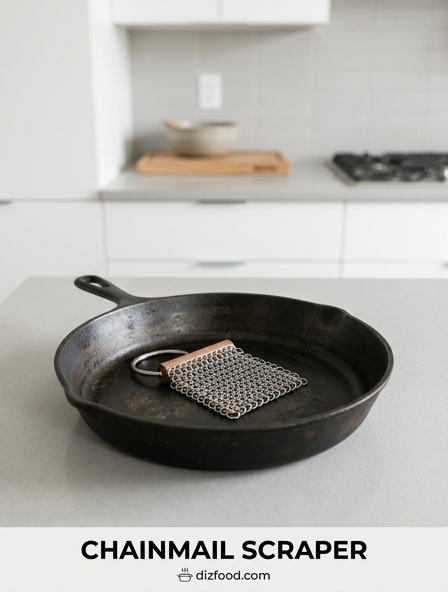
A chainmail scraper is specifically designed to interact with this chemistry. It provides enough physical force to dislodge carbonized food bits without possessing the sharp edges or chemical solvents required to strip the underlying polymerized layers. By maintaining this balance, the scraper helps refine the seasoning over time, making the cookware more effective with every use.
The Science of Abrasive Cleaning Without Stripping
The effectiveness of chainmail lies in the physics of its design. Unlike steel wool, which consists of fine, sharp-edged filaments that slice through seasoning, chainmail is composed of interconnected smooth, round rings. These rings distribute pressure across a broader surface area at each contact point. When you apply force to the scraper, the rounded edges of the 316-grade stainless steel roll over the hard, polymerized seasoning while catching on the irregular, protruding textures of stuck-on food. This selective abrasion is the key to its success.
Because the rings are flexible and shift as you move them, they conform to the unique contours and pockmarks of a cast iron or carbon steel pan. This ensures that the scraper reaches deep into the pebbled texture of modern cast iron without digging into the base metal. The lack of sharp points means that while the "crud" is lifted, the foundational seasoning remains intact. This mechanical advantage allows users to clean vigorously without the fear of exposing raw iron, which would necessitate a full re-seasoning process, saving both time and resources in the kitchen.
Why Chainmail Outperforms Sponges and Brushes
Standard kitchen tools often fail when confronted with the rugged surface of a cast iron skillet. Plastic brushes have bristles that melt or deform when exposed to heat, and their soft tips lack the rigidity to move stubborn, carbonized proteins. Sponges, on the other hand, are highly porous and prone to tearing on the rough surface of the iron. Furthermore, sponges often harbor bacteria and trap grease, becoming ineffective and unhygienic after only a few uses.
| Feature | Chainmail Scraper | Standard Sponge | Nylon Brush |
|---|---|---|---|
| Abrasive Power | High (Mechanical) | Low | Medium |
| Durability | Lifetime | 1-2 Weeks | 1-2 Months |
| Heat Resistance | Extreme | Low | Low/Medium |
| Sanitation | Dishwasher Safe | Bacteria Trap | Prone to Grease |
The chainmail scraper excels by offering a permanent solution. It does not absorb odors, it cannot be shredded by the iron's texture, and it can be used while the pan is still warm, which is the optimal time for cleaning. Its structural integrity ensures that it remains the most efficient tool for heavy-duty kitchen maintenance.
Preserving the Non-Stick Surface Integrity
The goal of using cast iron is to achieve a surface that rivals modern Teflon without the use of synthetic chemicals. Maintaining this integrity requires a cleaning method that acts as a polisher rather than a sander. When food burns onto a pan, it creates a microscopic "mountain range" of carbon. If these mountains are not removed, they become the anchor points for future sticking, eventually leading to a thick, flaky mess that ruins the non-stick properties of the cookware.
Chainmail acts as a leveling agent. By gliding over the surface, the rings gently knock down these carbon peaks. Over time, this action actually helps to smooth out the surface of the pan, assisting the seasoning in filling in the microscopic valleys of the iron. This dual action-removing the bad and preserving the good-ensures that the patina grows more uniform. A smooth, well-maintained seasoning layer allows for better heat distribution and superior food release, which is essential for delicate tasks like searing fish or frying eggs. The scraper is the guardian of this delicate balance, ensuring the pan stays slick and ready for the next meal.
Effortless Removal of Carbonized Food Particles
Carbonized food is the enemy of a well-performing kitchen. When sugars and proteins are subjected to high heat for too long, they bond stubbornly to the pan, creating a crust that is difficult to remove through soaking alone. The chainmail scraper provides a mechanical solution that minimizes the labor involved in this process. To effectively use the tool for carbon removal, follow these steps:
- Deglaze the pan with a small amount of warm water while the iron is still hand-hot.
- Drop the chainmail scraper into the pan and apply firm, circular pressure with your palm or a sponge.
- Focus on areas with visible darkening or textural irregularities.
- Rinse the pan and feel the surface with your fingers to ensure all grit is gone.
Because the stainless steel rings are non-reactive, they do not transfer metallic tastes to the food or the pan. The weight of the chainmail itself does much of the work, requiring less physical exertion from the user compared to scraping with a spatula or scouring with a pad. This efficiency makes post-dinner cleanup significantly less daunting, encouraging more frequent use of heavy-duty cookware.
The Hygiene Advantages of Stainless Steel
Hygiene is a paramount concern in any culinary environment. Traditional cleaning implements, such as sponges and wooden brushes, are organic or semi-porous, meaning they provide a fertile breeding ground for foodborne pathogens and mold. Because they stay damp for long periods, they can cross-contaminate surfaces. In contrast, a chainmail scraper is manufactured from high-quality stainless steel, a non-porous material that does not support the growth of bacteria or fungi.
The open-link design of the chainmail allows for total water flow and air circulation. Once used, it can be rinsed under a tap, and any trapped food particles simply fall through the gaps. For a deeper clean, the scraper can be tossed into the dishwasher or boiled in water without any risk of degradation. It dries almost instantly when hung by its ring, ensuring that it is completely sanitary the next time it touches your cookware. This level of cleanliness is particularly important when dealing with cast iron, as the pans are often cleaned without soap; knowing your primary cleaning tool is sterile provides peace of mind regarding food safety.
Durability and Sustainability of Metal Scrapers
In an era where kitchen waste is a significant environmental concern, the chainmail scraper stands out as a triumph of sustainable design. Most cleaning supplies are designed with built-in obsolescence; sponges are thrown away weekly, and plastic scrubbers eventually lose their bristles and end up in landfills. These items contribute to the global plastic crisis and require constant repurchasing, which is neither economical nor eco-friendly.
- Longevity: A single stainless steel scraper can last for decades, often outliving the user.
- Material: Stainless steel is 100% recyclable at the end of its very long life.
- Waste Reduction: Eliminates the need for dozens of disposable scrubbers per year.
The durability of the rings, which are often machine-welded to prevent breakage, means the tool can withstand immense pressure and high temperatures without failing. Investing in a chainmail scraper is a one-time purchase that supports a "buy it once" philosophy. By choosing a tool that does not degrade, kitchen enthusiasts reduce their environmental footprint while ensuring they always have a reliable, high-performance instrument at their disposal for daily maintenance.
Maintaining Surface Smoothness Over Time
The texture of a cast iron pan changes significantly with age and care. New pans, especially those that are sand-cast in modern factories, often have a pebbly, rough surface. While seasoning eventually fills these gaps, the mechanical action of cleaning plays a vital role in refining the surface. Using a chainmail scraper acts as a very mild form of burnishing. Every time the rings pass over the iron, they provide a gentle polishing effect that prevents the buildup of "old grease" that can become sticky and uneven.
Consistency is key to maintaining smoothness. By using the scraper after every use, you ensure that the seasoning grows in thin, dense, and even layers. An uneven surface not only causes food to stick but also leads to uneven heat distribution, as air pockets can form under thicker areas of carbonized buildup. The result of consistent chainmail maintenance is a pan that feels like glass to the touch. This smooth finish is the hallmark of a well-cared-for heirloom piece, allowing for superior culinary results and making the pan a joy to cook with regardless of the ingredients used.
Preventing Rust Through Effective Residue Removal
Rust is the primary threat to the longevity of cast iron. It occurs when moisture comes into contact with bare iron, initiating an oxidation reaction. While seasoning provides the primary defense, hidden food residue can trap moisture against the metal, leading to localized pitting and rust spots even on a seasoned pan. If food proteins are not fully removed, they can become hygroscopic, pulling moisture from the air and holding it against the surface of the skillet during storage.
The chainmail scraper is the most effective tool for ensuring that no such moisture-trapping debris remains. Because the rings are thorough at dislodging microscopic particles, they leave behind a truly clean surface. When you run your hand over a pan cleaned with chainmail, it should feel perfectly smooth, with no "tackiness." Removing this organic matter is a prerequisite for a dry, rust-free pan. By eliminating the microscopic reservoirs where water could hide, the scraper ensures that the protective oil layer applied after washing can form a continuous, unbroken seal over the iron, effectively mothballing the tool until its next use.
Combining Chainmail With Proper Post-Wash Care
While the chainmail scraper is a powerful tool for cleaning, its effectiveness is maximized when integrated into a comprehensive care routine. Cleaning is only the first step in maintaining high-performance cookware. Once the scraper has removed the food debris, the pan must be treated to ensure the seasoning remains robust and the metal remains protected. The process should be systematic to ensure the best results for your cast iron or carbon steel.
- Thorough Cleaning: Use the chainmail and warm water to remove all food traces.
- Complete Drying: Place the pan over a low stove burner for a few minutes to evaporate all residual moisture.
- Oil Application: While the pan is warm, apply a very thin layer of high-smoke-point oil (like grapeseed or flaxseed).
- Buffing: Wipe away the excess oil until the pan looks dry; only a microscopic layer should remain.
The chainmail scraper prepares the "canvas" for this maintenance. By providing a clean, level surface, it allows the new layer of oil to bond effectively during the drying phase. This synergy between mechanical cleaning and thermal protection is what creates a legendary non-stick surface that lasts for generations.




Comments