
Understanding Cast Iron Seasoning Science
To the casual cook, seasoning appears to be a simple layer of grease applied to a pan to prevent rust. However, from a scientific perspective, seasoning is a sophisticated example of chemical engineering occurring on your stovetop. It is the result of a process where liquid fats are converted into a hard, glass-like solid through the application of heat. This substance is not merely sitting on top of the metal; it is chemically bonded to the surface, creating a protective barrier that is both hydrophobic and remarkably durable. Unlike the grease used for sautéing, seasoned oil has undergone a fundamental molecular change, shifting from a collection of loose molecules into a structured network.
- Protects the iron from oxidation and rust.
- Creates a naturally slick surface for food release.
- Fills microscopic pores in the cast iron substrate.
- Increases the longevity and heat emissivity of the vessel.
The success of this science depends on the equilibrium between the type of oil used, the temperature applied, and the duration of the heating cycle. Without this transformation, cast iron remains a porous, reactive material that is prone to sticking and degradation. Understanding the shift from liquid to polymer is the key to mastering the kitchen's most versatile tool.
The Chemical Process of Polymerization
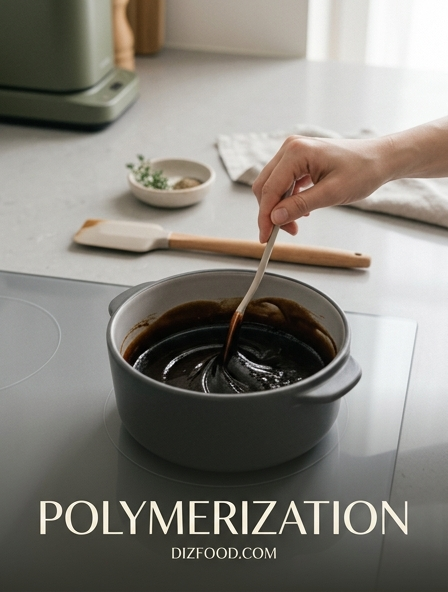
Polymerization is the core reaction that defines cast iron maintenance. It occurs when small molecules, known as monomers, undergo a chemical reaction to form long, repeating chains or three-dimensional networks called polymers. In the context of the kitchen, the monomers are the unsaturated fatty acids found in cooking oils. When these oils are heated in the presence of oxygen and the iron catalyst, they begin to break down and reform into a plastic-like coating. This is an oxidative polymerization process where oxygen acts as a bridge between the carbon chains, weaving them into a dense, solid matrix.
As the heat increases, the oil reaches its smoke point, and the molecules become highly reactive. They seek stability by linking with neighboring molecules. This cross-linking is what gives the seasoning its strength. The more cross-links that form, the harder and more resilient the resulting surface becomes. This transformation is irreversible; once the oil has polymerized into a solid state, it cannot be reverted back into a liquid oil through cooling or standard washing. The result is a synthetic-like coating derived entirely from organic fats, providing the foundational architecture of the pan's patina.
How Heat Transforms Liquid Oils
Heat serves as the primary catalyst for the metamorphosis of oil into seasoning. When oil is applied to a cold pan, it remains a viscous liquid. As the temperature rises, the kinetic energy of the molecules increases, causing them to vibrate and move more rapidly. Upon reaching a specific thermal threshold, usually just beyond the oil's smoke point, the fatty acid chains begin to crack and oxidize. This thermal decomposition is necessary for the transition to a solid state. Without sufficient heat, the oil simply becomes sticky or "gummy," a sign of incomplete polymerization where the molecules have started to link but have not yet formed a rigid, dry matrix.
| Oil Type | Smoke Point (approx.) | Seasoning Suitability |
|---|---|---|
| Flaxseed Oil | 225°F | High (Drying Oil) |
| Grapeseed Oil | 420°F | Excellent (High Polyunsaturates) |
| Canola Oil | 400°F | Good (Balanced Fats) |
| Lard | 370°F | Traditional (Saturated Focus) |
The heat must be maintained long enough for the volatile compounds to evaporate, leaving behind the heavy carbon-rich structures. This transformation is visually marked by the oil darkening and losing its sheen, indicating that the liquid phase has concluded and the solid polymer phase has begun.
The Role of Fatty Acids in Surface Bonding
The efficacy of a seasoning layer is largely determined by the fatty acid profile of the oil used. Specifically, polyunsaturated fatty acids are the most effective at polymerizing because they contain multiple double bonds in their molecular structure. These double bonds are "active sites" where oxygen can intervene to create links between different chains. Saturated fats, which lack these double bonds, are much more stable and therefore do not polymerize as readily or as strongly. This is why oils like flaxseed or grapeseed are often preferred over beef tallow or coconut oil for building a base layer.
Furthermore, the iron in the pan acts as a catalyst for this reaction. The metallic surface helps lower the activation energy required for the fatty acids to oxidize. As the oil polymerizes, it doesn't just sit on the iron; it anchors itself into the microscopic fissures and crags of the metal's surface. This mechanical and chemical bonding ensures that the seasoning does not flake off during the stresses of cooking. The relationship between the iron ions and the carboxylic groups in the fats creates a foundation that is far more robust than a simple coating of grease.
Building the Hardened Carbon Matrix
A single round of seasoning does not create a finished cooking surface; rather, it creates a microscopic foundation. To achieve a truly resilient finish, one must build a hardened carbon matrix through successive layers. Each application of oil adds a new stratum of polymers that fills in the gaps left by the previous layer. This additive process results in a dense, multi-layered structure that is significantly stronger than a single thick application. In fact, thin layers are essential because they allow for more uniform heating and better oxygen exposure during the polymerization process.
- Apply a microscopic layer of oil, wiping away all visible excess.
- Heat the vessel until the oil passes its smoke point and polymerizes.
- Allow the iron to cool slowly to stabilize the new molecular bonds.
- Repeat the process to build depth and durability.
Over time, as the pan is used for cooking, bits of carbonized food particles and additional fats integrate into this matrix. This creates a complex, carbon-reinforced polymer that can withstand high temperatures and mechanical scraping. The final result is a deep black patina that represents a history of chemical transformations, layered one on top of the other to form a resilient shield.
Why Polymerized Oil Creates Non-stick
The non-stick properties of seasoned cast iron are a direct result of surface chemistry and physics. Naturally, cast iron is a porous material with a high surface energy, meaning food molecules want to bind to it. Polymerization changes this by covering the iron with a low-energy, hydrophobic (water-repelling) film. Because the polymer is non-polar, it does not easily form bonds with the proteins and sugars in food, which are often polar. This lack of chemical attraction is what allows a fried egg to slide across the surface of a well-seasoned pan.
Additionally, the seasoning acts as a leveling agent. On a microscopic level, raw cast iron looks like a mountain range of peaks and valleys. When food cooks, it gets trapped in these valleys, leading to sticking. The polymerized oil fills these voids, creating a smooth, glassy plane. When heat is applied during cooking, a small amount of steam often forms between the food and the hydrophobic seasoning, further aiding in release. This combination of physical smoothness and chemical repulsion makes the polymerized surface a natural alternative to synthetic coatings like PTFE, provided the seasoning is maintained and kept intact through proper technique.
Durability of Molecularly Bonded Layers
The durability of a seasoned pan is often underestimated. Because the seasoning is a molecularly bonded polymer, it possesses significant structural integrity. It is resistant to many common kitchen stresses, including high heat, metal utensils, and mild surfactants. Once the carbon matrix has fully cured, it behaves more like a tough plastic than a layer of oil. This hardness is what allows seasoned iron to be scraped with a metal spatula without destroying the non-stick finish; the spatula is simply gliding over a surface that is harder than the food residue it is removing.
However, the durability is not infinite. The bonds can be broken by extreme chemical environments or physical abrasion. Strong acids, such as vinegar or heavy tomato sauces, can eventually dissolve the iron-polymer bond if left for extended periods. Similarly, while the layer is tough, it is thin; aggressive scrubbing with steel wool can mechanically strip the polymer from the iron substrate. The goal of maintenance is to ensure that the rate of new polymer formation during cooking exceeds the rate of wear and tear, keeping the molecular shield thick and protective over decades of use.
Optimal Temperatures for Effective Seasoning
Temperature control is the most critical variable when attempting to season cast iron. If the temperature is too low, the oil will not reach the activation energy required for polymerization, leaving the pan sticky and prone to rancidity. If the temperature is too high, the oil will skip the polymerization phase and move straight to carbonization, where the carbon chains break down completely into ash and soot. This results in a brittle, flaky seasoning that offers no protection and no non-stick benefit. The "sweet spot" for seasoning is generally 25 to 50 degrees Fahrenheit above the smoke point of the chosen oil.
- Under 300°F: Generally insufficient for most oils to begin cross-linking.
- 400°F - 500°F: The optimal range for most common vegetable oils to polymerize effectively.
- Over 600°F: Risk of breaking down existing seasoning and turning it into dry carbon.
Sustained heat is as important as the peak temperature. A pan should typically be held at the target temperature for at least 60 minutes. This allows the chemical reactions to complete across the entire surface area of the iron, ensuring that the polymer chains are fully formed and the volatile components have been completely driven off.
Maintaining Your Cast Iron Patina
Maintenance is essentially a continuous process of micro-polymerization. Every time you cook with fats at high temperatures, you are adding minute layers to the existing seasoning. This is why a pan that is used daily often performs better than one that is rarely used but was seasoned many times in an oven. The key to maintenance is "low and slow" accumulation. After cleaning, many enthusiasts recommend applying a very thin film of oil and heating the pan on the stovetop until it lightly smokes. This ensures any moisture is evaporated and a new, fresh layer of polymer is bonded to the surface.
Consistency is more important than perfection. Avoiding long soaks in water and ensuring the pan is dried immediately after use prevents the underlying iron from oxidizing, which would push the seasoning off from underneath. If the surface starts to look dull or feels "draggy" when cooking, it is a sign that the polymer layer has worn thin and requires a dedicated seasoning session. By treating the patina as a living, evolving chemical structure, you can maintain a surface that actually improves in quality and non-stick performance over several generations of kitchen use.
Science Based Cleaning for Seasoned Iron
There is a persistent myth that soap will ruin a seasoned pan. From a chemical standpoint, this is largely untrue for modern dish soaps. Traditional lye-based soaps could indeed strip seasoning because lye is a strong base that can break down the ester bonds in polymers. However, modern liquid dish soaps are mild surfactants designed to surround and lift away loose oils and fats, not to dissolve cross-linked solid polymers. If a pan is properly seasoned, a quick wash with soap will remove the liquid grease and food debris without affecting the hardened, bonded layer of seasoning underneath.
- Avoid abrasive scouring pads that can mechanically strip the polymer.
- Never put cast iron in a dishwasher, as the high heat and harsh detergents can cause delamination.
- Always dry the pan thoroughly to prevent "under-film" corrosion.
- Use salt as a gentle abrasive for stuck-on food to preserve the seasoning's integrity.
The real enemy of seasoning isn't soap, but moisture and time. Water left on the surface can find microscopic gaps in the seasoning and begin to rust the iron. Therefore, the best cleaning practice is to wash quickly, dry with heat, and apply a microscopic oil buffer to protect the polymer matrix until its next use.


Comments