
Whether you're a tea enthusiast or a culinary explorer, understanding the nuance between steeping and decoction is the secret to unlocking the full potential of your ingredients. Steeping is the gentle art of submersing delicate botanicals like leaves and petals in hot water to preserve volatile oils and subtle aromas without inducing bitterness. In contrast, decoction is a more intensive extraction method where "woody" ingredients-such as roots, bark, and seeds-are actively boiled to break down tough cellular structures and release deep-seated minerals and resins. By matching the technique to the structural density of your herbs, you can ensure every cup achieves the perfect balance of potency and flavor, maximizing the bioavailability of the plant's essential compounds.
| Feature | Steeping (Infusion) | Decoction |
|---|---|---|
| Core Process | Soaking in hot water (passive heat) | Simmering in boiling water (active heat) |
| Best Ingredients | Soft parts (leaves, flowers, green herbs) | Hard parts (roots, bark, seeds, berries) |
| Temperature | 70°C - 95°C (Below boiling) | 100°C+ (Continuous boil/simmer) |
| Extraction Time | 2-10 minutes | 20-40 minutes (plus reduction) |
| Flavor Profile | Light, aromatic, and volatile-rich | Robust, earthy, and highly concentrated |
| Main Benefit | Preserves delicate enzymes and oils | Maximizes mineral and resin solubility |
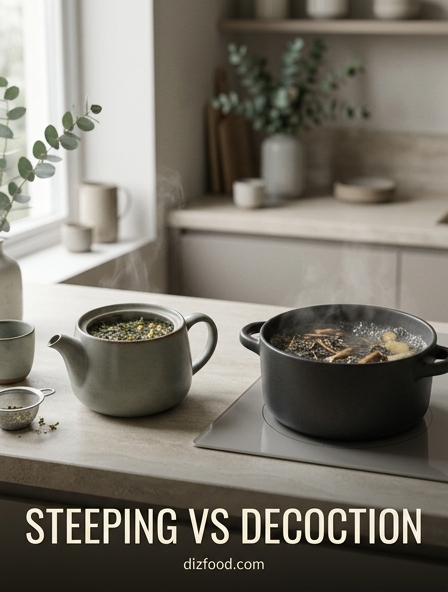
Understanding Steeping and Decoction Basics
In the culinary and herbal world, the methods used to extract flavor and medicinal properties from plant materials are fundamental to the quality of the final beverage. Steeping, often referred to as infusion, is the process of soaking botanical matter in a liquid-most commonly water-that has been heated but is no longer actively boiling. This method is passive, relying on the residual heat and time to gently coax out volatile oils and delicate nuances without damaging the structure of the plant. It is the gold standard for preparing most commercial teas and fresh herb garnishes.
Decoction, by contrast, is a more aggressive and active extraction process. It involves placing the plant material directly into cold water, bringing the mixture to a boil, and maintaining a simmer for an extended period. This method is designed to break down the tough, fibrous structures of certain ingredients that steeping cannot penetrate. While steeping is synonymous with elegance and subtlety, decoction is associated with strength and depth. Understanding these two pillars of liquid extraction is essential for any cook or herbalist looking to master the chemistry of the kitchen. The choice between them depends entirely on the physical characteristics of the ingredient and the desired concentration of the final liquid.
- Steeping: Best for soft tissues like leaves, flowers, and crushed berries.
- Decoction: Necessary for hard materials like bark, roots, seeds, and wood.
- Medium: Water is most common, but milk or oil can be used for steeping.
The Science of Heat Extraction
The transition of chemical compounds from a solid plant matrix into a liquid solvent is governed by the laws of thermodynamics and solubility. Heat acts as a catalyst, increasing the kinetic energy of water molecules, which allows them to collide with plant cell walls more forcefully. In the case of steeping, the temperature is usually calibrated to prevent the degradation of heat-sensitive polyphenols and tannins. When water is too hot, it can cause an over-extraction of bitter compounds, which is why green teas require lower temperatures than black teas. The goal is to reach a point of equilibrium where the water has absorbed the maximum amount of desirable flavor without becoming astringent.
Decoction operates on the principle of prolonged thermal agitation. Many beneficial compounds, such as alkaloids, mineral salts, and complex polysaccharides, are locked behind dense layers of lignin and cellulose. These structural barriers do not yield to a simple soak. By maintaining a constant boil, the cell walls are physically ruptured, allowing the solvent to reach the interior of the material. Furthermore, decoction often involves a reduction of the liquid volume, which concentrates the solutes. This results in a much thicker, more opaque, and potent liquid than what is achieved through steeping. The science suggests that for every ten-degree increase in temperature, the rate of chemical reaction roughly doubles, making the sustained heat of a decoction far more transformative than a cooling steep.
When to Choose Steeping Methods
Choosing to steep rather than boil is a decision rooted in the preservation of volatile aromatics. Most floral elements, such as chamomile, lavender, and hibiscus, contain essential oils that are highly susceptible to evaporation. If these materials were subjected to a decoction, the very scents and flavors that make them desirable would be carried away with the steam, leaving behind a flat and potentially unpalatable liquid. Steeping ensures that these delicate molecules remain trapped within the water, providing a sensory experience that is true to the plant's natural profile.
Additionally, steeping is the preferred method when the goal is a quick, refreshing beverage rather than a concentrated tonic. It is ideal for daily rituals where convenience is as important as quality. Because the extraction time is shorter, the cook has greater control over the intensity of the flavor. By simply removing the infuser or straining the liquid, the extraction stops immediately. This is particularly useful for delicate green or white teas where a difference of sixty seconds can be the difference between a sweet infusion and a bitter one. Use the following steps for an ideal steep:
- Heat water to the specific temperature required for the herb or tea type.
- Pour the hot water over the dry material in a vessel that can be covered.
- Allow the material to sit undisturbed for 3 to 7 minutes.
- Strain immediately to prevent the release of excess tannins.
Why Roots Require Herbal Decoction
Roots, bark, and woody stems are the structural anchors of the plant world, designed by nature to withstand environmental stressors and transport nutrients across long distances. They are composed of dense, fibrous networks that are largely waterproof. To extract the medicinal or culinary essence of items like ginger, cinnamon sticks, dandelion root, or burdock, a gentle soak is insufficient. These materials require the persistent force of boiling water to soften the fibers and dissolve the resins and gums that hold their most potent compounds. Without decoction, the water would remain clear, and the nutrients would remain trapped inside the discarded plant matter.
The process of decoction also facilitates the conversion of certain precursor compounds into their active forms through sustained heat. For example, some roots contain starches that need to be broken down into simpler sugars to provide the characteristic sweetness found in traditional herbal syrups. Moreover, the density of these materials means that the ratio of surface area to volume is low; boiling helps the water penetrate the core of the root chunks. While it takes more time and energy, the resulting decoction is a robust, dark, and nutrient-dense extract that carries the "soul" of the earth-bound parts of the plant, offering a depth of flavor that is unattainable through any other kitchen method.
Comparing Infusion and Boiling Times
Time is the most significant variable that differentiates steeping from decoction. In the kitchen, we often view time as a factor of convenience, but in extraction, it is a factor of yield. Steeping is a sprint, whereas decoction is a marathon. A standard tea infusion is measured in minutes, usually ranging from two to ten depending on the hardiness of the leaf. If left longer, the water begins to extract heavy tannins that mask the primary flavors. The cooling curve of the water also means that the rate of extraction slows down over time, creating a natural window for optimal flavor.
Decoction requires a commitment of time that often extends from twenty minutes to over an hour. Because the heat source is constant, the extraction does not slow down; rather, it intensifies as the liquid reduces. The following table provides a general guideline for timing based on the material being used in the kitchen:
| Material Type | Method | Standard Time |
|---|---|---|
| Fresh Mint/Leaves | Steeping | 3 - 5 Minutes |
| Dried Berries | Steeping | 7 - 10 Minutes |
| Dried Ginger Root | Decoction | 20 - 30 Minutes |
| Tree Bark (Cinnamon) | Decoction | 30 - 45 Minutes |
| Hard Seeds (Cardamom) | Decoction | 15 - 20 Minutes |
Flavor Profiles and Aromatic Differences
The sensory outcomes of steeping and decoction are vastly different, even when using the same plant material. Steeping produces a "top-note" heavy profile. It highlights the floral, citrusy, and bright attributes of an ingredient. The aroma is usually the first thing noticed, as the volatile oils are released gently into the air and the liquid. The mouthfeel of a steeped tea is typically light and clean, leaving little residue on the palate. This makes it an excellent accompaniment to meals or a refreshing standalone drink that doesn't overwhelm the senses.
Decoction, however, focuses on the "base-notes." The prolonged boiling drives off the light, floral aromas but unearths earthy, bittersweet, and umami flavors that are otherwise hidden. The texture of a decoction is noticeably heavier, often described as syrupy or "thick" due to the high concentration of dissolved solids and minerals. While a steeped ginger tea might taste spicy and bright, a ginger decoction will taste deep, woody, and intensely pungent. For culinary applications like stocks or medicinal syrups, decoction is the only way to achieve the necessary viscosity and flavor impact that can stand up to other strong ingredients or provide a therapeutic dose of the plant's constituents.
Maximizing Nutrient Density in Tea
To maximize the nutrient density of a beverage, one must understand what nutrients are being targeted. If the goal is to ingest Vitamin C or delicate antioxidants like EGCG found in green tea, steeping is the superior choice. High heat and prolonged boiling can denature these vitamins and oxidize antioxidants, rendering them less effective. In this context, "more" heat does not equal "better" nutrition. The key is to use water just below the boiling point and to cover the vessel to prevent the escape of steam, which can contain trace minerals and essential oils.
Conversely, if the goal is to extract minerals like magnesium, calcium, or iron, or to access the immune-supporting polysaccharides in mushrooms like Reishi or Chaga, decoction is non-negotiable. These elements are physically bound to the fiber of the plant and require the energy of a simmer to be liberated into the water. To maximize density in a decoction, many practitioners recommend a "double extraction" method, where the material is decocted first, and then allowed to steep as the liquid cools, ensuring that both the heat-stable and heat-sensitive components are captured. By matching the method to the nutrient, you ensure that your kitchen preparations are as functional as they are flavorful.
Best Tools for Each Process
The equipment used for steeping and decoction can significantly affect the purity and taste of the result. For steeping, the primary concern is insulation and ease of filtration. Ceramic, porcelain, and borosilicate glass are the preferred materials because they are non-reactive and do not leach metallic tastes into the delicate infusion. Infusion baskets should be large enough to allow the dried leaves to fully expand; cramped tea balls often result in a weak, uneven brew because water cannot circulate through the center of the compressed mass.
Decoction requires more rugged tools capable of withstanding direct, prolonged heat. Traditionally, clay or ceramic pots were used, particularly in Chinese medicine, because they provide even heat distribution and do not react with the acidic or alkaline compounds in roots. In the modern kitchen, stainless steel is the best alternative. One should strictly avoid aluminum or unlined copper pots for decoctions, as the long boiling time increases the risk of the metal leaching into the concentrated liquid, which can alter the flavor and cause toxicity. Use the following list as a guide for your kitchen setup:
- Steeping: French press, glass teapot with mesh strainer, or a ceramic gaiwan.
- Decoction: Heavy-bottomed stainless steel saucepan, ceramic Dutch oven, or specialized electric decoction pots.
- Accessories: A digital thermometer for steeping and a tight-fitting lid for both methods.
Common Mistakes in Herbal Preparation
One of the most frequent errors in the kitchen is treating all plant parts with a "one size fits all" approach to heat. Many people mistakenly boil delicate tea leaves, resulting in a bitter, astringent liquid that is difficult to drink. This happens because boiling water releases the heaviest tannins too quickly, overpowering the sweet and savory amino acids. Another common mistake is the failure to cover the vessel. Whether steeping or decocting, an open pot allows the "volatile" components-the very things that provide aroma and many health benefits-to escape into the kitchen air instead of staying in the cup.
In the realm of decoction, the most common mistake is starting with water that is already boiling. For roots and barks, it is better to start with cold water and bring it to a boil together with the herbs. This gradual heating allows the material to rehydrate and expand before the intense heat of the boil begins the extraction process. Additionally, people often fail to adjust the liquid volume; since decoction involves evaporation, you must start with significantly more water than you intend to end with. Following these corrective steps will improve the quality of your extractions:
- Match water temperature to the specific plant part.
- Always use a lid to trap steam and volatile oils.
- Start decoctions in cold water for deeper penetration.
- Avoid reusing material that has already been decocted, as its "essence" is likely spent.
Summary of Steeping vs Decoction Differences
In summary, the distinction between steeping and decoction is defined by the intensity of heat, the duration of the process, and the physical nature of the ingredients. Steeping is a gentle, subtractive process that preserves the delicate and aromatic qualities of leaves and flowers. It is a quick method that emphasizes clarity and subtlety. Decoction is a transformative, additive process that uses the power of boiling to unlock the dense nutritional and flavor profiles of roots, barks, and seeds. It is a slow method that results in a concentrated, robust, and potent extract.
For the home cook or herbal enthusiast, mastering both techniques allows for a full expression of the plant kingdom's potential. Whether you are looking for a light morning cup of white tea or a deeply grounding decoction of roasted dandelion root, knowing how to manipulate heat and time is the key to success. Refer to this summary table for a final comparison of the two kitchen techniques:
| Feature | Steeping (Infusion) | Decoction |
|---|---|---|
| Temperature | Off-boil (160°F - 200°F) | Active boil/simmer (212°F) |
| Plant Parts | Leaves, flowers, soft fruits | Roots, bark, seeds, twigs |
| Flavor Profile | Aromatic, light, floral | Earthy, bitter, concentrated |
| Liquid Change | Minimal volume change | Significant reduction/thickening |

Comments