
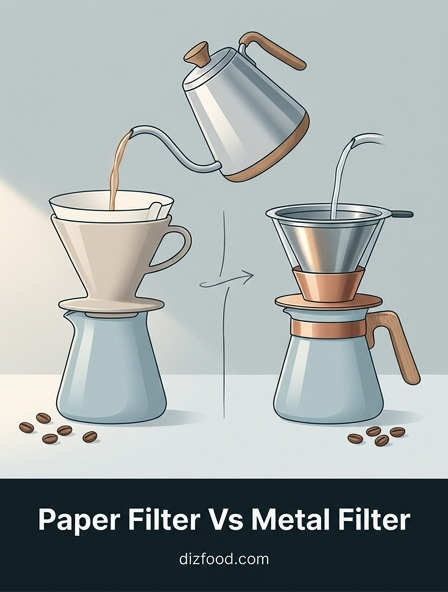
Choosing between a paper filter and a metal filter is the ultimate shortcut to customizing your morning brew's personality. If you're a fan of a "clean" cup, paper filters are your best friend; they are tightly woven to trap micro-fines and oily lipids, resulting in a bright, tea-like clarity that highlights subtle acidic notes. Conversely, metal filters-typically stainless steel-allow those natural coffee oils and tiny particles to pass through, rewarding you with a robust, full-bodied texture and a velvety mouthfeel similar to a traditional French Press. Whether you prioritize the crisp finish of a pour-over or the rich, lingering flavors of a bold roast, understanding these filtration mechanics is the secret to unlocking the best possible flavor in your coffee.
| Feature | Paper Filter | Metal Filter |
|---|---|---|
| Flavor Profile | Bright, crisp, and high clarity. | Bold, rich, and complex. |
| Body & Texture | Light body; tea-like consistency. | Heavy body; creamy mouthfeel. |
| Oil Retention | Absorbs most oils (cafestol). | Passes oils into the cup. |
| Sediment Level | Zero; removes all micro-fines. | Slight "silt" at the bottom. |
| Cleanup | Easy; disposable and compostable. | Requires thorough washing/rinsing. |
| Cost/Waste | Low upfront; recurring waste. | Higher upfront; zero-waste/reusable. |
The Fundamental Differences Between Paper and Metal Filters
At the core of the debate between paper and metal filters lies the physical structure of the filtration medium itself. Paper filters are typically manufactured from cellulose fibers, often sourced from trees or bamboo. These fibers are tightly woven to create a dense barrier that is remarkably efficient at trapping even the smallest particles. Because paper is a disposable medium, it is designed for single-use, offering a fresh, sterile surface for every brew. The thickness of these filters can vary significantly, ranging from the thin, bleached circles used in an AeroPress to the heavy, bonded sheets required for a Chemex.
In contrast, metal filters are permanent fixtures crafted from stainless steel or, occasionally, gold-plated mesh. These filters feature chemically etched or woven perforations that allow for a much higher degree of permeability. Unlike paper, which acts as an absorbent sponge, metal is non-reactive and non-absorbent. This fundamental difference in material properties dictates how water interacts with the coffee grounds and how the final liquid transitions from the brewer to the cup. While paper relies on a deep, dense matrix to catch debris, metal filters utilize a precise geometric surface to separate the spent grounds from the finished extract.
Impact of Paper vs Metal on Coffee Flavor Profiles
The choice of filter is perhaps the most significant variable in determining the final flavor profile of a cup of coffee. Paper filters are renowned for producing a "clean" cup. Because the cellulose fibers are highly absorbent, they trap most of the coffee's insoluble solids and oils. This results in a brew that highlights the coffee's acidity and brightness. If you are brewing a light-roasted Ethiopian Yirgacheffe, a paper filter will accentuate the delicate floral and citrus notes, allowing the nuanced aromatics to shine without interference.
Metal filters, however, offer a completely different sensory experience. Since metal cannot absorb oils, the lipid content of the coffee bean passes directly into the carafe. This yields a flavor profile that is often described as bold, earthy, and robust. The presence of these oils can mute high-end acidity while enhancing the perceived sweetness and chocolatey undertones of darker roasts. For those who prefer a "punchy" cup of coffee that lingers on the palate, metal is often the preferred choice. The following table summarizes these flavor distinctions:
| Feature | Paper Filter | Metal Filter |
|---|---|---|
| Acidity | High / Bright | Muted / Low |
| Clarity | Transparent / Crisp | Complex / Heavy |
| Sweetness | High (Fruit-like) | High (Caramel-like) |
Understanding Mouthfeel Body and Sediment Levels
Mouthfeel refers to the physical sensation of the coffee on the tongue, and this is where the distinction between filtration methods becomes most apparent. Paper filters are incredibly effective at removing "micro-fines"-tiny dust-like particles of coffee that are a byproduct of the grinding process. By removing these fines, paper produces a thin-bodied, tea-like consistency. This lack of sediment ensures a smooth, consistent texture from the first sip to the last drop, preventing the "muddy" sensation often found at the bottom of a cup.
Metal filters are designed with larger pore sizes, which inevitably allow some micro-fines to pass through. These particles remain suspended in the liquid, contributing to a heavy, velvety, and rich body. This is often referred to as "texture." While this adds a satisfying weight to the brew, it also results in a visible layer of silt or sediment at the bottom of the mug. For many enthusiasts, this sediment is a hallmark of a traditional, full-bodied brew, reminiscent of a French press. However, for those who prefer a sharp and refined texture, the presence of these solids can be perceived as a flaw. Ultimately, the "better" body is subjective, depending on whether one prefers the elegance of a clear broth or the richness of a hearty stew.
The Role of Coffee Oils and Health Considerations
Coffee contains natural oils known as diterpenes, specifically cafestol and kahweol. These compounds are largely responsible for the aromatic complexity and "creaminess" of the beverage. Beyond flavor, these oils have been the subject of various nutritional studies. Paper filters are exceptionally good at sequestering these oils; research indicates that a paper filter can remove up to 95% of these diterpenes. For individuals who are monitoring their cholesterol levels, paper filtration is often recommended by health professionals, as these specific oils have been linked to increases in LDL (bad) cholesterol.
On the other hand, metal filters allow these oils to pass through unhindered. This is why coffee brewed through metal often has a shimmering, oily sheen on the surface. While these oils carry significant flavor and antioxidant properties, their presence may be a concern for those with specific dietary restrictions. It is important to note that for the average healthy adult, the amount of cafestol consumed via a metal filter is generally considered negligible in the context of a balanced diet. However, the choice between filters allows consumers to align their morning ritual with their personal health goals. Choosing metal preserves the coffee's natural chemical makeup, while paper acts as a selective barrier that alters the brew's nutritional profile.
Sustainability and Environmental Impact Comparison
When evaluating the environmental footprint of coffee filtration, there is no simple answer, as both methods have distinct ecological trade-offs. Paper filters are biodegradable and compostable, making them an excellent choice for gardeners who wish to return nutrients to the soil. However, the environmental cost of paper lies in its production cycle. The manufacturing process involves:
- Deforestation or commercial timber harvesting for wood pulp.
- Chemical bleaching processes (in the case of white filters) which can release dioxins.
- Extensive energy and water consumption during the milling phase.
- Transportation emissions from shipping bulky, disposable items to retailers.
Long Term Cost Analysis of Reusable vs Disposable
From a financial perspective, the decision between paper and metal is a classic study in "upfront cost versus recurring expense." Paper filters are inexpensive in the short term, typically costing between $0.02 and $0.10 per brew depending on the brand and quality. While this seems marginal, a daily coffee drinker will spend between $15 and $35 annually on filters. Over five to ten years, these costs accumulate into hundreds of dollars, making paper a more expensive option for the long-term domestic brewer.
A high-quality stainless steel filter usually carries an initial price tag of $20 to $60. While this is significantly more expensive than a single box of 100 paper filters, it represents a one-time investment. If properly cared for, a metal filter can last a lifetime.
- Year 1: Metal filter ($30) vs. Paper filters ($25).
- Year 5: Metal filter ($30 total) vs. Paper filters ($125 total).
- Year 10: Metal filter ($30 total) vs. Paper filters ($250 total).
Cleaning Maintenance and Daily Convenience Factors
Convenience is often the deciding factor for the busy home cook or professional. Paper filters are the undisputed champions of ease-of-use. Once the brewing process is complete, the user simply lifts the filter-grounds and all-and tosses it into the compost or trash bin. The brewer itself usually requires nothing more than a quick rinse, as the paper has prevented oils and fines from coating the walls of the equipment. This "toss-and-go" workflow is ideal for office environments or rushed mornings.
Metal filters require a more involved maintenance routine. After brewing, the wet grounds must be knocked out into a bin, and the filter must be thoroughly scrubbed with warm, soapy water. If oils are allowed to build up within the fine mesh, they will eventually go rancid, imparting a sour, metallic, or fishy taste to future brews. Additionally, metal filters can occasionally become "blinded" (clogged) by micro-fines, requiring a deep soak in a specialized espresso detergent or vinegar solution to restore flow. For those who enjoy the ritual of cleaning and maintaining their tools, this is a minor chore. For those who view cleaning as a deterrent, the high maintenance of metal may lead to a degraded coffee experience over time.
How Filter Choice Affects Specific Brewing Methods
The efficacy of a filter often depends on the brewing device it is paired with. Some methods are synonymous with specific filter types, while others allow for experimentation. The Chemex, for instance, is famous for its proprietary thick bonded paper filters. Using a metal filter in a Chemex fundamentally changes the nature of the device, turning a light, bright brewer into something closer to a standard drip machine. Conversely, the French Press is designed specifically for a coarse metal mesh; using a paper insert here would likely lead to a stalled brew due to the lack of pressure.
The Hario V60 and AeroPress offer the most flexibility. V60 users often prefer paper to maintain the "V-shaped" flow rate and highlight acidity. However, many AeroPress fans have switched to metal disks because they are easier to travel with and allow for a more concentrated, espresso-like body. When selecting a filter, you must consider the "intended" physics of your brewer. A metal filter in a slow-drip pour-over may result in a brew that finishes too quickly because it lacks the resistance provided by paper, leading to under-extraction unless the grind size is adjusted significantly finer to compensate.
The Science of Micron Filtration in Coffee
To understand why these filters perform differently, we must look at the science of micron ratings. A micron is one-thousandth of a millimeter. Standard paper coffee filters generally have a pore size ranging from 10 to 20 microns. This is small enough to capture almost all solid matter and even large molecules like oils. This tight filtration creates a high level of hydraulic resistance, which is why paper-filtered coffee takes longer to "draw down" than coffee flowing through an empty vessel. The paper becomes part of the resistance bed alongside the coffee grounds themselves.
Metal filters typically have much larger openings, ranging from 60 to 150 microns. Even the "ultra-fine" woven meshes are significantly more porous than cellulose paper. Because the holes are larger, water passes through the filter more freely, and the responsibility for flow-rate regulation shifts almost entirely to the grind size of the coffee. If the grind is too coarse, the water will rush through the metal mesh without extracting enough flavor. If the grind is too fine, the micro-fines will clog the 100-micron holes, causing a "choke." Achieving a perfect brew with metal requires a more precise understanding of grind geometry to ensure that the lack of micron-level filtration doesn't result in a watery or over-extracted cup.
Final Verdict Choosing the Right Filter for Your Brew
Ultimately, the choice between paper and metal filters is a trade-off between clarity and body, convenience and sustainability, and short-term savings versus long-term investment. Neither is objectively superior; rather, they serve different masters of the kitchen. If you are a coffee "purist" who seeks to identify the specific terroir and delicate notes of high-altitude beans, or if you prefer a streamlined cleaning routine, paper filters are your best ally. They provide a reliable, consistent, and clinically clean result that lets the acidity of the bean take center stage.
However, if you value a rich, tactile mouthfeel and want to experience the full spectrum of oils and flavors inherent in the coffee bean, a metal filter is the way to go. It is also the superior choice for the environmentally conscious consumer who is willing to trade a few minutes of cleaning time for a zero-waste lifestyle. Many enthusiasts find the middle ground by owning both: using paper for their morning pour-over and a metal-filtered method like the French press for a weekend brunch. By understanding the mechanical and chemical differences between these two media, you can tailor your brewing process to match your palate, your health needs, and your kitchen habits perfectly.




Comments