
Choosing the right no-rinse sanitizer is essential for maintaining a professional-grade, bacteria-free kitchen, and the debate usually boils down to Star San versus Iodophor. While both are highly effective at eliminating microbes within minutes, they offer distinct user experiences: Star San is a phosphoric acid-based foaming agent beloved for its long-term stability and reusability, whereas Iodophor utilizes iodine for a quick, non-foaming kill that leaves zero residue. Whether you are deep-cleaning fermentation equipment or simply ensuring your countertops are food-safe, understanding the trade-offs between Star San's bubbly longevity and Iodophor's precision performance will help you pick the best tool for your sanitization routine.
| Feature | Star San | Iodophor |
|---|---|---|
| Active Ingredient | Phosphoric Acid | Iodine |
| Contact Time | 1-2 Minutes | 1-2 Minutes |
| Foam Level | High (Clings to surfaces) | Low / Non-foaming |
| Shelf Life (Mixed) | Days to Weeks (if pH < 3) | ~24 Hours (Degrades in light) |
| Staining Risk | None | High (Stains plastic & clothes) |
| Best Application | Spray bottles & long storage | Quick soaking & non-foam needs |
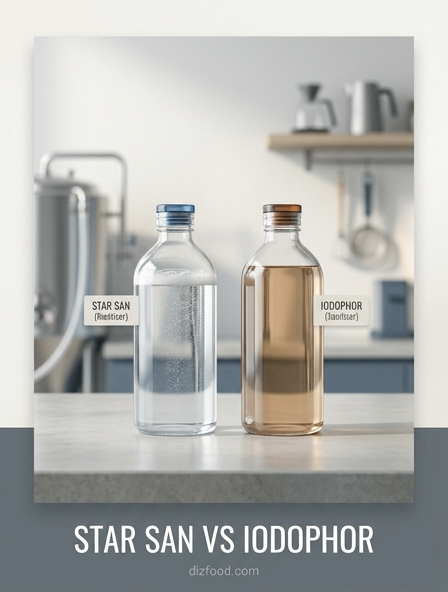
Choosing the Best Sanitizer: Star San vs Iodophor
In the world of homebrewing and professional kitchen sanitation, the debate between Star San and Iodophor is a foundational topic. Both products serve the critical role of ensuring that equipment is free from harmful microbes that could spoil a batch of beer or contaminate food. Star San is an acid-based sanitizer, primarily composed of phosphoric acid and dodecylbenzenesulfonic acid, which creates a high-foaming, low-pH environment that is lethal to bacteria and wild yeast. On the other hand, Iodophor utilizes an iodine-based complex to provide broad-spectrum antimicrobial activity through oxidation. Choosing between them often comes down to specific workflow preferences and the types of materials being sanitized.
While both are highly effective, they offer different user experiences. Star San is favored for its longevity and its ability to remain effective even when stored in a sealed container for several weeks. Iodophor is often the choice for those who want a quick, non-foaming solution that leaves no doubt about its presence due to its distinct amber color. When making a selection, consider the following primary factors:
- Material sensitivity of your equipment
- Local water hardness and pH levels
- Personal preference regarding foaming action
- Storage requirements and usage frequency
- Tolerance for potential staining of plastic components
Ultimately, both sanitizers are "no-rinse" when used at the proper concentrations, making them invaluable for maintaining a sterile environment without the risk of recontaminating surfaces with tap water after the cleaning process is complete.
Understanding Contact Time and Effectiveness
The efficacy of any sanitizer is strictly governed by contact time, which is the duration a surface must remain wet with the solution to achieve a 99.999% reduction in the microbial population. Star San is remarkably fast-acting; while the manufacturer technically recommends a longer soak, practical experience and various studies suggest that it can achieve complete sanitization in as little as 30 to 60 seconds. This makes it ideal for spray bottles and quick dunks of spoons or thermometers. Because it is a surfactant-based product, it clings to surfaces, ensuring that the acidic environment persists long enough to disrupt the cell membranes of pathogens.
Iodophor generally requires a slightly longer contact time to ensure total microbial kill, typically recommended at two minutes of exposure. However, it is exceptionally effective against a wide range of microorganisms, including some resistant strains that might survive milder cleaners. The effectiveness of both products is contingent upon the surface being visibly clean before application. Sanitizers are not detergents; they cannot penetrate layers of organic soil or "krausen" left behind from a previous fermentation. To maximize effectiveness, ensure all equipment is scrubbed and rinsed before applying these solutions. Using the following guidelines can help ensure success:
- Thoroughly clean the surface to remove all organic debris.
- Apply the sanitizer via submersion, spraying, or circulating.
- Ensure the surface remains fully wetted for the entire duration.
- Drain excess solution but do not rinse with water.
The Pros and Cons of Acid-Based vs Iodine Sanitizers
Choosing between an acid-based sanitizer like Star San and an iodine-based one like Iodophor involves weighing several trade-offs. Star San's primary advantage is its reusability. As long as the pH remains below 3.0 and the solution stays clear, it can be saved and used multiple times, which provides excellent value over time. Its high foaming action is also a benefit for many, as the foam can reach into small crevices and the interior of tubing where liquid might not easily flow. However, the foam can be a nuisance when filling carboys or kegs, as it can be difficult to displace.
Iodophor is praised for its reliability and its "see-it-to-believe-it" nature. If the water is still amber, it is generally still active. It does not foam, making it much easier to use in applications like bottle filling or when using a pump to circulate sanitizer through a draft system. On the downside, Iodophor can stain plastic and silicone over time, giving your equipment a yellowish or orange tint. It also has a shorter shelf life once diluted compared to Star San. A summary of the comparison is provided below:
| Feature | Star San (Acid) | Iodophor (Iodine) |
|---|---|---|
| Foaming | High | None to Low |
| Reusability | Excellent (if pH < 3) | Limited (loses potency) |
| Staining | None | Significant on plastics |
| Odor | None | Slight medicinal scent |
No-Rinse Performance in Homebrewing
The "no-rinse" aspect of these sanitizers is perhaps their most vital feature for homebrewers. Rinsing a sanitized surface with tap water introduces the risk of recontamination from water-borne bacteria or minerals. Star San is famous for the phrase "don't fear the foam." When the diluted solution comes into contact with wort or beer, the phosphoric acid is neutralized and actually acts as a yeast nutrient. The bubbles do not affect the flavor, head retention, or aroma of the finished beverage. This allows brewers to rack beer directly onto a bed of foam without any negative consequences, ensuring the vessel remains sterile until it is sealed.
Iodophor is also a no-rinse sanitizer when diluted to the proper concentration of 12.5 to 25 ppm (parts per million). At this level, it is safe for food-contact surfaces and will not impart an iodine taste to the beer or food. The iodine simply evaporates or is diluted to negligible levels by the incoming liquid. However, if the concentration exceeds 25 ppm, it must be rinsed, which defeats the purpose of using it in the final stages of brewing. Both products rely on the principle that a thin film of sanitizer is harmless to the consumer but deadly to microscopic organisms. This performance reliability is what allows for consistent results in the kitchen and the brewery, provided the user trusts the chemistry and resists the urge to rinse.
Comparing Shelf Life and Solution Stability
Stability is where Star San typically outperforms Iodophor. When Star San is mixed with distilled or deionized water, it can remain stable and effective for many months. The critical metric for Star San is the pH level; as long as the pH remains at or below 3.0, the solution remains active. Brewers often keep a five-gallon bucket of Star San or a spray bottle on hand for quick tasks, checking the clarity of the liquid as an indicator. If the solution turns cloudy, it usually means the minerals in the water have neutralized the acid, and the solution should be discarded.
Iodophor is much less stable once it has been diluted. The iodine in the solution is prone to sublimation, meaning it escapes into the air as a gas. This causes the solution to lose its effectiveness relatively quickly, often within 24 hours if left in an open container. Even in a sealed container, Iodophor rarely remains effective for more than a few days. You can tell if Iodophor is still active by its color; once the distinct amber hue fades to clear, the iodine concentration has dropped below the effective sanitizing threshold. For this reason, Iodophor is best mixed in small batches for immediate use, whereas Star San is better suited for those who want a long-term sanitizing reservoir available in their kitchen or brewery workspace.
The Staining Factor: Iodophor vs Clear Sanitizers
For many users, the primary deterrent for using Iodophor is its propensity to stain. Iodine is a powerful dye, and at sanitizing concentrations, it will eventually turn clear plastic fermenters, vinyl tubing, and silicone gaskets a permanent shade of orange or light brown. While this staining is purely cosmetic and does not affect the functionality of the equipment, it can make it difficult to visually inspect gear for cleanliness. For those who take pride in the pristine, clear appearance of their high-end plastic or glass equipment, this can be a significant drawback. Furthermore, if spilled on countertops or clothing, Iodophor can leave difficult-to-remove marks.
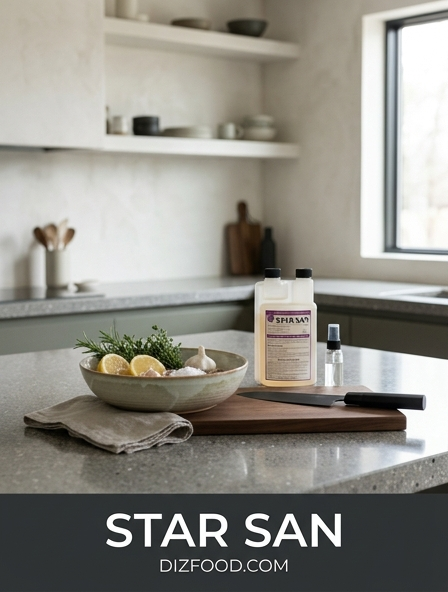
Star San is a clear, colorless liquid that does not stain any compatible materials. It leaves equipment looking exactly as it did before sanitization. This makes it the preferred choice for those using plastic "Better Bottles" or FermZilla fermenters. However, it is worth noting that Star San is an acid, and if left in contact with certain surfaces like granite or marble countertops for an extended period, it can etch the stone, causing permanent damage. Therefore, while it won't "stain" in the way iodine does, it still requires careful handling. Users should always wipe up spills immediately and avoid letting bottles of concentrate sit directly on porous kitchen surfaces. In summary, Iodophor presents a color-based staining risk to equipment, while Star San presents a chemical etching risk to sensitive stone surfaces.
Foaming Versus Non-Foaming Sanitizing Solutions
The presence or absence of foam is one of the most visible differences between these two products. Star San contains a surfactant that generates a dense, stable foam. This foam is beneficial because it can penetrate areas that liquid might miss, such as the threads of a jar, the inside of a valve, or the top of a carboy that isn't completely full. The foam clings to vertical surfaces, extending the contact time. Many brewers utilize this by "shaking" a small amount of solution inside a large vessel to coat the entire interior with foam. However, this same foam can be frustrating during bottling, as it can overflow the bottles or make it difficult to see the fill level.
Iodophor is a low-foaming or non-foaming sanitizer. This makes it the superior choice for equipment like bottle fillers, counter-pressure fillers, or any situation where a pump is used to recirculate liquid. High-speed pumps can turn Star San into a "foam monster," creating air pockets that prevent the liquid from contacting all surfaces and potentially causing the pump to lose prime. Iodophor's behavior is much more like plain water, allowing for easy drainage and immediate visibility of the sanitized surface. The choice often depends on the specific task:
- Use Star San for spray bottles and soaking large vessels.
- Use Iodophor for bottling lines and pump-driven systems.
- Use Star San when you need a visual "safety blanket" of foam.
- Use Iodophor when you need to quickly fill and drain equipment without bubbles.
Cost Efficiency and Dilution Ratios
When evaluating cost efficiency, one must look at the concentration and the required dilution ratio rather than the price of the bottle alone. Star San is typically diluted at a rate of 1 ounce per 5 gallons of water. Because the concentrate is very potent, a single 32-ounce bottle can produce 160 gallons of sanitizer. When you factor in its reusability, the cost per use becomes extremely low. Many users find that a single bottle of Star San lasts them several years of frequent homebrewing. However, the initial purchase price of Star San is usually higher than that of Iodophor.
Iodophor is generally diluted at a rate of 0.5 ounces (1 tablespoon) per 5 gallons of water to reach the 12.5 ppm threshold. While the dilution ratio is similar or slightly better than Star San, the fact that Iodophor cannot be easily reused means you will go through the concentrate much faster. Every time you brew or sanitize a kitchen counter, you are using a "fresh" dose that will likely be discarded shortly after. For occasional users, the lower upfront cost of a small bottle of Iodophor might be appealing. For high-volume users, the longevity and reusability of Star San usually result in better long-term savings. In a commercial kitchen or high-frequency brewery, the labor cost of constantly mixing new batches of Iodophor may also outweigh the higher material cost of acid-based alternatives.
pH Sensitivity and Water Quality Impact
The effectiveness of Star San is entirely dependent on the pH of the final solution. It must be at 3.0 or lower to effectively kill microbes. If your local tap water is very alkaline or "hard" (containing high levels of calcium carbonate), it will neutralize the phosphoric acid in Star San, raising the pH and turning the solution cloudy. In such cases, the sanitizer loses its punch, and you may need to use distilled water or add more concentrate to bring the pH back down. This sensitivity means that users with hard water must be more diligent about testing their solution with pH strips to ensure safety.
Iodophor is much more resilient to variations in water quality. It remains effective in a wider range of pH levels and is not significantly hindered by hard water minerals. This makes it a "safer" bet for individuals who do not want to worry about water chemistry or buy distilled water for sanitizing purposes. If you are in an area where the water has a high mineral content, Iodophor provides a consistent performance without the guesswork. However, very high levels of chlorine in tap water can react with iodine, so using filtered water is still recommended for the best results. For those who insist on Star San but have hard water, using a small amount of a mineral-stripping agent or simply switching to a "deionized water" mixing strategy is necessary to maintain its antimicrobial properties.
Equipment Compatibility and Long Term Safety
Long-term equipment maintenance is a final consideration. Star San is safe for use on most brewery and kitchen materials, including stainless steel, glass, and most plastics. However, because it is an acid, it should not be left in contact with soft metals like copper or aluminum for extended periods, as it can cause pitting and corrosion. Furthermore, silicone gaskets may swell slightly if soaked in Star San for several days, though they usually return to their normal size once dried. It is generally recommended to limit soak times to under an hour for these materials.
Iodophor is safe for most materials but, as mentioned, is a heavy stainer of plastics. It is very gentle on stainless steel and does not carry the same corrosive risk to soft metals that acid-based sanitizers do. Regarding human safety, both are safe when diluted properly. Star San concentrate is a strong acid and can cause skin irritation or eye damage, so it must be handled with care. Iodophor concentrate is also an irritant and can be toxic if ingested in large quantities. In their diluted, no-rinse forms, both are considered food-safe and pose no risk to the consumer. For environmental impact, Star San is biodegradable and can usually be poured down the drain, while iodine is also generally safe for septic systems in the small quantities used by homebrewers and kitchen staff.

Comments