
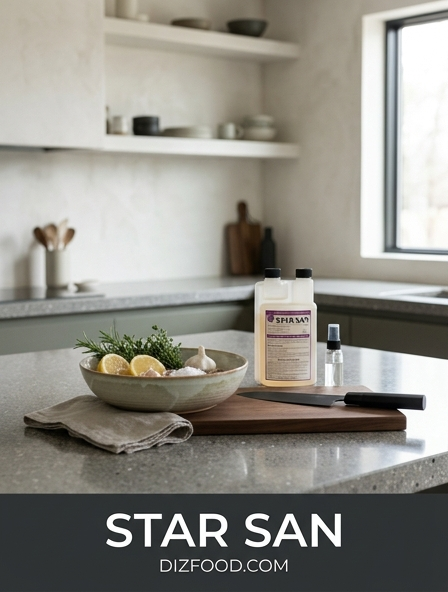
Understanding Star San Chemistry and Formulation
Star San is a high-foaming, acid-based anionic sanitizer widely utilized in both commercial breweries and home kitchens. Its primary active ingredients are phosphoric acid and dodecylbenzene sulfonic acid. This specific combination allows the solution to act as a powerful surfactant, reducing surface tension to ensure the sanitizer penetrates microscopic cracks and crevices that other agents might miss. The acidic nature of the formulation provides an inhospitable environment for most common foodborne pathogens and spoilage organisms.
Unlike many traditional sanitizers, Star San is specifically engineered to be a "no-rinse" product when used at the correct concentration. The phosphoric acid component essentially acts as a yeast nutrient in the fermentation process, meaning that small residual amounts do not harm the final product in brewing applications. Understanding the chemical synergy between the acid and the surfactant is crucial for users who want to ensure their equipment is biologically clean without leaving behind toxic residues or off-flavors.
- Phosphoric Acid: Provides the low pH necessary for sanitization.
- Dodecylbenzene Sulfonic Acid: Acts as the foaming agent and surfactant.
- Anionic Charge: Ensures compatibility with most food-grade surfaces.
Optimal Dilution Ratios for Maximum Efficacy
Achieving the correct dilution is the most critical factor in ensuring that Star San functions as a no-rinse sanitizer. The manufacturer's standard recommendation is 1 ounce of Star San concentrate per 5 gallons of water. When working with smaller batches, this translates to approximately 6 milliliters per gallon or 1.5 milliliters per liter. Using a syringe or a precise measuring cup is highly recommended, as over-concentrating the solution can lead to excessive acidity and potential flavor taints, while under-concentrating fails to meet the required kill-rate for bacteria.
Precise measurement ensures that the solution remains within the safe parameters defined by food safety regulations. If the ratio is followed correctly, the resulting liquid is safe to leave on equipment surfaces without a subsequent water rinse. This efficiency saves time and prevents the reintroduction of contaminants that might be present in tap water. The following table provides quick reference for common kitchen and brewery volumes:
| Water Volume | Star San Amount |
|---|---|
| 5 Gallons | 1 oz (30 ml) |
| 1 Gallon | 6 ml |
| 1 Liter | 1.5 ml |
| 750 ml (Spray Bottle) | 1.1 ml |
Monitoring pH Levels for Sanitizer Stability
The effectiveness of Star San is entirely dependent on its acidity. To remain a potent sanitizer, the pH of the prepared solution must stay below 3.0. When the pH rises above 3.5, the anionic surfactant loses its ability to disrupt the cell membranes of microorganisms, rendering the solution ineffective. This shift often occurs when the sanitizer is mixed with alkaline tap water or when it becomes contaminated with organic debris during the cleaning process.
Regular testing with a calibrated pH meter or high-quality pH test strips is essential for anyone reusing the solution over several days or weeks. If the solution becomes cloudy, it is often a visual indicator that the pH has risen due to mineral interactions, though cloudiness does not always guarantee failure. The only certain way to verify potency is through direct pH measurement. Users should be diligent in checking their solution before every use, especially if the mixture has been stored for an extended period, to ensure it still provides the necessary biocidal protection for their kitchen tools and brewing vessels.
Extending Shelf Life with Distilled Water
One of the most common issues with Star San is its reaction to hard water. The minerals found in typical tap water, such as calcium and magnesium, can react with the sulfonic acid, causing the solution to turn cloudy and eventually neutralizing the acidity. This reaction significantly shortens the shelf life of the prepared sanitizer, sometimes rendering it useless within just a few days. To maximize the longevity of a prepared batch, using distilled or reverse osmosis (RO) water is highly recommended.
When mixed with distilled water, a Star San solution can remain stable and effective for several months if kept in a sealed container. This allows users to mix large batches at once, reducing waste and the frequency of preparation. Because distilled water lacks the buffering minerals found in tap water, the pH remains consistently low, maintaining the surfactant's efficacy. This practice is not only more reliable for food safety but also more cost-effective in the long run, as it prevents the premature disposal of sanitizer batches that have lost their potency due to water quality issues.
Safe Application on Stainless Steel and Plastic
Star San is designed to be compatible with the most common materials found in modern kitchens and breweries, specifically stainless steel and high-density plastics. For stainless steel, the solution is safe for short-term contact, but it is important to avoid prolonged soaking. Because it is an acid, leaving stainless steel submerged for days or weeks can lead to surface pitting or corrosion. A contact time of one to two minutes is all that is required for effective sanitization before the equipment is put to use.
When it comes to plastics, Star San is exceptionally safe for HDPE, PET, and polypropylene. It does not cause the "crazing" or cracking often associated with alcohol-based sanitizers. However, users should be aware that the solution can occasionally stain soft vinyl tubing or certain types of gaskets if they are left in the liquid for an extended duration. For best results, follow these material guidelines:
- Stainless Steel: Limit contact to under 1 hour to prevent pitting.
- Hard Plastics: Excellent compatibility; safe for regular use.
- Soft Silicone/Vinyl: Safe, but may experience slight discoloration over time.
- Aluminum/Copper: Use with caution; acidic solutions can strip protective oxides.
The Science of No Rinse Sanitizing Foam
One of the most distinctive features of Star San is its heavy foaming action. Many novices mistakenly attempt to rinse away the foam, fearing it will affect the taste of their food or beer. However, the foam is a vital part of the sanitizing process. It is composed of the same phosphoric acid and surfactant as the liquid, allowing it to cling to vertical surfaces and penetrate deep into crevices where liquid might simply run off. This ensures that every square millimeter of the equipment is contacted by the sanitizer.
The "don't fear the foam" mantra is backed by science. Once the solution is diluted to the proper ratio, the amount of residual acid left in the foam is negligible. In a brewing context, these trace amounts are actually beneficial, as they are consumed by yeast during fermentation. Rinsing the foam away with tap water is counterproductive, as it risks re-contaminating the surface with bacteria or minerals present in the water supply. Embracing the foam is key to a streamlined and effective sanitization workflow, ensuring that the "no-rinse" promise is fully realized.
Storage Solutions to Maintain Solution Potency
Proper storage is essential for maintaining the biocidal strength of Star San over time. Once mixed, the solution should be stored in a clean, airtight container made of high-density polyethylene (HDPE) or glass. Exposure to air can lead to the absorption of carbon dioxide, which may slightly alter the chemistry over very long periods, but the primary threat is evaporation and the introduction of dust or organic matter. Storing the solution in a cool, dark place away from direct sunlight helps prevent the degradation of the surfactants.
Many professionals and hobbyists utilize spray bottles for localized application. This is an efficient way to store Star San, as it allows for targeted use on small items like spoons, thermometers, or bottle caps. When using spray bottles, ensure they are clearly labeled and kept in a convenient location. If the solution is stored in a bucket for dipping larger items, keep a lid on the bucket when not in use. Following these storage practices ensures that the sanitizer is always ready for use and maintains its required pH levels for maximum safety.
Identifying Contamination Risks in Reuse
While Star San is robust, its efficacy is not infinite when reused. The primary risk factor in reusing a sanitizer solution is organic contamination. If equipment is not thoroughly cleaned with a detergent before being placed in the Star San bath, proteins, fats, and sugars can enter the solution. These organic materials act as a buffer, quickly raising the pH and neutralizing the acidic environment required to kill bacteria. Furthermore, the presence of organic "load" provides a medium where microbes can potentially survive even in an acidic environment.
Users must distinguish between cleaning and sanitizing. Star San is not a cleaner; it is a sanitizer meant for use on surfaces that are already visually clean. If a batch of Star San contains visible debris, sediment, or a distinct color change, it should be discarded immediately regardless of its pH reading. To minimize contamination risks during reuse, always follow these steps:
- Pre-clean equipment with an alkaline cleaner like PBW.
- Rinse the cleaner off thoroughly with water.
- Submerge or spray the clean item with Star San.
- Discard the sanitizer if it becomes visibly soiled.
Equipment Material Compatibility and Corrosion Prevention
While Star San is generally safe, its acidic nature requires a nuanced understanding of material science to prevent equipment damage. For 300-series stainless steel, which is standard in kitchens and breweries, the risk of corrosion is low during standard contact times. However, if Star San is left to dry on the surface or if the equipment is soaked for days, the chloride ions in some water sources can combine with the acid to cause pitting. This can create tiny holes that harbor bacteria, defeating the purpose of sanitization.
Special care should be taken with "soft" metals. Aluminum, brass, and copper are more reactive to phosphoric acid than stainless steel. Prolonged exposure can lead to tarnish or the stripping of the metal's protective patina. For these materials, it is best to use a quick spray-and-wipe method rather than a long soak. The following table summarizes the risk levels for various materials commonly found in a kitchen or brewery environment:
| Material | Compatibility | Risk Level |
|---|---|---|
| Stainless Steel | High | Low (Short contact) |
| HDPE / PET Plastic | Excellent | Very Low |
| Copper / Brass | Moderate | Medium (Tarnish) |
| Aluminum | Moderate | Medium (Oxidation) |
Best Practices for Kitchen and Brewery Hygiene
The hallmark of a professional hygiene routine is the separation of cleaning and sanitizing. Best practices dictate that every piece of equipment must first be cleaned of all organic soils using a dedicated detergent. Once the surface is clean to the touch and sight, Star San is applied to eliminate the microscopic organisms that remain. For maximum efficiency, many users keep a 5-gallon bucket of prepared Star San and a pressurized spray bottle on hand at all times. This allows for both immersion of small parts and the quick coating of large surfaces like countertops or fermenter walls.
A minimum contact time of sixty seconds is required for the sanitizer to be effective, though many users prefer two minutes for an extra margin of safety. After this period, the equipment can be used immediately while still wet or after the foam has settled. By integrating these steps into a standard operating procedure, kitchen staff and brewers can ensure a high level of biological safety. Consistently monitoring the pH and using distilled water further ensures that the hygiene protocol remains foolproof and cost-effective over the long term.

Comments